

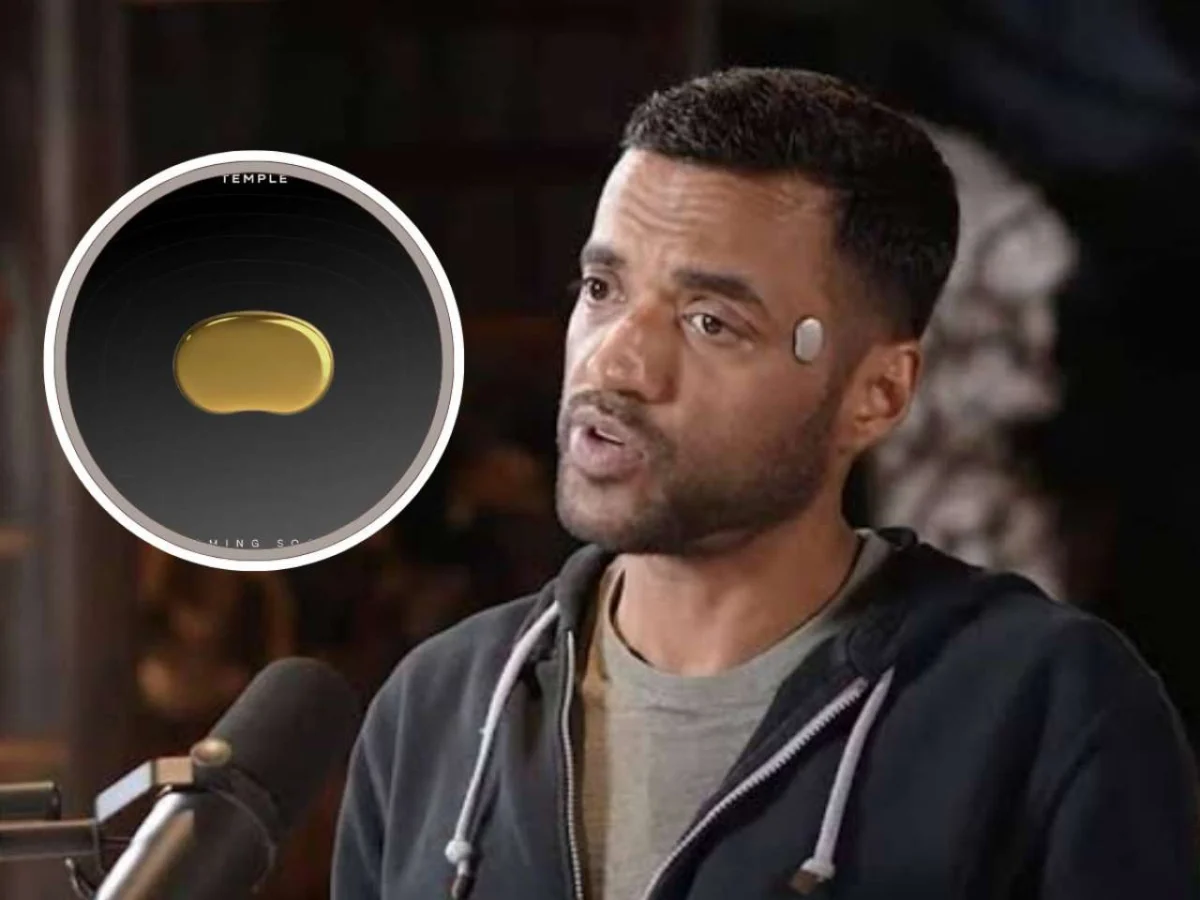
NEW DELHI, India – Deepinder Goyal, the visionary co-founder of food delivery giant Zomato, is once again poised to disrupt an industry, this time setting his sights on the burgeoning health technology sector. His ambitious new venture, a wearable device dubbed "Temple," is slated for a launch within the next 6 to 12 months. Priced at a premium of approximately USD 1,000 (roughly INR 1 lakh), Temple promises a revolutionary approach to personal health monitoring, focusing on a novel biomarker referred to as ‘entropy’ to track metabolic health.
The device, which Goyal has confirmed will initially be introduced as a wellness product, aims to provide unprecedented insights into an individual’s stress levels, meditation efficacy, recovery processes, sleep quality, and exercise impact. A key differentiator will be the simultaneous release of peer-reviewed studies to substantiate its audacious health claims, a move designed to build trust and scientific credibility from day one. Despite facing acknowledged delays in its development timeline, the project has already garnered significant public interest, with over 100,000 individuals reportedly applying for early access to the initial batch of just 100 units. This extraordinary demand underscores both the public’s fascination with advanced health tracking and the enduring curiosity surrounding Goyal’s entrepreneurial pursuits beyond the realm of food tech.
Main Facts: Unveiling the "Temple" Project
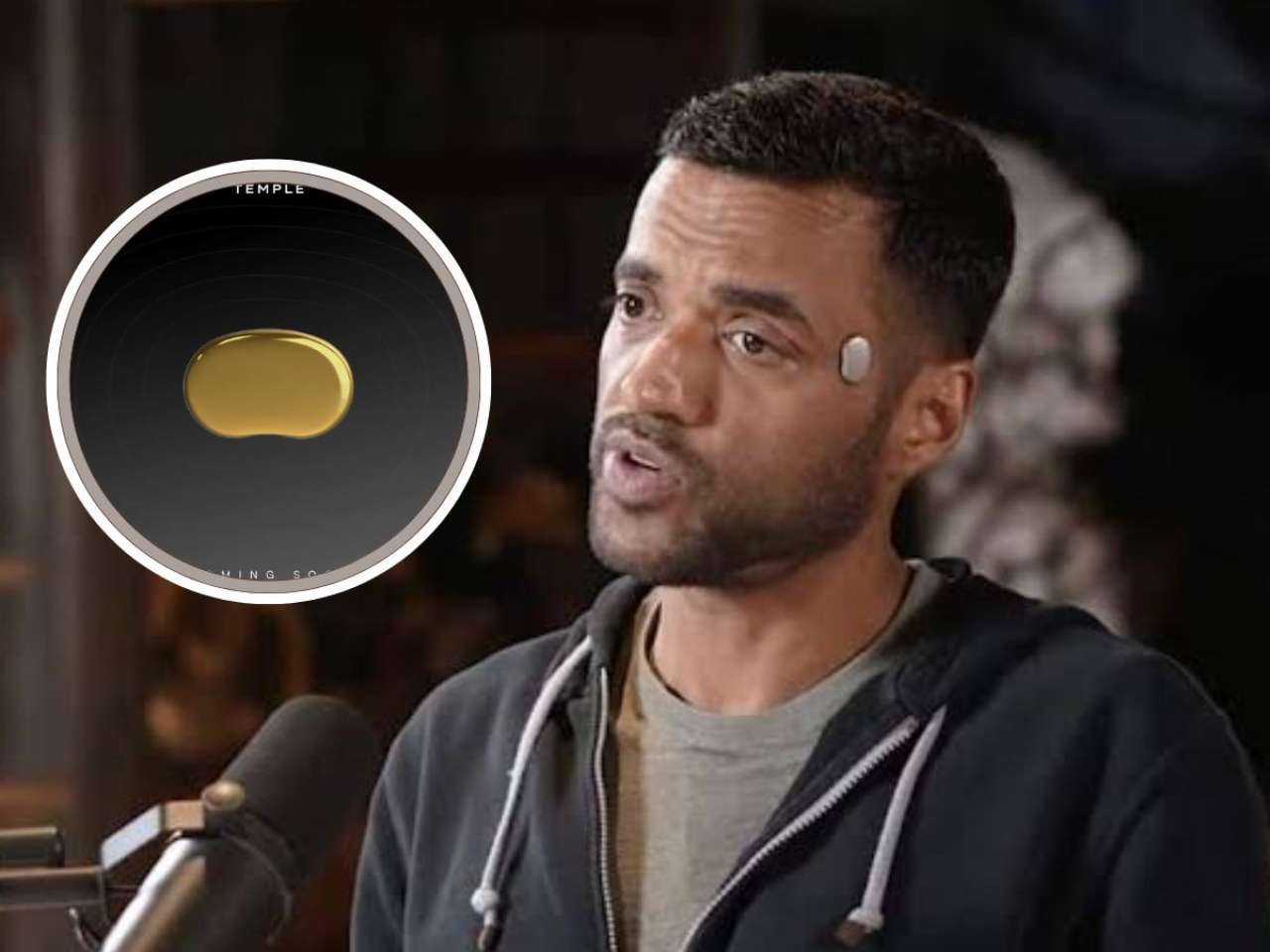
Deepinder Goyal’s latest innovation, "Temple," is an advanced wearable technology poised to redefine personal health monitoring. Breaking away from the conventional wrist-worn form factor, Temple is designed as a bean-shaped garment intended to be worn discreetly on the side of the forehead. Its core mission is to continuously monitor the body’s metabolic condition in real-time, offering a more granular understanding of physiological states than many existing devices.
The most intriguing aspect of Temple lies in its proprietary approach to health tracking: the measurement of a novel biomarker termed ‘entropy.’ According to Goyal and his team, this biomarker is directly correlated with metabolic rate and can offer profound insights into various aspects of well-being, including stress, the effectiveness of meditation, recuperation, sleep patterns, and the body’s response to exercise. This focus on ‘entropy’ represents a significant departure from the heart rate variability (HRV) or activity-based metrics commonly found in consumer wearables today.
)
With a projected price tag of USD 1,000, Temple is positioned as a high-end device targeting a discerning clientele. Goyal has openly stated that his primary motivation for developing Temple is personal, emphasizing, "I am constructing it solely for myself. Business is a side effect of what we’re doing for ourselves." This philosophy suggests a product built for uncompromising performance and precision, initially catering to individuals with a deep commitment to optimizing their health, particularly high-performance athletes. Indeed, Goyal himself, alongside badminton star PV Sindhu, has been publicly seen wearing the device, indicating its advanced stage of real-world testing and its appeal to elite sports figures.
Crucially, Temple will launch as a wellness device, rather than a medical one, a strategic classification that allows for faster market entry while acknowledging the rigorous regulatory pathways required for medical devices. To bolster its credibility, the company plans to release peer-reviewed studies concurrently with its launch, aiming to provide a robust scientific foundation for its claims regarding ‘entropy’ and metabolic health. This move is vital, especially given that independent validation of the underlying science behind ‘entropy’ as a health biomarker is still awaited. However, Goyal has expressed long-term aspirations for Temple to evolve into a medical device, indicating that future functionalities will be introduced only after obtaining the necessary regulatory approvals.

Chronology: The Journey from Concept to Near-Launch
The journey of "Temple" is one shrouded in a degree of secrecy typical of ambitious tech projects, punctuated by strategic reveals and candid admissions of the inherent challenges in pioneering new technology. Deepinder Goyal’s foray into health tech did not emerge overnight; it is understood to be the culmination of years of quiet development, possibly under the umbrella of a venture previously known as Eternal, a company where Goyal served as former CEO. While details about Eternal’s exact scope remain limited, it appears to have served as the incubation ground for Temple, allowing Goyal to pivot his entrepreneurial energy towards a domain vastly different from the logistical complexities of food delivery.
Goyal has been remarkably open about the project’s protracted development, admitting to a timeline that has "previously slipped." His candid remark, "I’ve been repeating it for the past eighteen months. Thus, I’m not sure," reflects the immense technical hurdles and scientific validation processes involved in bringing such an innovative device to market. This transparency, while unusual, underscores the complexity of developing a product that relies on entirely new biomarkers and aims for scientific rigor.
)
The first tangible public glimpses of Temple began to surface, hinting at its advanced testing phase. Notably, Goyal himself has been observed wearing the device, signaling his personal conviction and involvement in its real-world application. More significantly, badminton icon PV Sindhu was spotted sporting the bean-shaped wearable during high-profile events, including the 2026 Uber Cup in April. These public appearances are not mere endorsements; they signify a crucial phase of beta testing among high-performance individuals, gathering invaluable data and feedback under demanding conditions. This period of real-world application is critical for refining the device’s accuracy, comfort, and functionality before a broader release.
The recent announcement targeting a 6-12 month launch window marks a significant milestone, indicating that the development team is nearing a mature product ready for commercialization. This projected launch will be accompanied by the highly anticipated release of peer-reviewed studies, a strategic decision to immediately address potential skepticism and establish scientific credibility. The overwhelming response of over 100,000 applications for early access to a mere 100 units further highlights the immense anticipation and curiosity surrounding Temple, validating the market’s hunger for advanced, data-driven health solutions, even at a premium price point. This chronological progression, from secretive development and personal motivation to public testing and a clear launch roadmap, illustrates the methodical and ambitious nature of Goyal’s latest entrepreneurial endeavor.
)
Supporting Data & Scientific Basis: Decoding "Entropy" and the Wearable Landscape
The scientific foundation of "Temple" hinges on the measurement of ‘entropy,’ a concept more commonly associated with physics and thermodynamics, now being applied to human biology. In the broadest sense, entropy is a measure of disorder, randomness, or the unavailability of a system’s thermal energy for conversion into mechanical work. In biological systems, particularly within the context of health and disease, researchers have explored the concept of "physiological entropy" or "complexity." A healthy biological system often exhibits a certain degree of complexity and adaptability, implying a dynamic and non-linear regulatory network. A loss of this complexity, or an increase in physiological "disorder," has been hypothesized to correlate with disease states, aging, and reduced resilience.
Goyal’s team asserts that their novel biomarker, ‘entropy,’ directly correlates with metabolic rate. The metabolic rate is a fundamental physiological process, representing the speed at which the body converts food into energy. It influences nearly every bodily function, from organ performance to energy levels. If Temple can accurately and non-invasively track changes in this ‘entropy’ biomarker, it could offer unprecedented, real-time insights into how an individual’s metabolism is responding to various internal and external stimuli. For instance, increased entropy might signal heightened stress, inefficient recovery, or suboptimal metabolic function, while a more stable or optimal entropy signature could indicate a state of balance and high performance. This approach fundamentally differs from traditional fitness trackers that largely rely on heart rate, step counts, or sleep stage analysis derived from movement and heart rate variability. While these metrics provide valuable data, they often offer indirect insights into the body’s deeper metabolic and homeostatic states.
)
The decision to launch Temple as a "wellness device" rather than a "medical device" is a critical strategic move with significant implications. Medical devices are subject to stringent regulatory approvals from bodies like the FDA in the US or similar agencies globally. These approvals require extensive clinical trials, demonstrating both safety and efficacy, a process that can take years and cost millions. A wellness device, on the other hand, is typically defined as a product that promotes or maintains a healthy lifestyle and is not intended to diagnose, treat, or prevent any disease. This classification allows Temple to enter the market more rapidly. However, to establish credibility, Goyal’s commitment to releasing "peer-reviewed studies" is paramount. Peer review is the process by which scientific research is evaluated by other experts in the field prior to publication, ensuring rigor, validity, and scientific merit. The absence of "independent validation of the science underlying entropy" remains a key challenge, and the forthcoming peer-reviewed studies will be crucial in addressing this. The scientific community will closely scrutinize these studies to understand the methodology, the robustness of the data, and the generalizability of the findings concerning ‘entropy’ as a reliable biomarker.
In the broader wearable technology landscape, Temple aims to carve out a distinct niche. The market is currently dominated by devices like Apple Watch, Fitbit, Garmin, Oura Ring, and Whoop, all offering varying degrees of activity tracking, heart rate monitoring, sleep analysis, and recovery scores. While some advanced wearables incorporate metrics like heart rate variability (HRV) as an indicator of autonomic nervous system balance and recovery, none currently claim to track ‘entropy’ as a primary metabolic biomarker. Temple’s unique form factor—a bean-shaped garment worn on the forehead—also sets it apart. The forehead offers a stable, hairless surface with proximity to the brain and major blood vessels, potentially allowing for more direct and consistent sensor contact for whatever physiological signals are being measured to derive ‘entropy.’ This design choice suggests a deliberate effort to optimize sensor placement for the specific biomarker Temple aims to track, moving beyond the wrist, which can be prone to movement artifacts and less direct physiological readings for certain parameters. By focusing on a novel biomarker and a unique form factor, Temple is attempting to differentiate itself in a crowded and competitive market.
)
Official Responses & Perspectives: Goyal’s Vision and Market Dynamics
Deepinder Goyal’s public statements regarding "Temple" offer a unique window into his entrepreneurial philosophy and the strategic positioning of this groundbreaking device. His assertion, "I am constructing it solely for myself. Business is a side effect of what we’re doing for ourselves," is particularly illuminating. This perspective suggests that Temple is not merely a commercial venture driven by market opportunity, but rather a passion project born out of a deep personal need for advanced self-quantification and optimization. Such intrinsic motivation often leads to products that are meticulously designed, highly functional, and uncompromising in quality, as they are initially built to satisfy the most demanding user – the founder himself. This approach naturally targets a niche audience, specifically high-performance athletes and biohackers who share this drive for peak performance and detailed physiological insights.
The premium price point of USD 1,000 for Temple, roughly equivalent to a high-end smartphone or a sophisticated medical diagnostic tool, reflects this niche positioning and the advanced technology embedded within. It signals that Temple is not intended for the mass market but for early adopters and enthusiasts willing to invest significantly in cutting-edge personal health technology. This pricing strategy is also likely influenced by the substantial research and development costs associated with pioneering a new biomarker and developing proprietary sensor technology. Compared to existing high-end wearables like the Oura Ring or Whoop, which typically range from a few hundred dollars plus subscriptions, Temple’s price point places it in a league of its own, emphasizing its unique value proposition rather than competing on cost.
)
Goyal has been remarkably candid about the project’s development timeline, acknowledging that it has "previously slipped." His frankness, "I’ve been repeating it for the past eighteen months. Thus, I’m not sure," highlights the inherent complexities and unpredictable nature of developing truly innovative hardware and software, especially when dealing with novel scientific concepts. This transparency, while potentially unsettling for investors looking for firm timelines, also builds trust, showcasing a leader who understands and communicates the arduous journey of R&D rather than making unrealistic promises. It implies that the team is prioritizing scientific rigor and product efficacy over rushed market entry.
Furthermore, Goyal’s long-term vision for Temple extends beyond its initial classification as a wellness device. He stated, "We’re developing features that will make it a medical device. Therefore, whenever we have those functionalities, we will launch them after obtaining regulatory approvals." This declaration reveals a strategic roadmap that aims to eventually transition Temple into a regulated medical device, capable of making diagnostic or therapeutic claims. This pathway is significantly more challenging and time-consuming, requiring extensive clinical trials and regulatory clearances from health authorities. However, it also opens up vastly larger markets and greater potential for impacting public health by offering medically validated insights and interventions. This dual-phase strategy—starting with wellness and evolving into medical—allows for earlier market entry while retaining ambitious long-term goals.
)
The market’s initial response to Temple, evidenced by over 100,000 applications for early access to just 100 units, is overwhelmingly positive. This level of demand, despite the high price and the novelty of the underlying science, speaks volumes about the allure of Deepinder Goyal’s ventures and the public’s appetite for advanced health solutions. These early adopters are likely a mix of tech enthusiasts, biohackers, professional athletes, and individuals with a keen interest in self-optimization, all eager to be at the forefront of what could be the next major shift in personal health monitoring. Their feedback and experiences will be crucial in refining Temple before its broader commercial launch.
Implications: Reshaping Health Tech and Future Horizons
The advent of Deepinder Goyal’s "Temple" carries significant implications for the health technology industry, personal wellness, and entrepreneurial innovation. If Temple successfully validates its claims regarding ‘entropy’ as a reliable biomarker for metabolic rate, it could catalyze a paradigm shift in how individuals and healthcare professionals approach preventative health and performance optimization. The concept of monitoring an entirely new physiological metric could open doors for further research into biological complexity and its correlation with various health states, potentially leading to new diagnostic tools and therapeutic strategies. It challenges the existing framework of wearables, which largely focus on heart rate, movement, and sleep, by introducing a deeper, more fundamental physiological insight.
)
Goyal’s transition from leading Zomato, a mass-market food delivery platform, to pioneering a niche, high-tech health wearable, underscores a fascinating entrepreneurial pivot. It demonstrates his capacity for audacious vision and his willingness to tackle complex scientific and engineering challenges. This move could inspire other established entrepreneurs to venture into deep tech and life sciences, leveraging their business acumen to accelerate scientific innovation. It also positions India as a potential hub for cutting-edge health technology development, moving beyond service-oriented tech to product-centric, research-intensive ventures.
However, the path forward for Temple is fraught with challenges. The most significant hurdle remains the scientific validation of ‘entropy’ as a reliable and actionable biomarker. While peer-reviewed studies are planned, the broader scientific community will demand robust, independent replication and verification of these findings. Without widespread acceptance of ‘entropy’ as a legitimate physiological metric, Temple risks being perceived as a sophisticated gadget rather than a scientifically grounded health tool. Building this scientific consensus will require sustained research, collaboration with academic institutions, and transparent data sharing.
)
Market adoption also presents a unique challenge. While the early access demand is impressive, scaling beyond a niche audience of high-performance individuals to a broader consumer base will require demonstrating clear, tangible benefits that resonate with everyday health concerns. The USD 1,000 price point, while justified by its advanced technology, will naturally limit its accessibility. Strategies for making the technology more affordable or demonstrating its long-term economic value through improved health outcomes will be crucial for wider penetration. Furthermore, the crowded wearable market means Temple must continuously innovate and prove its superiority over established players.
The long-term aspiration to develop medical device features and obtain regulatory approvals introduces another layer of complexity. This pathway involves navigating intricate regulatory landscapes, conducting extensive clinical trials to prove efficacy and safety for specific medical indications, and potentially facing scrutiny over data privacy and security. The time and capital investment required for this transition are substantial, and success is far from guaranteed.
)
Despite these challenges, the potential implications of Temple are transformative. Imagine a future where real-time metabolic entropy tracking could provide early warnings for stress-induced burnout, optimize athletic training regimes with unprecedented precision, or even offer personalized insights into dietary responses, moving beyond generic advice to truly individualized health management. If Temple delivers on its promise, it could empower individuals with a deeper understanding of their physiological states, fostering proactive health management and preventative care. Ultimately, Deepinder Goyal’s "Temple" represents more than just a new wearable; it is a bold experiment at the intersection of technology, biology, and entrepreneurship, with the potential to redefine the future of personal health. Its journey will undoubtedly be closely watched by innovators, scientists, and health-conscious consumers worldwide.
