

On a sweltering July afternoon in Kolkata, the air thick with the scent of rain and ripening produce, two of India’s most decorated mixologists were not behind a sleek marble bar. Instead, they were navigating the labyrinthine alleys of Lake Market. Manoj Kumar and Krishna Kumar, the creative forces behind Bengaluru’s acclaimed bar Soka, were engaged in a sensory reconnaissance mission.
One was seen meticulously inspecting bunches of fresh herbs, bruising leaves between his thumb and forefinger to release their essential oils. The other was deep in conversation with a fruit vendor, hefting a massive, spiky jackfruit to judge its ripeness by weight and the resonance of its hollow thud.
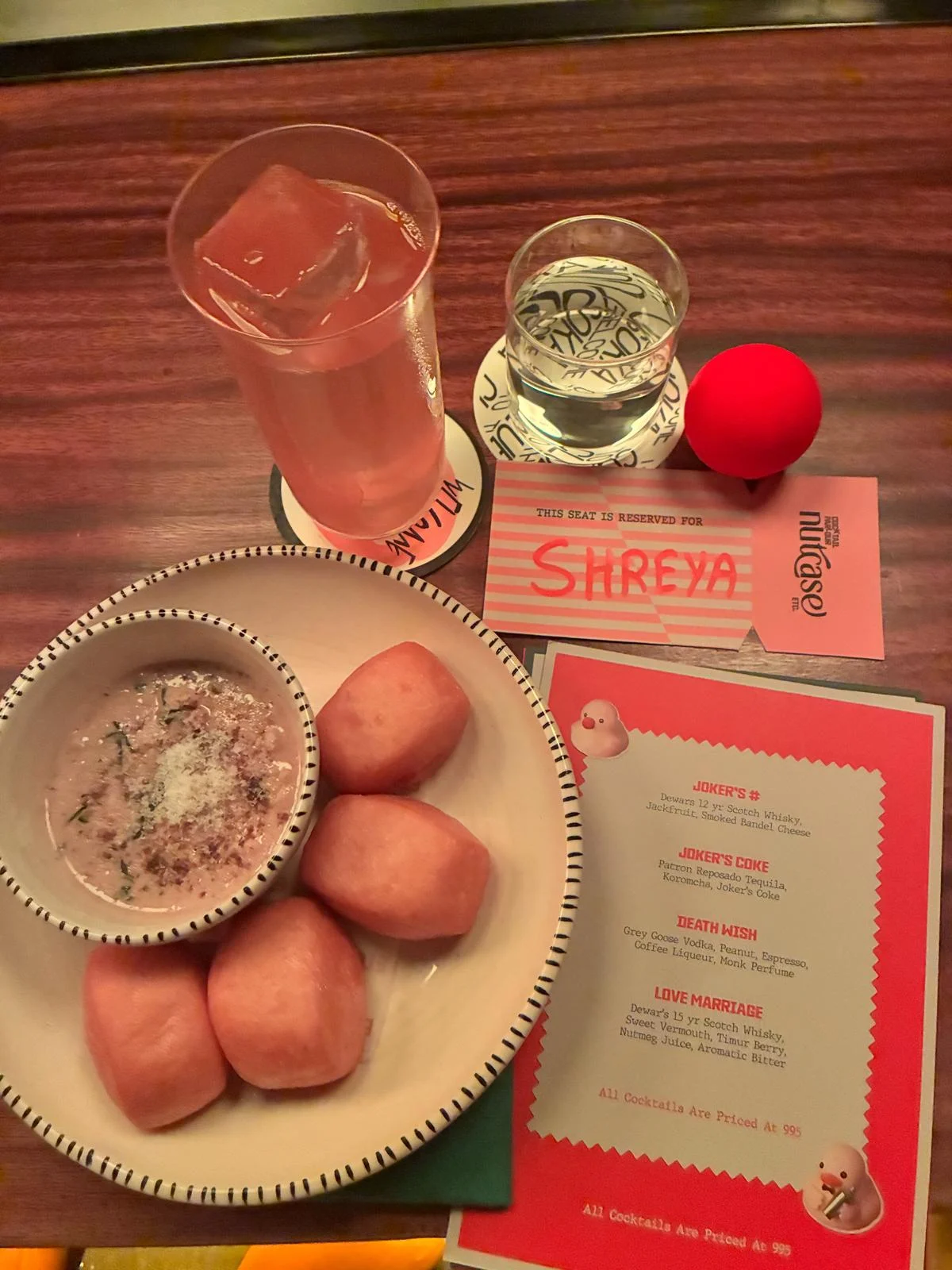
This was not a standard grocery run. It was the birth of "The Joker Shift," a revolutionary guest shift format conceptualized by Kolkata’s Nutcase Etc. The goal? To strip away the safety net of pre-batched syrups and signature recipes, forcing world-class bartenders to translate the "vernacular" of a local pantry into the universal language of a high-end cocktail.
I. Main Facts: A Departure from the Traditional Guest Shift
The collaboration, which culminated in a high-octane event on July 2nd, represented a significant shift in how the Indian hospitality industry views "guest shifts." Traditionally, guest shifts involve a visiting bar bringing their most popular menu items to a new city, often carrying pre-made ingredients in flight cases to ensure consistency.

"The Joker Shift" inverted this model. Manoj (MK) and Krishna (KK) arrived from Bengaluru empty-handed. Their mandate was to build a menu from scratch within 36 hours, using only what they discovered in Kolkata.
The Powerhouses Involved:
- Soka (Bengaluru): Founded by Chef Sombir Choudhary and Avinash Kapoli, Soka has rapidly ascended the ranks of the global bar scene. It currently holds the #2 spot on 30 Best Bars India 2025 and is ranked #28 on Asia’s 50 Best Bars 2025. It is known for its minimalist, ingredient-forward philosophy.
- Nutcase Etc. (Kolkata): Located on Manohar Pukur Road, this intimate cocktail parlour has become the vanguard of Kolkata’s modern bar culture. Within a year of its inception, it secured the #15 spot on 30 Best Bars India 2026 and was named one of Condé Nast Traveller India’s Hottest New Openings.
II. Chronology: 36 Hours of Creative Ferment
The journey from Bengaluru to a Kolkata cocktail glass followed a strict, high-pressure timeline designed to test the improvisational skills of the visiting team.
Phase 1: The Mystery Box (The "Googly")
The collaboration began on the evening of their arrival. Nutcase Etc. presented the Soka team with a plain cardboard box—a "mystery box" that served as a culinary map of Bengal.
Priyadarshini Chitrangada, Manager of Brand and Community at Nutcase Etc., noted that they wanted to avoid the clichés of Bengali flavors. "They guessed the usual suspects like gondhoraj (aromatic lime) and kasundi (mustard sauce). But we wanted to throw them a googly," she explained.

Inside the box were eight complex ingredients:
- Smoked Bandel Cheese: A salty, pungent, ash-coated cheese with roots in Portuguese settlements in Bengal.
- Patali Gur: Solidified date palm jaggery, known for its deep, smoky sweetness.
- Sundarban Honey: Wild, multi-floral honey harvested from the world’s largest mangrove forest.
- Badshah Bhog Rice: A fragrant, short-grain heirloom rice.
- Panch Phoron: The iconic Bengali five-spice mix (cumin, mustard, fenugreek, nigella, and fennel).
- Jamun: The astringent, purple Indian blackberry.
- Hog Plum (Amra): A tart, fibrous fruit used in local chutneys.
- Karamcha: Pink-and-white Bengal currants known for their aggressive acidity.
Phase 2: The Lake Market Expedition
The following morning, the team headed to Lake Market. This was where the "translation" began. In the dry goods section, the bartenders compared patali gur to the jaggery of Karnataka. They realized that while the names changed, the soul of the ingredients remained remarkably similar.
"Both of them felt the produce here was extraordinary," says Rahul Banerjee, head bartender and co-founder of Nutcase. "There were these lovely moments when we realized the same ingredient exists across states. Only the names change."
Phase 3: The Lab and the Menu
The final 12 hours were spent in the Nutcase Etc. lab. The challenge was to balance the bold, often polarizing flavors of Bengal—like the saltiness of Bandel cheese or the sharp bite of karamcha—with premium spirits like Dewar’s Scotch and Patrón Tequila.

III. Supporting Data: Ingredient Profiles and the Final Menu
The resulting menu was a testament to the "Joker Shift" philosophy. It didn’t try to replicate Bengaluru, nor did it try to be a traditional Bengali celebration. It was a hybrid—a liquid reflection of two cities overlapping.
The Signature Creations:
| Cocktail Name | Key Spirits | Local Ingredient Integration | Flavor Profile |
|---|---|---|---|
| Joker’s # | Dewar’s 12-Year Scotch | Jackfruit & Smoked Bandel Cheese | Savory, smoky, and tropical; a bold play on the "umami" cocktail trend. |
| Joker’s Coke | Patrón Reposado Tequila | Karamcha (Bengal Currant) | High-acid, vibrant, and tart; the karamcha acted as a natural citrus replacement. |
| Love Marriage | Dewar’s 15-Year Scotch | Timur Berry & Fresh Nutmeg Juice | Aromatic and spicy; utilized the numbing qualities of Timur and the earthiness of nutmeg. |
| Death Wish | Grey Goose Vodka | Peanut & Espresso | Rich and indulgent; a sophisticated take on the espresso martini using local peanuts. |
The "Karamcha" Revelation
The karamcha (Bengal currant) emerged as the star of the show. Neither Manoj nor Krishna had encountered the fruit before. Its transformation from a wild, astringent berry into the backbone of a sophisticated Tequila cocktail highlighted the technical prowess of the Soka team. They studied its taut skin and the lingering sweetness that followed its initial acidic burst, treating it with the same reverence a sommelier might treat a rare grape.
IV. Official Responses: A New Philosophy of Collaboration
The organizers and participants viewed this event as a blueprint for future industry interactions.
Rituparna Banerjee, Chef and Founder of Nutcase Etc., emphasized the importance of perspective: "Usually, bars collaborate by making the drinks they’re already known for. We wanted MK and KK to discover Kolkata through their own eyes—through the eyes of Bengaluru."

Rahul Banerjee, Co-founder of Nutcase Etc., spoke to the cultural bridge built through the shift: "Strip away language and geography, and Indian pantries often speak the same dialect. This journey proved that the raw materials of our heritage are our greatest creative assets."
The Soka team, while exhausted by the 36-hour sprint, noted that the lack of a pre-set menu allowed for a level of spontaneity rarely seen in high-end bars. The "Joker" format allowed them to be "wild cards," reacting to the environment rather than imposing a brand identity upon it.
V. Implications: The Future of the Indian Bar Scene
The success of "The Joker Shift" carries several implications for the broader F&B industry in India:
1. The Rise of "Hyper-Localism"
This event signals a move away from imported botanical syrups and toward indigenous produce. By using Bandel cheese and karamcha, Nutcase and Soka are proving that Indian ingredients can hold their own against traditional Western cocktail components.

2. Redefining the Guest Shift
As the Indian bar scene matures, the "standard" guest shift may become obsolete. Discriminating consumers are looking for unique, one-time-only experiences. The "Mystery Box" format provides a narrative tension and creative authenticity that a standard menu cannot match.
3. Cross-State Culinary Dialogue
Bengaluru and Kolkata are two of India’s most distinct culinary hubs. Collaborations like this foster a "national" cocktail identity, where techniques from the South meet the pantry of the East. It encourages a shared knowledge base among bartenders, elevating the industry as a whole.
4. Sustainability and Seasonality
By forcing bartenders to use what is available in the local market that day, the Joker Shift naturally promotes seasonal and sustainable sourcing. The jackfruit KK picked up at Lake Market wasn’t just a flavor choice; it was a choice dictated by the season and the soil.
Conclusion
"The Joker Shift" at Nutcase Etc. was more than a night of drinking; it was an exercise in culinary anthropology. By placing two of the country’s best bartenders in the middle of a humid Kolkata market and asking them to find inspiration in a mystery box, the organizers tapped into something essential.

They proved that at the highest level of mixology, the most important tool isn’t a gold-plated shaker or a rare vintage spirit—it’s the ability to look at a common ingredient like a hog plum or a block of jaggery and see an infinite world of possibilities. As this format becomes a bi-annual tradition, the Indian bar scene can expect many more "googlies" that challenge the status quo and celebrate the rich, diverse pantry of the subcontinent.
