

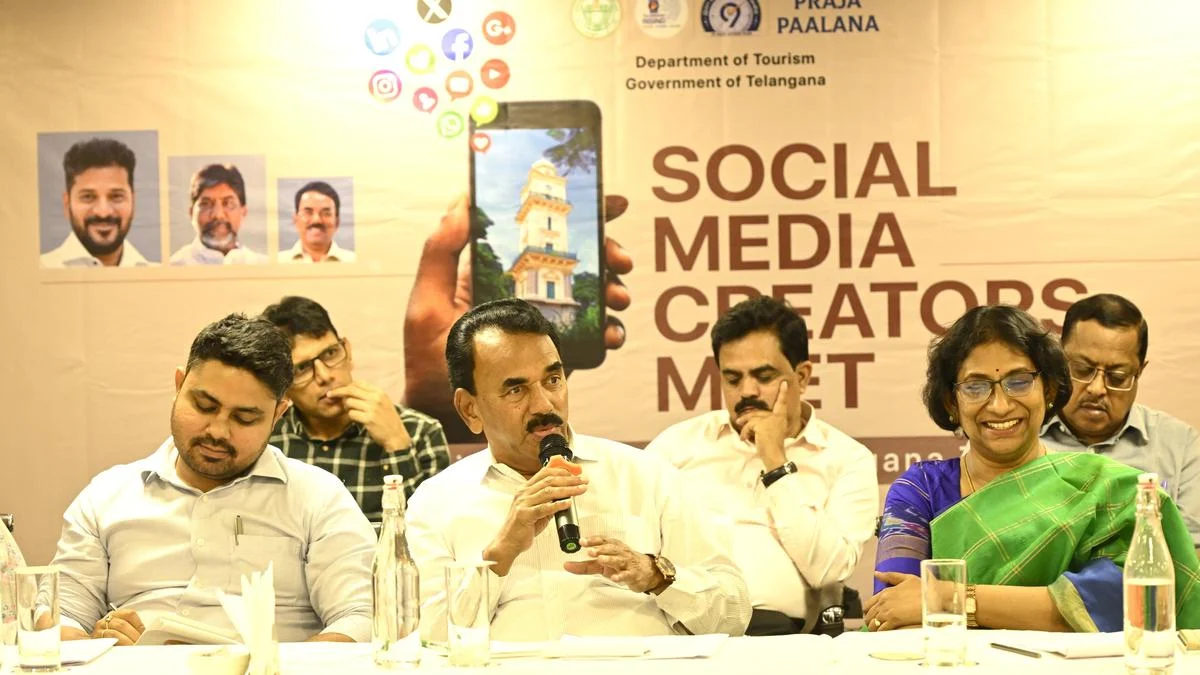
HYDERABAD – In a significant move to redefine its global tourism footprint, the Government of Telangana has pivoted toward a digital-first strategy, identifying the state as an "under-discovered" gem with vast storytelling potential. At the heart of this transformation is the "Telangana Tourism Creators Meet," a high-profile gathering held in Hyderabad as part of the government’s ambitious "99 Days Action Plan."
By formalizing a partnership between the state and the digital creator economy, Telangana aims to bypass traditional advertising bottlenecks, leveraging the authenticity of influencers, vloggers, and photographers to showcase its rich tapestry of heritage, culture, and modern experiences.
Main Facts: A Paradigm Shift in Destination Marketing
The "Telangana Tourism Creators Meet" serves as the cornerstone of a new digital outreach initiative. The Department of Tourism has recognized that while the state boasts world-class heritage sites—ranging from the architectural marvels of the Kakatiya dynasty to the vibrant culinary landscape of Hyderabad—it remains under-represented in the mainstream global travel narrative.
Key Objectives of the Initiative:
- Experience-Driven Storytelling: Moving away from static imagery toward immersive video content that highlights "living heritage."
- Influencer Collaboration: Tapping into the established audiences of travel vloggers and digital creators to build trust and emotional connection.
- The "99 Days Action Plan": Implementing rapid-response tourism promotion strategies to boost visibility within a short timeframe.
- Digital Infrastructure: The launch of a dedicated Instagram portal focused exclusively on destination branding rather than just state-run hospitality properties.
Tourism Minister Jupally Krishna Rao emphasized that this is not merely a promotional campaign but a strategic economic intervention. By positioning Telangana as a primary destination for "discovery-oriented" travelers, the state seeks to stimulate local economies, preserve artisanal traditions, and create a sustainable ecosystem for self-employment.
Chronology: The Evolution of Telangana’s Tourism Narrative
To understand the significance of this meet, one must look at the trajectory of Telangana’s tourism development since the state’s formation in 2014.
Phase I: Foundation and Infrastructure (2014–2019)
Following the bifurcation of Andhra Pradesh, Telangana focused on securing its identity. This period saw the aggressive promotion of the "Bangaru Telangana" vision, focusing on restoring historical tanks (Mission Kakatiya) and renovating major temples. The successful bid for UNESCO World Heritage status for the Ramappa Temple in Mulugu marked a high point in this phase.
Phase II: The Pandemic and the Rise of Domestic Travel (2020–2022)
The COVID-19 pandemic shifted focus toward domestic tourism. As international borders closed, the Telangana State Tourism Development Corporation (TSTDC) began looking inward, promoting weekend getaways like Ananthagiri Hills, Laknavaram Lake, and the riverside retreats of Bhadrachalam.
Phase III: The Digital Integration (2023–Present)
Realizing that the modern traveler relies heavily on social media algorithms rather than travel agencies, the current administration launched the "99 Days Action Plan." The "Tourism Week" celebrations, culminating in Thursday’s Creators Meet, represent the formal integration of the state’s tourism board with the "Creator Economy."
Supporting Data: The Economic and Social Impact of Digital Outreach
The decision to leverage influencers is backed by shifting global trends in the travel industry. According to industry reports, nearly 75% of travelers between the ages of 18 and 34 use social media as their primary source of travel inspiration.
The Power of the "Under-Discovered" Label
Telangana Tourism Development Corporation (TGTDC) Managing Director P. Gouthami highlighted a unique data point: the "first-mover advantage" for content creators. In a saturated market where destinations like Bali or Paris are over-documented, "under-discovered" locations offer creators higher engagement rates because the content is novel.
Tourism as an Economic Multiplier
The state government views tourism through the lens of the "Multiplier Effect." For every rupee spent by a tourist, a significant portion circulates through:
- Direct Employment: Guides, hotel staff, and transport operators.
- Indirect Employment: Local artisans (Pochampally weavers, Silver Filigree artists of Karimnagar) and local farmers supplying the hospitality sector.
- State Revenue: Tax collections that are subsequently diverted to welfare schemes, healthcare, and infrastructure.
Minister Krishna Rao noted that tourism is one of the few sectors where growth directly correlates with the preservation of cultural identity rather than its displacement.
Official Responses: Leaders Outline the Vision
The meet saw a convergence of administrative expertise and political will. The speeches delivered by key officials provided a roadmap for how the state intends to navigate the digital landscape.
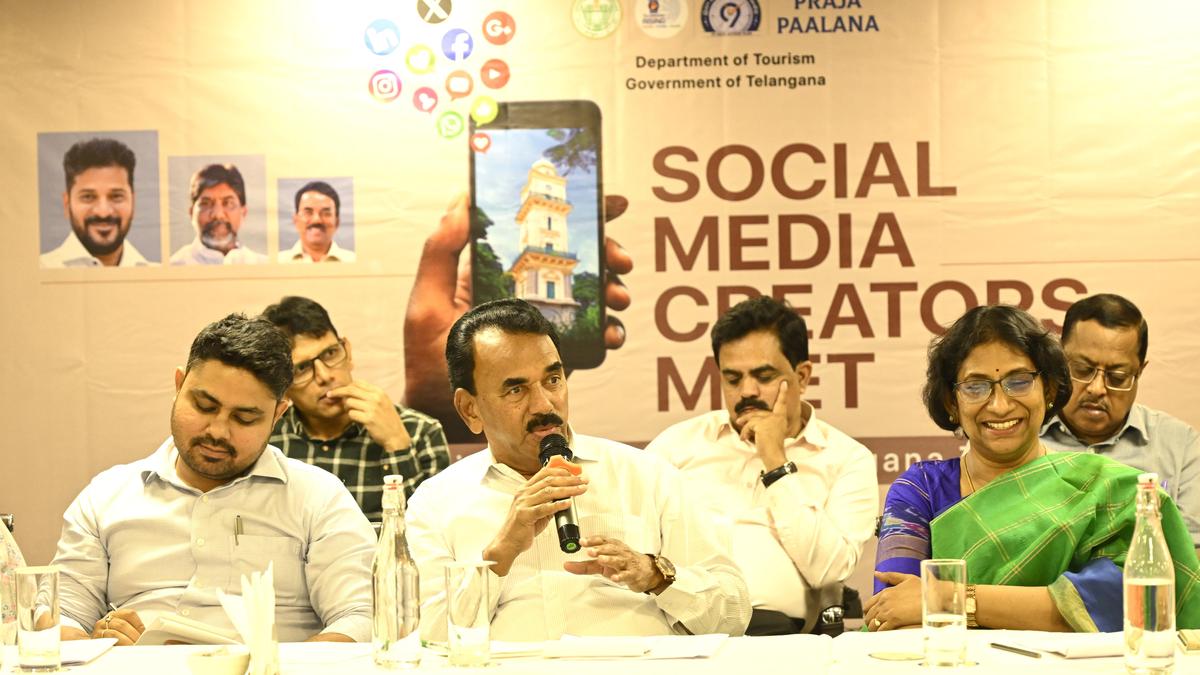
Jupally Krishna Rao, Minister for Tourism and Culture
Minister Rao linked tourism directly to the state’s broader welfare agenda. "Tourism promotion is ultimately for the betterment of the State," he stated. "It creates employment and self-employment opportunities while also increasing State revenue, which can support welfare schemes, education, healthcare, and infrastructure development." He urged creators to see themselves as ambassadors of the state’s progress.
P. Gouthami, Managing Director, TGTDC
MD Gouthami spoke on the shift from "monumental" tourism to "experiential" tourism. "Travel today is not just about visiting monuments. People are looking for experiences," she said. She pointed out that while tourists are visiting, the "depth" of the story is often missing. By engaging with folk artists and local weavers, creators can provide the "narrative depth" that traditional brochures cannot.
Ranjeet Nayak, Director of Tourism
Director Nayak addressed the technical synergy required between the government and creators. "At the government level, we have one approach, while creators understand how social media platforms and algorithms work," he noted. He described the partnership as a "promotion engine" designed to hack the visibility of the state’s hidden gems.
A. Vani Prasad, Special Chief Secretary for Tourism and Culture
Vani Prasad highlighted the "credibility gap" in modern marketing. She argued that influencers carry more emotional weight and authenticity than traditional advertisements. Her focus remained on the "emotional influence" that can convert a 30-second Reel into a booked holiday.
Implications: A New Era for the Deccan Heartland
The launch of this initiative carries several long-term implications for the state of Telangana and the broader Indian tourism industry.
1. Diversification of the Tourism Portfolio
By moving beyond the "Charminar-centric" view of Telangana, the state is opening up the "Hinterland." This includes the eco-tourism circuits of Adilabad, the Buddhist circuits of Nagarjuna Sagar, and the spiritual corridors of Jogulamba Gadwal. This geographical diversification prevents "over-tourism" in the capital while bringing wealth to neglected rural districts.
2. Digital Sovereignty and Branding
The launch of a new, dedicated Instagram account specifically for destination branding—separate from the TGTDC’s property-management account—marks a sophisticated understanding of digital marketing. It allows the state to curate a "vibe" or an "aesthetic" that appeals to Gen Z and Millennial travelers, focusing on the experience rather than just the transaction.
3. Preserving "Living Traditions"
When influencers document a Pochampally weaver or a folk dancer, they provide global visibility to dying art forms. This digital documentation acts as a secondary archive of Telangana’s intangible heritage. It creates a market for these artisans, ensuring that the next generation sees economic value in continuing their ancestral crafts.
4. Competitive Edge in South India
With neighboring states like Kerala and Karnataka having long-established tourism brands, Telangana is positioning itself as the "new frontier." The "under-discovered" tag is a clever marketing pivot that turns a lack of historical promotion into a selling point for the modern traveler seeking "authentic" and "untouched" locations.
5. Infrastructure and Policy Alignment
The "99 Days Action Plan" suggests a sense of urgency. This initiative will likely be followed by policy shifts to improve "last-mile connectivity" to the sites discovered by these creators. If a vlogger makes a remote waterfall in Asifabad viral, the government must be prepared to provide the roads and safety infrastructure to handle the ensuing influx.
Conclusion
The Telangana Tourism Creators Meet is more than a social media campaign; it is a strategic realignment of state resources to meet the demands of the 21st-century economy. By empowering content creators, the Telangana government is betting on the power of decentralized storytelling to drive centralized economic growth. As the "99 Days Action Plan" unfolds, the world will likely see a lot more of Telangana on their screens—and soon after, on their travel itineraries.
The message from Hyderabad is clear: Telangana is no longer waiting to be found; it is actively inviting the world to come and discover its untold stories.
