

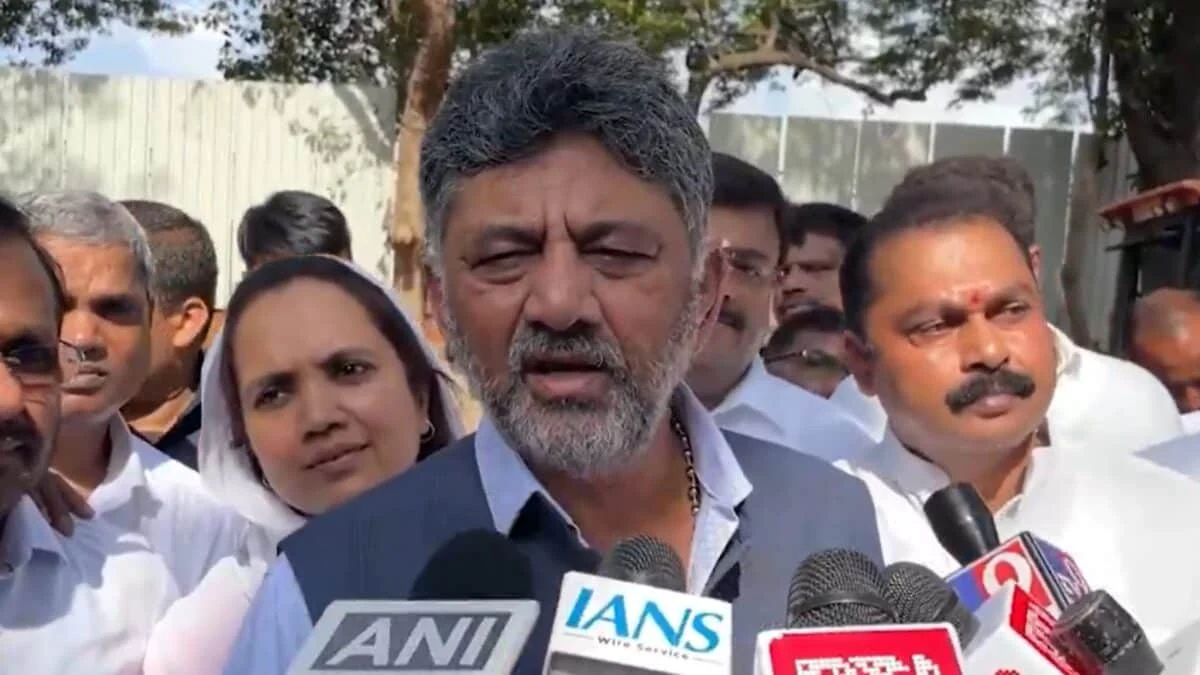
Bengaluru, Karnataka – May 31, 2026: Karnataka Congress Chief D.K. Shivakumar is poised to take the mantle of Chief Minister, with a meticulously planned, low-profile swearing-in ceremony scheduled for July 3 at Bengaluru’s Lok Bhavan. The decision to scale back the grandeur, according to Shivakumar, aims to preempt potential chaos and ensure smooth proceedings in the capital city. The event, while modest in its physical footprint, carries immense political weight, marking a significant transition for the Congress party in its crucial southern stronghold.
The ceremony is slated to be broadcast live at the Karnataka Pradesh Congress Committee (KPCC) headquarters, accommodating party leaders and cadres unable to attend the primary venue. Addressing reporters, Shivakumar remained tight-lipped regarding the inclusion of other ministers in the initial oath-taking, deferring to the party’s central leadership. "That I don’t know; whatever the party high command decides will be done," he stated, underscoring the central role of the All India Congress Committee (AICC) in the crucial cabinet formation process.
A Journey to the Apex: The Road to Chief Ministership
D.K. Shivakumar’s ascent to the Chief Minister’s chair culminates a period of intense political manoeuvring and deliberation within the Congress party. His path was formally cleared following the unanimous election by the Congress Legislature Party (CLP) as its leader. In a crucial show of party unity, outgoing Chief Minister Siddaramaiah, who tendered his resignation on May 28, himself proposed Shivakumar’s name as the next Chief Minister of Karnataka. This gesture, coming after weeks of reported internal negotiations, cemented Shivakumar’s position and presented a united front to the public.
The resolution of the leadership question was not without its challenges. The Congress party’s impressive victory in the 2023 Assembly elections, securing 135 seats in the 224-member assembly, was swiftly followed by an internal tussle over the Chief Minister’s post. Both D.K. Shivakumar and Siddaramaiah, formidable figures with strong individual support bases, were seen as prime contenders. Shivakumar, widely recognized as the party’s "troubleshooter" and a key architect of the electoral win, had long eyed the top executive position. Siddaramaiah, a seasoned administrator and former Chief Minister, also commanded significant backing, particularly from the AHINDA (minorities, backward classes, and Dalits) communities.
Chronology of Deliberation and Decision
The period following the 2023 election results was marked by a series of high-stakes meetings and intense speculation:
- May 13, 2023: Election results declared, Congress sweeps Karnataka with a clear majority, setting the stage for leadership contention.
- May 14-17, 2023: Both D.K. Shivakumar and Siddaramaiah travelled to Delhi for marathon talks with the Congress high command, including party President Mallikarjun Kharge, Rahul Gandhi, and General Secretary K.C. Venugopal. These discussions, held away from public scrutiny, aimed to resolve the leadership deadlock.
- May 18, 2023 (Speculated): Reports widely suggested a compromise formula, possibly involving a power-sharing agreement wherein the Chief Minister’s post would be split between the two leaders for 2.5 years each. While never officially confirmed, these reports highlighted the depth of the negotiations.
- May 28, 2026: Outgoing CM Siddaramaiah formally resigned, paving the way for the new government formation.
- May 28, 2026 (Evening): The Congress Legislature Party (CLP) convened, unanimously electing D.K. Shivakumar as its leader. Significantly, Siddaramaiah himself put forth Shivakumar’s name, signalling a collective decision and a visible commitment to party unity. This meeting also saw the unanimous passage of three key resolutions, further streamlining the formal election process.
- May 31, 2026: D.K. Shivakumar announced the July 3 swearing-in date and details, confirming his assumption of the Chief Minister’s office.
The weeks of intense deliberations in Delhi underscored the Congress party’s attempt to project a united front, particularly after facing criticism for internal factionalism in other states. The eventual resolution, culminating in Siddaramaiah’s proposal of Shivakumar’s name, was viewed as a strategic move to ensure stability and prevent any public display of dissent, which could have undermined the party’s hard-won victory.
Supporting Data: The Architects of Victory and Their Legacies
D.K. Shivakumar: The ‘Troubleshooter’ Ascends
Known for his organisational prowess, financial acumen, and ability to keep the flock together, D.K. Shivakumar has long been considered the Congress party’s crisis manager in Karnataka. His political journey has been marked by resilience, overcoming various legal and political challenges. He served as the KPCC President during the arduous election campaign, playing a pivotal role in mobilising resources, crafting strategy, and uniting various factions within the state unit. His image as a grassroots leader with a strong connection to the Vokkaliga community further solidified his claim to the top post.
Siddaramaiah: A Legacy of Governance and Compromise
Siddaramaiah, a seasoned politician with a strong socialist background, brought to the table his extensive experience as a former Chief Minister (2013-2018). His administration was known for its pro-poor and pro-backward class policies, particularly the "Anna Bhagya" scheme. His decision to step aside, despite his continued popularity and strong legislative backing, is seen by many as a statesman-like move, prioritising party unity and the long-term prospects of the Congress government over personal ambition. His role will undoubtedly remain influential, potentially as a mentor or a key advisor to the new administration.
The "high command’s" role in mediating between these two stalwarts highlights the centralised decision-making structure inherent in the Congress party, particularly when strong regional leaders are involved. The ability of the central leadership to broker a deal and secure a public show of unity is crucial for the stability of the new government.
Official Responses and Future Outlook
Shivakumar’s deference to the "high command" on cabinet formation is a standard practice in the Congress, indicating that portfolios and the final list of ministers will be meticulously vetted by the central leadership to ensure regional balance, caste representation, and reward for loyalty. This process often involves further rounds of discussions to accommodate various aspirations and prevent internal disgruntlement.
Beyond the immediate task of forming a cabinet, Shivakumar also unveiled ambitious plans for the party’s future in the state. He announced the party’s decision to establish 100 new offices across Karnataka. This initiative is designed to commemorate the centenary celebrations of Mahatma Gandhi presiding over the 1924 Belagavi session of the Indian National Congress – a historic event that marked Gandhi’s only presidential tenure at an AICC session.
"After the swearing-in ceremony, I am requesting Rahul ji and Mallikarjun Kharge ji to come here and lay the foundation if they agree. I am extending this invitation. We cannot inaugurate all 100 offices at the same time, so we are laying the foundation in phases. This is my request regarding the land and related arrangements," Shivakumar stated.
This strategic move serves multiple purposes:
- Historical Linkage: It connects the contemporary Congress with its illustrious past and the legacy of Mahatma Gandhi, resonating with nationalist sentiments.
- Grassroots Strengthening: Establishing 100 new offices will significantly expand the party’s physical presence and outreach at the grassroots level, particularly in rural and semi-urban areas.
- Party Building: It aims to revitalise the party machinery, provide dedicated spaces for cadre training, public engagement, and coordination.
- Central Leadership Endorsement: Inviting Rahul Gandhi and Mallikarjun Kharge to lay the foundation stones symbolically reinforces the central leadership’s backing for the state unit and its future endeavours.
Implications: A New Era for Karnataka and Congress
The ascension of D.K. Shivakumar as Chief Minister heralds a new political era for Karnataka. The state, known for its dynamic economy and pivotal role in South Indian politics, will now be governed by a leader known for his aggressive approach and strong administrative capabilities.
Implications for Karnataka:
- Governance and Promises: The immediate challenge for the new government will be to fulfil the extensive guarantees made during the election campaign, such as free bus travel for women, 200 units of free electricity, and unemployment allowances. Delivering on these promises will be crucial for maintaining public trust.
- Economic Stability: Navigating the state’s finances to implement these welfare schemes while ensuring fiscal prudence will require astute management.
- Administrative Efficiency: Shivakumar’s reputation as an efficient administrator will be tested as he takes charge of the state’s bureaucracy.
Implications for the Congress Party:
- Party Unity and Stability: The smooth transition of power, following intense negotiations, is a significant victory for the Congress high command in demonstrating its ability to manage internal differences. The challenge will be to maintain this unity between Shivakumar and Siddaramaiah’s factions moving forward.
- National Aspirations: Karnataka’s victory is a major morale booster for the Congress party nationally, especially after a series of electoral setbacks in other states. A successful government in Karnataka could serve as a template and inspiration for the party’s strategy in upcoming national elections.
- Leadership Test: Shivakumar’s tenure will be closely watched as a testament to the party’s ability to govern effectively and provide a credible alternative to the BJP.
The decision to hold a low-profile swearing-in ceremony, while pragmatic, also sends a subtle message of focusing on governance rather than ostentatious celebrations. As Karnataka looks to its new leadership, all eyes will be on D.K. Shivakumar to steer the state towards progress and stability, while simultaneously strengthening the Congress party’s foundational presence across its diverse regions. The political landscape of Karnataka, often a bellwether for national trends, is set for a dynamic period under its new helmsman.
