

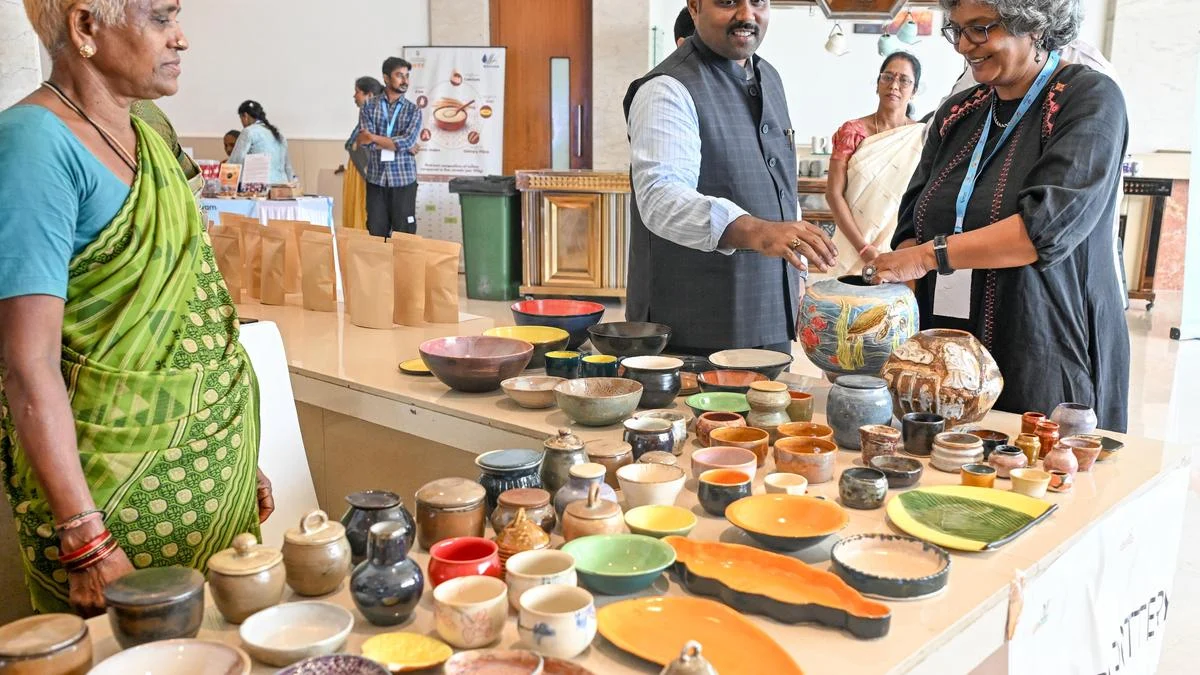
VISAKHAPATNAM – In a significant stride toward bridging the gap between grassroots production and global market access, the "Celebrating Women Entrepreneurs: Urban Ecosystem and Grassroots Leadership" conference concluded on Tuesday in the port city of Visakhapatnam. The event served as a high-level convergence of policy-makers, industry veterans, and self-made entrepreneurs, all focused on a singular mission: dismantling the systemic barriers that prevent women-led enterprises from scaling.
The conference, held on June 16, 2026, was a collaborative effort spearheaded by the Global Alliance for Mass Entrepreneurship (GAME) and Aspire For Her (AFH), in strategic partnership with the Women’s Wing of the Visakhapatnam Chamber of Commerce and Industry (VCCI).
Main Facts: A Strategic Alignment for Growth
The summit was designed not merely as a celebratory gathering but as a functional workshop to address the "missing middle" in women’s entrepreneurship. While India has seen a surge in women starting micro-businesses, the transition from subsistence-level operations to scalable, sustainable enterprises remains a challenge.
Key highlights of the event included:
- The Attendance of High-Level Dignitaries: Member of Parliament M. Sribharat and VMRDA (Visakhapatnam Metropolitan Region Development Authority) Commissioner N. Tej Bharath provided the administrative and legislative weight necessary to signal government commitment.
- A Focus on Three Pillars: The deliberations were centered around three critical bottlenecks: Finance (access to credit), Market Access (linking local products to global supply chains), and Digital Opportunities (leveraging e-commerce and AI).
- Diversity of Participation: The event successfully brought together a spectrum of entrepreneurs, ranging from high-end handcrafted ceramic artists to traditional fisherwomen cooperatives, highlighting the diversity of the "Mass Entrepreneurship" model.
Chronology of the Event: From Vision to Execution
The day began with a ceremonial walkthrough of the Exhibition Zone, a curated space where the vibrancy of Visakhapatnam’s entrepreneurial spirit was on full display. VMRDA Commissioner N. Tej Bharath spent significant time interacting with vendors, most notably at the Arra Pottery stall, where he discussed the nuances of handcrafted ceramic production and the logistical hurdles of transporting fragile, high-value goods.
Following the exhibition tour, the formal proceedings commenced with an Inaugural Plenary. MP M. Sribharat addressed the gathering, emphasizing that the economic future of Andhra Pradesh is inextricably linked to the labor force participation and leadership of women. He noted that the "urban ecosystem" must be redesigned to be more inclusive of women’s unique professional trajectories.
The afternoon was dominated by Panel Discussions and Spotlight Sessions. These sessions were structured to allow for raw, honest storytelling. Successful entrepreneurs shared their "business journeys"—not just the successes, but the failures in navigating bureaucratic red tape and the difficulty of securing collateral-free loans.
The day concluded with Buyer-Seller Interactions and Networking. This was perhaps the most practical segment of the conference, where representatives from larger retail chains and export houses met with local producers to discuss quality standards, packaging requirements, and potential procurement contracts.
Supporting Data: Profiling the Grassroots Leadership
To understand the impact of the conference, one must look at the data and the history of the participating entities. The event highlighted a fascinating contrast between modern "lifestyle" brands and legacy "cooperative" models.
The Legacy of the Fisherwomen’s Cooperative
A standout participant was the Visakhapatnam Town Fisherwomen Dry Fish Cooperative Society. This organization serves as a blueprint for what the Global Alliance for Mass Entrepreneurship (GAME) defines as a successful "Fishermen Farmer Producer Organisation" (FFPO).
- Established: 1987.
- Membership: 164 active women members.
- Core Function: Processing, quality control, and marketing of dry fish.
- Significance: For nearly four decades, this cooperative has provided a social and economic safety net for women in the coastal belt. However, the conference highlighted their need for "technological upgrades"—specifically in solar drying and vacuum packaging—to reach premium urban markets.
The "Hamsafal" Program and Scale
Divya Sampath of Aspire For Her brought forward staggering data regarding their reach. With a community of 1.2 million women, AFH is one of the largest networks of its kind in the country. A central theme of the day was the implementation of the Hamsafal programme, a joint initiative between GAME and AFH.

- Objective: To move women from "necessity-based" entrepreneurship to "opportunity-based" entrepreneurship.
- Mechanism: Providing a structured pathway that includes mentorship, digital literacy, and direct linkages to financial institutions.
Official Responses: Voices from the Ecosystem
The leadership present at the event underscored the necessity of a "collaborative" rather than a "siloed" approach to economic development.
Subhash Kiran, Programme Director at GAME, spoke to The Hindu regarding the structural goals of the alliance. "Entrepreneurship flourishes when local ecosystems work together. We are not just looking for the next ‘unicorn’ founded by a woman; we are looking for thousands of ‘soonicorns’ at the grassroots level. Our goal is to help these women move beyond subsistence livelihoods. Through collaborations with community organisations, industry, and market partners, we are building the infrastructure for scale."
Divya Sampath of Aspire For Her emphasized the power of the network. "In collaboration with GAME, we are implementing the Hamsafal programme to strengthen entrepreneurial journeys. It’s about creating a ‘sisterhood of success’ where the 1.2 million women in our network can act as each other’s customers, mentors, and investors."
VMRDA Commissioner N. Tej Bharath highlighted the role of urban planning in entrepreneurship. He suggested that as Visakhapatnam grows, the creation of "Entrepreneurial Hubs" or dedicated "Women’s Markets" could provide the physical infrastructure needed for these businesses to thrive without the burden of exorbitant commercial rents.
Implications: The Road Ahead for Visakhapatnam
The conference in Visakhapatnam is indicative of a broader shift in India’s economic policy, moving toward what experts call "Women-Led Development." The implications of this event and the ongoing work of GAME and AFH are three-fold:
1. Formalization of the Informal Sector
By bringing organizations like the Fisherwomen Dry Fish Cooperative into the same room as VCCI and MP Sribharat, the event facilitates the formalization of informal labor. Formalization allows these women to access government schemes, GST registration, and institutional credit—tools that were previously out of reach.
2. The Digital Leapfrog
The emphasis on "Digital Opportunities" suggests a push for these entrepreneurs to skip traditional brick-and-mortar limitations. With the "Hamsafal" program’s focus on digital literacy, a ceramic artist from Arra Pottery or a weaver from Sankalpa Art Village can theoretically sell to a global audience via Instagram or specialized e-commerce platforms, bypassing predatory middlemen.
3. Economic Resilience
Diversifying the entrepreneurial base makes the regional economy more resilient. When women-led grassroots enterprises are strengthened, the "wealth effect" is often more localized. Studies consistently show that women reinvest a higher percentage of their income back into their families and communities, particularly in health and education.
Conclusion
The "Celebrating Women Entrepreneurs" conference was more than a localized event; it was a microcosm of the challenges and opportunities facing India’s female workforce. As the delegates left the venue in Visakhapatnam, the consensus was clear: the talent exists at the grassroots, and the ambition exists in the urban centers. The bridge between the two is now being built through strategic alliances, digital integration, and a renewed commitment from the state’s leadership.
For the 164 members of the Fisherwomen’s Cooperative and the artisans of Arra Pottery, the event marked the beginning of a transition from being "local vendors" to becoming "regional stakeholders" in India’s ambitious economic journey toward 2030.
