

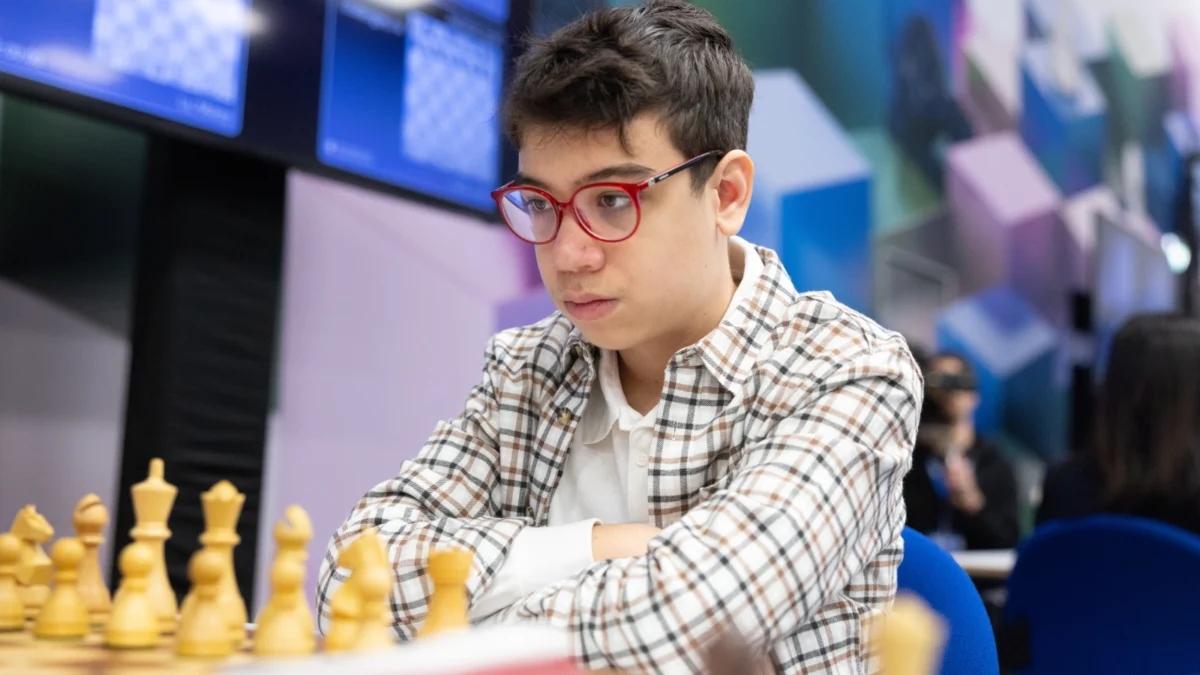
Sardinia, Italy – For much of his formative pre-teen years, the relentless ticking of the clock was Faustino Oro’s most formidable, unseen adversary. Every strategic move, every tactical gambit, every hard-fought victory, and indeed, every tantalizing half-chance missed, was a desperate race against time. The ultimate prize: to shatter the sport’s most coveted age record and ascend to the pinnacle of chess as its youngest-ever Grandmaster. While that specific, fleeting record remained agonisingly beyond his grasp, the prodigious Argentine has nonetheless carved out his own indelible slice of history. On Sunday, at the tender age of 12 years, 6 months, and 26 days, Faustino Oro officially became the second-youngest player ever to earn the prestigious Grandmaster (GM) title, marking a monumental achievement that has sent ripples of excitement through the global chess community.
The historic culmination of years of intense dedication and extraordinary talent unfolded at the Sardinia World Chess Festival in Italy. It was here, amidst the competitive fervor, that Oro meticulously clinched his third and final GM norm – the critical benchmark required by FIDE, the international chess federation, to bestow the Grandmaster title. With this decisive achievement, his name is now firmly etched into the annals of chess, positioned directly behind American prodigy Abhimanyu Mishra, who had claimed the highest title in chess at an astonishing 12 years, 4 months, and 25 days in July 2021.
Main Facts: The Ascent of a Chess Prodigy
A New Star in the Chess Firmament
Faustino Oro’s journey to Grandmaster status is a testament to an exceptional blend of innate talent, relentless work ethic, and a maturity that belies his tender age. Hailing from Buenos Aires, Argentina, Oro has been on the radar of chess enthusiasts for several years, his rapid ascent through the ranks signaling a generational talent. The Grandmaster title is not merely an accolade; it signifies a player who has reached the highest level of competitive chess, possessing profound strategic understanding, tactical acuity, and psychological resilience. For Oro to achieve this before his thirteenth birthday places him in an almost mythical category, comparable to the most celebrated child prodigies across various disciplines. His accomplishment is not just a personal triumph but a source of immense pride for Argentina, a nation with a rich chess heritage that now sees its future luminated by this young star.
The Near Miss: Chasing History’s Youngest Grandmaster Title
While achieving the second-youngest Grandmaster title is an extraordinary feat, the narrative surrounding Oro is also punctuated by his valiant, though ultimately unfulfilled, quest for the absolute youngest GM record. This pursuit, a race against time measured in days and months, added a dramatic tension to his career trajectory. The record, set by Abhimanyu Mishra, is a moving target, constantly challenged by a new wave of exceptionally talented young players who are starting their chess journeys earlier and benefiting from advanced training methodologies and online play. For Oro, the tantalizing proximity to this record fueled his ambition and captured the imagination of fans worldwide, making his eventual achievement, even if it wasn’t the absolute youngest, no less remarkable. The difference of just over two months between his age and Mishra’s highlights the razor-thin margins at the very top echelon of youth chess.
Chronology: A Race Against Time and Talent
Early Days and the Spark of Genius
Faustino Oro’s engagement with chess began at an unusually early age, a common thread among child prodigies. While the exact moment of his "discovery" might be anecdotal, it quickly became evident that he possessed an extraordinary aptitude for the game. Unlike many children who dabble in various activities, Oro demonstrated a singular focus and an intuitive grasp of chess principles that far outstripped his peers. His initial forays into competitive play were marked by a rapid progression through local and national tournaments, consistently outperforming older, more experienced players. This early success wasn’t merely a reflection of natural talent; it was underpinned by countless hours of study, practice, and a deep immersion in the intricacies of chess theory. His parents and coaches recognized this rare gift early on, providing the structured support necessary to nurture his burgeoning talent, while also striving to maintain a balanced childhood.
Breaking Records: From International Master to Global Contender
Before securing his Grandmaster title, Oro had already made waves by establishing himself as an International Master (IM), another significant milestone in a chess player’s career. In June 2024, he broke the record for the world’s youngest International Master, achieving his final norm at the age of 10 years, 8 months, and 16 days. This accomplishment itself was a strong indicator of his trajectory toward Grandmastership. The IM title serves as a critical stepping stone, requiring a high level of consistent performance against strong opposition. However, the relentless pace of youth chess development meant even this record was fleeting. His IM record has since been surpassed by 10-year-old Roman Shogdzhiev from Russia, who achieved the feat at just 10 years, 3 months, and 21 days – a full five months younger. This continuous breaking and re-breaking of age records underscores the intensely competitive and rapidly evolving landscape of youth chess, where prodigies are emerging at ever-younger ages, constantly pushing the boundaries of what is considered possible.
The Aeroflot Agony: A Moment of Heartbreak
The path to Grandmaster status is rarely linear, often punctuated by moments of intense pressure and heartbreaking setbacks. For Faustino Oro, such a moment arrived in March earlier this year at the prestigious 2026 Aeroflot Open in Moscow. Heading into the final round, Oro was within a single victory of making chess history. A win over Russian teenager Aleksey Grebnev would have secured his third and final GM norm, making him a Grandmaster at 12 years, 4 months, and 19 days – just six days younger than the record holder, Abhimanyu Mishra. The stakes could not have been higher.
The atmosphere must have been electric, the pressure immense. Yet, in a cruel twist of fate, Grebnev played the role of the spoiler, denying Oro his fairytale ending. The loss was not just a defeat in a game; it was the shattering of a dream that was mere moves away from becoming reality. For an ordinary 12-year-old, such a setback could be profoundly demoralizing, potentially impacting their motivation and confidence. But Oro, nicknamed the ‘Messi of Chess’ for his exceptional talent and calm demeanor under pressure, proved he was no ordinary child. Far more mature than his age suggested, he absorbed the heartbreaking loss with remarkable composure.
"I didn’t play badly overall, but today I didn’t play a good game. In fact, I played quite a bad game," he had candidly admitted after the defeat that delayed his record-breaking dream. His self-assessment, devoid of excuses, showcased a rare level of introspection and self-awareness. "The good thing is that I will probably get the norm soon. Without the record, but I will become a Grandmaster soon," Oro had declared to the Spanish international news agency EFE, his voice still bubbling with an infectious energy and unwavering enthusiasm. This statement revealed not just resilience but a profound understanding of the long game – that the ultimate title was more important than the specific age record, and that his talent would inevitably lead him there.
Redemption in Sardinia: The Final Norm
True to his word, Oro’s setback at Aeroflot proved to be a temporary detour, not a dead end. His focus and determination remained undimmed. The Sardinia World Chess Festival provided the next stage for his pursuit of the coveted GM title. This time, there was perhaps less external pressure regarding the absolute age record, allowing Oro to concentrate purely on his game and the requirements for the norm. The final GM norm is notoriously difficult to achieve, demanding consistent high-level performance against a field of strong Grandmasters and International Masters, often requiring a specific performance rating over a set number of games.
In Sardinia, Oro navigated the complexities of the tournament with precision and tactical brilliance, demonstrating the full breadth of his chess prowess. Each game played, each point earned, brought him closer to the threshold. When the final result was confirmed, the relief and elation must have been immense. It was a moment of profound validation, not just for Oro, but for his coaches, family, and the entire Argentine chess community who had watched his journey unfold with bated breath. The GM title, secured at an age that still places him among the youngest in history, represents the culmination of years of tireless effort and a testament to his extraordinary talent and unwavering spirit.
Supporting Data: Dissecting Oro’s Phenomenon
An Elite Pantheon: Joining the Ranks of Child Grandmasters
Faustino Oro’s achievement places him in an incredibly exclusive club. He is just the seventh player in history to accomplish the Grandmaster feat before turning 13. This elite list is a who’s who of modern chess prodigies and includes luminaries like Abhimanyu Mishra (USA), Sergey Karjakin (Ukraine/Russia), D Gukesh (India), Yagiz Kaan Erdogmus (Turkey), Javokhir Sindarov (Uzbekistan), and R Praggnanandhaa (India). Each of these players has gone on to achieve significant success in the chess world, with some, like Karjakin and Gukesh, even challenging for the World Championship title. This context elevates Oro’s accomplishment beyond a mere statistic; it positions him as a potential future contender at the very highest levels of the game. The increasing frequency of young GMs also speaks to evolving chess pedagogy, greater access to online resources, and the intense competitive environment fostering rapid development.
The "Messi of Chess": A Style Forged in Precision and Panache
The nickname "Messi of Chess" is not merely a clever marketing tag; it hints at a deeper comparison to the football legend’s genius on the field. Like Lionel Messi, who combines incredible technical skill with a unique strategic vision and an ability to execute under immense pressure, Faustino Oro possesses a distinctive playing style that sets him apart.
"I’m a positional player, but with tactics," Oro had told The Indian Express, offering a concise yet insightful description of his approach. "I like tactics, and I believe I am a tactical player too. But I believe I’m not dynamic. I don’t try to checkmate my opponent in 20 moves. I try to play good chess and focus on winning the game."
This self-assessment reveals a sophisticated understanding of his own strengths. A "positional player" emphasizes long-term strategic advantages, control of key squares, and the slow accumulation of small advantages. Such a style often requires patience, deep calculation, and a profound understanding of chess theory. To combine this with "tactics" means he can identify and exploit short-term opportunities, execute complex combinations, and seize the initiative when it presents itself. This blend is particularly potent: he doesn’t rush into aggressive, flashy attacks (the "not dynamic" part), but he’s ready to unleash tactical fireworks when the position demands it. This methodical yet incisive approach is a hallmark of truly strong players and is especially rare in such young talents, who often gravitate towards more aggressive, tactical play. It suggests a mature and balanced understanding of the game, prioritizing solid play and victory over dramatic flourishes.
Mental Fortitude: Beyond the Boardroom Battles
Oro’s ability to bounce back from the Aeroflot disappointment is a profound indicator of his mental strength. In chess, psychological resilience is as crucial as technical skill. Players face immense pressure, particularly in critical games where norms or titles are at stake. The ability to manage nerves, maintain focus over long hours, and recover from setbacks defines champions. Oro’s calm demeanor, his honest self-assessment after a loss, and his unwavering belief in his eventual success demonstrate a mental fortitude far beyond his years. This characteristic is often what separates good players from truly great ones, enabling them to learn from mistakes, adapt to adversity, and consistently perform at their peak. It also suggests a healthy relationship with the game, where the joy of playing and the pursuit of improvement outweigh the immediate sting of defeat.
The Argentine Chess Legacy and Future
Argentina has a rich and storied history in chess. It hosted the Chess Olympiad in 1939 and produced legendary players like Miguel Najdorf and Oscar Panno. In recent decades, while producing strong GMs, the country hasn’t had a consistent stream of top-tier talent challenging for the highest global honors. Faustino Oro’s emergence has reignited hope and enthusiasm within the Argentine chess community. He is not just a prodigy; he is a symbol of a potential resurgence, inspiring a new generation of young players to take up the game. His success will likely translate into increased funding, greater media attention, and enhanced development programs for chess in Argentina, potentially fostering a golden age for the sport in the nation.
Expert and Official Responses: Voices from the Chess World
Magnus Carlsen’s Endorsement: A Seal of Approval
When the greatest player of his generation, five-time World Champion Magnus Carlsen, offers his stamp of approval, it carries immense weight in the chess world. Carlsen’s insights into talent are unparalleled, and his words regarding Faustino Oro serve as a powerful endorsement of the young Argentine’s potential.
"He’s a great player. He has a wonderful positional feeling for chess, which is quite rare among such young players," Carlsen said in an interview with Take Take Take. This specific observation from Carlsen underscores Oro’s unique style – the blend of positional understanding with tactical prowess, which Carlsen identifies as a rare and valuable trait in someone so young. It suggests a depth of understanding that usually comes with far more experience.
Carlsen further elaborated on Oro’s dedication: "He seems to really love chess, seeing as he plays a ton online and plays every tournament that he can." This highlights another crucial aspect of prodigy development: passion. Talent alone is often insufficient; it must be coupled with an insatiable desire to play, learn, and improve. Oro’s prolific online activity and tournament participation are clear indicators of this deep love for the game.
His final advice to Oro resonated with wisdom and perspective: "He’s on an incredible path. Believe me, it’s fun to be that much into something and be that good at it at such an early age. So just enjoy it, and the pieces will fall where they may." This counsel encourages Oro to savor the journey, to enjoy the process of mastering the game, rather than being solely fixated on records or external pressures. It’s a reminder that intrinsic motivation and joy in the craft are paramount for sustained success and well-being.
Oro’s Own Perspective: Maturity Beyond His Years
Oro’s public statements, particularly after the Aeroflot setback, reveal a level of emotional intelligence and maturity remarkable for a 12-year-old. His candid self-criticism, followed by an optimistic outlook and unwavering commitment to his goal, speaks volumes about his character. He doesn’t shy away from acknowledging his mistakes, but he also doesn’t dwell on them. This balanced perspective is crucial for elite athletes, allowing them to learn and move forward without being paralyzed by past failures. His focus on becoming a Grandmaster, even "without the record," shows a profound understanding of what truly matters in the long run.
Community Reactions: Admiration and Anticipation
The chess community’s reaction to Oro’s achievement has been overwhelmingly positive, marked by admiration for his talent and anticipation for his future. Social media platforms, chess news outlets, and forums buzzed with discussions about his potential. Many seasoned players and coaches expressed awe at the speed of his development and the sophistication of his play. There’s a collective sense of excitement about what this new generation of super-prodigies, led by players like Oro, will bring to the game. His story serves as an inspiration, not just to young aspiring chess players, but to anyone pursuing excellence in a demanding field.
Implications: What Lies Ahead for Faustino Oro and Chess
The Road Ahead: Grandmastery as a New Beginning
Achieving the Grandmaster title at such a young age is not the end of a journey, but rather a significant new beginning for Faustino Oro. The chess world now watches with keen interest to see how he transitions from a prodigious talent to a consistent force on the international circuit. The challenges ahead are immense: maintaining his form, continuing to improve against ever-stronger opposition, and navigating the pressures of professional chess life. His next logical steps will involve competing in more elite tournaments, working towards a higher FIDE rating, and potentially vying for national and continental championships. The ultimate goal for many young GMs is to challenge for the World Championship, a path that requires years of relentless dedication, strategic planning, and continuous evolution of one’s game.
Impact on Argentine Chess: Inspiring a Nation
Faustino Oro’s success has an immediate and profound impact on chess in Argentina. He instantly becomes the most prominent figure in Argentine chess, a national hero who can inspire a new generation. His achievement is likely to boost participation in chess clubs and schools, encourage investment in youth development programs, and elevate the profile of the sport across the country. Governments and sports organizations often look for such inspiring figures to promote activities, and Oro provides the perfect face for a revitalized Argentine chess scene. His global visibility also places Argentine chess firmly back on the international map.
The Evolving Landscape of Prodigies in Chess
Oro’s story, alongside those of Mishra, Gukesh, and others, highlights a fascinating trend in modern chess: the accelerating emergence of prodigies. Several factors contribute to this phenomenon:
- Early Exposure: Children are being introduced to chess at increasingly younger ages.
- Online Resources: Abundant online platforms offer instant access to strong opponents, vast databases of games, and sophisticated training tools.
- Improved Coaching: Access to high-quality coaching, often remotely, has become more widespread.
- Competitive Environment: The sheer number of talented young players creates an intensely competitive environment that pushes everyone to improve faster.
This trend poses questions about the limits of human potential in chess and how the game itself might evolve with players reaching peak performance at younger ages. It also raises discussions about the balance between intensive training and a normal childhood for these young talents.
Beyond Records: The Pursuit of Excellence
While the pursuit of age records is captivating, the enduring legacy of players like Faustino Oro will ultimately be measured by their sustained excellence and contributions to the game. The Grandmaster title is a gateway to a professional career, but true greatness requires more than just an early start. It demands consistent innovation, resilience through inevitable plateaus and setbacks, and a lifelong passion for the game. As Magnus Carlsen wisely noted, "the pieces will fall where they may." For now, Faustino Oro, the "Messi of Chess," can stand tall among the giants of the game, not just for the records he chased or broke, but for the remarkable talent, character, and promise he embodies. His journey has just begun, and the chess world eagerly awaits the next brilliant chapter from this extraordinary young mind.
