

TORONTO, Canada – July [Insert Day], 2026 – The FIFA World Cup 2026 Round of 32 clash between European giants Portugal and Croatia has ignited with a pivotal moment, as Ivan Perisic’s 53rd-minute strike has given Croatia a crucial 1-0 lead. The match, hosted in Toronto, promised a spectacle of tactical prowess and individual brilliance, but has quickly evolved into a dramatic narrative centered on the looming farewell for one of football’s most iconic figures, Cristiano Ronaldo.
After a goalless yet enthralling first half where Portugal, spearheaded by Ronaldo, created the majority of the scoring opportunities against Luka Modric’s resilient Croatian side, the deadlock was finally broken. The goal has intensified the stakes dramatically, casting a long shadow over the future of 41-year-old Ronaldo’s World Cup career, as Portugal now faces the daunting prospect of elimination. For both sets of fans, and indeed the global football community, this fixture is more than just a passage to the quarter-finals; it is a potential changing of the guard, a final chapter for legends, and a testament to the enduring power of the beautiful game.
Main Facts: A Battle of Titans and Fading Glories
The highly anticipated Round of 32 encounter at the FIFA World Cup 2026 in Toronto is currently witnessing Croatia holding a narrow 1-0 advantage over Portugal, courtesy of veteran forward Ivan Perisic’s goal in the 53rd minute. This critical strike has shifted the momentum of a game that had seen Portugal largely dominate possession and chances in a vibrant, goalless first half. The match pits two of the sport’s most enduring and decorated players, Cristiano Ronaldo of Portugal and Luka Modric of Croatia, against each other – former Real Madrid teammates now vying for national glory in what is likely their swansong on the grandest stage.
For Portugal, the pressure is immense. Their long-time talisman, Cristiano Ronaldo, at 41 years old, is still seeking his first goal in the knockout rounds of a World Cup. Despite an unparalleled achievement of scoring in six different World Cups, his struggle to find the net in crucial knockout fixtures has become a persistent talking point. Earlier in the tournament, Ronaldo notably failed to score against Congo and Colombia, fueling debates about his diminishing impact and optimal role within the Portuguese squad. Against Croatia, Portugal desperately needs their megastar to ignite if they are to avoid an early exit from the tournament and keep his World Cup dream alive.
Across the pitch, 40-year-old Luka Modric remains the beating heart of the Croatian midfield. Fresh off earning his 200th international cap just over a week ago in Toronto during a vital win against Panama, Modric continues to defy age with his sublime control, vision, and leadership. Having steered Croatia to second and third-place finishes in the last two World Cups, his influence is unquestionable. Croatian coach Zlatko Dalic openly acknowledged that the outcome of this pivotal match would largely be decided in the midfield, a domain where Modric reigns supreme. The personal duel between these two former Real Madrid giants, who shared six seasons together at the Santiago Bernabéu, transcends the match itself, embodying a potential final farewell to the World Cup for one of them. The world watches, captivated by the unfolding drama and the poignant spectacle of legends battling against time and each other.
Chronology: A Game of Two Halves and a Decisive Strike
Pre-Match Build-up: Toronto’s Electric Atmosphere
The anticipation in Toronto was palpable hours before kickoff. BMO Field, transformed into a cauldron of national pride, was awash with the vibrant reds and greens of Portugal and the iconic checkerboards of Croatia. Fans from both nations, alongside a diverse Canadian audience, had converged, eager to witness what many dubbed the "Clash of the Titans." The narrative was clear: two footballing nations with rich recent histories, two legendary captains on the cusp of retirement, and a single spot in the quarter-finals. Social media buzzed with predictions, statistical breakdowns of Ronaldo and Modric’s careers, and nostalgic tributes to their Real Madrid era. The weight of expectation, particularly on Ronaldo to deliver that elusive knockout goal, was immense. Croatian supporters, meanwhile, exuded a quiet confidence, buoyed by their team’s consistent overperformance and Modric’s seemingly ageless brilliance.
First Half: Portugal’s Dominance, Croatia’s Resilience
From the opening whistle, the match unfolded with an intensity befitting a World Cup knockout stage. Portugal, under the guidance of their astute coach, immediately sought to assert their attacking philosophy. Their midfield, orchestrating quick transitions, fed a lively forward line that probed the Croatian defense repeatedly. Bruno Fernandes and Bernardo Silva were particularly influential, linking up well and creating space on the flanks.
Cristiano Ronaldo, starting as the central striker, was visibly eager. He dropped deep at times to participate in link-up play, but his primary focus was clearly on finding shooting opportunities. Early in the half, he tested the Croatian goalkeeper with a powerful long-range effort that sailed just wide. Later, a deft header from a Joao Cancelo cross forced a smart save. Despite Portugal accumulating several promising chances – shots narrowly missing the target, crosses begging to be tapped in, and set-piece opportunities – the Croatian defense, marshaled expertly by veterans like Domagoj Vida and Dejan Lovren, held firm. Goalkeeper Dominik Livaković demonstrated his renowned shot-stopping abilities, making crucial saves and commanding his box with authority.
Luka Modric, as expected, was the fulcrum of Croatia’s play. While Portugal pressed high, Modric’s uncanny ability to retain possession under pressure and distribute the ball with precision allowed Croatia to weather the storm and occasionally launch counter-attacks. He dictated the tempo, calming his team when necessary and injecting urgency when an opening arose. Despite the entertaining nature of the half, characterized by end-to-end action and tactical battles, both teams went into the break goalless, leaving the outcome hanging tantalizingly in the balance.
Second Half: The Breakthrough and Mounting Pressure
The second half began with renewed vigor from both sides. Portugal, perhaps frustrated by their inability to convert first-half chances, came out with an even greater attacking impetus. However, it was Croatia who found the decisive breakthrough just eight minutes after the restart.
The goal, scored in the 53rd minute by Ivan Perisic, was a testament to Croatia’s clinical edge. A well-worked move down the left flank saw Mateo Kovacic release Borna Sosa, who delivered a perfectly weighted low cross into the box. Perisic, showing his predatory instincts, ghosted past his marker with a clever run and met the ball with a powerful, first-time finish that left the Portuguese goalkeeper with no chance. The roar from the Croatian contingent was deafening, a mixture of relief and euphoria, as their team took a vital 1-0 lead.
The goal dramatically altered the complexion of the match. Portugal, now trailing, intensified their attacks, pushing more players forward and taking greater risks. Substitutions were made, bringing on fresh legs and more offensive-minded players in an attempt to break down Croatia’s now even more resolute defense. Ronaldo, spurred by the urgency, seemed to find an extra gear, making more incisive runs and demanding the ball. However, the Croatian backline, inspired by Modric’s tireless work rate in midfield, formed an almost impenetrable barrier. Every Portuguese attack was met with fierce resistance, every pass intercepted, every shot blocked. The clock continued to tick, each passing minute amplifying the pressure on Portugal and bringing Croatia closer to a famous victory and a place in the quarter-finals.
Supporting Data: Legacies Forged, Records Challenged
Cristiano Ronaldo: The Pursuit of Knockout Glory
Cristiano Ronaldo’s career is a tapestry woven with records and unparalleled achievements. His status as the first player to score in six different FIFA World Cups is a testament to his longevity, dedication, and consistent goal-scoring prowess across nearly two decades at the elite level. From his early days as a dazzling winger to his evolution into a prolific central striker, Ronaldo has redefined what is possible in modern football. This World Cup, however, has highlighted a glaring void in his otherwise impeccable resume: the absence of a goal in the knockout stages of the tournament.
Despite his numerous goals in group stages, his inability to find the back of the net when the stakes are highest in the latter rounds has become a persistent narrative. In previous World Cups, Portugal has often relied on other players to score in crucial knockout ties, or Ronaldo’s efforts have been thwarted by stout defenses. This tournament has seen a continuation of this trend, with Ronaldo failing to register a goal in the group stage matches against Congo and Colombia. This dry spell has invited intense scrutiny, especially given his age and the collective expectation of a "golden generation" of Portuguese talent.
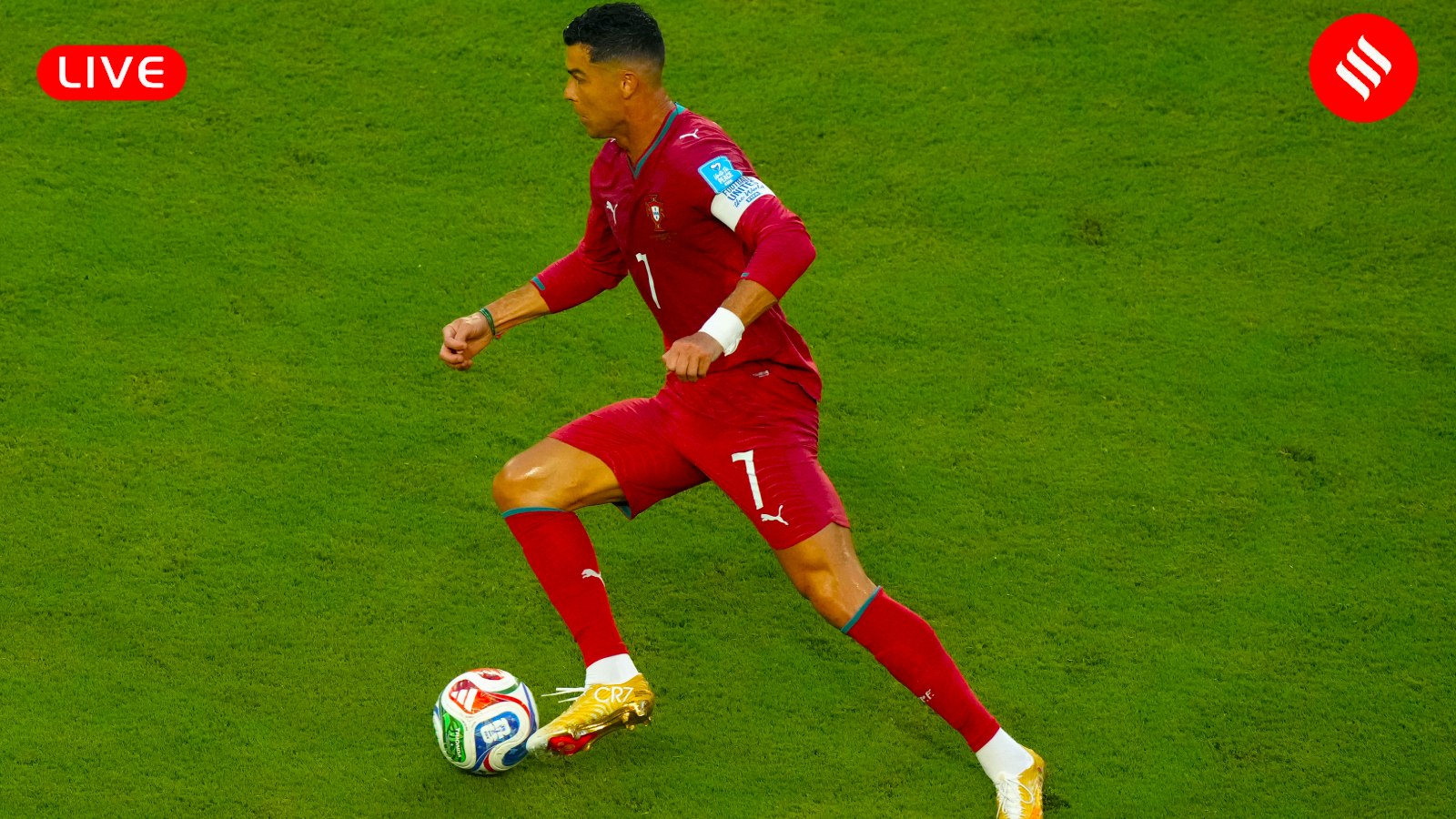
The Indian Express article accurately captured the sentiment surrounding his "fading powers." The incident described, where Pedro Neto’s brilliant run down the right flank found "no one" from Ronaldo, who was "midway from the centre circle," encapsulates the tactical and physical challenges he now faces. While his experience and intelligent movement are still valuable, the blistering pace and relentless pressing that once defined his game have naturally diminished. Portugal’s manager has previously emphasized that Ronaldo’s game is now "built around experience, discipline and intelligent movement rather than physical output alone." This approach requires other players to compensate for his reduced mobility, and when those connections fail, as in the Neto incident, it highlights the inherent risks of relying on a player whose physical peak is behind him. The question for Portugal is no longer if Ronaldo can score, but if he can consistently be in the right place at the right time, and if the team’s tactical framework can effectively integrate his evolving role.
Luka Modric: The Ageless Maestro
Luka Modric stands as a symbol of Croatian football’s remarkable rise in the last decade. His recent 200th international cap, achieved just a week prior to this clash in Toronto, solidifies his legendary status not just for Croatia but in global football. This milestone underscores his incredible endurance and unwavering commitment to his national team. At 40 years old, Modric continues to operate at the pinnacle of the sport, dictating play from the heart of midfield with an elegance and efficiency that belies his age.
His role as a "pillar" for Croatia cannot be overstated. He is the engine that drives their counter-attacks, the shield that protects their defense, and the visionary who unlocks opposition defenses with his exquisite passing range. His ability to control the tempo of a game, retain possession under intense pressure, and deliver crucial passes makes him indispensable. His leadership, both vocal and through example, has been instrumental in guiding Croatia to unprecedented success on the world stage – a second-place finish in 2018 and a third-place finish in 2022. These achievements, against nations with far larger footballing infrastructures, highlight the collective spirit and Modric’s singular genius.
Croatian coach Zlatko Dalic’s pre-match assertion that the match would be "decided at his position" was a clear acknowledgment of Modric’s critical influence. His duel with Portugal’s midfield, and his ability to disrupt their rhythm while creating for his own side, was always going to be central to Croatia’s chances. His performance against Panama, where he earned his 200th cap, showcased his continued ability to dominate games, even in his fifth decade. Modric’s sustained excellence challenges conventional notions of player longevity, proving that footballing intelligence and supreme technique can triumph over the raw physicality of youth.
Team Dynamics and Historical Context
Portugal arrived at the World Cup 2026 with a squad often described as a "golden generation," boasting an array of talent across all positions. Players like Bruno Fernandes, Bernardo Silva, Rafael Leão, and Ruben Dias represent a formidable collective, capable of challenging any team in the world. However, the shadow of Cristiano Ronaldo, and the tactical dilemma he presents, has often been a point of contention. The expectation is that this generation, with or without Ronaldo at his peak, should be delivering major silverware.
Croatia, conversely, continues to punch above its weight. Despite being a relatively small nation, their consistent performances in recent World Cups demonstrate a profound team spirit, tactical discipline, and a core of world-class players. Their resilience and ability to perform under pressure have become their hallmarks. Historically, matches between Portugal and Croatia have often been tight, cagey affairs, reflecting the tactical acumen of both nations. While not a rivalry steeped in decades of animosity, the stakes of a World Cup knockout game between two European heavyweights naturally elevates the intensity and importance of every encounter.
Official Responses: Managerial Insights and Tactical Philosophies
Portugal’s Strategic Dilemma
Prior to the tournament, and even heading into this crucial Round of 32 fixture, the Portuguese coaching staff has consistently addressed the role of Cristiano Ronaldo. Portugal’s manager, whose identity is not explicitly stated in the provided text but implied as a key figure in managing Ronaldo, has maintained a public stance that emphasizes Ronaldo’s enduring value beyond mere physical output. "Ronaldo’s game is built around experience, discipline and intelligent movement rather than physical output alone," a representative from the Portuguese camp might have reiterated. This viewpoint suggests a deliberate tactical decision to leverage his unparalleled game intelligence, his ability to draw defenders, and his psychological impact on opponents and teammates alike.
However, the events on the pitch, particularly his struggles to score in key moments and the incident involving Pedro Neto, have inevitably put pressure on this narrative. During the half-time interval, after a goalless first 45 minutes where Portugal had the chances but lacked the finishing touch, one can imagine the manager’s directives would have focused on clinicality in front of goal and perhaps a more aggressive press to win the ball higher up the pitch. Following Perisic’s goal, the shift would undoubtedly have been towards an all-out attack, with instructions to exploit any defensive lapses from Croatia and to get Ronaldo into more direct goal-scoring positions, perhaps by providing him with more direct service. The weight of potential elimination would have been palpable in the dressing room, urging the players to find an equalizer.
Croatia’s Unwavering Confidence
Croatian coach Zlatko Dalic has consistently articulated a clear vision for his team, one built around defensive solidity, midfield control, and opportunistic attacking. His faith in Luka Modric is absolute, as evidenced by his pre-match comment: "The match will be decided at his position." This statement underscores Dalic’s tactical philosophy, which places immense importance on winning the midfield battle and leveraging Modric’s ability to dictate play and break lines. Dalic would have certainly emphasized the need to neutralize Portugal’s creative midfielders like Bruno Fernandes and Bernardo Silva, while also keeping a watchful eye on Ronaldo’s movements.
At half-time, after successfully fending off Portugal’s first-half onslaught, Dalic’s message would likely have been one of continued discipline, patience, and the importance of seizing any attacking chances. The instruction to exploit the flanks, which ultimately led to Perisic’s goal, would have been a key tactical adjustment. Following the goal, Dalic’s priority would undoubtedly have shifted to maintaining defensive shape, managing the game tempo, and potentially introducing fresh defensive or holding midfield players to absorb Portugal’s inevitable onslaught. His team’s ability to hold onto leads, a characteristic seen in previous tournaments, would have instilled confidence that they could weather the storm. The awareness amongst both sets of players that this game was not just about advancing, but also about the potential "reunion" and farewell for two legends, would have added an extra layer of emotional intensity that coaches would need to manage.
Implications: A Crossroads for Legends and Nations
The outcome of this Round of 32 clash carries monumental implications, not just for the immediate progression in the FIFA World Cup 2026, but for the legacies of two of football’s most celebrated figures and the trajectories of their respective national teams.
Ronaldo’s Final Bow?
Should Portugal fail to overcome Croatia and be eliminated, it would almost certainly mark a "permanent farewell to the FIFA World Cup stage" for Cristiano Ronaldo. At 41, the physical demands of international football’s premier tournament are immense, and it is highly improbable he would feature in another World Cup in four years’ time. An elimination would undoubtedly spark a profound debate about his World Cup legacy. Despite his unprecedented scoring record across six tournaments, the absence of a knockout stage goal and the narrative of his "fading powers" would inevitably cast a bittersweet shadow over his final appearance. It would prompt a crucial conversation for Portugal about transitioning into a post-Ronaldo era. The "golden generation" of Portuguese talent, which has often been overshadowed by Ronaldo’s individual brilliance, would then be forced to step out of his colossal shadow and collectively shoulder the burden of national expectation. Failure to advance, despite the wealth of talent in the squad, would represent a significant underachievement and force a re-evaluation of their tactical approach and leadership structure moving forward.
Modric and Croatia’s Continued Ascent
For Luka Modric and Croatia, advancing to the quarter-finals would represent another remarkable chapter in their inspiring World Cup journey. For Modric, it would further cement his status as one of the greatest midfielders of all time, a testament to his incredible longevity, leadership, and unwavering influence on the pitch. Another deep run in the tournament would enhance his already legendary status and underscore Croatia’s consistent ability to defy expectations and compete with the sport’s traditional powerhouses. Croatia’s continued success, built on a strong core of experienced players and a clear tactical identity, would send a strong message to the footballing world: their previous World Cup heroics were no fluke, but rather a reflection of a deeply ingrained winning mentality and exceptional talent. Advancing would fuel their ambitions for a potentially even more historic finish, perhaps even surpassing their previous achievements.
A Tournament Reshaped
Beyond the individual narratives, the result of this match will significantly impact the wider tournament bracket. If Croatia progresses, they will be seen as a formidable force, capable of challenging any opponent in the subsequent rounds. Their resilience, defensive discipline, and the enduring brilliance of Modric make them a dangerous prospect. Conversely, Portugal’s elimination would remove one of the pre-tournament favorites and a team boasting immense individual talent. This would open up their side of the draw, potentially creating new pathways for other contenders. The emotional weight of seeing a legend like Ronaldo exit the stage would also undoubtedly be a significant talking point throughout the remainder of the World Cup, shaping the narrative of a tournament that continues to deliver drama, heartbreak, and the forging of new legends. The football world watches with bated breath as the final minutes of this monumental encounter unfold, ready to witness history being made, and perhaps, a legend’s final farewell.
