

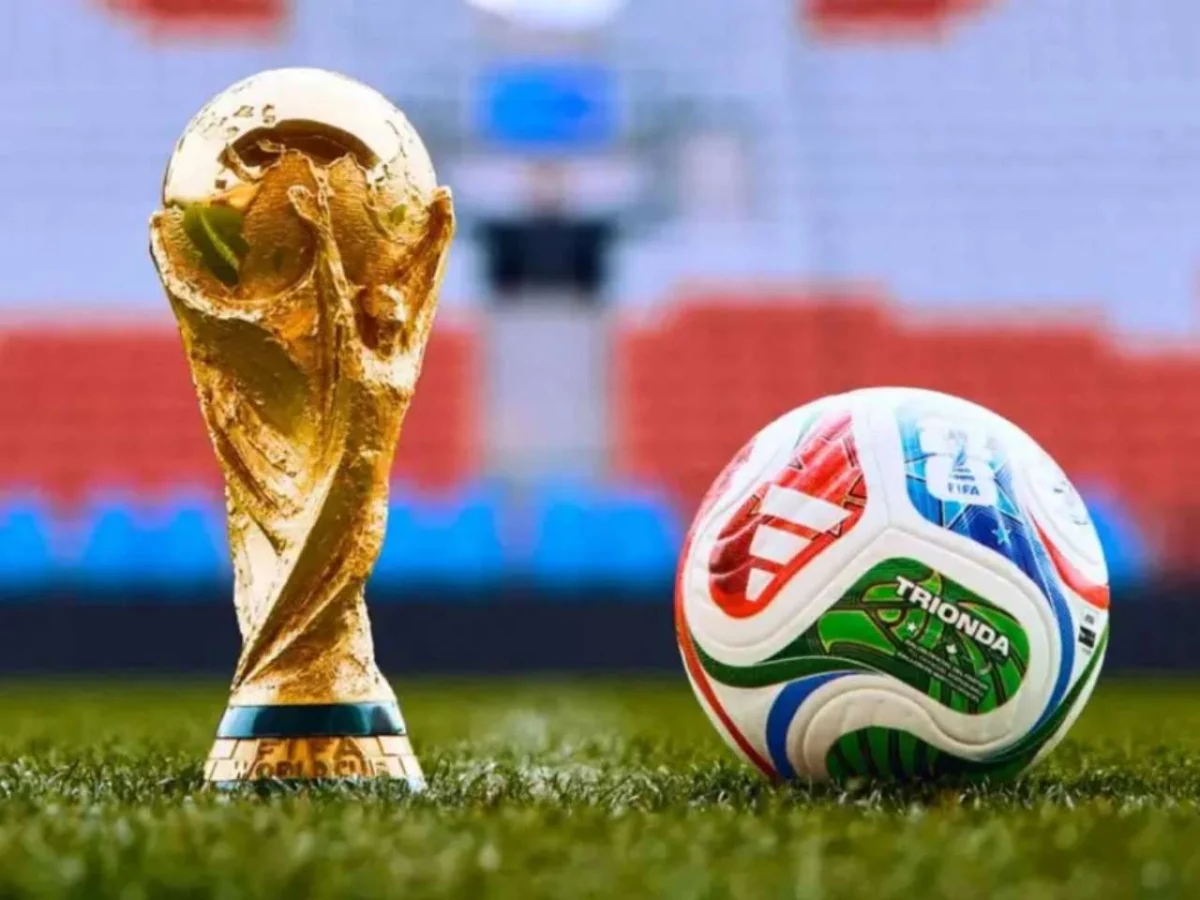
Arlington, Texas – In a dramatic turn of events that has ignited fierce debate across the footballing world, American forward Folarin Balogun was controversially sent off during the USA’s FIFA World Cup 2026 Round of 32 clash against Bosnia and Herzegovina. The decision, delivered after a meticulous VAR review, left the United States playing with ten men for a significant portion of the match, yet they ultimately prevailed 2-0. This incident not only secured the USA’s passage to the Round of 16 but also cast a spotlight on the ever-present tension between on-field refereeing and the burgeoning influence of video assistant referees (VAR) in high-stakes tournaments.
The red card, universally recognized as the most severe punishment a player can receive during a match, automatically sidelines Balogun for the crucial Round of 16 encounter against Belgium. While the USA’s resilience shone through, securing a victory with goals from Balogun himself (before his dismissal) and Malik Tillman, the contentious nature of the sending-off has fueled discussions about consistency in officiating and the true spirit of the game. Coach Mauricio Pochettino and midfielder Weston McKennie voiced their strong disagreement with the decision, pointing to a perceived lack of intent and inconsistent application of the rules in similar past incidents. As the FIFA World Cup 2026, a tournament of unprecedented scale and format, continues to unfold across North America, this moment of controversy serves as a stark reminder of the fine margins that define success and failure on football’s grandest stage.
A Moment of Controversy: Balogun’s Dismissal in the Round of 32
The match at AT&T Stadium in Arlington, Texas, was finely poised, a typical high-tension knockout fixture in the newly expanded FIFA World Cup. The United States, buoyed by a strong group stage performance, were looking to assert their dominance against a tenacious Bosnia and Herzegovina side. The game had reached its 64th minute when the narrative irrevocably shifted.
The Incident Unfolds
Up until that point, Folarin Balogun had been enjoying a stellar individual performance. His pace and clinical finishing had tormented the Bosnian defence, and it was his well-taken goal just moments before the fateful incident that had given the USA a crucial 1-0 lead. The stadium was still reverberating with the cheers for Balogun’s opener when the incident occurred. In a contested play for the ball in midfield, Balogun stretched to win possession, his studs making contact with the leg of Bosnian defender Tarik Muharemovic. It was a fleeting moment, one that initially went unnoticed by the on-field referee amidst the natural ebb and flow of a physical encounter. Muharemovic reacted, but not with the immediate, theatrical anguish often associated with a truly malicious challenge. Play continued for a brief period, but the eyes of the football world were already being drawn to the sideline, where the VAR officials were scrutinizing every angle.
)
The VAR Intervention
The VAR protocol dictates that the system intervenes only for "clear and obvious errors" or "serious missed incidents" in four specific scenarios: goal/no goal, penalty/no penalty, direct red card, and mistaken identity. In this instance, the VAR team quickly identified a potential direct red card offence. The on-field referee was advised to review the incident at the pitch-side monitor, a moment that always injects a palpable tension into the stadium. Replays shown on the big screens, and subsequently to the referee, focused on the point of contact – Balogun’s studs making direct contact with Muharemovic’s shin.
The interpretation of such incidents often lies in a grey area, balancing the letter of the law with the spirit of the game. Was it "serious foul play" involving excessive force or endangering the safety of an opponent? Or was it an unfortunate consequence of a legitimate attempt to win the ball, perhaps clumsy but without malicious intent? After several agonizing minutes of review, the referee emerged from the monitor and, to the collective gasp and outrage of the American contingent, brandished the red card, dismissing Balogun. The decision was final, irreversible, and instantly altered the complexion of the match.

Immediate Match Impact
Balogun’s dismissal forced an immediate and drastic tactical rethink for USA coach Mauricio Pochettino. Playing with ten men against a well-organized opponent in a World Cup knockout match is arguably the greatest challenge a team can face. The immediate aftermath saw Bosnia and Herzegovina sensing an opportunity, pressing higher and attempting to exploit the numerical advantage. The USA, however, demonstrated remarkable composure and tactical discipline. They quickly reorganized, dropping deeper, compressing spaces, and relying on swift counter-attacks. The psychological impact on the team was evident; rather than crumbling, they seemed to galvanize, spurred on by a perceived injustice.
It was in this period of adversity that the USA found their second wind. Just ten minutes after Balogun’s red card, Malik Tillman delivered a stunning blow, scoring the second goal for the United States. This goal was a testament to the team’s resilience and their ability to adapt under immense pressure. It effectively sealed the victory, proving that even the most severe disciplinary action could not derail their World Cup ambitions on that particular day. However, the cost of the victory, Balogun’s suspension, would undeniably loom large over their next fixture.
)
The Laws of the Game: Understanding Red Cards and Their Ramifications
The red card, a powerful symbol in football, represents the ultimate sanction for a player during a match. Its implications extend far beyond the immediate dismissal, affecting not only the individual player but also the team’s tactical setup, morale, and future prospects in a tournament.
What Constitutes a Red Card Offence?
According to FIFA’s Laws of the Game, a referee must show a red card and send a player off for any of the following offences:
)
- Serious Foul Play: This is perhaps the most common category and the one Balogun’s incident likely fell under. It involves a tackle or challenge that endangers the safety of an opponent or uses excessive force or brutality. This includes lunging at an opponent from the front, side, or behind, using one or both legs, with excessive force or endangering the safety of an opponent. Studs-up challenges, especially those making contact with sensitive areas like the shin or knee, often fall into this category.
- Violent Conduct: This involves using or attempting to use excessive force or brutality against an opponent when not challenging for the ball, or against a team-mate, team official, match official, spectator or any other person, or against one’s self. This includes punching, kicking, headbutting, or spitting.
- Spitting at an Opponent or Any Other Person: Self-explanatory, considered a highly unsporting and unhygienic act.
- Denying an Obvious Goal-Scoring Opportunity (DOGSO): This occurs when a player commits an offence (e.g., a foul or handball) that prevents the opposing team from scoring a goal or having an obvious goal-scoring opportunity, and the offence cannot be punished by a penalty kick where the referee awards a penalty and attempts to play the ball. The criteria for DOGSO include the distance between the offence and the goal, the likelihood of controlling the ball, the direction of the play, and the location and number of defenders.
- Using Offensive, Insulting or Abusive Language and/or Gestures: Any verbal or non-verbal communication deemed inappropriate or inflammatory by the referee.
- Receiving a Second Caution (Yellow Card) in the Same Match: Accumulating two yellow cards automatically results in a red card and dismissal.
The referee’s decision in such situations is paramount, often influenced by the speed of the game, the angle of observation, and the severity of the perceived contact. VAR’s role is to provide additional angles and slow-motion replays, but ultimately, the interpretation of the law remains with the referee.
Disciplinary Consequences Beyond the Pitch
The immediate consequence of a red card is the player’s mandatory removal from the field of play, leaving their team with a numerical disadvantage. However, the disciplinary action extends beyond the 90 minutes.
)
- Automatic One-Match Suspension: For most direct red card offences, the player incurs an automatic one-match suspension for their team’s next competitive fixture. In Balogun’s case, this means missing the crucial Round of 16 match against Belgium.
- Potential for Further Sanctions: For more severe offences, such as violent conduct, spitting, or particularly egregious foul play, the incident may be reviewed by FIFA’s Disciplinary Committee. This committee has the authority to impose additional match suspensions, ranging from two to three games, or even longer bans depending on the gravity of the offence. They can also impose financial penalties (fines) on the player and/or the national association.
- Impact on Player’s Reputation: A red card, especially a controversial one on a global stage like the World Cup, can have a significant impact on a player’s public image and reputation. It can lead to scrutiny from media, pundits, and fans, potentially affecting endorsements or future club prospects.
- Team Morale and Future Availability: Beyond the immediate tactical disadvantage, a red card can affect team morale, especially if the team feels the decision was unjust. The absence of a key player like Balogun can also force significant tactical adjustments and limit a coach’s options in subsequent matches, potentially impacting the team’s overall tournament trajectory.
The Historical Context of Red Cards in World Cups
Red cards have been a part of World Cup drama since their introduction in 1970, shaping narratives and outcomes in unforgettable ways. Iconic moments of dismissal are etched into the tournament’s history, often becoming talking points for generations. Who can forget Zinedine Zidane’s headbutt in the 2006 final, costing France their captain and arguably the trophy? Or David Beckham’s flick at Diego Simeone in 1998, which led to England’s elimination and a national outcry? Luis Suárez’s infamous handball in 2010 denied Ghana a sure goal, leading to a red card but preserving Uruguay’s semi-final hopes. These incidents underscore how a single red card can alter a team’s destiny and become a defining moment in a player’s career. Balogun’s red card, while perhaps not yet reaching the notoriety of these historical events, joins a long lineage of controversial dismissals that have added layers of drama and debate to the FIFA World Cup.
Official Responses and Lingering Debate
The immediate aftermath of Balogun’s red card was predictably charged, with those associated with the USA camp expressing strong disapproval of the decision. Their sentiments reflect a broader frustration often felt when VAR intervenes in a way that appears to contradict the flow or perceived fairness of the game.
)
Coach Pochettino’s Stance
USA head coach Mauricio Pochettino, known for his passionate sideline presence, was visibly frustrated by the decision. In his post-match press conference, he articulated his disappointment, stating, "I respect the referee’s decision, of course, but I struggle to understand the consistency. We see similar challenges every week in various leagues, sometimes a yellow, sometimes nothing. Folarin’s intent was to win the ball; it was a strong challenge, yes, but I do not believe it was malicious or excessively violent. To have a player sent off for that in a World Cup knockout match, moments after he scored a crucial goal, feels incredibly harsh." Pochettino likely emphasized the subjective nature of the "excessive force" criterion and the differing interpretations seen across various games and referees, suggesting a lack of clear guidelines or uniform application. He would have highlighted the disadvantage it placed on his team and the potential impact on future matches, underscoring the weight of such a call.
Weston McKennie’s Viewpoint
Midfielder Weston McKennie, a stalwart in the USA lineup, echoed his coach’s sentiments, offering a player’s perspective on the incident. "From where I was on the pitch, it looked like a standard tackle," McKennie reportedly commented. "Maybe a bit clumsy, but never a red. These are split-second decisions for us as players. You go for the ball, and sometimes there’s contact. The slow-motion replay always makes it look worse than it is in real-time. It’s tough because it feels like the game is being stopped for moments that aren’t clear and obvious errors, but rather debatable interpretations. It affects the rhythm, it affects the players, and it certainly affects the outcome." McKennie’s comments point to the player’s perspective on the speed of the game and the perceived exaggeration of contact when viewed in slow motion, a common critique against VAR.
)
Analysis from Pundits and Former Referees
The incident immediately became a hot topic for football pundits and former referees. Many analysts suggested that while the contact was undeniable, the severity of the punishment was debatable. "The modern game is very strict on studs-up challenges, especially when contact is made above the ankle," remarked former Premier League referee Mark Halsey during a post-match analysis. "From a purely technical standpoint, the referee could argue it endangered the safety of the opponent. However, the context of the challenge – Balogun attempting to win the ball, the lack of follow-through, and the relatively minor reaction from Muharemovic – certainly adds to the argument that a yellow card, or even just a free-kick, might have sufficed. It’s a borderline call that unfortunately went against the USA." Other commentators highlighted the increasing pressure on referees to utilize VAR for every potential infringement, sometimes leading to over-officiating rather than correcting truly egregious errors. The consensus among many was that while technically justifiable by the letter of the law, the decision lacked the spirit of the game.
The Referee’s Perspective (Hypothetical)
From the perspective of the match referee, the decision would have been agonizingly difficult. In a high-stakes World Cup knockout game, every call is magnified. When VAR advises a review for a potential direct red card, the referee is obligated to meticulously examine the footage. Their primary responsibility is player safety. If, after reviewing the replays, the referee genuinely believes that Balogun’s challenge involved "excessive force" or "endangered the safety of an opponent" (e.g., due to the height of the studs, the point of contact, and the force involved), then the Laws of the Game mandate a red card. The pressure to make the "right" call, especially with millions watching and the knowledge that every angle will be dissected, is immense. While coaches and players may argue intent, the referee’s focus is on the act itself and its potential consequences for player welfare. The VAR system, designed to aid decision-making, in these borderline cases, often places the referee in an even more scrutinized position.
)
Broader Implications for the USA Campaign and Tournament Dynamics
Balogun’s red card, and the subsequent one-match ban, carries significant weight for the United States National Team as they progress deeper into the FIFA World Cup 2026. Beyond the immediate match outcome, it introduces new challenges and reshapes the narrative for their tournament journey.
Impact on USA’s Round of 16 Clash Against Belgium
The most immediate and tangible implication is Balogun’s absence from the Round of 16 match against Belgium. Belgium, a perennial powerhouse with a star-studded squad, represents a formidable opponent. Balogun, having just scored his first goal of the tournament, was clearly finding his rhythm and confidence. His pace, clinical finishing, and ability to run in behind defenses are vital components of the USA’s attacking strategy.
)
- Attacking Void: Without Balogun, Coach Pochettino will need to find a suitable replacement. Options might include starting another striker, like Josh Sargent or Ricardo Pepi, or potentially opting for a false nine setup. Each choice comes with its own set of strengths and weaknesses, and none might fully replicate Balogun’s unique attributes.
- Tactical Adjustments: Pochettino will be forced to adapt his tactical blueprint. This could involve a more conservative approach, focusing on defensive solidity and counter-attacking, or attempting to compensate for the lost attacking threat through increased midfield creativity. The team’s dynamic will undoubtedly shift.
- Psychological Challenge: While the team showed resilience against Bosnia and Herzegovina, facing Belgium without a key player adds another layer of psychological pressure. The squad will need to maintain their unity and belief, channeling any lingering frustration into a determined performance.
- Belgium’s Advantage: Belgium will undoubtedly view Balogun’s absence as a significant advantage. It simplifies their defensive planning and potentially allows them to press higher, knowing one of the USA’s primary attacking threats is neutralized.
The Psychological Ripple Effect
A controversial red card can have a profound psychological ripple effect. For the USA team, it could either be a unifying force, rallying them against perceived injustice, or a source of lingering frustration. For fans, it fuels debate and can create a sense of victimhood, adding an emotional layer to their support. For the referees and VAR officials, such high-profile incidents increase scrutiny and pressure for future decisions, potentially leading to more cautious or even over-zealous interventions. The incident becomes a talking point that shapes perceptions of the tournament’s fairness.
VAR’s Evolving Role in Modern Football
The Balogun incident is yet another chapter in the ongoing saga of VAR’s integration into modern football. While introduced with the noble aim of eliminating "clear and obvious errors," VAR has frequently become a source of its own controversies.
)
- Benefits: Proponents argue that VAR has undeniably corrected numerous clear errors, ensuring that major injustices are avoided. Goals scored from offside positions, unpunished violent conduct, and incorrectly awarded penalties are now routinely rectified.
- Drawbacks: Critics, however, point to the interruptions in play, the erosion of the referee’s on-field authority, and the inherent subjectivity in interpreting certain rules, particularly those involving contact and intent. The slow-motion replay, while offering clarity on contact, can sometimes exaggerate the severity of an incident that occurs at lightning speed. The Balogun decision perfectly encapsulates this debate: was it a "clear and obvious error" by the on-field referee, or merely a differing interpretation that VAR amplified? The incident underscores the need for continued refinement of VAR protocols and clearer guidelines for officials.
The Fairness of Football: A Constant Discussion
At its heart, football is about competition, skill, and the pursuit of victory. But it is also deeply intertwined with a sense of fairness and justice. When decisions like Balogun’s red card occur, they inevitably spark a discussion about the integrity of the game. Is the game truly fair when human interpretation, even with technological aid, can lead to such impactful and disputed outcomes? This question is a constant companion to the beautiful game, and moments like these ensure it remains at the forefront of conversations among players, coaches, pundits, and fans alike.
The Grand Stage of FIFA World Cup 2026: A New Era
The backdrop to this unfolding drama is the FIFA World Cup 2026, a tournament that represents a significant evolution in the history of global football. Its unique structure and expanded scope promise a spectacle unlike any before.
)
A Tournament of Firsts
The FIFA World Cup 2026 is historic for several reasons. It is the first time the tournament is being co-hosted by three nations: the United States, Canada, and Mexico. This tripartite hosting arrangement showcases the growing global reach of football and the collaborative spirit of the CONCACAF region. Furthermore, it marks the first time the World Cup features an expanded format of 48 teams, a substantial increase from the previous 32. This expansion has opened doors for more nations to participate on the world stage, fulfilling FIFA’s vision of making the tournament more inclusive and globally representative. The increased number of teams means more matches, more stories, and a broader tapestry of footballing cultures converging in North America.
The Expanded Knockout Stage
With 48 teams, the tournament’s structure has undergone a significant overhaul, particularly in its knockout format. Gone are the traditional group stages directly leading to the Round of 16. Instead, the 2026 edition introduces a Round of 32. This additional knockout round means that teams must navigate an extra hurdle to reach the quarterfinals, intensifying the competition and increasing the pressure on every match. The pathway to becoming world champion now involves successfully traversing the Round of 32, Round of 16, quarterfinals, semi-finals, and finally, the ultimate showdown in the final. This extended knockout phase provides more opportunities for upsets, more nail-biting finishes, and ultimately, more moments of unparalleled drama, such as the one witnessed with Balogun’s red card.
)
Global Reach and Spectacle
The sheer scale of the FIFA World Cup 2026 is unprecedented. Spanning three countries and numerous host cities, it is set to be the most geographically expansive and logistically complex World Cup ever. The tournament is a celebration of football’s global appeal, bringing together diverse cultures and passionate fan bases. The stakes are higher, the competition is broader, and the potential for unforgettable moments – both glorious and controversial – is amplified. The Balogun incident, though contentious, is precisely the kind of high-drama event that defines World Cup narratives and keeps audiences around the globe captivated.
How to Follow the Action: FIFA World Cup 2026 Broadcast Details in India
For football enthusiasts in India, staying abreast of all the thrilling action from the FIFA World Cup 2026 is made convenient through digital platforms. Multiple group-stage matches, including those taking place simultaneously, are being aired across the ZEE5 app and website. This ensures comprehensive coverage, allowing fans to follow their favorite teams and witness every dramatic moment, from stunning goals to controversial VAR decisions, as the tournament unfolds. Fans can access the live streams and on-demand content by visiting https://www.zee5.com/.
)
Conclusion
Folarin Balogun’s red card against Bosnia and Herzegovina will undoubtedly stand as one of the defining, and most debated, moments of the FIFA World Cup 2026 Round of 32. While the United States showcased commendable resilience to secure a 2-0 victory despite playing with ten men, the disciplinary action has significant repercussions for their upcoming Round of 16 clash against Belgium. Coach Pochettino and midfielder McKennie’s protests underscore the ongoing tension surrounding VAR’s application and the subjective nature of interpreting the Laws of the Game, particularly in high-stakes environments.
As the tournament progresses through its expanded 48-team format and novel knockout stages across North America, every decision, every goal, and every disciplinary action will be magnified. Balogun’s absence will force the USA to adapt, challenging their depth and tactical flexibility against a formidable Belgian side. This incident serves as a potent reminder of the fine line between triumph and tribulation in elite football, where moments of individual brilliance can be swiftly overshadowed by the unforgiving hand of officialdom. The FIFA World Cup 2026 continues to deliver unparalleled drama, cementing its place as the pinnacle of sporting spectacle, controversies and all.
)
Find your daily dose of All Latest News including Sports News, Entertainment News, Lifestyle News, explainers & more. Stay updated, Stay informed- Follow DNA on WhatsApp.
