

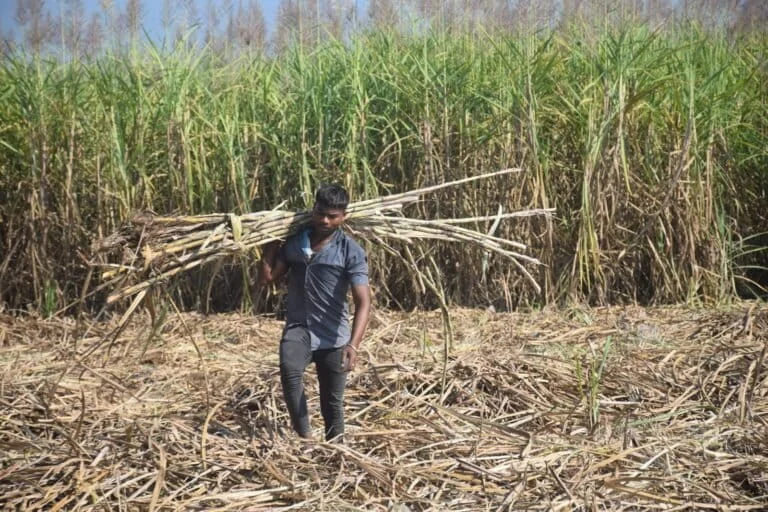
As India aggressively pursues its 20% ethanol blending target, a fundamental shift from sugarcane to grain-based feedstocks is triggering rural unrest, environmental warnings, and a heated "food versus fuel" debate. While the government eyes energy security, experts warn that the cost may be measured in depleted groundwater and rising food prices.
1. Main Facts: The Great Feedstock Transition
India’s ambitious journey toward energy self-reliance is hitting a significant crossroads. Originally conceived as a way to utilize sugarcane by-products, the national ethanol program has undergone a radical transformation. In recent procurement cycles, grain-based distilleries—primarily using maize and rice—have overtaken sugarcane as the primary source of ethanol. According to industry data from Zuari Industries Limited, grain-based ethanol now accounts for more than 70% of the supply procured by state-run oil marketing companies (OMCs).
This pivot is driven by the government’s "E20" mandate, which seeks to blend 20% ethanol into gasoline by 2025-26. However, this transition is not without friction. The shift from molasses (a waste product) to primary food grains like maize and rice has sparked a three-pronged crisis:

- Social Unrest: Local communities are protesting the construction of distilleries, fearing the exhaustion of local water tables.
- Market Competition: The poultry, animal feed, and food processing industries are now in direct competition with the fuel sector for the same grain supplies.
- Environmental Sustainability: New research suggests that the water and fertilizer footprint of this expansion could be catastrophic for India’s already stressed agricultural resources.
While Brazil is frequently cited as the gold standard for ethanol, experts argue that India’s reliance on irrigation and its massive population density make the Brazilian model a dangerous blueprint to follow without significant adjustments.
2. Chronology: From Sugarcane Waste to Food Grain Fuel
The evolution of India’s ethanol policy reflects an escalating urgency to reduce oil import bills, often at the expense of long-term resource planning.
- The Molasses Era (2003–2018): For over a decade, India’s Ethanol Blended Petrol (EBP) program relied almost exclusively on C-heavy molasses, a by-product of sugar production. The goal was modest, and the impact on food security was negligible.
- The Diversification Push (2018–2022): The National Policy on Biofuels (2018) expanded the scope of feedstocks to include B-heavy molasses, sugarcane juice, and "damaged" food grains like broken rice. This was intended to manage sugar surpluses.
- The Grain Pivot (2023–Present): Facing fluctuating sugarcane yields due to erratic monsoons, the government opened the floodgates for grain-based ethanol. In late 2023 and throughout 2024, the Food Corporation of India (FCI) began diverting massive stocks of rice and maize to distilleries.
- December 2025 (The Hanumangarh Flashpoint): Tensions boiled over in Rathi Khera, Rajasthan. Farmers, fearing that a new grain-based ethanol plant would deplete their groundwater and pollute their soil, clashed with police. This event became a symbol of a growing national "not-in-my-backyard" movement against distilleries, with similar protests emerging in Punjab, Madhya Pradesh, and Telangana.
3. Supporting Data: The Cost of the "E20" Mandate
The scale of the environmental and economic trade-offs is now being quantified by researchers. A landmark study published in PLOS One by the Indian Institute of Management Ahmedabad (IIM-A) utilizes the MAgPIE (Model of Agricultural Production and its Impact on the Environment) to project the consequences of the 20% blending mandate.

Water and Fertilizer Surge
The study estimates that under current ethanol expansion scenarios:
- Water Consumption: India’s agricultural water use for ethanol feedstocks is projected to rise by 21% to 118% by 2030, and potentially up to 138% by 2050.
- Nitrogen Surplus: To meet the demand for maize and sugarcane, fertilizer use is expected to spike, leading to increased nitrogen runoff, which pollutes local water bodies and increases greenhouse gas emissions.
Feedstock Composition
A decade ago, sugarcane molasses provided nearly 100% of India’s fuel ethanol. Today, the balance has shifted dramatically:
- India: ~65-70% Grains (Maize/Rice), ~30-35% Sugarcane/Molasses.
- Brazil: ~80% Sugarcane, ~20% Maize (mostly from "second-crop" harvests on existing land).
The "Blue Water" Divergence
Unlike Brazil, where the majority of sugarcane is "rainfed" (relying on natural precipitation), Indian sugarcane and maize are heavily dependent on "blue water"—withdrawals from groundwater and irrigation canals. In a country where 60% of districts are already facing groundwater depletion, the IIM-A study warns that the "climate benefit at the tailpipe" could be entirely negated by the environmental cost of production.

4. Perspectives and Official Responses
The shift to grain-based ethanol has created a rift between industry proponents, agricultural analysts, and environmental scientists.
The Industry View: Productivity as the Solution
Athar Shahab, Managing Director of Zuari Industries, acknowledges the pressure on feed markets but argues that the solution lies in innovation rather than retreat. "The real question is whether India can expand ethanol while simultaneously increasing agricultural productivity," Shahab notes. He emphasizes that if maize is to be the future of Indian biofuel, the government must invest in higher-yield seeds, better storage infrastructure, and efficient procurement to prevent price shocks in the poultry and livestock sectors.
The Critical View: "Feeding Cars vs. Feeding People"
Agriculture policy analyst Devinder Sharma offers a more scathing critique. He argues that India is ignoring its primary responsibility: food security. "Brazil is a big country with a small population. India is also a big country, but our population is huge," Sharma says. He questions the ethical framework of the policy, asking, "If we start feeding cars, how do we feed our people?" Sharma asserts that diverting food crops to fuel is a regressive step for a nation still struggling with nutritional security.

The Scientific Warning: Local Context Matters
Fabio V. Scarpare of Washington State University cautions against the "copy-paste" application of the Brazilian model. He points out that Brazil’s ethanol success is built on "land-use governance"—strict laws that prevent the conversion of native forests and favor the use of degraded pastureland. In contrast, India lacks integrated lifecycle water accounting. Without strict limits on converting rain-fed foodlands, Scarpare warns that ethanol policy risks intensifying the vulnerability of climate-stressed rural communities.
5. Implications: A Roadblock for Sustainability?
The transition to a grain-heavy ethanol model carries profound implications for India’s future. If the current trajectory continues, several risks appear inevitable:
1. Escalating Food and Feed Prices
Maize is the backbone of the poultry and starch industries. As distilleries offer higher prices or government-backed procurement lures farmers away from traditional markets, the cost of eggs, chicken, and processed foods is likely to rise. This creates an indirect "inflation tax" on the consumer to subsidize "green" fuel.

2. Groundwater Exhaustion
The concentration of ethanol plants in water-stressed basins is a recipe for ecological collapse. Experts like Anjal Prakash of FLAME University suggest that India must impose "national caps on irrigated-area shifts" and exclude highly water-stressed regions from feedstock expansion. Without these safeguards, the energy security gained from ethanol may be lost to the food insecurity caused by dry wells.
3. The Displacement of Smallholders
While the government frames ethanol as a way to boost farmer income, the infrastructure requirements of large distilleries often favor industrial-scale farming. There is a risk that smallholder farmers may be displaced or forced into monocropping for the fuel industry, reducing the biodiversity and resilience of the Indian farm system.
4. The Need for "Second-Generation" (2G) Ethanol
The consensus among environmentalists is that India must pivot again—this time away from "first-generation" (food-based) ethanol toward "second-generation" (2G) ethanol made from agricultural residues like rice straw and cotton stalks. While more technologically challenging and expensive, 2G ethanol avoids the food-vs-fuel trap and addresses the seasonal problem of crop residue burning.

Conclusion
India’s ethanol transition is at a tipping point. While the desire to reduce carbon emissions and oil dependency is laudable, the current reliance on food grains and intensive irrigation is a high-stakes gamble. As the protests in Hanumangarh demonstrate, the transition to renewable energy cannot be decoupled from the rights of the people and the health of the land. For India’s ethanol push to be truly sustainable, it must prioritize "waste-to-fuel" over "food-to-fuel" and ensure that the quest for energy security does not leave the nation’s dinner plates empty.
