

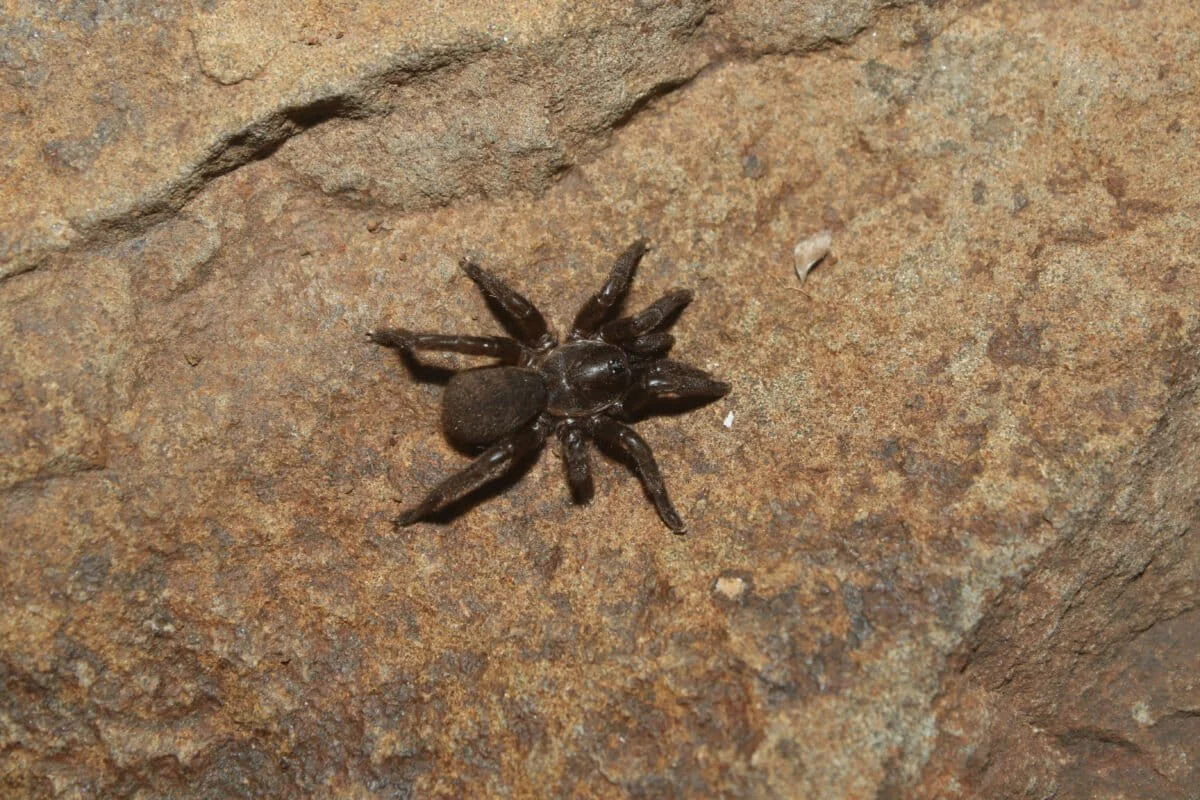
In the sun-drenched, rocky expanses of Maharashtra’s Deccan Plateau, a landscape often dismissed by policymakers as "barren wasteland," a group of researchers has uncovered a biological treasure that dates back to the era of the Gondwana supercontinent. What began as a routine ecological survey has culminated in the description of a new-to-science species of trapdoor spider, Tigidia singhal, marking a significant milestone in Indian arachnology and challenging long-held perceptions about the biodiversity value of semi-arid ecosystems.
The discovery, published in the prestigious journal Arachnology, reveals a creature of ancient lineage—a master of concealment that spends the vast majority of its life underground, hidden behind a silk-lined door. The find not only increases the number of known Tigidia species in India to eight but also represents the first time this genus has been documented in a semi-arid, open natural ecosystem (ONE).
Main Facts: The Anatomy of a Discovery
The newly described species, Tigidia singhal, belongs to the family Barychelidae, commonly known as brush-footed spiders. These spiders are part of the infraorder Mygalomorphae, a group that includes tarantulas and funnel-web spiders. Mygalomorphs are often referred to as "primitive" spiders because they have retained several ancestral traits, such as downward-pointing fangs and a lack of complex silk-spinning organs found in more modern "araneomorph" spiders.
Physical Characteristics
The type specimen of Tigidia singhal is a female measuring approximately 15 millimeters in length. Her appearance is both striking and functional for a life spent in the shadows of the soil:
- Coloration: The spider possesses jet-black legs covered in a dense layer of greyish, bristle-like hairs (setae).
- Abdomen: The abdomen is lighter in color, featuring distinct chevron-shaped markings that likely provide a degree of camouflage during the rare moments the spider is exposed.
- Identification: Researchers confirmed the species as new to science through a rigorous morphological analysis. The primary diagnostic feature was the unique shape and arrangement of the spermathecae—the female’s internal reproductive structures—which differed significantly from all other known species in the genus.
Habitat and Range
Traditionally, species of the genus Tigidia have been associated with the lush, humid environments of peninsular India’s tropical evergreen and deciduous forests, specifically within the Western and Eastern Ghats biodiversity hotspots. Tigidia singhal shatters this trend. Found near the Nandeshwar Mahadev Temple in Ahilyanagar, Maharashtra, this species thrives in rocky hilltop grasslands. These habitats are characterized by thin soil layers, extreme seasonal temperature fluctuations, and sparse vegetation—conditions previously thought unsuitable for this specific genus.

Chronology: From Field Survey to Laboratory Rearing
The path to describing Tigidia singhal was a blend of serendipity and meticulous follow-up research.
November 2025: The Initial Encounter
The story began during a routine vegetation monitoring survey. While examining the flora of the Deccan Plateau, researchers Rishikesh Tripathi and Prasad Bolde overturned a rock to inspect the soil beneath. Instead of roots or common insects, they found a vertical, silk-lined burrow. Recognizing the tell-tale signs of a trapdoor spider, the team carefully excavated the site. At the end of a bulb-shaped chamber, several centimeters underground, they found the first female specimen.
Early 2026: Taxonomic Verification
Following the collection, the specimen underwent an intensive study at the Ashoka Trust for Research in Ecology and the Environment (ATREE). Lead author Rishikesh Tripathi, a Postdoctoral Research Associate at ATREE, and Prasad Bolde, a Project Associate at the Wildlife Institute of India (WII), collaborated with Abi Tamim Vanak to map the spider’s physical traits against existing records. The lack of a match in the Tigidia catalog confirmed they had found something entirely new.
May – June 2026: Life History Observations
The team returned to the site multiple times to understand the spider’s life cycle. In May, as the first pre-monsoon showers softened the parched earth, they observed signs of increased activity. In June, they made a critical find: a female guarding an egg sac within her burrow. This observation suggested that the breeding season is timed with the onset of the monsoon, ensuring that the spiderlings emerge when the environment is moist and prey is abundant.
Present Day: Laboratory Rearing
Currently, the researchers are rearing 17 to 18 juveniles that emerged from the collected egg sac. By observing these spiderlings in a controlled environment, the team hopes to document the growth rates, molting patterns, and behavioral development of the species—data that is almost impossible to gather in the wild due to the spider’s secretive nature.

Supporting Data: An Ancient Lineage and Ecological Importance
The discovery of Tigidia singhal carries profound scientific weight due to the biogeographical history of its genus.
The Gondwanan Connection
The genus Tigidia exhibits a "disjunct distribution," meaning its members are found in widely separated geographic regions: India, Madagascar, and Mauritius. This distribution is a biological footprint of the breakup of the Gondwana supercontinent millions of years ago. As the Indian plate drifted away from Africa and Madagascar, these ancient spiders were carried along like passengers on a tectonic raft. Each new species discovered in India provides a fresh piece of the puzzle regarding how life evolved and diversified following the continental split.
Engineering the Soil
Trapdoor spiders are more than just biological curiosities; they are "ecosystem engineers." Their burrows, which range from 4 to 10 centimeters deep, perform several vital ecological functions:
- Soil Aeration: The vertical shafts allow air and water to penetrate deeper into the hard-packed soil of the grasslands.
- Microhabitats: Abandoned burrows provide refuge for smaller invertebrates, protecting them from the searing heat of the Deccan summers.
- Soil Stability: The silk lining of the burrows helps bind the soil particles, preventing erosion in rocky areas.
Furthermore, because these spiders are long-lived (some mygalomorphs can live for over 20 years) and highly sedentary, they are excellent "ecological indicators." Their presence in a landscape signifies a stable environment with a healthy soil food web.
Official Responses: Voices from the Field
The researchers involved emphasize that this discovery is a wake-up call for Indian conservation policy.

Rishikesh Tripathi and Prasad Bolde, Study Authors:
In a joint communication to Mongabay-India, the authors noted: "Finding a previously unknown trapdoor spider here highlights how little we still know about the biodiversity of these open natural ecosystems. The species inhabits rocky hilltop grasslands… an ecosystem often overlooked despite supporting remarkable biodiversity." They further argued that if tigers are the flagship species for forests, ancient spiders like Tigidia should be the "flagship species" for India’s grasslands.
Zeeshan A. Mirza, Arachnologist at Mizoram University:
Mirza, an expert who has described several other Tigidia species, called the find "exciting" but not entirely surprising. "The diversity of these spiders is far from well known, and the new discovery from the Deccan is not surprising, as these regions have been barely surveyed for them," he stated. Mirza pointed out that funding for "non-charismatic taxa" (insects and spiders) remains a significant hurdle in documenting India’s true biological wealth.
Implications: Challenging the "Wasteland" Narrative
The most significant implication of the Tigidia singhal discovery lies in the realm of land-use policy and environmental conservation.
The Myth of the Wasteland
For decades, India’s grasslands and semi-arid savannahs have been officially classified as "wastelands" in government records. This terminology is a relic of the British colonial era, where any land that did not produce timber or taxable agricultural crops was deemed unproductive. This classification has made these ecosystems prime targets for industrial development, solar parks, and "wasteland reclamation" projects that often involve planting trees in areas where they do not naturally belong.
Threats to Survival
The researchers observed several immediate threats to the habitat of Tigidia singhal:

- Stone Quarrying: Since the spiders rely on the stable microclimate beneath rocks, quarrying for construction material literally removes their homes.
- Soil Extraction: Removing topsoil for agriculture or construction destroys the complex burrow systems these spiders spend years maintaining.
- Invasive Waste: Tourism near the Nandeshwar Mahadev Temple has led to an accumulation of plastic waste, which can alter soil chemistry and block burrow openings.
A Call for New Conservation Frameworks
The discovery of a Gondwanan relic in a "wasteland" proves that these open natural ecosystems (ONEs) are not degraded landscapes in need of "fixing." Instead, they are ancient, specialized habitats that support unique life forms found nowhere else on Earth.
Conservationists argue that the presence of Tigidia singhal, alongside more "charismatic" residents like the Indian wolf and the blackbuck, provides the necessary evidence to reclassify these regions as Protected Areas. By recognizing the Deccan Plateau as a biodiversity-rich ecosystem rather than a vacant lot for development, India can ensure that its "hidden architects"—the trapdoor spiders—continue to survive in the shadows of the rocks for another few million years.
