

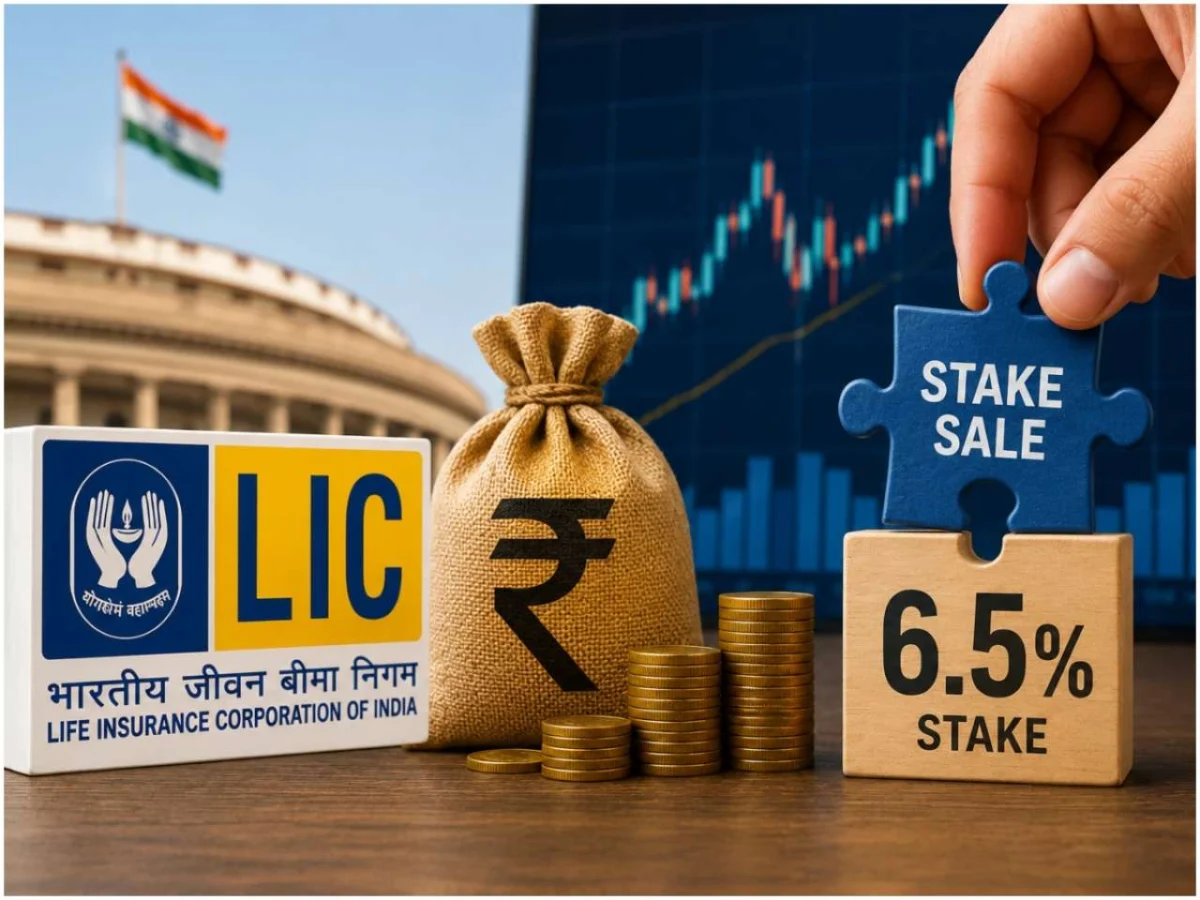
NEW DELHI, India – In a significant move signaling its continued commitment to market reforms and fiscal prudence, the Indian central government has announced plans to offload a 6.5 percent stake in the Life Insurance Corporation of India (LIC) through an Offer for Sale (OFS). This strategic divestment, expected to generate approximately Rs 30,000 crore, is poised to reshape LIC’s public shareholding structure and provide critical impetus to the government’s broader disinvestment agenda. The decision has sparked considerable interest across investor communities, prompting questions about its implications for shareholders, the venerable insurance giant, and the nation’s economic landscape.
The proposed stake sale comes as the government, while remaining LIC’s largest shareholder, seeks to navigate the dual objectives of adhering to market regulatory norms and optimizing its asset monetization strategy. This latest tranche of disinvestment in LIC, a behemoth in the Indian financial sector, underscores a calculated effort to enhance public float, improve liquidity, and attract a wider spectrum of institutional investors, both domestic and international.
Main Facts: The Latest Chapter in LIC’s Public Journey
The announcement of the 6.5 percent stake sale through an Offer for Sale (OFS) mechanism marks a pivotal moment in the ongoing public journey of Life Insurance Corporation of India. This move is not merely a financial transaction but a strategic maneuver designed to achieve multiple objectives, primarily driven by regulatory mandates and fiscal considerations.
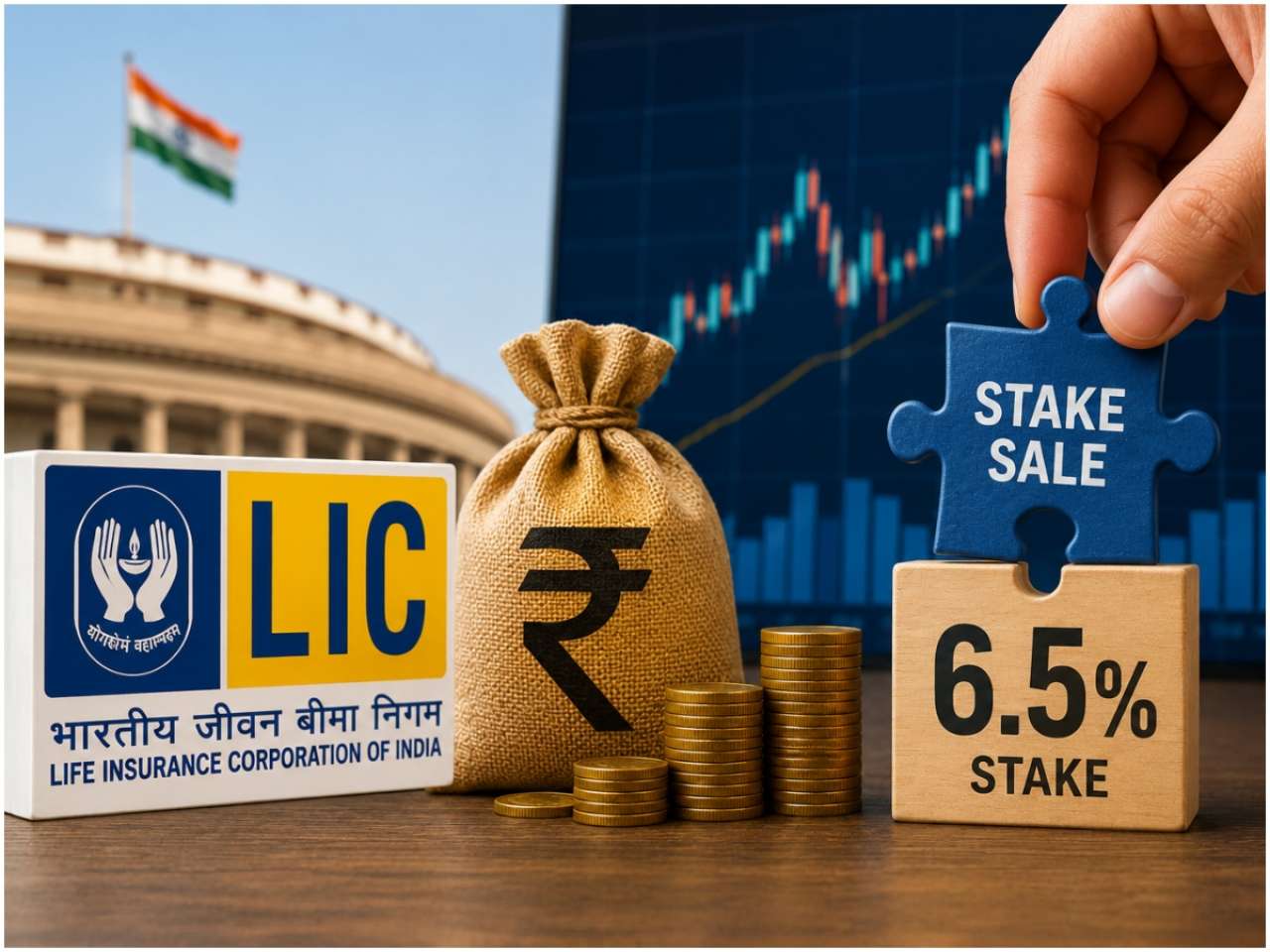
The Offer for Sale (OFS) in Detail
The Offer for Sale, a method commonly employed for promoters to reduce their stake in a listed company, will see the government divest a substantial portion of its holding. While the exact floor price for the OFS is yet to be announced, market expectations place the valuation in the vicinity of Rs 30,000 crore, contingent on the prevailing market conditions and investor appetite. This figure represents a crucial inflow for the government’s exchequer.
Currently, the central government holds a dominant majority stake in LIC, a position that has been largely maintained since its listing in May 2022. The 6.5 percent dilution, though significant in absolute terms, will ensure that the government retains its controlling interest, thereby maintaining stability and strategic oversight over the country’s largest insurer. The OFS will be conducted in a structured manner, typically involving institutional and retail investor tranches, allowing for broad participation. Market participants will keenly watch the pricing and subscription levels as indicators of investor confidence in LIC and the broader Indian equity market.
Immediate Market Reaction and Context
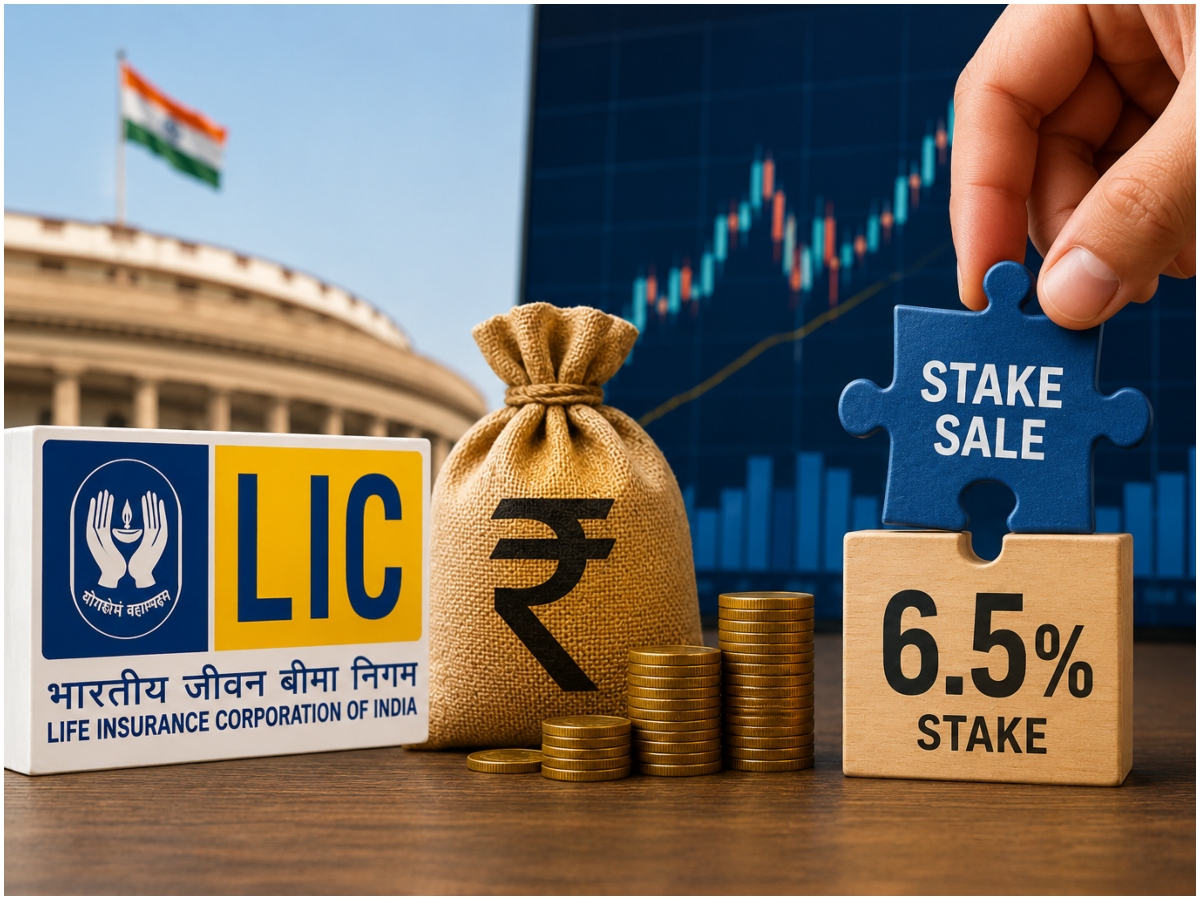
Upon the announcement, market sentiment surrounding LIC shares and the broader financial sector has been notably dynamic. While some analysts anticipate a potential short-term pressure on the stock price due to the increased supply of shares, others view the move as a long-term positive, enhancing liquidity and making the stock more attractive to a wider investor base. The context for this sale is critical; it follows a period where LIC’s stock performance has been under scrutiny since its much-anticipated IPO. The market will evaluate this OFS not just on its standalone merits but also as a barometer of the government’s commitment to unlocking value from its public sector undertakings (PSUs) and adhering to regulatory frameworks. The success of this OFS could set a precedent for future divestments and influence investor perception of other state-owned entities.
)
A Historical Perspective: The Chronology of LIC’s Public Listing and Disinvestment
The current stake sale is not an isolated event but rather a continuation of a well-defined strategy that began with LIC’s initial public offering. Understanding the historical context provides crucial insights into the government’s motivations and the regulatory landscape governing such divestments.
The Landmark IPO: Setting the Stage
Life Insurance Corporation of India, a household name and a cornerstone of India’s financial system for decades, made its public debut on May 17, 2022. This IPO was monumental, not only for its sheer size – it was India’s largest ever, raising approximately Rs 21,000 crore – but also for bringing one of the country’s most iconic and trusted institutions to the public markets. Prior to the IPO, LIC was wholly owned by the government. The IPO saw the government dilute a 3.5 percent stake, reducing its holding from 100 percent to approximately 96.5 percent.
The IPO garnered significant attention, reflecting LIC’s immense scale, vast policyholder base, and substantial asset book. Despite its strategic importance and widespread brand recognition, the listing performance was somewhat subdued, with the stock opening below its issue price. This initial market reception has been a key factor influencing subsequent government decisions regarding further stake dilutions, emphasizing the need for strategic timing and robust investor communication. The IPO was a crucial first step towards marketizing a previously entirely state-controlled entity, introducing it to the rigors and opportunities of public scrutiny and capital markets.

The Imperative of Minimum Public Shareholding (MPS) Norms
At the heart of the current disinvestment lies a fundamental regulatory requirement: the Minimum Public Shareholding (MPS) norms mandated by the Securities and Exchange Board of India (SEBI). These norms are designed to ensure adequate public float in listed companies, thereby promoting liquidity, preventing market manipulation, and facilitating better price discovery.
As per SEBI regulations, specifically Rule 19A of the Securities Contracts (Regulation) Rules, 1957, all listed companies in India are generally required to maintain a minimum public shareholding of 25 percent. This threshold ensures that a significant portion of a company’s shares is available for trading by the general public, rather than being concentrated in the hands of a few promoters.
However, recognizing the unique nature and strategic importance of large public sector undertakings (PSUs) like LIC, SEBI has provided certain relaxations and extended timelines for compliance. For PSUs, the timeline to achieve the 25 percent MPS threshold is typically five years from the date of listing, as opposed to the standard three years for other companies. This extension acknowledges the challenges involved in divesting large government holdings without unduly disrupting market dynamics or undermining the strategic objectives of these state-owned entities. In LIC’s case, having listed in May 2022 with approximately 3.5 percent public shareholding, the government has until May 2027 to meet the 25 percent MPS requirement. The current 6.5 percent stake sale is a proactive step towards fulfilling this regulatory obligation, demonstrating the government’s commitment to ensuring compliance within the stipulated timeframe.
)
Government’s Broader Disinvestment Mandate
The current stake sale in LIC is also an integral part of the Indian government’s overarching disinvestment strategy. Disinvestment, or the selling of assets (typically by a government or public entity) to raise revenue or to privatize an industry, has been a key component of India’s economic policy for decades. The primary objectives often include:
- Fiscal Consolidation: Generating non-tax revenue to bridge the fiscal deficit, reduce public debt, and fund developmental projects.
- Improving Efficiency: Introducing private sector discipline and market competition into PSUs, leading to better operational efficiency and profitability.
- Unlocking Value: Realizing the true market potential of state-owned assets.
- Promoting Public Ownership: Broadening public participation in the ownership of national assets.
In recent years, the government has set ambitious disinvestment targets for each fiscal year. While achieving these targets has often presented challenges due to market volatility and strategic complexities, high-value assets like LIC remain crucial to these plans. The government has identified LIC as a strategic asset whose partial divestment can contribute significantly to its revenue targets without compromising its fundamental control or its role as a key player in the Indian economy. This consistent push for disinvestment signals a broader policy shift towards greater market orientation and reduced government footprint in commercial enterprises, while retaining strategic control where necessary.
Supporting Data: Unpacking the Numbers and Market Dynamics
A deeper dive into the quantitative aspects provides a clearer picture of the magnitude and potential impact of this disinvestment.
)
LIC’s Shareholding Structure: Before and After the OFS
Prior to the current OFS, the Government of India held approximately 96.5 percent of LIC’s total equity, with the remaining 3.5 percent constituting the public float from its IPO. Post the successful completion of the 6.5 percent OFS, the government’s stake will reduce to approximately 90 percent. Consequently, the public shareholding will increase to roughly 10 percent.
While this represents a significant increase in public float, it is important to note that LIC will still be considerably short of the 25 percent MPS norm. With the deadline set for May 2027, the government will likely need to undertake further stake sales in the coming years to meet the regulatory requirement. This staggered approach allows for market absorption and helps prevent excessive supply-side pressure on the stock.
Financial Health and Market Position of LIC
LIC is an undisputed giant in the Indian insurance sector. As of recent reports, its Assets Under Management (AUM) exceed Rs 45 lakh crore (approximately $540 billion), making it one of the largest institutional investors in the country. It commands a substantial market share in the life insurance segment, particularly in terms of individual policies and new business premiums. Its vast network of agents, extensive branch presence, and deep penetration into rural India provide it with an unparalleled distribution advantage.
)
Despite the emergence of several private players, LIC continues to hold a dominant position, driven by public trust and its historical legacy. Its profitability trends have generally been robust, though influenced by investment cycles and actuarial valuations. Compared to its private peers, LIC often trades at different valuation multiples, partly due to its sheer scale, government ownership, and unique business model that balances commercial objectives with social mandates. The strength of LIC’s balance sheet and its consistent dividend payouts are key attractions for investors.
Disinvestment Proceeds: Where the Money Goes
The estimated Rs 30,000 crore generated from this stake sale will be credited to the Consolidated Fund of India. This fund is the main account of the government, into which all revenues are received and from which all expenditures are made. The utilization of these proceeds is multi-faceted:
- Infrastructure Development: A significant portion is typically earmarked for crucial infrastructure projects across various sectors like roads, railways, ports, and energy. These investments are vital for boosting economic growth and creating employment.
- Fiscal Deficit Management: Disinvestment proceeds play a critical role in managing the government’s fiscal deficit, which is the difference between its total revenue and total expenditure. Reducing the deficit helps in maintaining macroeconomic stability and signals fiscal discipline to credit rating agencies and international investors.
- Public Expenditure and Social Welfare Schemes: Funds can also be allocated to finance various social welfare programs, including healthcare, education, poverty alleviation, and rural development initiatives, thereby directly impacting the lives of citizens.
- Debt Reduction: In some instances, proceeds may be used to pare down government debt, which can lower borrowing costs and free up resources for productive investments.
This strategic deployment of funds underscores the importance of disinvestment as a tool for economic management and national development.
)
Market Performance and Valuation Metrics
Since its IPO, LIC’s share price trajectory has been a subject of considerable discussion. After listing below its issue price, the stock has experienced periods of volatility, influenced by broader market trends, company-specific performance, and investor sentiment. While some analysts point to a potential undervaluation relative to its embedded value and market leadership, others adopt a more cautious stance, citing concerns over regulatory oversight, competition, and the unique challenges associated with a state-owned insurer.
Valuation multiples such as Price-to-Earnings (P/E) and Price-to-Book (P/B) ratios are closely scrutinized by investors. Comparing LIC’s multiples with those of its private sector counterparts can offer insights into how the market perceives its growth potential, profitability, and governance structure. Analyst ratings and price targets vary, reflecting different methodologies and assumptions about the company’s future earnings and market position. The success of this OFS, coupled with LIC’s operational performance, will be critical in shaping its future valuation narrative.
Official Responses and Expert Commentary: A Spectrum of Views
The announcement has naturally elicited responses from various stakeholders, each offering a distinct perspective on the rationale and potential ramifications of the stake sale.
)
Government’s Stated Rationale
Officials from the Ministry of Finance and the Department of Investment and Public Asset Management (DIPAM), the nodal agency for disinvestment, have consistently articulated the government’s rationale. The primary stated reason is to comply with SEBI’s Minimum Public Shareholding (MPS) norms. Beyond regulatory compliance, the government emphasizes that increasing the public float will lead to greater market capitalization, improved price discovery, and enhanced liquidity for LIC shares.
The Finance Minister and other senior officials have reiterated the government’s commitment to strengthening LIC as a robust, market-oriented institution while ensuring its continued stability and strategic role in the Indian economy. They have also highlighted the importance of disinvestment proceeds in bolstering public finances and funding critical development projects, thereby contributing to the nation’s economic growth trajectory.
LIC Management’s Perspective
The management of LIC, including its Chairman and Managing Directors, has generally adopted a confident stance. They have reassured policyholders and shareholders that the proposed stake sale will not impact LIC’s day-to-day operations, its long-term growth strategy, or its commitment to policyholder value. They emphasize that the government will remain the majority shareholder, ensuring continuity in leadership and strategic direction.
)
LIC’s management is focused on enhancing operational efficiency, expanding its product portfolio, leveraging digital transformation, and maintaining its dominant market position. They view the increased public shareholding as an opportunity to attract greater institutional investment and improve market perception, potentially leading to a more robust valuation for the company in the long run.
Analyst and Economist Insights
Financial analysts and economists have offered a nuanced perspective. Many agree that the OFS is a necessary step towards MPS compliance and will contribute positively to market liquidity. They view it as a mature move by the government to align a major PSU with market best practices.
- Positive Outlook: Some analysts anticipate that increased public float could lead to better price discovery and potentially attract more foreign institutional investors (FIIs) and domestic institutional investors (DIIs) who often prefer stocks with higher liquidity. This could, in turn, provide a fillip to LIC’s stock performance.
- Pricing and Timing: Experts will keenly watch the pricing of the OFS. A competitive price, possibly with a slight discount to the prevailing market rate, could ensure strong subscription. The timing is also crucial, considering the broader market sentiment and global economic cues.
- Broader Market Implications: Economists suggest that successful disinvestments like this signal the government’s resolve in pursuing reforms, which can boost overall investor confidence in India’s capital markets and its commitment to reducing the state’s footprint in commercial ventures.
- Governance Perspective: While the government retains majority control, increased public shareholding often brings enhanced scrutiny and demands for better corporate governance, which can be beneficial for the company in the long term.
Investor Community’s Take
The investor community, comprising both institutional and retail participants, has a mixed but generally pragmatic view. Institutional investors are primarily focused on the valuation, growth prospects, and governance quality of LIC. They will analyze the OFS price carefully to determine if it offers an attractive entry point. Increased liquidity post-OFS is a definite draw for large funds.
)
Retail investors, many of whom participated in the IPO, are interested in the long-term stability and dividend potential of LIC. They will be watching for any impact on the share price and whether the OFS presents another opportunity to invest in a company they perceive as a bedrock of the Indian economy. There are often concerns about potential dilution or short-term price pressure, but these are often balanced by the appeal of a stable, government-backed entity.
Implications: A Multi-faceted Impact
The government’s decision to further dilute its stake in LIC carries wide-ranging implications, affecting the company itself, its investors, the government’s fiscal position, and the broader market.
For LIC: Enhanced Liquidity and Governance Scrutiny
The most immediate and tangible impact on LIC will be an improvement in its share liquidity. With a larger percentage of shares available for trading in the open market, the free float will increase significantly. This is crucial for:
)
- Better Price Discovery: Increased trading volume often leads to more efficient and accurate price discovery, reflecting the true market value of the company.
- Attractiveness to Institutional Investors: Many large institutional funds, both domestic and international, have mandates that require a certain level of liquidity before they can invest in a stock. A higher free float makes LIC more appealing to these significant capital pools.
- Inclusion in Indices: Enhanced liquidity could also pave the way for LIC to gain a higher weightage or even inclusion in prominent market indices, further increasing its visibility and attracting passive investment.
While the government will remain the majority stakeholder, the larger public float inherently brings increased scrutiny from a diverse shareholder base. This can subtly push for enhanced corporate governance practices, greater transparency, and potentially a more independent board structure over time. Though operational control will remain largely with the government, the public market’s demands for accountability often lead to improved investor relations and more robust reporting standards. This evolution, while gradual, can ultimately benefit LIC’s long-term corporate health and reputation.
For Investors and Shareholders: Opportunities and Considerations
The OFS presents both opportunities and considerations for existing and prospective investors.
- Existing Shareholders: For those who hold LIC shares, the increased liquidity is a significant benefit. It means easier entry and exit points for their investments. While there might be short-term price pressure due to the increased supply, a successful OFS with strong demand could also reinforce investor confidence and support the stock in the medium to long term. The government’s continued majority stake provides a strong sense of stability and assurance against major strategic shifts.
- Prospective Investors: The OFS offers an opportunity to invest in a market-leading insurance company with a massive reach and a stable business model. For investors looking for exposure to India’s growing insurance sector, particularly in the life insurance segment, LIC remains an attractive proposition. Its strong brand, extensive network, and consistent dividend payments are key draws. However, prospective investors must consider that government’s majority ownership, while providing stability, can also mean that strategic decisions might sometimes prioritize broader national objectives over pure shareholder value maximization. The long-term growth prospects are tied to India’s demographic dividend and increasing insurance penetration, which remain strong tailwinds.
For the Government: Fiscal Consolidation and Reform Signals
For the government, the implications are primarily centered on fiscal management and policy signaling.
)
- Resource Generation: The Rs 30,000 crore expected from the sale is a substantial boost to the government’s non-tax revenue. This capital infusion is critical for funding ambitious infrastructure projects, stimulating economic growth, and potentially reducing the reliance on market borrowings, which helps manage interest costs.
- Fiscal Deficit Reduction: The proceeds contribute directly to narrowing the fiscal deficit, a key macroeconomic indicator. A lower fiscal deficit signals fiscal prudence to domestic and international investors, credit rating agencies, and financial markets, potentially leading to improved sovereign credit ratings and lower borrowing costs for the nation.
- Signaling Commitment to Reforms: This divestment reaffirms the government’s commitment to its disinvestment policy and its broader agenda of public sector reforms. It demonstrates that the government is serious about reducing its footprint in commercial enterprises where appropriate, and about making PSUs more market-oriented. This can enhance investor confidence in India as an investment destination and encourage further capital inflows. It also sets a precedent for how other large PSUs might be brought into compliance with market regulations.
Broader Market and Economic Repercussions
Beyond the direct stakeholders, the LIC OFS has broader implications for the Indian capital markets and the economy.
- Deepening of Equity Market: Large-scale offerings like this contribute to the deepening and broadening of India’s equity market, providing more investment avenues and fostering a more mature financial ecosystem.
- Attracting Foreign Capital: Increased liquidity and better governance signals can attract more foreign institutional investment, which is crucial for capital formation and economic growth.
- Boost to Investor Confidence: A successful and well-managed disinvestment process for a company as significant as LIC can significantly boost overall investor confidence in the transparency and efficacy of India’s capital market regulations and government policies. It reinforces the narrative of India as a stable and attractive emerging market.
The Road Ahead: Navigating Future Disinvestment and Growth
The current 6.5 percent stake sale is a significant step, but it is unlikely to be the final chapter in LIC’s journey towards full MPS compliance.
Future MPS Compliance Steps
With the public shareholding projected to reach approximately 10 percent post-OFS, the government will still need to divest another 15 percent of its stake in LIC by May 2027 to meet the 25 percent MPS norm. This implies that further tranches of stake sales are probable in the coming years. These could take various forms, including additional OFS, institutional placements, or even follow-on public offers (FPOs), depending on market conditions and the government’s strategic objectives. Each subsequent sale will be carefully planned to ensure minimal market disruption and optimal value realization.
)
LIC’s Growth Trajectory
Irrespective of ownership structure, LIC remains a pivotal player in India’s financial landscape. Its growth trajectory will be driven by:
- Market Expansion: Leveraging its unparalleled reach to tap into the under-insured segments of the population, particularly in semi-urban and rural areas.
- Product Diversification: Innovating and offering a wider array of insurance products, including health insurance, unit-linked plans, and specialized retirement solutions, to meet evolving customer needs.
- Digital Transformation: Investing heavily in technology to enhance customer experience, streamline operations, and improve efficiency in policy issuance, claims processing, and agent support.
- Investment Performance: Maintaining strong investment performance on its vast AUM to ensure robust returns for policyholders and shareholders.
India’s Disinvestment Vision
The LIC stake sale fits into India’s broader vision for its state-owned enterprises. The government aims to create a leaner, more efficient public sector that focuses on strategic areas, while allowing market forces to drive growth and innovation in non-strategic sectors. This involves a mix of strategic sales, minority stake dilutions, and asset monetization, all geared towards unlocking value, improving governance, and ensuring that PSUs contribute optimally to the national economy.
Conclusion:
)
The central government’s decision to sell a 6.5 percent stake in LIC is a meticulously planned move, serving multiple strategic objectives. It primarily addresses the regulatory mandate of Minimum Public Shareholding, while simultaneously providing a significant boost to the government’s fiscal resources for developmental projects. For LIC, it promises enhanced market liquidity and greater investor participation, potentially leading to improved valuation and corporate governance in the long run. While the government retains its majority ownership, signaling stability, the move marks another critical step in the ongoing evolution of India’s public sector towards greater market orientation. As the nation progresses, such strategic disinvestments will continue to shape the contours of its financial markets and contribute to its overarching economic ambitions.
