

By [Journalist Name/News Desk]
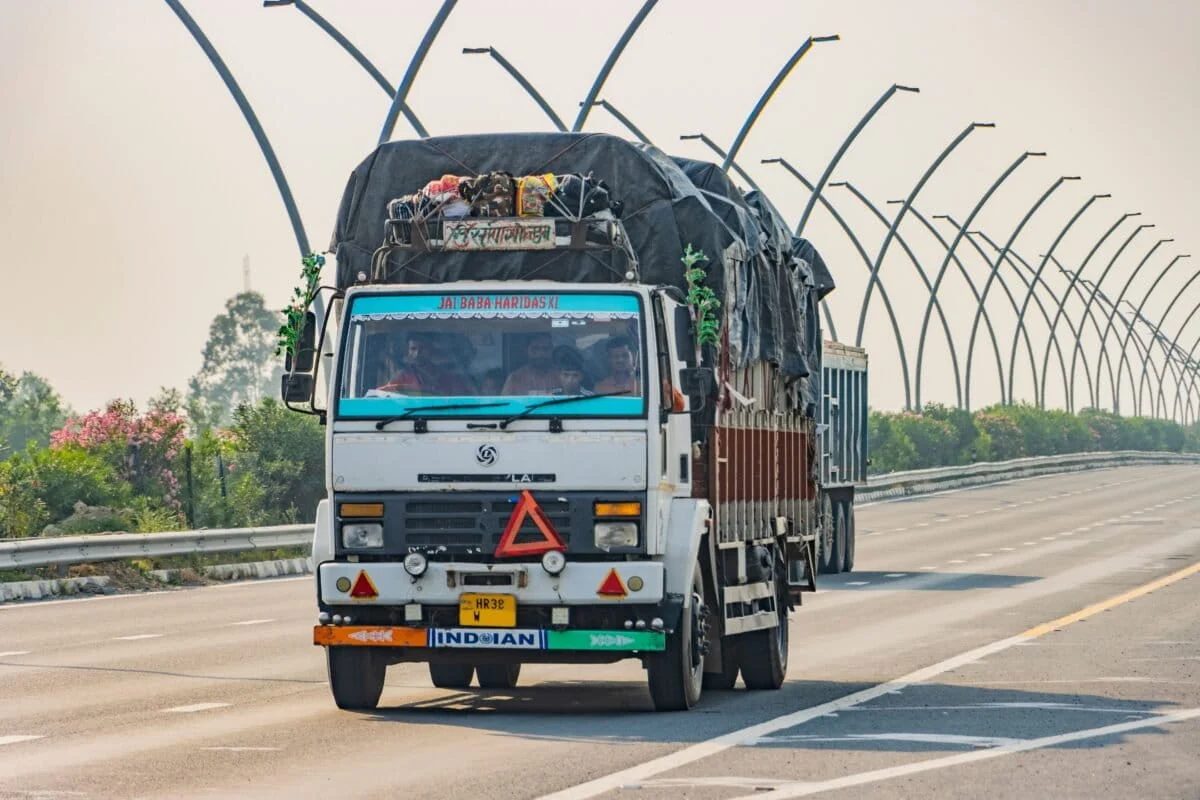
In a decisive move to combat the perennial atmospheric crisis gripping India’s National Capital Region (NCR), the Union Cabinet has greenlit a comprehensive two-year scheme designed to overhaul the region’s heavy-duty transport sector. With a staggering financial outlay of ₹9,585 crore, the initiative seeks to transition nearly 200,000 trucks and buses from aging, high-polluting engines to either cutting-edge Electric Vehicles (EVs) or Bharat Stage VI (BS-VI) compliant models.
The policy represents one of the most aggressive fiscal interventions in the history of Indian environmental governance, targeting the specific vehicular segment—trucks and buses—that contributes disproportionately to the toxic smog that blankets the region every winter.
Main Facts: A Multi-Billion Rupee Intervention
The scheme, officially approved on June 3, is built upon a cost-sharing model between the Central Government and the states comprising the NCR, including Delhi, Haryana, Rajasthan, and Uttar Pradesh. Of the total ₹9,585 crore budget, the Central Government has committed ₹5,041 crore in direct subsidies and incentives. An additional ₹1,601 crore is expected to be accounted for through motor vehicle tax concessions provided by the participating state governments.
The Target Demographic
The government has identified a specific fleet of vehicles for this transition:
- Trucks: Approximately 1.91 lakh (191,000) privately owned units.
- Buses: Approximately 16,329 units.
- Exclusions: Notably, the scheme excludes government-owned vehicles, focusing its fiscal firepower entirely on private operators and logistics firms.
The Incentive Structure
To lower the barrier to entry for expensive BS-VI or electric upgrades, the government has unveiled a "carrot and stick" approach:
- Interest Subsidies: A 5% interest subsidy on loans for a duration of five years.
- Operational Support: Monthly fuel vouchers worth up to ₹4,800 to offset the higher costs of cleaner fuels or charging.
- Lump-sum Benefits: Significant capital subsidies for those choosing to go fully electric.
- Tax Breaks: A 100% waiver on registration fees and motor vehicle taxes for new vehicle purchases, and a 50% concession for vehicles up to 10 years old.
- Manufacturer Discounts: A mandated 8% discount on ex-showroom prices for participants in the scheme.
Chronology: The Road to BS-VI and Beyond
The journey toward this policy began with the escalating public health crisis in Northern India. For over a decade, the Supreme Court of India and the National Green Tribunal (NGT) have been tightening the noose around old diesel engines.
- 2018: A landmark study by the Automotive Research Association of India (ARAI) and The Energy and Resources Institute (TERI) provided the scientific smoking gun. It revealed that while heavy vehicles made up a minuscule fraction of the total fleet, their tailpipe emissions were the primary drivers of particulate matter.
- April 2020: India made a historic leap, skipping Bharat Stage V entirely and moving directly from BS-IV to BS-VI. This transition required a massive overhaul of the domestic refinery system to produce ultra-low-sulfur fuel.
- 2021-2023: Despite the mandate for new vehicles, the "legacy fleet"—older BS-III and BS-IV trucks—continued to operate within the NCR, bypassing the spirit of the law through long-term permits.
- June 3, 2024: The Union Cabinet formalizes the current two-year window, recognizing that without financial incentives, small-scale truck owners would be unable to retire their aging assets.
The "enrolment window" for this scheme is set for two years, but the financial benefits, such as the interest subsidy, will persist for five years from the date of the new vehicle’s registration, ensuring that the economic impact is sustained.
Supporting Data: The Science of the Smog
The rationale for targeting heavy vehicles is rooted in alarming environmental data. According to estimates cited by Urban Emissions, the transport sector contributes up to 30% of the total air pollution in the NCR year-round. However, the ARAI-TERI study of 2018 highlighted a startling disparity: trucks and buses account for 36% of all vehicular PM 2.5 emissions, despite representing only 3% of the total vehicle population.
The BS-VI Advantage
The shift from BS-IV to BS-VI is not merely incremental; it is a technological generation gap. BS-VI standards require:
- Sulphur Reduction: A five-fold reduction from 50 ppm (parts per million) in BS-IV to just 10 ppm in BS-VI.
- Nitrogen Oxide (NOx): A 70% reduction in diesel engines and 25% in petrol engines.
- Particulate Matter (PM): The introduction of mandatory Diesel Particulate Filters (DPF) and Selective Catalytic Reduction (SCR) has led to an 80% reduction in PM emissions.
For owners of BS-III vehicles, the scheme is an ultimatum: these vehicles must be scrapped. For BS-IV owners, the government offers a degree of flexibility—they can either scrap the vehicle for a payout or sell it in "non-polluted areas" outside the NCR. This "zonal" approach aims to clear the air in the capital while acknowledging the residual economic value of relatively newer BS-IV trucks in less congested rural regions.

Official Responses: A Unified Front for Clean Air
In its official statement, the government characterized the scheme as a pillar of its "Cleaner Mobility" mission. A spokesperson for the Ministry of Heavy Industries noted that the policy was designed to "balance the urgent need for environmental remediation with the economic realities of the logistics sector."
"The goal is not to punish the transporters who are the backbone of our economy, but to partner with them," the statement read. "By providing 5% interest subsidies and substantial tax waivers, we are making the ‘green choice’ the ‘economical choice’ for the average truck owner in Haryana or Uttar Pradesh."
State representatives from the NCR regions have also signaled their cooperation. A senior official from the Delhi Transport Department remarked, "Air knows no borders. The coordination between the four states under this Union Cabinet umbrella is the only way to ensure that a truck scrapped in Delhi doesn’t simply reappear in Noida or Gurugram with a different registration."
Environmentalists have largely welcomed the move but remain cautious. Experts from the Centre for Science and Environment (CSE) pointed out that while the financial package is robust, the success of the EV component will depend heavily on the rapid expansion of heavy-duty charging infrastructure along the Western and Eastern Peripheral Expressways.
Implications: Economic, Health, and Logistical Shifts
The long-term implications of this ₹9,585 crore outlay extend far beyond the tailpipes of trucks.
1. The Health Dividend
The most immediate beneficiary will be public health. High levels of PM 2.5 and NOx are linked to chronic respiratory diseases, stunted lung development in children, and increased cardiovascular mortality. By slashing heavy vehicle emissions by up to 80%, the NCR could see a significant reduction in "smog days," potentially saving the exchequer billions in healthcare costs over the next decade.
2. The Scrappage Economy
The mandatory scrapping of BS-III vehicles will provide a massive boost to the nascent Organized Vehicle Scrapping Centers (OVSCs) under the National Automobile Scrappage Policy. This creates a circular economy where steel, aluminum, and rubber from old trucks are recycled back into the manufacturing chain, reducing the environmental footprint of the automotive industry itself.
3. Logistical Costs and Inflation
There is a looming concern regarding the cost of logistics. BS-VI trucks are more expensive to maintain due to the requirement for AdBlue (Diesel Exhaust Fluid) and more frequent sensor calibrations. While the ₹4,800 monthly fuel voucher and interest subsidies mitigate this, the industry may see a marginal rise in freight rates. However, the government argues that the improved fuel efficiency of BS-VI engines and the significantly lower "fuel" costs of EVs will eventually lead to lower operational costs.
4. The EV Transition
By offering lump-sum benefits for electric trucks and buses, the government is attempting to jumpstart a market that currently lacks scale. Most electric heavy vehicles in India are currently limited to short-haul city buses. This scheme could provide the necessary volume for manufacturers like Tata Motors, Ashok Leyland, and Olectra to invest more heavily in long-haul electric freight technology.
5. Urban Planning and Regional Cooperation
The scheme sets a precedent for regional environmental governance. If successful, the NCR model—where the Center provides the bulk of the funding and states waive taxes—could be replicated in other polluted clusters such as the Indo-Gangetic plain or the industrial belts of Maharashtra and Gujarat.
Conclusion
The Union Cabinet’s ₹9,585 crore scheme is a high-stakes bet on a cleaner future. By targeting the "3% that causes 36% of the problem," the government is applying a surgical approach to air pollution. For the 200,000 truck and bus owners in the NCR, the next two years represent a period of forced but funded evolution. As the region prepares for another winter, the success of this transition will be measured not just in crores of rupees spent, but in the clarity of the horizon and the health of the millions who breathe the air of the National Capital.
