

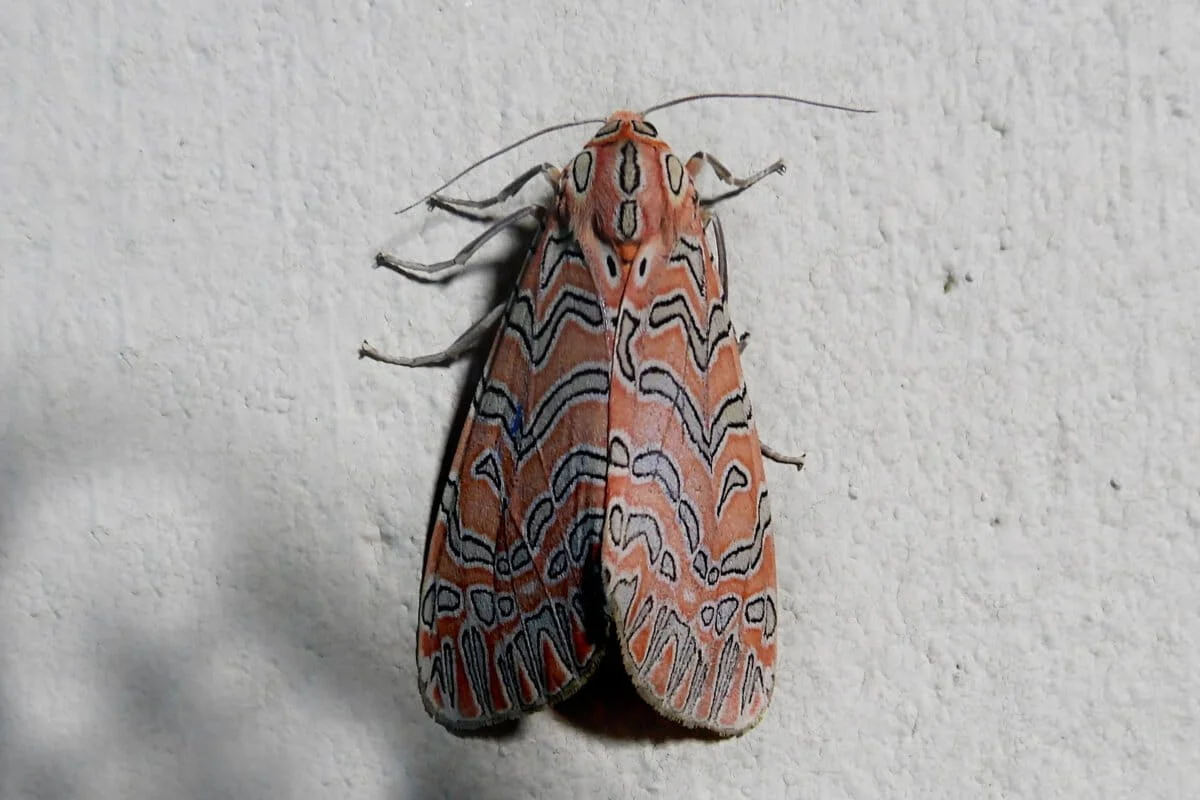
IDUKKI, KERALA — In a discovery that underscores the profound biological mysteries still hidden within the dense canopies of the Western Ghats, an international team of entomologists has identified a completely new genus and species of tiger moth. The discovery of the moth, now named Antaram idukki, represents a significant milestone in Indian entomology, as the identification of an entirely new genus—a taxonomic rank higher than species—is an increasingly rare occurrence in the modern era of natural science.
The finding, led by Dr. Aparna Sureshchandra Kalawate of the Zoological Survey of India (ZSI), in collaboration with experts from the Natural History Museum in London, highlights the Western Ghats’ status as a global biodiversity hotspot and serves as a reminder of the vast "Linnean shortfall"—the gap between the species that exist and those that have been formally described by science.
Main Facts: The Emergence of Antaram idukki
The newly described insect belongs to the subfamily Arctiinae within the family Erebidae, commonly known as tiger moths. These moths are celebrated among naturalists for their often-vibrant coloration and intricate wing patterns, which frequently serve as a warning to predators of their toxicity. However, Antaram idukki possesses a suite of morphological characteristics so distinct that it challenged existing classification systems.
The genus name, Antaram, was established to accommodate the unique physical structure of the moth, while the specific epithet, idukki, pays homage to the district in Kerala where the specimen was first located.
Key Identifying Features
The moth is characterized by a striking and unusual pattern of strongly wavy, dark bands across its forewings. This aesthetic distinguishes it from the majority of Indian tiger moths, which typically exhibit more geometric or spotted patterns. Beyond its external appearance, the researchers noted significant differences in the moth’s reproductive anatomy and skeletal body structure, which provided the definitive evidence required to propose a new genus.
The discovery was based on a single male specimen collected during a field expedition in the southern Western Ghats. While the lack of a female specimen or a larger population sample leaves some questions unanswered, the distinctiveness of the male’s morphology was sufficient for the team to conclude that they were looking at a previously unknown branch of the evolutionary tree.
Chronology: From Field Collection to Formal Recognition
The journey to the formal description of Antaram idukki began in the early months of 2024, during a routine biodiversity survey in the Idukki district of Kerala.
The Initial Encounter
Dr. Aparna Sureshchandra Kalawate, a seasoned scientist with the Zoological Survey of India (Western Regional Centre, Pune), collected the specimen while surveying the moth diversity of the region. Upon initial inspection, the moth’s unique wing venation and color patterns signaled that it was not a common species. However, the true extent of its uniqueness was not immediately apparent.
The Comparative Analysis
After returning to the lab, Dr. Kalawate conducted a detailed morphological analysis, comparing the specimen against the extensive records of Indian tiger moths held by the ZSI. When the moth failed to match any known Indian genus, the scope of the investigation expanded internationally.
In mid-2024, Dr. Kalawate contacted Alberto Zilli, the renowned curator of Lepidoptera at the Natural History Museum (NHM) in London. The NHM houses one of the world’s most comprehensive collections of insects, making it the ultimate destination for verifying rare taxonomic finds.
The Six-Month Verification
For the next five to six months, Zilli conducted an exhaustive comparative study, examining the Idukki specimen against tiger moth genera from across the globe. The process involved meticulous examination of the insect’s genitalia—a standard practice in entomology to distinguish between closely related groups—and wing patterns.
By late 2024, the conclusion was clear: the specimen did not fit into any existing genus within the Arctiinae subfamily. This confirmation set the stage for the formal naming and publication of the new genus and species in The Journal of the Lepidopterists’ Society.
Supporting Data: Morphology and the Mimicry Hypothesis
The scientific paper detailing the discovery provides a deep dive into the evolutionary biology of Antaram idukki. One of the most compelling aspects of the study is the hypothesis regarding the moth’s appearance.
The Evolution of Mimicry
The researchers observed that Antaram idukki bears a remarkable resemblance to moths of the genus Mangina, which are common throughout Kerala. Species within the Mangina genus are known to be unpalatable to birds and other predators due to chemical compounds sequestered during their larval stage.

The scientists hypothesize that Antaram idukki may have evolved to resemble these more common, toxic moths—a biological strategy known as mimicry. If Antaram is indeed a mimic, it gains protection by "tricking" predators into thinking it is a member of a species they have already learned to avoid. This evolutionary pressure could explain why the moth possesses such a distinct look compared to its actual genetic relatives.
Structural Divergence
The paper notes that the reproductive anatomy of the male Antaram idukki is fundamentally different from any other members of the Arctiinae subfamily found in the Oriental region. In the world of insect taxonomy, the "lock and key" mechanism of genitalia is often the most reliable indicator of a genus-level split, as these structures are less likely to be influenced by external environmental factors than wing color or size.
Official Responses and Researcher Insights
The discovery has been met with excitement within the scientific community, though the researchers remain cautious about the moth’s future.
Dr. Aparna Sureshchandra Kalawate emphasized the rarity of the find during a press briefing. "Typically, taxonomists discover new species. To find an entirely new genus is a rare event that happens once in a decade for many researchers," she stated. "It suggests that our understanding of the Western Ghats is still in its infancy."
Regarding the limitations of the current study, Kalawate noted the absence of genetic data. "We relied solely on morphological evidence because we only had one specimen. While DNA analysis would have provided an additional line of evidence, we had to prioritize the preservation of the specimen’s physical integrity for the holotype. With just one individual, our ability to conduct destructive sampling for DNA was limited."
The Challenge of Conservation
When asked about the conservation status of Antaram idukki, the team admitted that it is currently impossible to determine. Because only one specimen has ever been found, scientists cannot say if the moth is "critically endangered" or simply "cryptic"—meaning it is good at hiding or lives in a niche habitat that humans rarely visit.
"We cannot yet say whether it is endemic only to Idukki or if it ranges across the Western Ghats," Kalawate added. "We need more specimens and further ecological studies to understand its life cycle, its host plants, and its population density."
Implications: Biodiversity and the "Wallacean Shortfall"
The discovery of Antaram idukki has broader implications for the conservation of the Western Ghats, a region currently facing intense pressure from deforestation, climate change, and infrastructure development.
The Western Ghats as a Refugium
The fact that a large, relatively distinct insect could remain undetected until 2024 suggests that many smaller or less conspicuous species may be going extinct before they are even discovered. This is often referred to as the "Wallacean shortfall"—the lack of knowledge regarding the geographic distribution of species.
Idukki, with its unique topography of high-altitude shola forests and evergreen patches, acts as a biological island. The discovery of Antaram reinforces the need for stricter habitat protections in the southern Western Ghats, as the region likely harbors other "relict" lineages that exist nowhere else on Earth.
The Importance of Natural History Museums
The collaboration between the ZSI and the Natural History Museum in London highlights the vital role that museum collections play in modern science. Without the ability to compare the Idukki specimen against millions of other insects stored in London, the identification of Antaram as a new genus would have been nearly impossible. This discovery underscores the need for continued funding and support for taxonomic research and museum curation.
Future Research Directions
The next steps for the research team involve returning to the Idukki district during different seasons to attempt to locate more specimens. Finding a female Antaram idukki is a high priority, as it would allow scientists to complete the morphological description of the species. Additionally, should more specimens be found, DNA barcoding will be conducted to place the genus more accurately within the evolutionary tree of the Erebidae family.
For now, Antaram idukki remains a beautiful enigma—a "ghost moth" of the Western Ghats that reminds us how much of the natural world remains to be explored. As Dr. Kalawate concluded, "Every discovery like this is a piece of the puzzle. We are just beginning to see the full picture of India’s incredible natural heritage."
Scientific Publication Reference: Kalawate, A.S., & Zilli, A. (2024). A Remarkable New Genus and Species of Tiger Moth from the Western Ghats, India. The Journal of the Lepidopterists’ Society, 80(2).
