

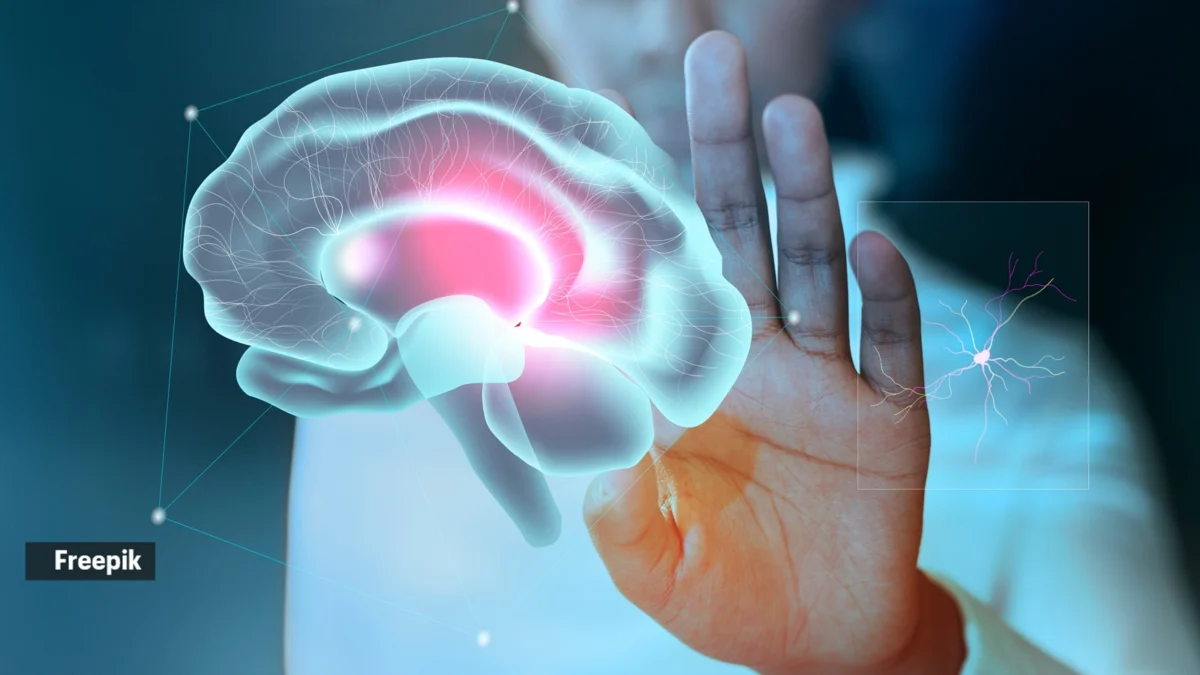
New Delhi, September 22, 2026 – In a discovery that could fundamentally alter our understanding of the human brain, researchers at Stanford Medicine have unveiled compelling evidence suggesting the brain may not develop as a single, monolithic organ. Instead, their groundbreaking study, published in the esteemed journal Nature Neuroscience on September 18, 2026, posits that the brain is comprised of "two separate organs adjacent to one another." This paradigm-shifting finding promises to unlock new avenues for research into devastating neurological diseases that have long eluded effective treatment.
For decades, the scientific community has grappled with the challenge of cultivating certain crucial brain cell types in laboratory settings. This hurdle has significantly impeded the study of conditions like spinal muscular atrophy (SMA) and amyotrophic lateral sclerosis (ALS), also known as Lou Gehrig’s disease. However, the latest research from Stanford University appears to have overcome this obstacle, opening unprecedented doors to understanding and potentially treating these debilitating disorders.
Unraveling the Dual Origin Hypothesis: A Deeper Dive
The implications of the Stanford Medicine discovery are profound, suggesting a more complex developmental pathway for the human brain than previously assumed. Dr. Lokesh B, a Senior Consultant in Neurology at Aster CMI Hospital in Bangalore, offered a simplified explanation of the study’s significance to The Indian Express.
"The Stanford study is crucial because it challenges the long-held notion that the human brain develops as one completely uniform system," Dr. Lokesh explained. "Instead, it proposes that the anterior (front) and posterior (back) portions of the brain appear to originate from two distinct groups of early-stage cells. These separate origins eventually converge and integrate to form the single, highly interconnected organ we recognize as the brain."
Dr. Lokesh was quick to clarify that this does not imply humans possess two physically separate brains. "When we hear the term ‘two organs,’ it’s essential not to interpret this literally as having two distinct brains," he emphasized. "Rather, it refers to distinct developmental origins and potentially differing cellular lineages that contribute to the brain’s overall structure and function."
From a neurological perspective, this nuanced understanding of brain development could revolutionize how scientists approach the study of various neurological conditions. "This research could significantly enhance our comprehension of how different brain regions develop and, critically, why certain neurological diseases disproportionately affect specific areas," Dr. Lokesh elaborated. "Historically, culturing specific brain cells for research has been a significant bottleneck. Now, researchers have successfully utilized human stem cells to generate functional hindbrain neurons in a laboratory environment. This provides a novel and powerful tool for investigating conditions like ALS and SMA, which directly impact brainstem neurons responsible for vital functions such as swallowing and breathing."
The ability to study these specific neuron types in vitro offers a controlled environment to observe their behavior, identify their vulnerabilities, and test potential therapeutic interventions without the complexities and ethical considerations of human trials. This leap forward could accelerate the discovery of disease mechanisms and the development of targeted treatments for conditions that have previously been difficult to model and study effectively.
A Glimpse into the Chronology of Discovery
The journey to this groundbreaking revelation has been a protracted one, built upon decades of incremental advancements in neuroscience and developmental biology. While the precise timeline of the Stanford study’s inception is not detailed in the initial report, its publication in Nature Neuroscience signifies the culmination of rigorous research, experimentation, and peer review.
The publication date of September 18, 2026, places this discovery firmly in the present, building upon a rich history of neurological research. Early pioneers in understanding brain development, such as Santiago Ramón y Cajal in the late 19th and early 20th centuries, laid the groundwork by proposing the neuron doctrine – the idea that the nervous system is composed of discrete cells. Subsequent advancements in genetics, molecular biology, and imaging techniques have allowed researchers to probe the intricate processes of brain formation with increasing precision.
The development of advanced stem cell technologies, particularly induced pluripotent stem cells (iPSCs), has been a critical enabler for studies like the one conducted by Stanford Medicine. These technologies allow scientists to reprogram adult cells back into a stem cell-like state, which can then be differentiated into various specialized cell types, including neurons. This has provided a crucial alternative to studying cells directly from developing or diseased brains.
The Stanford study likely involved a multi-disciplinary approach, integrating expertise in developmental neuroscience, cell biology, genetics, and potentially computational modeling. The ability to culture and study functional hindbrain neurons is a testament to the refinement of these techniques, allowing for the creation of more accurate and relevant cellular models of neurological disorders.
Supporting Data: The Foundation of the Two-Organ Theory
While the initial report does not delve into the specific experimental data, the publication in Nature Neuroscience implies a robust dataset supporting the "two separate organs" hypothesis. Typically, such a significant claim would be backed by evidence from:
- Genetic Analysis: Researchers would likely have examined the expression patterns of specific genes during early brain development. Distinct sets of genes might be activated in the precursor cells destined to form the anterior versus posterior brain regions. This could reveal unique molecular signatures associated with each developmental pathway.
- Cellular Tracing Studies: Advanced techniques for tracking cell lineages during development would be instrumental. By marking specific progenitor cells and observing their fate, scientists could confirm whether cells originating from distinct embryonic regions give rise to separate parts of the mature brain.
- Comparative Anatomy and Embryology: The study might draw parallels with the developmental processes observed in other species, looking for conserved mechanisms that support a dual origin of brain structures.
- Stem Cell Differentiation Assays: The success in growing functional hindbrain neurons from human stem cells itself serves as supporting data. This indicates a degree of self-organization and developmental potential within specific cell populations that can be isolated and studied. The efficiency and characteristics of these cultured neurons would be key metrics.
- Functional Characterization: Demonstrating that the cultured hindbrain neurons exhibit characteristic electrical and biochemical properties would validate their functional relevance. This allows for studying how these neurons interact and contribute to overall brain function.
The fact that scientists have struggled for decades to grow certain types of brain cells suggests that these cells possess unique developmental requirements or are derived from very specific progenitor populations. The Stanford study’s success in overcoming this suggests they have identified key factors or pathways that enable the growth and differentiation of these challenging cell types, lending further credibility to their findings.
Official Responses and Expert Commentary
The scientific community is reacting with a mixture of excitement and cautious optimism to the Stanford Medicine announcement. As a leading institution in medical research, Stanford’s findings carry significant weight.
Dr. Lokesh B’s commentary provides an invaluable perspective from a practicing neurologist. His emphasis on the distinction between developmental origins and literal "two brains" highlights the importance of precise scientific communication. His statement, "I would consider this a positive step for future neurological research and treatment, but it is important not to suggest that it will immediately change diagnosis or treatment in hospitals," encapsulates the current sentiment.
The research community will undoubtedly be scrutinizing the full details of the Nature Neuroscience paper. Independent verification and replication of these findings by other research groups will be crucial in solidifying the new understanding of brain development. Funding bodies and research institutions are likely to take note, potentially directing resources towards studies that explore the implications of this dual-origin hypothesis.
Discussions are expected to emerge within professional societies such as the American Academy of Neurology and the Society for Neuroscience, where the findings will be presented and debated. The potential impact on medical education is also significant, as textbooks and curricula may need to be updated to reflect this evolving understanding of brain embryology.
Implications: A New Dawn for Neurological Research and Treatment
The implications of the Stanford Medicine discovery are far-reaching, offering a renewed sense of hope for patients suffering from a range of neurological disorders.
For Neurological Research:
- Enhanced Disease Modeling: The ability to grow specific hindbrain neurons in the lab provides a powerful new tool for creating more accurate cellular models of diseases like SMA and ALS. This allows researchers to study disease progression at a cellular level, identify the molecular mechanisms underlying neuronal dysfunction and death, and screen for potential therapeutic compounds more effectively.
- Targeted Drug Discovery: A deeper understanding of the distinct developmental pathways of different brain regions could lead to the identification of novel drug targets. Therapies could be designed to specifically address the vulnerabilities of neurons originating from one lineage or the other, potentially leading to more precise and effective treatments.
- Regenerative Medicine: If the study sheds light on the intrinsic regenerative capacities of different neural populations, it could pave the way for new regenerative medicine strategies. Understanding how to coax these cells to regenerate or repair damaged tissue could offer revolutionary treatment options for neurodegenerative diseases.
- Understanding Developmental Disorders: The dual-origin hypothesis could also offer new insights into congenital neurological disorders, helping to unravel why certain brain structures fail to form correctly during embryonic development.
For Future Treatments:
While Dr. Lokesh cautions against immediate changes in clinical practice, the long-term potential is immense.
- Personalized Medicine: If distinct genetic or cellular profiles are identified for the two developmental pathways, this could lead to more personalized approaches to neurological treatment. Therapies could be tailored based on an individual’s specific developmental makeup.
- Early Intervention Strategies: A better understanding of early developmental anomalies might enable the development of strategies for earlier diagnosis and intervention in certain neurological conditions, potentially mitigating their impact before significant damage occurs.
- Novel Therapeutic Modalities: The discovery could inspire the development of entirely new therapeutic modalities that target the specific cellular and molecular characteristics of the two brain components. This might include gene therapies, cell-based therapies, or novel small-molecule drugs.
However, as Dr. Lokesh wisely points out, "these possibilities will require substantial further research and clinical testing before they become routine patient care." The transition from laboratory discovery to bedside application is a long and arduous process, often taking many years. Nevertheless, the Stanford Medicine study represents a significant leap forward, providing a foundational understanding that could accelerate this journey and ultimately improve the lives of millions affected by neurological diseases worldwide. The scientific world eagerly awaits further details and the ensuing wave of research that this pivotal discovery is sure to inspire.
