

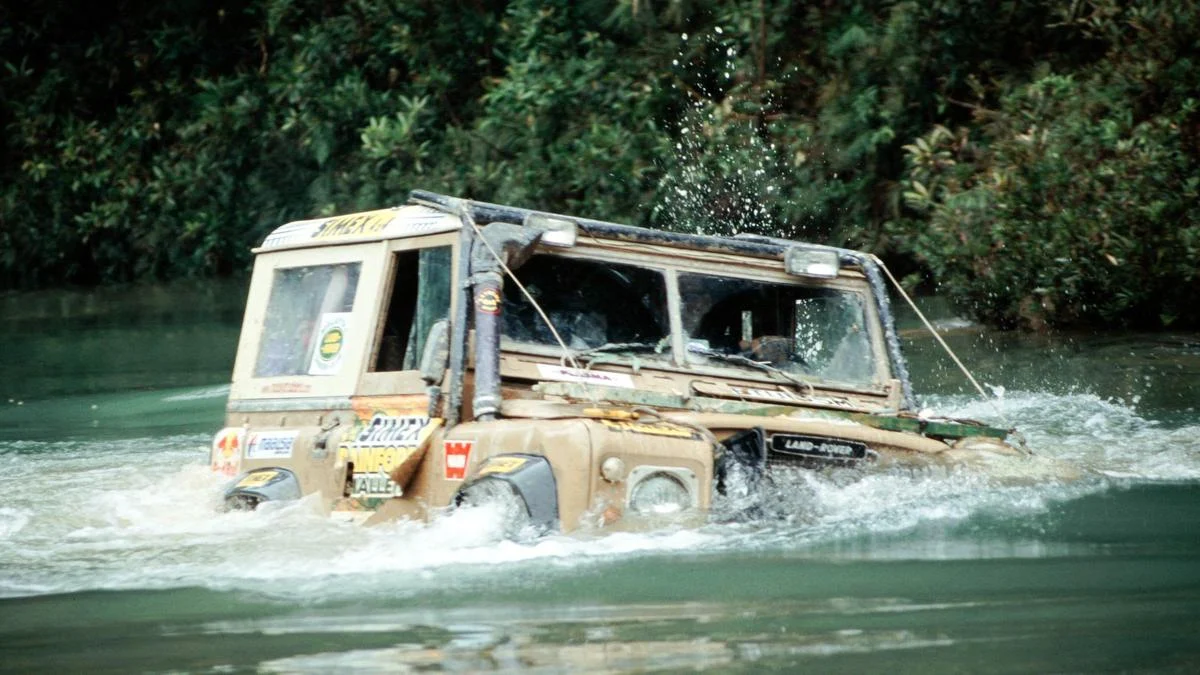
In the heart of the Western Ghats, where the Indian monsoon transforms the Goan wilderness into a treacherous landscape of waist-deep slush and vertical inclines, a new chapter in Indian motorsports history was written this August. The 2026 edition of the Rainforest Challenge (RFC) India, widely regarded as one of the most grueling off-road competitions on the planet, saw an unprecedented victory for a duo from Kerala. Athul Thomas and Binil Babu, competing under the moniker "Team Killerbull," emerged as champions in the 4X4 Stock class, navigating their Maruti Jimny to a decisive win that has sent ripples through the national off-roading community.
The Rainforest Challenge, an international franchise headquartered in Malaysia, is not merely a race; it is a test of mechanical endurance, psychological resilience, and the symbiotic relationship between a driver and their navigator. For Athul and Binil, the victory represents more than just a trophy—it is the culmination of a self-funded dream and a significant milestone for Kerala’s burgeoning motorsports scene.
Main Facts: A Breakthrough in the Stock Category
The Rainforest Challenge India is structured into various categories, including Extreme and Modified classes, where vehicles are often unrecognizable from their factory versions, boasting massive tires, custom suspensions, and high-performance engines. However, the 4X4 Stock class remains a purist’s battleground. It requires participants to compete in vehicles that maintain their original factory specifications with minimal modifications, placing the onus of victory squarely on driving technique and navigational strategy.
Athul Thomas, a veteran with a decade of experience and over 300 motorsports events under his belt, took the wheel. Beside him was Binil Babu, a seasoned motorbike racer making his competitive debut in a four-wheeled vehicle. Despite their differing backgrounds, the duo demonstrated a masterclass in off-road synergy.
Representing Kerala, a state with a rich history in motorsports but a previously empty mantle in the RFC Stock category, Team Killerbull outperformed 24 other competitors. They finished the event with a staggering 1,247 points out of a possible 1,400, a testament to their consistency across the multi-day ordeal. While other Kerala-based teams found success in the Modified and Extreme categories, Athul and Binil’s win marks the first time a team from the state has conquered the Stock class at this level.
Chronology: Four Days of Mud, Sweat, and Gears
The road to the podium was a four-day marathon that tested the limits of both man and machine. The event, which concluded on August 1, 2026, was characterized by the relentless Goan monsoon, which provided the "perfect" hostile environment for which the RFC is famous.
Day 1 & 2: The Proving Grounds
The competition began with the opening Special Stages (SS). In the Stock class, the challenges are designed to exploit the limitations of factory vehicles. The "terrain" consisted of dense forest patches where "roads" were non-existent, replaced by narrow paths marked only by cones. On the first two days, Team Killerbull focused on precision. In off-roading, speed is often the enemy of progress; hitting a cone or failing to negotiate a turn results in heavy point penalties. Athul’s decade of experience allowed him to read the shifting soil, while Binil, drawing on his bike racing instincts for line selection, provided critical navigational cues.

Day 3: The Slush and the Slope
As the rain intensified, the stages became increasingly "winch-heavy." Even in the Stock category, recovery skills are paramount. The duo faced 14 different stages across the event, each presenting a unique obstacle—from deep water crossings that threatened to drown the engine to near-vertical climbs where the Maruti Jimny’s lightweight frame was its greatest asset. By the end of Day 3, Team Killerbull had established a narrow lead, relying on their ability to minimize damage to the vehicle while maintaining a steady pace.
Day 4: The Final Push
The final day was a test of nerves. With 24 other cars vying for the top spot, any mechanical failure would have been catastrophic. The duo managed to maintain their composure through the final stages, which involved technical maneuvering through thick laterite mud. When the final scores were tallied on the evening of August 1, the 1,247-point haul secured their position at the top of the leaderboard.
Supporting Data: The Statistics of Endurance
The RFC India is statistically recognized as one of the top 10 toughest motor races in the world and ranks among the top five toughest off-road races globally. The 2026 edition maintained this reputation with a high attrition rate.
- Participation: 25 vehicles competed in the 4X4 Stock class.
- Success Rate: Team Killerbull achieved an 89% efficiency rating, scoring 1,247/1,400 points.
- The Machine: The Maruti Jimny, despite being a stock entrant, proved its mettle. Its compact dimensions allowed the team to navigate tight forest stages that hampered larger SUVs.
- Financial Investment: The cost of participation is a significant barrier. The team reported an expenditure of approximately ₹6 lakh. This includes the entry fee, vehicle preparation (safety cages, specialized tires allowed under stock rules, and recovery gear), logistics from Kerala to Goa, and technical support.
Official Responses and Participant Perspectives
The victory has brought to light the stark contrast in institutional support for motorsports across different Indian states. While the event itself is supported by the State Government of Goa, which recognizes the tourism and sporting value of the RFC, the participants often feel the weight of financial isolation.
Binil Babu, who serves as a manager at Ducati Kochi in his professional life, spoke candidly about the challenges of self-funding. "Preparing for a race of this magnitude is not just a physical or mental challenge; it is a financial one," Babu stated. "We dipped into our personal savings to make this happen. While we are thrilled with the win, the reality is that without sponsorships, this sport remains inaccessible to many talented individuals."
Babu drew a comparison to the winners of the 4X4 Extreme class from Arunachal Pradesh, who received significant recognition and state-level support upon their return. "We aren’t necessarily looking for government handouts, but local corporate sponsorships would be a game-changer. Kerala has an incredible pool of talent in both two-wheel and four-wheel racing, but many are forced to quit because they cannot sustain the costs."
The organizers of RFC India have frequently emphasized that the event is designed to promote adventure tourism and technical driving skills. However, the call from participants like Athul and Binil suggests a need for a more robust ecosystem that connects athletes with sponsors.

Implications: Safety, Sport, and the Future of Off-Roading
The success of Team Killerbull carries implications that extend beyond the trophy room. It touches upon the cultural perception of speed and the development of the Indian automotive industry.
1. Promoting a "Healthy Speed" Culture
One of the most poignant points raised by Binil Babu was the role of professional motorsports in curbing illegal street racing. "This is a great outlet for youngsters who love speed," he noted. "When you compete in a controlled, high-stakes environment like the RFC, it changes your entire perspective. You realize that true skill isn’t about reckless driving on public roads; it’s about control, patience, and technical mastery. It fosters a healthy attitude toward speed."
2. The "Stock" Validation
The victory in the Stock class serves as a massive validation for the vehicles themselves. In an era where "overlanding" and off-roading are becoming mainstream hobbies in India, seeing a stock Maruti Jimny outperform a field of 24 competitors in the toughest conditions imaginable provides valuable data to manufacturers and consumers alike. It proves that Indian-spec off-roaders are world-class in their base form.
3. Kerala as a Motorsports Hub
With this win, Kerala cements its position as a powerhouse of Indian off-roading. The state’s unique geography—ranging from high-altitude tea plantations to marshy coastal plains—provides a natural training ground for drivers. If the success of Team Killerbull can be leveraged to attract local sponsors, Kerala could potentially lead the way in professionalizing off-road racing in India.
4. The Need for Institutional Frameworks
The ₹6 lakh price tag for a four-day event highlights the need for a more structured support system. If India aims to produce world-class rally drivers who can compete in events like the Dakar Rally, the journey begins at domestic challenges like the RFC. The lack of a clear pathway for "Stock" category winners to progress to international stages remains a hurdle that the Federation of Motor Sports Clubs of India (FMSCI) and state sports ministries may need to address.
Conclusion
The triumph of Athul Thomas and Binil Babu at the Rainforest Challenge India 2026 is a story of grit against the elements. In the mud-slicked forests of Goa, Team Killerbull proved that with enough passion and technical prowess, the financial and physical obstacles of extreme motorsports can be overcome. As they return to Kerala as champions, their victory stands as a call to action for the motorsports community: to support the talent that exists in the "Stock" ranks and to recognize off-roading not just as a hobby, but as a disciplined professional sport that builds character, promotes safety, and tests the very limits of human ingenuity.
