

The Indian two-wheeler landscape remains dominated by the presence of Hero MotoCorp, a titan that continues to move volumes that dwarf most of its global competitors. However, the sales performance for July 2026 reveals a complex narrative of a brand in transition. While the company achieved a robust year-on-year (YoY) growth of over 21%, the internal dynamics of its product portfolio suggest a significant shift in consumer preferences, the rapid maturation of the electric vehicle (EV) segment, and a persistent struggle to break into the premium motorcycle category.
Main Facts: A Macro View of Hero’s July Performance
In July 2026, Hero MotoCorp recorded domestic sales of 4,99,943 units. This figure represents a substantial 21.56% growth compared to the 4,11,271 units sold during the same month in 2025. This double-digit growth underscores a healthy recovery in the entry-level and executive commuter segments, which form the backbone of rural and semi-urban Indian mobility.
However, a closer look at the month-on-month (MoM) performance shows a more stagnant trend. Sales declined marginally by 0.34% from June 2026’s figure of 5,01,661 units. This plateau suggests that while the annual trajectory is positive, the immediate market momentum has stabilized, possibly due to the onset of the monsoon season, which traditionally impacts rural purchasing patterns.
The most striking takeaway from the July data is the emergence of the Vida electric brand as a top-three contributor to Hero’s volume, contrasting sharply with the near-total collapse of the company’s high-end premium offerings like the Karizma and Mavrick.
Chronology of Performance: Segment-by-Segment Breakdown
The Splendor Hegemony and the HF Deluxe Decline
The Hero Splendor continues to be the undisputed "spine" of Hero MotoCorp’s balance sheet. In July 2026, the Splendor range moved 3,35,246 units. This accounted for a staggering 67.06% of Hero’s total domestic volume. While it saw a 35.88% YoY growth, it experienced a 5.04% MoM dip. Despite the slight monthly decline, the Splendor remains the primary driver of Hero’s market share in India.
In contrast, the HF Deluxe, once a consistent "one-lakh-plus" performer, finished the month with 55,978 units. Although this was a 26.38% improvement over June 2026, it represented a 21.68% YoY decline. The widening gap between the Splendor and the HF Deluxe suggests that Hero’s customer base is consolidating around the Splendor brand, potentially cannibalizing the HF Deluxe’s market share as buyers opt for the more aspirational "Splendor" badge within the same price bracket.
The Electric Revolution: Vida’s Ascent
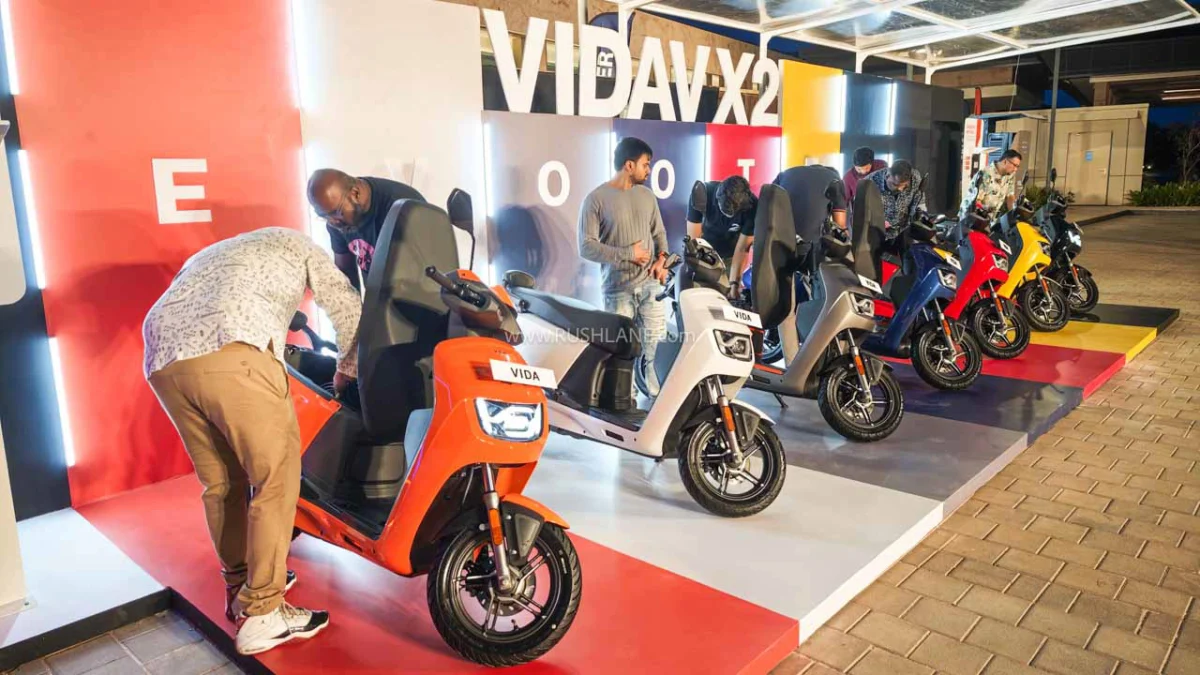
Perhaps the most significant development in Hero’s July report is the performance of the Vida electric scooter range. For the first time, Vida has climbed to the third position in Hero’s domestic sales hierarchy. With 22,707 units sold, Vida registered a massive 102.29% YoY growth, effectively doubling its volume from July 2025.

This growth indicates that Hero’s late entry into the EV space is finally paying dividends. The Vida VX2 and its siblings are no longer niche products; they are now outselling established internal combustion engine (ICE) models like the Passion, Glamour, and Destini.
Turbulence in the 125cc Sporty Segment
The Xtreme 125R, which was launched to challenge the dominance of the TVS Raider and the Honda Shine 125, appears to be facing a cooling-off period. Sales fell to 9,696 units, a decline of 21.09% YoY and a significant 26.66% MoM. This weakening momentum is a cause for concern, as the 125cc "sporty commuter" segment is one of the fastest-growing niches in the Indian market.
The Premium Failure: Karizma and Mavrick
At the top end of the spectrum, Hero’s "Premium 2.0" strategy is facing a crisis. The Karizma 210, a revival of an iconic nameplate, moved only a single unit in July. Even more concerning is the Mavrick 440, which recorded zero sales. Despite sharing a platform with the successful Harley-Davidson X440, the Mavrick has failed to resonate with premium buyers who seem to prefer the heritage of the Harley-Davidson badge or the performance of rivals from KTM and Royal Enfield.
Supporting Data: Sales Statistics at a Glance
To better understand the shifts, the following tables summarize the July 2026 performance compared to previous periods.
Table 1: Hero MotoCorp Top Performers (July 2026)
| Model | July 2026 Sales | YoY Growth (%) | MoM Growth (%) | Market Share (Within Hero) |
|---|---|---|---|---|
| Splendor | 3,35,246 | +35.88% | -5.04% | 67.06% |
| HF Deluxe | 55,978 | -21.68% | +26.38% | 11.20% |
| Vida (EV) | 22,707 | +102.29% | +11.22% | 4.54% |
| Passion | 19,211 | +6.09% | +25.64% | 3.84% |
| Destini 125 | 19,142 | -2.96% | -13.03% | 3.83% |
Table 2: Scooter and Premium Segment Highlights
| Model | July 2026 Sales | YoY Change | MoM Change | Status |
|---|---|---|---|---|
| Xoom 125 | 9,375 | +43.28% | +39.07% | Gaining Momentum |
| Xpulse | 4,649 | +15.56% | +57.22% | Strong Niche Growth |
| Xtreme 125R | 9,696 | -21.09% | -26.66% | Declining |
| Karizma 210 | 1 | N/A | (0 in June) | Critical Failure |
| Mavrick 440 | 0 | -100% | (3 in June) | Critical Failure |
Official Responses and Strategic Adjustments
While Hero MotoCorp has not released a specific statement regarding the July 2026 breakdown, the company’s recent actions provide insight into their corrective strategy.
Reviving the 125cc Segment
Recognizing the slip in Xtreme 125R sales, Hero recently introduced a refreshed version of the motorcycle. The update includes a high-definition TFT screen and a Tyre Pressure Monitoring System (TPMS). These features are typically reserved for higher-capacity motorcycles, and Hero is clearly attempting to use "segment-first" technology to lure tech-savvy young buyers back from the TVS Raider.
Doubling Down on the "Xoom" Brand
The scooter segment is a vital area where Hero has historically trailed behind Honda. However, the Xoom range (125 and 160) is showing promise. The Xoom 125’s 43% YoY growth suggests that Hero’s focus on sharper styling and better performance is working. The company is expected to continue expanding the Xoom sub-brand to cover more price points.

The "250cc" Reset
Internal sources suggest that Hero is aware of the Karizma 210’s struggle. The "next major hope" for the brand is the upcoming Karizma 250 and Xtreme 250R. By moving to a higher displacement and a more aggressive design language (as seen in recent spy shots and EICMA showcases), Hero hopes to offer a more compelling reason for buyers to choose a Hero-badged premium bike over the competition.
Implications: The Road Ahead for Hero 2.0
The July 2026 sales figures offer three major implications for the future of Hero MotoCorp:
1. The "Splendor Risk" Remains
Hero’s reliance on the Splendor is both its greatest strength and its most significant vulnerability. While 3.35 lakh units provide immense cash flow, the brand is essentially a "one-trick pony" in the motorcycle space. Any disruption in the 100-110cc commuter segment—be it through aggressive EV adoption in rural areas or a shift in taxation—could disproportionately impact Hero compared to more diversified rivals like Bajaj or TVS.
2. The EV Pivot is Succeeding
The rise of Vida is the silver lining in this report. Achieving the #3 spot within the company’s portfolio proves that Hero can successfully migrate its customer base to electric mobility. If Vida continues this trajectory, it could eventually replace the HF Deluxe as the company’s second-highest volume driver, fundamentally altering the company’s profit margins and brand perception.
3. The Premium Identity Crisis
The zero-sale performance of the Mavrick 440 and the near-zero performance of the Karizma 210 indicate a deep-seated branding issue. Indian consumers are willing to pay for Hero’s reliability in the commuter segment, but they do not yet associate the brand with "lifestyle" or "performance" motorcycling. The upcoming 250cc and 400cc launches will be the final test of whether Hero can ever truly compete in the premium space or if it is destined to remain the "Commuter King" forever.
Conclusion
Hero MotoCorp’s July 2026 performance is a story of two halves. On one hand, the company is a volume powerhouse, growing its annual sales by over 20% and successfully scaling its electric vehicle division. On the other hand, it faces a daunting challenge in the premium segment and a cooling interest in its sporty 125cc offerings. As the company moves toward the festive season, all eyes will be on whether the updated Xtreme 125R and the upcoming Karizma 250 can balance the scales and reduce the brand’s overwhelming dependence on the legendary Splendor.
