

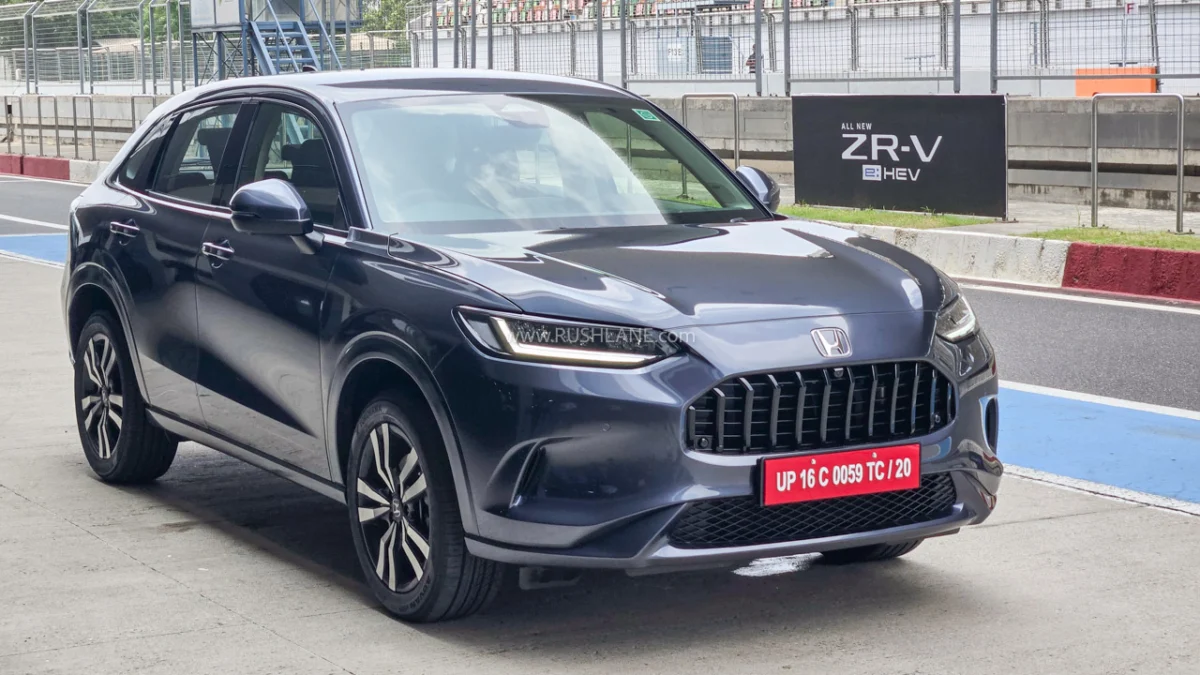
NEW DELHI – Honda Cars India Limited (HCIL) has reported a significant shift in its market trajectory, posting a robust 48.5% growth in domestic sales for July 2026. This double-digit growth comes at a critical juncture for the Japanese automaker as it transitions from a sedan-centric brand to a comprehensive player in the highly competitive Indian SUV landscape. With the recent introduction of the ZR-V and the continued success of the Elevate, Honda is effectively reclaiming its share in the world’s third-largest automotive market.
Main Facts: A Resurgence Driven by Domestic Demand
The sales figures for July 2026 highlight a tale of two markets for Honda. While global export fluctuations impacted the overall total, the domestic performance remained the undisputed star of the report.
Honda reported total sales of 8,284 units in July 2026. This represents a 10.1% increase compared to the 7,524 units sold during the same month in 2025. However, the aggregate figure masks the explosive growth seen within the Indian borders. Domestic volumes soared to 6,014 units, up from 4,050 units in July 2025. This nearly 50% year-on-year (YoY) increase in domestic appetite suggests that Honda’s refreshed product portfolio is resonating deeply with Indian consumers.
Conversely, exports witnessed a contraction, falling to 2,270 units from 3,474 units in July 2025. Industry analysts suggest this dip may be attributed to a strategic reallocation of production capacity to meet the surging domestic demand for newly launched models, as well as shifting logistics in international shipping corridors.
Chronology of Growth: From Recovery to Momentum
To understand the significance of the July 2026 figures, one must look at the sequential progress Honda has made over the last several months.
The Month-on-Month (MoM) Climb
The momentum observed in July was not an isolated spike but a continuation of a positive trend. In June 2026, Honda recorded domestic sales of 5,243 units. The jump to 6,014 units in July represents a healthy 14.7% month-on-month growth. This steady climb indicates that the "wait-and-watch" period for many Indian car buyers is ending, with many opting for the reliability and updated tech of the Honda badge.
Fiscal Year Performance (April–July FY2027)
The first four months of the 2026-27 fiscal year (FY2027) paint a picture of sustained recovery. For the April–July period, Honda sold a total of 29,863 vehicles, marking a 27.1% growth over the 23,504 units sold during the corresponding period in the previous fiscal year.
Breaking this down further:
- Domestic FYTD Growth: 27.9% (20,437 units vs. 15,978 units)
- Export FYTD Growth: 25.3% (9,426 units vs. 7,526 units)
The fact that both domestic and export segments show strong double-digit growth for the fiscal year to date—despite the July export dip—suggests that Honda’s manufacturing facility in Tapukara, Rajasthan, is operating at high efficiency to support a global supply chain while prioritizing the local market.
Supporting Data: Analyzing the Portfolio Mix
The primary catalysts for this growth are the strategic additions to Honda’s lineup and the revitalization of its legacy nameplates.
The ZR-V Factor
The most significant recent addition is the Honda ZR-V. Positioned to bridge the gap between the midsize Elevate and more premium offerings, the ZR-V has successfully attracted a demographic looking for a "global" crossover feel. Its introduction has not only added incremental volume but has also refreshed the brand’s image as a contemporary, design-led manufacturer.
The Elevate and New City
The Honda Elevate continues to be the "bread and butter" SUV for the company, consistently pulling buyers away from rivals in the midsize SUV segment. Meanwhile, the "New City" (the updated 5th-generation model) continues to defend the executive sedan territory. Despite the market’s heavy lean toward SUVs, the City remains a cornerstone of Honda’s identity, offering hybrid options (e:HEV) that appeal to the fuel-efficiency-conscious urban professional.
The Amaze Value Proposition
In the compact sedan segment, the Amaze remains a vital volume driver. As entry-level car prices have risen across the industry, the Amaze has maintained its reputation for offering a "big car" feel at a competitive price point, ensuring Honda retains a footprint in the sub-10 lakh (INR) category.

Official Responses: Strategic Optimism
Commenting on the sales performance, Kunal Behl, Vice President, Marketing & Sales, Honda Cars India, emphasized that the growth is a direct result of a synchronized product strategy.
"Our domestic sales growth of over 48% is a clear reflection of the positive momentum we are building across our entire portfolio," Behl stated. "The encouraging response to the recently introduced New City and the successful launch of the Honda ZR-V have significantly strengthened customer interest in the brand. Furthermore, the Elevate and Amaze continue to deliver robust sales, backed by their strong value proposition and Honda’s legendary reliability."
Looking ahead, Behl noted that the company is preparing for the upcoming festive season, a period that typically accounts for a significant portion of annual automotive sales in India. "With the festive season approaching, we expect our strengthened portfolio and customer-focused initiatives—including enhanced financing options and service packages—to help sustain this momentum in the coming months."
Implications: Honda’s Roadmap to 2030
The July 2026 sales report is more than just a tally of units; it is a precursor to what industry insiders are calling "Honda 2.0" in India. The company is currently executing one of the most ambitious expansion plans in its history on the subcontinent.
1. The Electric Leap: 0 Alpha eSUV
Honda is no longer a laggard in the EV race. The company has already begun intensive real-world testing of its upcoming 0 Alpha eSUV. Recently spotted undergoing high-altitude testing in Manali, this vehicle is expected to be Honda’s first dedicated electric SUV for India, built on a bespoke EV platform. Scheduled for a 2027 launch, the 0 Alpha will be crucial in helping Honda meet increasingly stringent corporate average fuel economy (CAFE) norms while competing with the likes of the Tata Curvv.ev and Hyundai Creta EV.
2. Filling the SUV Gaps
To truly compete for market share, Honda has confirmed the development of two new India-focused SUVs:
- Sub-4 Metre SUV (2028): Aimed directly at the Maruti Brezza, Tata Nexon, and Kia Sonet. This model is expected to be the volume powerhouse that could potentially double Honda’s monthly domestic output.
- New Midsize SUV (2028+): Positioned to offer a more premium alternative to the Elevate, targeting the upper end of the Creta/Seltos segment.
3. The "10 by 30" Strategy
Honda’s long-term commitment involves launching 10 new models in India by 2030. This diversified approach will include Internal Combustion Engines (ICE), Strong Hybrids (e:HEV), and Battery Electric Vehicles (BEV). By spreading its bets across multiple powertrain technologies, Honda is hedging against the uncertainty of the pace of EV adoption in India.
Market Analysis: Regaining the "Premium" Edge
For years, Honda was perceived as a brand that had lost its way in India, sticking too long to sedans while the market moved to SUVs. The July 2026 data suggests that the "lost years" are over.
By successfully launching the Elevate and the ZR-V, Honda has proved it can translate its global SUV expertise into the Indian context. The 48.5% domestic growth indicates that brand loyalty for Honda remains high; customers were simply waiting for the right products to return to the showrooms.
Furthermore, Honda’s focus on safety—standardizing six airbags and Honda Sensing (ADAS) across most of its lineup—has aligned the brand with the growing consumer demand for vehicular security. This "safety-first" approach, combined with the reliability of their i-VTEC and i-DTEC (where applicable) or Hybrid engines, provides a unique selling proposition that rivals like Maruti Suzuki or even some European competitors struggle to match in terms of total cost of ownership and peace of mind.
Conclusion
Honda Cars India’s performance in July 2026 marks a definitive turning point. The transition from 4,050 units to over 6,000 units in domestic sales within a year is a testament to a successful product pivot. While the road to 2030 is long, the foundation—built on the success of the Elevate, the premium appeal of the ZR-V, and the upcoming "0 Alpha" electric offensive—looks more stable than it has in a decade.
As the festive season nears, the automotive industry will be watching closely to see if Honda can break the 7,000-unit domestic ceiling. If the current trajectory holds, Honda is well on its way to reclaiming its status as a top-tier player in the Indian automotive hierarchy.
