

Introduction
In an era where the global automotive landscape is undergoing a seismic shift toward electrification, Hyundai Motor India Limited (HMIL) has positioned itself as a pivotal architect of India’s green mobility transition. Recognizing that the primary hurdle to electric vehicle (EV) adoption is not just the availability of cars, but the robustness of the supporting infrastructure, Hyundai has announced a comprehensive expansion of its charging network. By integrating over 30,000 charging points into its proprietary "myHyundai" app and committing to a tripling of its own DC fast-charging stations by 2030, the South Korean automaker is effectively dismantling "range anxiety"—the psychological barrier that has long hindered the mass-market transition to EVs in the Indian subcontinent.
Main Facts: A Unified Ecosystem for a Fragmented Market
The cornerstone of Hyundai’s latest initiative is the creation of a seamless, unified digital interface. Currently, the Indian EV charging landscape is highly fragmented, with dozens of Charge Point Operators (CPOs) requiring individual apps, wallets, and registration processes. Hyundai’s "myHyundai" app seeks to solve this friction by offering an integrated platform that provides access to more than 30,000 EV charging points.
This massive network is the result of strategic partnerships with multiple CPOs and service providers across the country. Key features of this initiative include:
- Universal Accessibility: Unlike many proprietary networks that limit access to their own brand’s customers, Hyundai has opened its platform to electric vehicles of all brands. This "open-source" approach to infrastructure is designed to benefit the entire EV community, fostering a more inclusive environment for green mobility.
- Comprehensive Functionality: Through the app, users can locate charging stations in real-time, check for availability, navigate to the site via integrated maps, book slots in advance to avoid queues, and execute digital payments seamlessly.
- Geographical Reach: Hyundai’s data indicates that its network now ensures a charging facility is available within an average radius of 25 kilometers across major urban centers and transit corridors. This reach extends from the northernmost tip of Kashmir to the southern reaches of Kanyakumari.
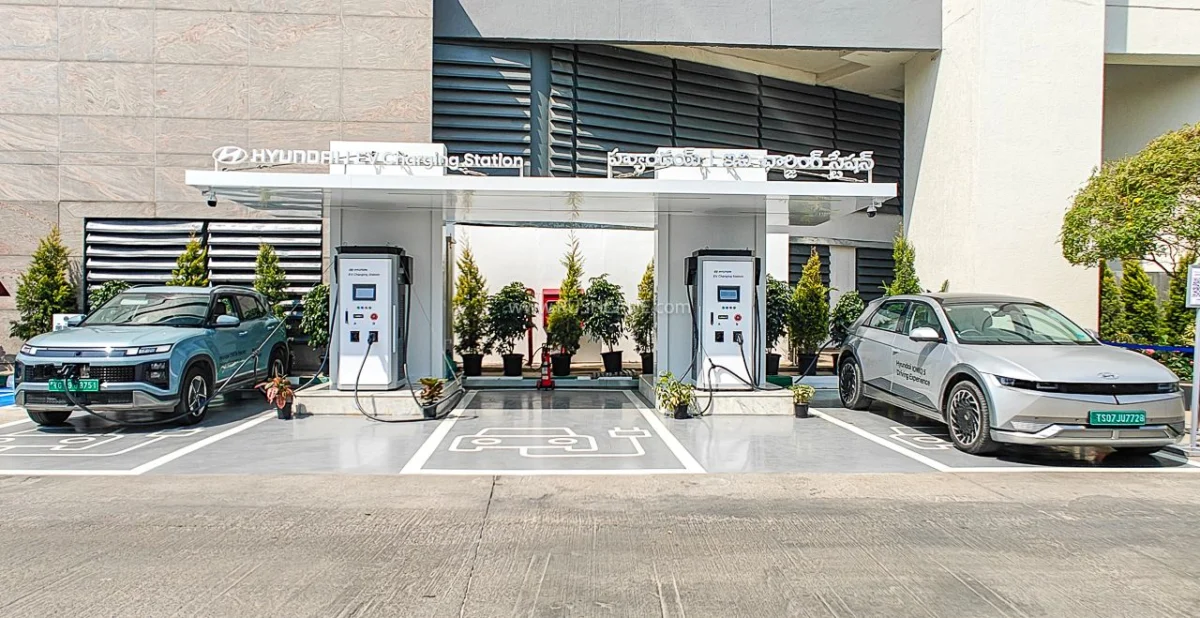
- Proprietary Expansion: While the 30,000-point network includes partners, Hyundai is also aggressively scaling its own hardware. The company currently operates 183 DC fast-charging stations across 105 cities. This number is slated to grow to 600 stations by the year 2030.
Chronology: From Early Adoption to Infrastructure Dominance
Hyundai’s journey in the Indian EV space has been one of calculated evolution. To understand the significance of the current expansion, one must look at the timeline of the company’s commitment to the Indian market.
2019 – The Pioneer Phase: Hyundai launched the Kona Electric, India’s first genuine long-range electric SUV. While it was a niche product at the time, it served as a "proof of concept" for the brand, testing the Indian climate and road conditions for battery longevity.
2022-2023 – The Premium Push: The introduction of the Ioniq 5, built on the dedicated E-GMP (Electric Global Modular Platform), signaled Hyundai’s intent to lead the premium EV segment. During this period, Hyundai began laying the groundwork for its DC fast-charging network, installing 60 kW and 120 kW units at key dealerships and highway points.
2023-2026 – The Infrastructure Scaling: Between January 2023 and June 2026, Hyundai’s charging operations saw exponential growth. The proprietary network delivered over 50 lakh (5 million) kWh of electricity, serving more than 3 lakh (300,000) EV users. This period also marked the realization of the "myHyundai" app integration, transforming it from a vehicle management tool into a comprehensive mobility service.
2024-2030 – The Mass-Market Vision: Looking forward, the current financial year is set to be a landmark for HMIL. The company has confirmed the launch of a new mass-market electric SUV, widely expected to be the Creta EV. To support this volume-heavy model, the infrastructure expansion to 600 proprietary stations and 30,000 partner points is being fast-tracked.
Supporting Data: Metrics of Progress and Sustainability
The scale of Hyundai’s ambition is best illustrated through the technical specifications and environmental metrics of its network.
Charging Capacity and Speed
Hyundai is not merely installing standard chargers; it is focusing on high-capacity DC fast chargers that minimize downtime. The current network features:
- Power Output: Ranging from 60 kW to ultra-fast 240 kW units.
- Efficiency: The 240 kW chargers are among the fastest in the country, capable of charging high-voltage architectures (like the Ioniq 5) from 10% to 80% in under 20 minutes.
Environmental Impact
A critical component of Hyundai’s reporting is the tangible environmental benefit derived from its infrastructure. Between January 2023 and June 2026, the utilization of Hyundai-owned charging stations resulted in:
- CO2 Savings: Approximately 3.5 million kilograms of CO2 emissions were averted.
- Electricity Delivery: Over 5 million kWh of clean energy dispensed to the Indian public.
Highway Corridor Coverage
To facilitate long-distance travel, Hyundai has prioritized five major highway corridors, ensuring that EV owners can travel between economic hubs without the fear of being stranded:
- Delhi – Gurgaon – Jaipur: Connecting the national capital to the heart of Rajasthan.
- Mumbai – Pune – Bengaluru: The industrial and tech corridor of western and southern India.
- Mumbai – Ratnagiri – Goa: A key tourist route.
- Chennai – Vellore – Bengaluru: A vital link between the southern manufacturing hubs.
- Hyderabad – Kurnool – Bengaluru: Connecting the burgeoning tech cities of the Deccan plateau.
Official Responses: Leadership Perspectives
The leadership at Hyundai Motor India emphasizes that their strategy is not just about selling cars, but about building a sustainable culture of mobility.
Tarun Garg, Managing Director & CEO of Hyundai Motor India, highlighted the strategic importance of this infrastructure blitz. He noted that the expansion of charging facilities is the "linchpin" of the government’s and the industry’s shared goal of accelerating EV adoption.
"Expanding charging infrastructure is essential for accelerating EV adoption in the country," Garg stated during the announcement. He further elaborated that the company’s mission is to make electric mobility "more practical and convenient" for the everyday user. By placing chargers near restaurants, food outlets, and amenities, Hyundai is attempting to align vehicle charging with the natural rhythm of human rest stops, thereby making the transition from internal combustion engines (ICE) to EVs feel less like a compromise and more like an upgrade.
Company representatives also stressed that the "myHyundai" app’s ability to aggregate multiple CPOs is a direct response to customer feedback regarding the complexity of managing various digital wallets and accounts for different charging brands.
Implications: Reshaping the Indian Automotive Market
The expansion of Hyundai’s charging network carries significant implications for the Indian automotive industry, competitors, and consumers alike.
1. Setting a New Standard for Brand Agnosticism
By opening its charging network to vehicles from other manufacturers, Hyundai is positioning itself as a "mobility provider" rather than just an "auto manufacturer." This move could pressure other major players, such as Tata Motors and Mahindra, to further open or collaborate on their infrastructure, potentially leading to a more standardized and accessible national grid.
2. Paving the Way for Mass-Market EVs
The timing of this expansion is not coincidental. With the Creta EV on the horizon—a vehicle that targets India’s most popular SUV segment—Hyundai needs an infrastructure that can handle a massive surge in volume. A robust 30,000-point network ensures that when the mass-market consumer finally makes the switch, the "fueling" experience is as reliable as the petrol pumps they are leaving behind.
3. Economic and Social Impact
The strategic placement of chargers at highway eateries and retail outlets creates a new micro-economy. As EV owners spend 30–60 minutes charging, local businesses see increased footfall. Furthermore, the push toward 240 kW charging technology encourages local manufacturing and service expertise in high-voltage electrical systems, contributing to the "Make in India" initiative.
4. Addressing the "Urban-Rural" Divide
The average radius of 25 km for a charging station is a significant metric. While EV adoption has been largely confined to Tier-1 cities, this network density begins to make EV ownership viable for Tier-2 and Tier-3 cities, as well as rural areas located along major transit arteries.
Conclusion
Hyundai Motor India’s roadmap to 2030 represents a holistic approach to the future of transportation. By combining high-tech hardware expansion (the 600 proprietary DC stations) with a sophisticated digital aggregator (the 30,000+ points on the myHyundai app), the company is addressing both the physical and digital hurdles of the EV transition. As the automotive industry stands at a crossroads, Hyundai’s investment in a comprehensive, accessible, and high-speed charging ecosystem may well be the catalyst that transforms India from an EV-curious market into an EV-dominant one. With more models on the way and a carbon-conscious strategy at its core, HMIL is not just participating in the green revolution—it is driving it.
