

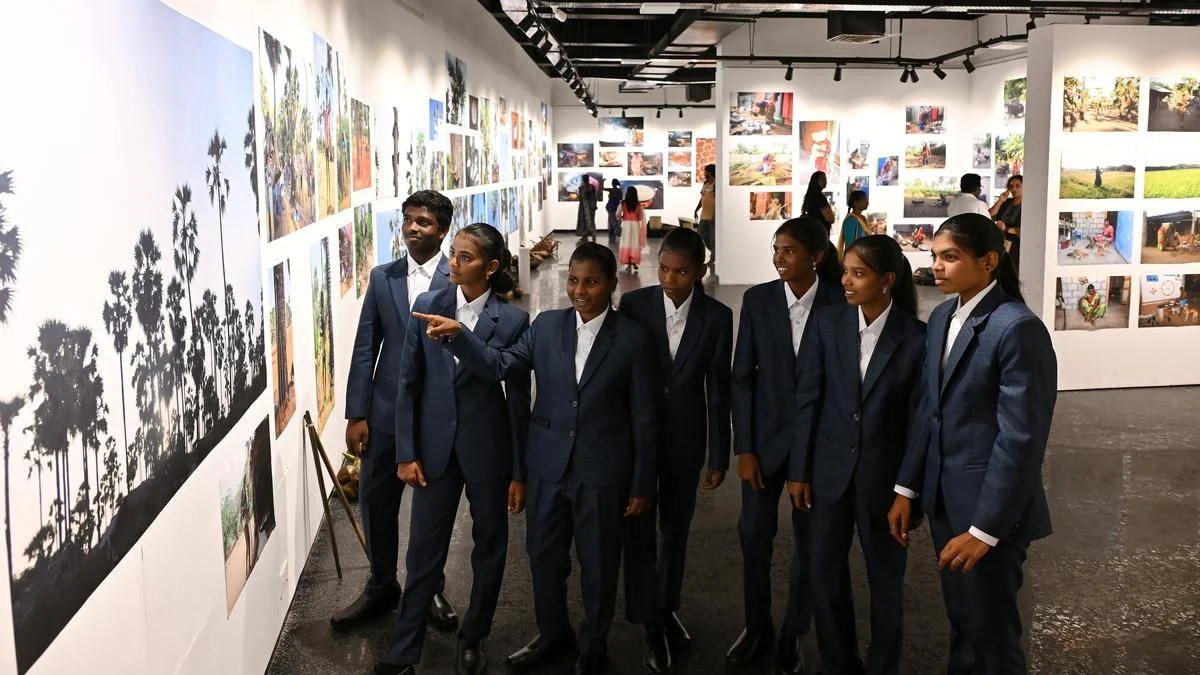
Chennai, India – The Lalit Kala Akademi gallery, usually a bastion of established artistic expression, is currently transformed into a stark, intimate portal, offering a profound glimpse into the often-unseen realities of life in Tamil Nadu’s palmyrah belt. "Lives Among The Palms," an exhibition showcasing the evocative photographic works of seven young students from Ramanathapuram district, invites visitors to step into a world illuminated by headlamps, where towering palmyrah trees conceal the precarious existence of those who harvest their bounty. This compelling exhibition, born from a collaborative initiative by photographer Palani Kumar and the People’s Photographers’ Collective (PPC), in partnership with the Rural Workers Development Society (RWDS) and supported by The People’s Archive of Rural India (PARI), is more than just a display of images; it is a testament to the power of nascent voices documenting their own lived experiences.
The Spark of Documentation: A Journey from Village to Gallery
The journey into this world begins in a deliberately darkened room, where the focused beams of headlamps gradually reveal stark yet poignant images. Sakthi Muneeswari, a Class XII student from Keezhaallikullam village, guides viewers through her captivating photographs. Her lens captures the familiar figures of her own uncle and aunt, silhouetted against the twilight sky, as they ascend towering palmyrah trees to collect sap. "They work well into the night, and wear these headlamps," Sakthi explains, her voice tinged with both admiration and concern. "They are so high up from the ground and hidden from view; often we realise there is a worker in a tree only if we hear a sound." These words underscore the inherent risks and the often-invisible nature of their labor, a reality Sakthi has meticulously documented.
The exhibition features the work of Sakthi and six other young photographers – Munees Prabha, Aathi Selvan, Moniga S, J Jebamalai, T Pon Lakshmi, and P Janani. Over an intensive eighteen-month period, Palani Kumar and his team worked closely with these students, equipping them with basic cameras and empowering them to explore and narrate the stories that unfolded in their backyards. The initiative champions a belief in "going out into the field," fostering a generation of young storytellers who can authentically represent their communities.
"We strongly believe in going out into the field, and have been working with students across the country, in rural areas to teach them photography and encourage them to document and narrate their lives," Palani Kumar, founder of the People’s Photographers’ Collective, stated during the exhibition’s opening. "For over one-a-half years, we worked with seven students from Ramanathapuram district, introducing them to photography, and encouraging them to document their lives and the people around them."
Armed with simple cameras and encouraged to experiment with manual settings, these young photographers ventured forth, capturing a kaleidoscope of narratives. Their lenses have focused on the arduous labor undertaken by their family members and neighbors in the palm groves, the scorching heat of the salt pans, and the persistent challenges of water scarcity that mark the rhythm of life in this region.
Chronicles of Toil: Unveiling the Daily Grind
The exhibition is a powerful tapestry woven from the threads of everyday labor. Munees Prabha, a Class XII student from Kannigapuri, presents a series that highlights the weathered hands and worn footwear of workers who toiled tirelessly in the palm groves, processed wood for charcoal production, or endured the relentless sun at the salt pans. Her photographs are a testament to the physical toll of their work.

"There are many young students who drop out and work as well," Munees shares, her gaze reflecting a mature understanding of her community’s circumstances. "Our town does not have bus connectivity, and we have to pay ₹40 to travel one way by auto to school." This statement reveals the intertwined realities of economic necessity and educational aspirations, a common thread running through the lives of many in the region.
Munees’s mother, Maari S, is a recurring subject in her work, her bent form diligently weaving baskets from palm leaves. "Making baskets for storing palm sugar harvested here is long hours of back-breaking work," Munees explains. "Working in the palm groves happens only during the summer months and the weather is often unforgiving." These intimate portraits offer a profound insight into the skilled craftsmanship and immense effort involved in producing the local palm sugar, a staple for many.
Aathi Selvan, a Class XII student from Narippaiyur village, turned his camera towards the daily lives of coastal workers. His grandfather, a central figure in his photographic series, is captured mending heavy nets, gathering crabs, and finding moments of respite on the sun-drenched sands. Aathi’s images convey a deep sense of respect and affection for the resilience of these individuals who depend on the sea for their livelihood.
Moniga S, also from Kannigapuri, chose to document the relentless labor of her grandmother, Rasathi. Her photographs chronicle Rasathi’s daily routine: crafting palm leaf baskets, transporting them, and tending to her pigs. "I followed her around with my camera for over one-a-half years. She was initially very exasperated," Moniga recounts with a chuckle, highlighting the perseverance required to capture such candid moments. The presence of Rasathi’s loyal dog and cat, quiet companions in her labor, adds another layer of tenderness to Moniga’s visual narrative.
The exhibition also features the insightful works of J Jebamalai, T Pon Lakshmi, and P Janani, each contributing unique perspectives to the collective portrayal of life in the palmyrah belt.
A Platform for Authentic Voices: The TM Krishna-PARI Award and the Philosophy of PARI
The "Lives Among The Palms" exhibition also served as the backdrop for the prestigious TM Krishna-PARI Award 2026, an honor bestowed upon seven young photojournalists, including K Ravikumar, K Hairunisha, K Noor Nisha, K Mukesh, S Keethi, Suba Gomathi Muppidathi, and R Karthikeyan. This award underscores PARI’s commitment to nurturing and amplifying marginalized voices.

P Sainath, the acclaimed journalist and founder of PARI, articulated the organization’s core philosophy: "PARI’s mandate has always been that we generate journalism within communities that are easily, and conventionally excluded. We have published photos clicked by these seven awardees and in the future, will publish photos clicked by this new, young set of photographers for Lives Among The Palms as well." He emphasized that PARI’s foundation lies in empowering individuals to tell their own stories, making the "Lives Among The Palms" exhibition a crucial element in their mission.
Carnatic singer, author, and activist TM Krishna, who lent his name to the award, lauded the initiative for its ability to empower young photographers to narrate their own realities. He described the exhibition as a "powerful way of bringing attention and an archival documentation of their everyday lives." Krishna further highlighted the significance of observing the world through the eyes of these young artists: "It is very interesting to see what their perception is, at their age. The young photographers have also acquired skills, and the ability to grow which is very impactful. The communities and the labour that makes up the subject of their stories and photographs are often invisible, despite the fact that all our lives in some way depend on all the work you are seeing, captured in these photographs." His words resonate with the exhibition’s profound message: that the seemingly mundane labor depicted is, in fact, the bedrock of society.
Beyond the Frame: Installations that Speak Volumes
The exhibition transcends the confines of photographic prints. Scattered amongst the approximately 300 photographs adorning the gallery’s white walls are carefully curated installations that serve as poignant reminders of the labor and struggles depicted. These include sturdy, long-handled wooden shovels used in salt pans, an array of meticulously crafted baskets and hats fashioned from palm leaves, bunches of ripe palmyra palm fruit, a cart laden with colorful pots for water, and substantial heaps of charcoal. These tangible objects act as powerful anchors, grounding the viewer in the material reality of the lives captured by the young photographers. They are silent storytellers, echoing the sweat, dedication, and resourcefulness of the communities that inhabit the palmyrah belt.
Implications and Legacy: A Call for Visibility and Support
The "Lives Among The Palms" exhibition is a vital intervention in a world that often overlooks the contributions of rural and marginalized communities. By entrusting cameras to young people from these very communities, Palani Kumar and his collaborators have initiated a profound act of empowerment. The exhibition not only provides a platform for these young photographers to showcase their talent but also serves as a crucial archive of their lived realities, preserving stories that might otherwise fade into obscurity.
The success of this initiative highlights the potential for photography to be a tool for social change, fostering empathy, understanding, and ultimately, action. It calls for greater recognition and support for the often-invisible labor that sustains our society. The exhibition, a testament to the resilience and ingenuity of the people of Ramanathapuram’s palmyrah belt, leaves a lasting impression, urging viewers to look beyond the surface and appreciate the intricate tapestry of human endeavor that shapes our world.
The exhibition, curated by Palani Kumar and supported by PARI, will be on display at the Lalit Kala Akademi, Greams Road, until July 16th, open daily from 10 am to 7 pm. It is an opportunity not to be missed for anyone seeking to understand the authentic narratives of India’s heartland, told through the fresh, unvarnished perspectives of its youngest chroniclers.
