

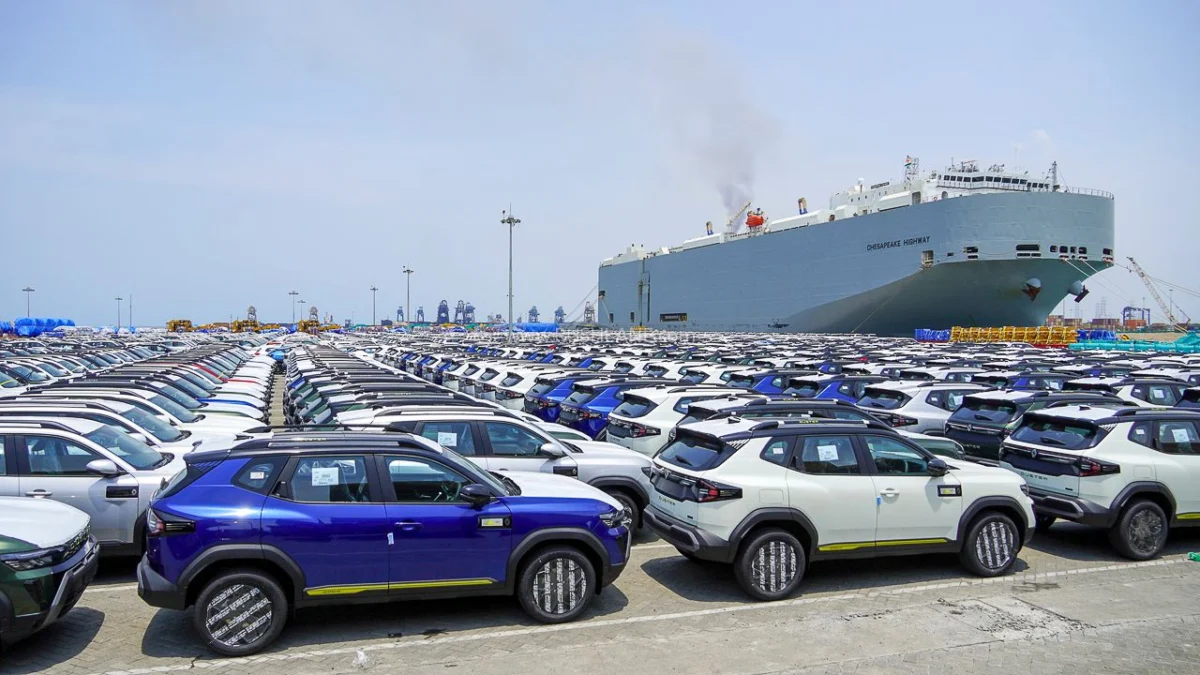
The Indian automotive landscape reached a significant milestone this week as Renault India officially flagged off the first global export shipment of the all-new Duster. This move not only marks the return of a legendary nameplate to the international stage but also reinforces India’s burgeoning reputation as a high-quality, cost-effective manufacturing hub for the global Renault Group.
The first consignment, consisting of 750 units of the next-generation SUV, departed from the Chennai Port, destined for the South African market. This shipment serves as the vanguard for a much larger export offensive, with Renault confirming that several other international markets across various continents are slated to receive India-made Dusters in the coming months.
The Strategic Shift: India at the Heart of Renault’s Global Supply Chain
The commencement of Duster exports is far more than a routine logistical update; it is a centerpiece of Renault’s "futuREady" strategy. For years, the Renault-Nissan alliance has utilized its massive manufacturing facility in Oragadam, Chennai, to cater to domestic demand. However, the latest iteration of the Duster represents a shift in philosophy, where the Indian plant is now treated as a primary export base for right-hand-drive (RHD) and potentially left-hand-drive (LHD) markets globally.
By leveraging India’s localized supply chain and engineering talent, Renault is positioning itself to compete more aggressively in emerging markets. The "Made in India" Duster is expected to be a volume driver for the brand in regions that demand ruggedness, modern technology, and competitive pricing—traits that the Duster has historically embodied.
Chronology of a Comeback: From Segment Creator to Modern Icon
To understand the weight of this export milestone, one must look at the Duster’s journey in the Indian subcontinent.

- 2012 – The Original Disruptor: Renault launched the first-generation Duster in India, effectively creating the compact SUV segment. It became an overnight sensation, known for its ride quality and "go-anywhere" attitude.
- The Mid-Life Cycle: While the Duster enjoyed nearly a decade of relevance, the lack of a timely second-generation update in India led to a decline in sales as competitors like the Hyundai Creta and Kia Seltos took over the market.
- 2022 – The Hiatus: Renault India eventually discontinued the first-gen Duster, leaving a void in its portfolio that was temporarily filled by the Kwid, Kiger, and Triber.
- 2024 – The Rebirth: The all-new Duster was unveiled, built from the ground up on a completely new architecture.
- June 2026 (Projected/Current Timeline): Following a successful domestic launch where sales quickly surpassed the 5,000-unit mark, the company has now transitioned into its export phase, starting with the 750-unit shipment to South Africa.
This chronology highlights Renault’s persistence. The company didn’t just bring the Duster back; they re-engineered it to be a global contender.
Technical Foundation: The Renault Group Modular Platform (RGMP)
The all-new Duster is the first vehicle in India to be underpinned by the Renault Group Modular Platform (RGMP). This architecture is a derivative of the global CMF-B platform, tailored specifically for high-growth markets to balance cost with cutting-edge technology.
Flexibility and Future-Proofing
The RGMP architecture is designed to be "multi-energy capable." While the current export models focus on efficient internal combustion engines, the platform is inherently designed to support:
- Mild-Hybrid Systems: Enhancing fuel efficiency for urban environments.
- Full Hybrid (HEV): Catering to markets with stricter emission norms.
- Battery Electric Vehicles (BEV): Providing a pathway for future electrification without requiring a total redesign of the chassis.
Structural Rigidity and Safety
One of the most significant data points supporting the Duster’s export potential is its safety credentials. Renault recently announced that the new Duster secured a prestigious 5-star rating from Bharat NCAP. This rating applies across all variants and powertrain options, ensuring that the vehicles leaving Chennai Port meet some of the most stringent crash-test standards in the world. For international buyers in South Africa and beyond, this 5-star validation serves as a critical trust factor.
Official Responses: Validating the "Make in India" Vision
The leadership at Renault Group India has been vocal about the importance of this milestone. Stephane Deblaise, CEO of Renault Group India, emphasized that the start of exports is a testament to the maturity of the Indian automotive ecosystem.

"The commencement of exports for the all-new Duster validates the quality, competitiveness, and manufacturing capabilities of our Chennai facility," Deblaise stated. He further noted that the Chennai plant is not just a factory but a "global center of excellence" for engineering and production.
Deblaise also shed light on the financial ambitions of the brand. Renault has set an aggressive target to generate €2 billion (approximately ₹18,000 crore) in annual exports from India by 2030. Achieving this goal requires high-volume products like the Duster to perform well in diverse geographic conditions. The CEO highlighted that India’s improving logistics infrastructure—such as better port connectivity and dedicated freight corridors—has played a vital role in making these large-scale exports viable.
Supporting Data: Market Performance and Pricing
In the domestic Indian market, the all-new Duster has already begun to regain its lost ground. With a starting price of Rs 10.5 lakh (ex-showroom), it undercuts several key rivals while offering a more rugged aesthetic.
Key Domestic Statistics:
- Launch Sales: Reached the 5,000-unit milestone within the first few months of availability.
- Customer Incentives: To maintain momentum, Renault has introduced offers such as three years of free maintenance, which has significantly boosted consumer confidence.
- Safety Standard: 5-star Bharat NCAP rating (the first Renault in India to achieve this).
The 750 units headed to South Africa are expected to be priced competitively against established players in the African market, leveraging the Free Trade Agreements and maritime proximity between the two regions.

Economic Implications: Beyond the Vehicle
The export of the Duster has broader implications for the Indian economy. As part of the "Make in India" initiative, Renault’s export programme contributes to:
- Foreign Exchange Earnings: The €2 billion target by 2030 will significantly contribute to India’s trade balance.
- Ancillary Industry Growth: Every Duster exported supports a vast network of local component manufacturers. From steel suppliers in North India to electronics providers in the South, the "multiplier effect" of car manufacturing is immense.
- Skill Development: Producing a 5-star NCAP-rated global vehicle requires high-precision engineering and assembly. The Indian workforce at the Chennai plant is now operating at global Tier-1 standards.
- Logistics Hub Status: The successful execution of large-scale RORO (Roll-on/Roll-off) shipments from Chennai Port reinforces the city’s title as the "Detroit of South Asia."
The Road Ahead: A Product Offensive
The Duster is merely the first chapter in Renault’s renewed Indian playbook. The company has a clear roadmap to ensure the Chennai plant remains busy and the export pipeline remains full.
The 7-Seater Duster (Bigster)
Later this fiscal year, Renault is expected to launch the much-anticipated 7-seater version of the Duster (often referred to as the Bigster in concept form). This vehicle will target the mid-size SUV segment, competing with the likes of the Tata Safari and Mahindra XUV700. Like its 5-seater sibling, the 7-seater version will be a candidate for global exports, offering more utility for larger families in international markets.
The "Bridger" SUV
Looking further ahead to Diwali 2027, Renault has patented the design for a new sub-4-meter SUV, currently codenamed the "Bridger." This vehicle is expected to be a rugged, lifestyle-oriented SUV designed to rival the Maruti Suzuki Jimny. By diversifying its portfolio into niche segments like lifestyle 4x4s, Renault aims to capture a wider demographic both in India and in rugged terrains like those found in Africa and South America.
Conclusion
The departure of the first 750 Renault Dusters from Chennai Port is a symbolic and literal movement toward a new era for Renault India. It signifies the transition of the Indian subsidiary from a domestic-focused entity to a pivotal global manufacturing hub.

With a robust platform in the RGMP, a gold standard in safety with the 5-star BNCAP rating, and a clear vision from leadership to hit €2 billion in exports, Renault is no longer just "selling cars in India." It is "engineering the future from India." As the all-new Duster begins to traverse the roads of South Africa, it carries with it the aspirations of an Indian automotive industry that is finally ready to lead on the world stage.
