

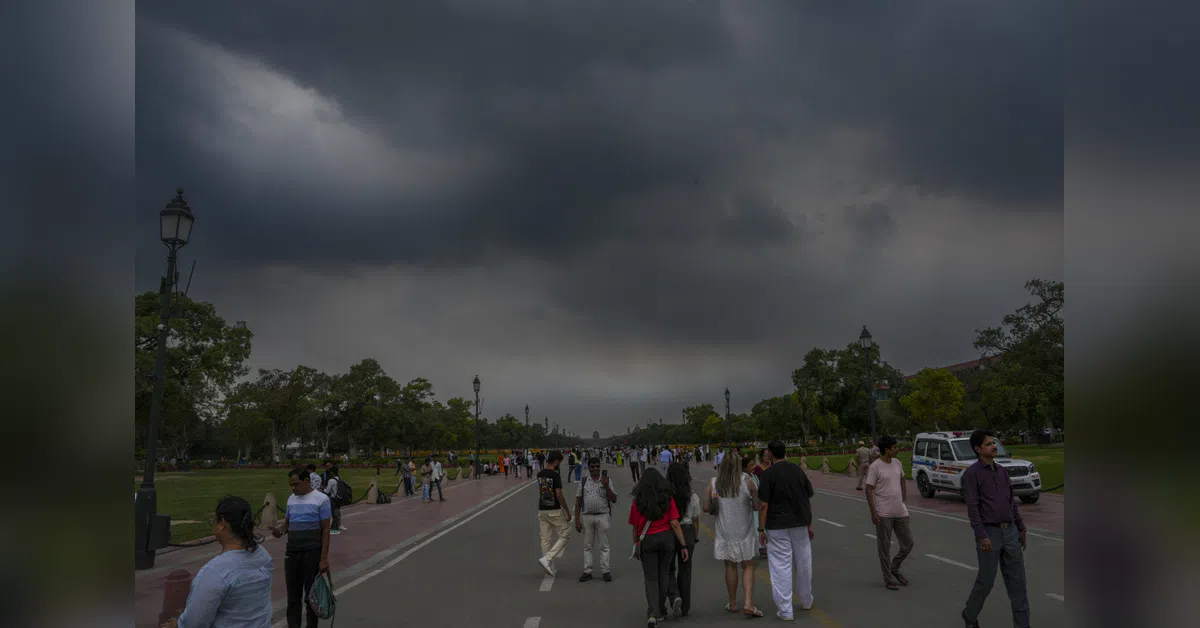
New Delhi, India – [Insert Date] – In a landmark stride towards enhancing its climate resilience and agricultural planning, India has unveiled a groundbreaking artificial intelligence (AI)-enabled monsoon advance forecasting model. Launched on Monday by the India Meteorological Department (IMD), this pioneering system promises to revolutionize weather prediction by offering block-level insights into the onset of the crucial southwest monsoon up to four weeks in advance. The initiative comes at a critical juncture, as climate change increasingly injects complexity and unpredictability into global weather patterns, demanding a new era of precision in meteorological services.
Alongside the monsoon forecasting model, the IMD also rolled out a pilot project for high-resolution rainfall forecasting in Uttar Pradesh. Developed by the National Centre for Medium Range Weather Forecasting (NCMRWF), this advanced AI system can generate rainfall predictions at an unprecedented spatial resolution of a 1-kilometre (km) grid, offering a level of granularity previously unavailable. These dual launches underscore India’s commitment to leveraging cutting-edge technology to equip its vast agricultural sector and disaster management agencies with the most accurate and timely weather intelligence.
The introduction of these sophisticated models gains added significance against the backdrop of the 2026 southwest monsoon, which is currently projected to be below normal across most parts of the country. While the IMD clarifies that the new models have no direct correlation with this seasonal forecast, their deployment is a strategic move to mitigate the impacts of such weather anomalies by providing actionable, hyperlocal data. Both systems are meticulously designed to deliver impact-based, AI-driven weather services across the nation, developed in close consultation with the Ministry of Agriculture and Farmers Welfare, ensuring their outputs are directly relevant and accessible to farmers through dedicated application programming interfaces (APIs) and the Agri Stack platform.
The Imperative of Precision: Climate Change and Forecasting Challenges
The global climate crisis has fundamentally altered traditional weather patterns, presenting unprecedented challenges for meteorologists worldwide. India, with its diverse geography and heavy reliance on monsoon rains for agriculture, is particularly vulnerable to these shifts. Historically, weather forecasting models, while robust, have often operated at broader regional or district levels, sometimes lacking the granular detail required for effective local decision-making.
Climate change manifests in more frequent and intense extreme weather events – from prolonged droughts to sudden, devastating floods – and an increased variability in seasonal patterns. The monsoon, once a relatively predictable annual phenomenon, now exhibits greater erraticism in its onset, progression, and intensity. This volatility makes traditional statistical and numerical weather prediction (NWP) models, while foundational, less effective in capturing the localized nuances and rapid shifts characteristic of a changing climate.
The demand for more precise, hyperlocal forecasts has therefore intensified. Farmers need to know not just if it will rain in their district, but specifically in their block, and with what intensity, to make critical decisions about sowing, irrigation, and harvesting. Disaster management agencies require highly localized information to pre-position resources and issue targeted advisories for specific villages or sub-districts. The IMD’s adoption of AI represents a strategic pivot to address these evolving needs, acknowledging that the future of weather forecasting lies in the intelligent processing of vast datasets to discern complex patterns that human analysis or traditional models might miss.
India’s Leap: AI-Powered Monsoon Advance Forecasting
The newly launched AI-enabled monsoon advance forecasting model is a testament to India’s ambition to lead in climate technology. It marks a significant upgrade in the nation’s capacity to predict one of its most vital natural phenomena.
A New Era of Block-Level Prediction
Minister of State (Independent Charge) for Earth Sciences, Jitendra Singh, highlighted the transformative nature of the new system during its launch. "The block-level monsoon onset forecast model combines existing numerical weather prediction models with AI to generate probabilistic forecasts of monsoon progression every Wednesday up to four weeks in advance, with a model error margin of around four days," Singh explained.
This focus on "block-level" prediction is a game-changer. A block, typically a sub-district administrative unit, represents a much smaller geographical area than a district. Forecasting at this resolution means that farmers in a specific block can receive highly tailored information directly relevant to their fields, rather than generalized regional forecasts that might not apply uniformly across varied microclimates. The ability to predict onset four weeks in advance provides an invaluable window for agricultural planning, allowing farmers to prepare their land, procure seeds, and make informed decisions about crop selection. The probabilistic nature of the forecasts, while acknowledging inherent uncertainties, also empowers users to assess risks and plan for various scenarios, rather than relying on a single, deterministic prediction. The stated error margin of approximately four days is a significant improvement, demonstrating a robust level of accuracy for long-range, hyperlocal predictions.
Defining Monsoon Onset: A Scientific Approach
M Ravichandran, Secretary in the Ministry of Earth Sciences, elaborated on the scientific criteria underpinning the block-level monsoon advance forecasting system. He stated that the system bases its assessment on "the onset of a continuous five-day rainfall spell and the absence of prolonged dry spells over the subsequent 30 days."
This sophisticated definition goes beyond simply detecting the first showers. It recognizes that true monsoon onset, from an agricultural and hydrological perspective, requires sustained rainfall sufficient for germination and initial crop growth, followed by a period without significant dry spells that could stress young plants. This nuanced approach ensures that the forecast reflects conditions genuinely conducive to agricultural activities, rather than just isolated rain events. Such precise meteorological definitions, combined with AI’s pattern recognition capabilities, make the forecasts far more actionable for end-users.
Targeting Vulnerability: Focus on Rainfed Regions
The initial phase of the forecasting system is strategically deployed across 3,196 blocks in 15 states and one Union Territory. This coverage is largely concentrated in India’s vast rainfed regions, where agriculture is almost entirely dependent on monsoon rains and where farmers are most vulnerable to climatic variability. These areas often lack extensive irrigation infrastructure, making timely and accurate monsoon forecasts absolutely critical for crop success and the livelihoods of millions.
The strategic choice to prioritize these regions underscores the IMD’s commitment to supporting the most vulnerable sections of the farming community. As the system matures and proves its efficacy, there are clear plans for its gradual expansion to other parts of the country, aiming for comprehensive national coverage. This phased rollout allows for refinement and optimization based on real-world feedback and performance.
Revolutionizing Local Rainfall: The Uttar Pradesh Pilot
Complementing the monsoon onset model, the pilot project in Uttar Pradesh for high-resolution rainfall forecasting represents another significant leap in localized weather intelligence. Uttar Pradesh, India’s most populous state and a major agricultural hub, serves as an ideal testing ground for this advanced system.
Hyper-Resolution for Hyper-Impact
Minister Singh elaborated on the capabilities of the Uttar Pradesh pilot, stating that "the system will generate rainfall forecasts at 1 km spatial resolution up to 10 days in advance." The importance of a 1 km resolution cannot be overstated. Traditional models might provide forecasts for areas spanning tens of kilometres, meaning a farmer might receive a "no rain" forecast even if a heavy downpour occurs a few kilometres away. With a 1 km grid, the precision dramatically increases, allowing for highly localized advisories.
This hyper-resolution is achieved through AI-driven downscaling techniques. Downscaling refers to the process of converting large-scale weather model outputs into finer-resolution forecasts for smaller areas. AI algorithms excel at this by identifying complex relationships and patterns within meteorological data that can be used to infer local conditions from broader atmospheric models. The system integrates data from a diverse array of sources, including automatic rain gauges, automatic weather stations (AWS), Doppler weather radars, and satellite-based rainfall datasets. This multi-source data fusion provides a comprehensive and robust picture of atmospheric conditions, enhancing the accuracy and reliability of the forecasts.
Empowering Farmers: Decision-Making at the Ground Level
The immediate beneficiaries of this hyper-resolution rainfall forecasting system are the farmers of Uttar Pradesh. The enhanced precision is expected to empower them to make significantly more informed decisions across various stages of the agricultural cycle.
For instance, precise forecasts can guide decisions on:
- Sowing: Knowing the exact timing and intensity of impending rainfall can help farmers decide the optimal day for sowing, ensuring seeds receive adequate moisture for germination without being washed away by excessive rain.
- Irrigation: Farmers can optimize irrigation schedules, reducing water waste if sufficient rainfall is predicted, or increasing it if a dry spell is expected.
- Crop Protection: Timely warnings about heavy rainfall or specific humidity levels can alert farmers to the potential for pest outbreaks or fungal diseases, allowing them to apply protective measures proactively.
- Harvesting: Accurate forecasts about dry periods can help farmers plan their harvesting activities to avoid crop damage due to unexpected rains, ensuring the quality and quantity of their yield.
This direct, localized impact on farm-level decision-making has the potential to significantly reduce agricultural losses, improve yields, and enhance the overall economic stability of farming communities.
Strategic Collaborations and Outreach
The success of such sophisticated forecasting systems hinges not only on their technological prowess but also on their effective dissemination and integration into existing frameworks. Recognizing this, the IMD’s initiative has been developed in close consultation with the Ministry of Agriculture and Farmers Welfare. This inter-ministerial collaboration ensures that the models’ outputs are tailored to the specific needs of the agricultural sector.
Crucially, the forecasts will not remain confined within scientific institutions. They will be shared directly with farmers through application programming interfaces (APIs) developed by the Ministry of Agriculture and through the ambitious Agri Stack platform. Agri Stack is India’s digital ecosystem for agriculture, aiming to create a seamless flow of information and services to farmers. Integrating these AI-powered weather forecasts into Agri Stack will provide farmers with a unified platform where they can access a wide array of agricultural information, from soil health data to market prices, now complemented by highly localized and precise weather predictions. This direct-to-farmer approach minimizes information asymmetry and maximizes the utility of the advanced forecasting capabilities.
Official Endorsement and Vision
The launch of these AI models was met with strong official endorsement, reflecting the government’s strategic vision for a technologically advanced and climate-resilient India. Minister Jitendra Singh emphasized the broader societal benefits, stating, "This innovative system will be of immense help in agricultural planning, disaster management and water resources management."
His words underscore the multi-faceted impact of these tools. Beyond agriculture, accurate hyperlocal forecasts are vital for disaster preparedness and response. Authorities can issue targeted warnings for flash floods, prepare for drought conditions, and optimize water reservoir management based on precise rainfall and monsoon onset predictions. This allows for proactive measures, potentially saving lives and minimizing economic damage from extreme weather events.
The IMD, under the Ministry of Earth Sciences, continues to evolve its services, aiming to provide a comprehensive suite of weather and climate information that is not only accurate but also actionable and accessible to all stakeholders. These AI models represent a significant leap towards achieving that vision, setting a new benchmark for meteorological services in the country.
Contextualizing the Forecasts: The 2026 Monsoon Outlook
The unveiling of these advanced AI models takes on a heightened urgency given the IMD’s preliminary projection for the 2026 southwest monsoon, indicating a "below normal" rainfall across most parts of the country. While the new AI models are designed for short-to-medium range, hyperlocal predictions and are not correlated with the seasonal long-range forecast, their operational readiness becomes even more critical in such a scenario.
A below-normal monsoon year typically implies reduced agricultural output, potential water scarcity, and increased stress on rural economies. In such challenging conditions, the ability to predict monsoon onset at the block level up to four weeks in advance, and rainfall at 1 km resolution for 10 days, becomes indispensable. It allows farmers to optimize scarce resources, make crucial decisions about drought-resistant crops, and manage irrigation more judiciously. For water resource managers, it means better planning for reservoir levels and equitable distribution. For disaster management, it helps in anticipating and preparing for localized drought impacts.
Therefore, even though the models don’t predict the seasonal outlook, they provide the tools to better manage the consequences of whatever the seasonal outlook may be. This strategic preparedness is key to building climate resilience in a nation where the economy and the well-being of its population are inextricably linked to the monsoon.
Immediate Weather Landscape: Monsoon Builds, Heatwave Persists
Further highlighting the immediate relevance of accurate forecasting, the IMD also provided updates on current weather conditions across the country. Conditions are becoming favourable for the onset of the southwest monsoon over parts of the south Bay of Bengal, Andaman Sea, and Andaman and Nicobar Islands towards the end of this week. This marks the initial phase of the monsoon’s northward progression, a development that will be closely monitored by the new AI systems. The department confirmed it would issue further updates on the monsoon’s progress later this month, integrating the insights from its advanced models.
Simultaneously, large swathes of the country continue to grapple with intense heatwave conditions. Isolated places over West Rajasthan are likely to experience heatwaves during the next six to seven days, while East Rajasthan, adjoining parts of Central India, Gujarat, and Maharashtra are forecast to endure similar conditions over the next four to five days. These ongoing heatwaves underscore the broader climatic challenges India faces and the critical need for precise short-term forecasts, which the new AI systems are designed to provide, not just for rainfall but potentially for other extreme weather events in the future.
The Road Ahead: Challenges and Opportunities
While the launch of these AI-powered forecasting models represents a significant milestone, the journey towards fully harnessing the potential of artificial intelligence in meteorology is continuous. Challenges remain, including the need for constant refinement of AI algorithms, the robust maintenance and expansion of data infrastructure (sensors, radars, satellites), and ensuring effective user adoption and interpretation of the complex probabilistic forecasts. Training and capacity building for farmers and local administrators will be crucial to maximize the benefits of these advanced tools.
However, the opportunities are immense. These models pave the way for a future where weather forecasting is not just about predicting rain, but about providing comprehensive, actionable climate intelligence tailored to specific needs – from agricultural micro-planning to urban flood management and energy grid optimization. India’s pioneering efforts in integrating AI into its core meteorological services position it as a leader in leveraging technology for climate adaptation and resilience, setting a precedent for other nations grappling with the escalating impacts of climate change.
Conclusion
The India Meteorological Department’s launch of its AI-enabled monsoon advance and high-resolution rainfall forecasting models marks a pivotal moment in India’s quest for climate resilience. By embracing artificial intelligence, India is moving beyond traditional forecasting limitations, offering unprecedented precision and lead times for critical weather events. This technological leap promises to empower millions of farmers, bolster disaster preparedness, and optimize water resource management, thereby strengthening the nation’s ability to adapt and thrive in an era of increasing climate volatility. As these systems expand and evolve, they are set to redefine how India perceives, predicts, and responds to its weather, ensuring a more secure and sustainable future for its people.
