

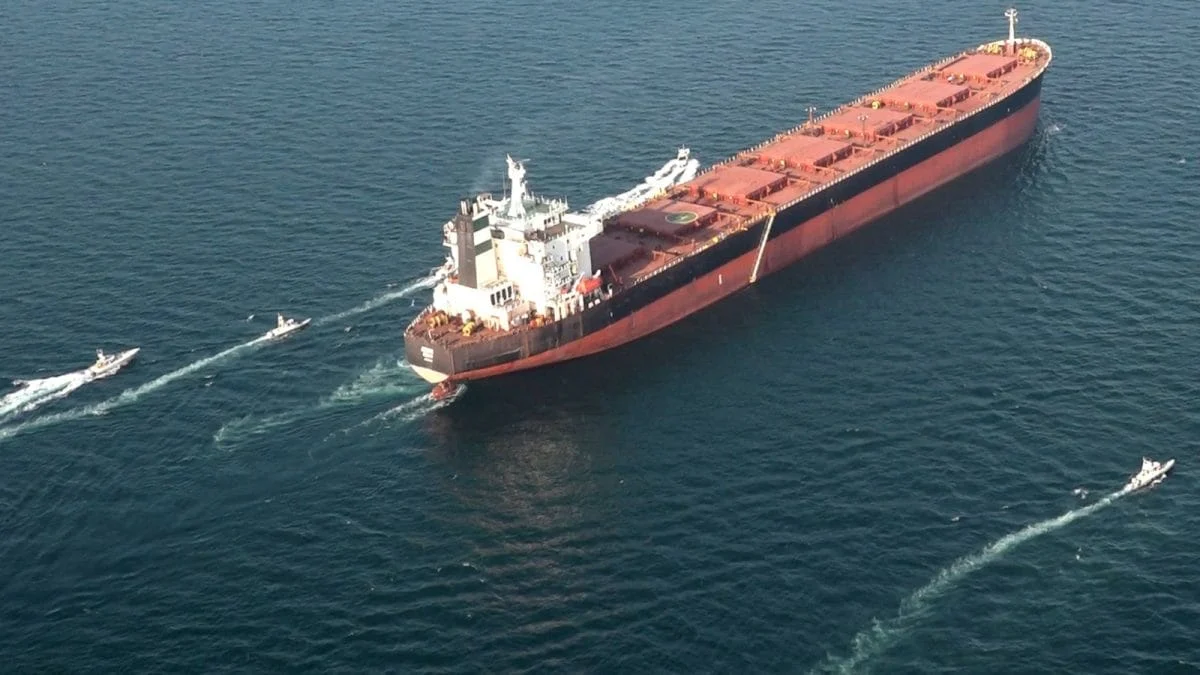
New Delhi, India – May 12, 2026 – The escalating conflict in the West Asia region, particularly involving Iran, is tightening its grip on global shipping networks, portending a significant ripple effect that threatens to reach the pockets of ordinary consumers worldwide, especially in import-reliant economies like India. As fuel costs for maritime transport surge, the financial burden is poised to cascade down the supply chain, inevitably translating into higher prices for online orders, imported goods, and a range of essential commodities.
At the heart of this burgeoning crisis is the Strait of Hormuz, an indispensable chokepoint for global maritime trade. The geopolitical instability ignited by the conflict has severely disrupted the supply of bunker fuel – the heavy petroleum product that serves as the lifeblood for the vast majority of cargo ships traversing the world’s oceans. This disruption, coupled with heightened security risks, is pushing freight rates skyward and introducing an unprecedented level of uncertainty into an already complex global logistics landscape.
The Main Facts: A Looming Economic Storm
The core issue revolves around the Strait of Hormuz, a narrow passage between the Persian Gulf and the Gulf of Oman, through which an estimated one-fifth of the world’s total petroleum consumption, and a substantial portion of global liquefied natural gas, passes. The current conflict in the region, details of which remain fluid but point to an intensified standoff involving Iran, has transformed this vital artery into a perilous zone for international shipping.
The immediate consequence has been a drastic reduction in the availability and an exponential increase in the cost of bunker fuel. This isn’t merely an inconvenience for shipping companies; it represents a fundamental threat to the economic model of global trade. With nearly 80% of all international commerce by volume moving by sea, the ramifications of this maritime bottleneck are pervasive. From the electronics powering our digital lives to the machinery underpinning industries, and from edible oils gracing our tables to the chemicals essential for manufacturing, virtually every sector reliant on global trade is bracing for impact.
For nations like India, which possess an extensive coastline and a deep reliance on maritime imports – including a significant share of its crude oil and a vast array of finished goods and raw materials – the exposure to this disruption is particularly acute. The principle is simple yet stark: as the cost of shipping rises for carriers, these expenses are invariably passed on. First, importers and businesses absorb the initial shock, but ultimately, these elevated costs manifest as higher retail prices for the end-consumer, fueling inflationary pressures across the economy.
Chronology of Escalation: From Regional Tensions to Global Economic Threat
The roots of the current maritime crisis can be traced back to a series of escalating geopolitical developments in West Asia over the past several months. While specific triggers are multifaceted, the broad chronology unfolds as follows:
Late 2025 – Early 2026: Intensification of Regional Standoffs
Initial reports indicated a gradual increase in military posturing and rhetorical exchanges between regional powers and external actors. Naval exercises in the Persian Gulf became more frequent and assertive, signaling a heightened state of readiness. Minor incidents involving commercial vessels and naval patrols began to be reported, though largely contained.
March 2026: Targeted Disruptions and Supply Concerns
The situation took a turn for the worse with confirmed reports of several commercial tankers experiencing GPS interference, harassment, or minor damage near the Strait of Hormuz. While official attribution remained disputed, these incidents immediately injected a dose of fear into the shipping industry. Insurance premiums for vessels transiting the area began to climb, and some smaller shipping lines started exploring alternative, albeit longer and costlier, routes. Analysts noted a subtle but discernible tightening in the market for heavier crude oils essential for bunker fuel production, as refiners anticipated supply chain issues.
April 2026: Direct Impact on Bunker Fuel Supplies
By early April, the full impact of the regional instability became undeniable. Key bunkering hubs, particularly Singapore – the world’s largest ship refuelling centre – reported significant shortfalls in the availability of heavier crude grades typically sourced from the Middle East. The disruption to traditional shipping lanes through the Strait of Hormuz made the reliable and timely delivery of these crudes increasingly challenging. This supply squeeze directly translated into a rapid ascent of bunker fuel prices. Reports from port authorities indicated delays in refuelling operations, further exacerbating the operational challenges for shipping companies.
May 2026: Full-Blown Economic Alert
As of May 2026, the crisis has matured into a full-blown economic concern. Bunker fuel prices have not only surged but have also shown extreme volatility, making long-term planning for shipping companies nearly impossible. Major shipping lines have announced surcharges, and many have revised their vessel schedules, introducing significant delays. Governments, particularly those of import-dependent nations, are now openly acknowledging the potential for widespread inflationary pressures and are beginning to formulate contingency plans. The direct link between the Strait of Hormuz conflict and the cost of everyday consumer goods is becoming increasingly clear, moving from a theoretical concern to an imminent reality.
Supporting Data: The Hard Numbers Behind the Squeeze
The economic indicators paint a stark picture of the escalating crisis:
Global Trade Dependency:
- 80%: The estimated proportion of global trade by volume that relies on sea transport. This figure underscores the inherent vulnerability of the world economy to maritime disruptions.
- 21 million barrels per day: The average volume of crude oil and petroleum products that passed through the Strait of Hormuz in 2023, representing roughly 21% of global petroleum liquids consumption. Any sustained disruption here has immediate and severe implications for global energy markets.
Bunker Fuel Price Volatility:
- Pre-conflict (Late 2025) Average: Bunker fuel (IFO 380) in Singapore, a global benchmark, was trading around $500-$520 per metric tonne. This was considered a relatively stable baseline.
- Early May 2026 Surge: Prices in Singapore have skyrocketed, breaking the $800 per metric tonne barrier, with some spot purchases reported even higher, nearing $850-$870 per metric tonne. This represents an increase of over 60% in just a few months.
- Regional Discrepancies: While Singapore is the primary indicator, other key bunkering ports like Fujairah (UAE) and Rotterdam (Europe) have also seen significant, albeit slightly varied, price increases, indicating a systemic issue rather than an isolated incident. Fujairah, due to its proximity to the Strait, has seen similar volatility, often mirroring Singapore’s spikes.
India’s Import Exposure:
- Over 85%: India’s reliance on imported crude oil to meet its energy demands, with a substantial portion originating from the Middle East, much of which transits the Strait of Hormuz. This makes India critically exposed to energy price shocks.
- $700 billion+: The approximate value of India’s total merchandise imports in the fiscal year 2025-26 (projected), a significant portion of which consists of goods that are either shipped directly or whose components are shipped through global maritime routes.
- Specific Import Categories at Risk:
- Electronics & Machinery: India imports a vast array of finished electronics, semiconductors, and industrial machinery, often from East Asia, Europe, and the US, whose supply chains frequently involve components from or transit through West Asia.
- Chemicals & Pharmaceuticals: Key raw materials and intermediates for India’s burgeoning chemical and pharmaceutical industries are globally sourced, making them susceptible to freight cost increases.
- Edible Oils: India is one of the world’s largest importers of edible oils (palm, sunflower, soy), and while not directly from West Asia, global prices are influenced by overall shipping costs and energy prices.
- Luxury Goods & Specialty Items: Discretionary imports, which often have higher per-unit shipping costs, will see more pronounced price hikes.
Shipping Industry Response Metrics:
- Slow Steaming: A common industry tactic, vessel speeds have reportedly been reduced by an average of 10-15% across major routes to conserve fuel, extending transit times by days or even weeks.
- Freight Surcharges: Major container lines like Maersk, MSC, and CMA CGM have already announced "Bunker Adjustment Factors" (BAF) and "Emergency Surcharges" (EBS) that are 15-25% higher than their pre-conflict levels, directly passing on fuel costs to clients.
- Route Diversions: While less feasible for direct Strait of Hormuz transit, some long-haul routes that previously skirted the region are now actively being rerouted, adding thousands of nautical miles and significant transit time, further increasing costs.
These figures collectively underscore the fragility of global supply chains and the immediate, quantifiable impact of geopolitical instability on the foundational elements of international trade.
Official Responses: Navigating the Crisis
The unfolding crisis has prompted a range of reactions from governments, international bodies, and industry associations, all grappling with the immediate challenges and long-term implications.
Indian Government’s Stance:
The Ministry of Commerce and Industry in India has reportedly initiated a series of consultations with industry stakeholders, including major importers, logistics providers, and shipping associations. While no definitive policy changes have been announced, sources within the ministry suggest that the government is exploring several avenues:
- Supply Chain Diversification: Encouraging Indian businesses to diversify their sourcing away from overly concentrated regions and to explore new trade partnerships, though this is a long-term strategy.
- Strategic Reserves Review: A review of India’s strategic petroleum reserves is underway, assessing their adequacy in the face of prolonged crude oil disruptions.
- Diplomatic Engagement: India’s Ministry of External Affairs is understood to be engaged in active diplomatic efforts with key regional and international partners, advocating for de-escalation and stability in West Asia to ensure the uninterrupted flow of maritime trade.
- Fiscal Measures (Under Consideration): There is internal debate about potential short-term fiscal interventions, such as temporary customs duty adjustments on critical imported goods or subsidies for logistics, to cushion the impact on consumers and specific industries. However, such measures would need careful consideration to avoid distorting markets or straining public finances.
International Maritime Organization (IMO):
The IMO has issued advisories to member states and the global shipping community, urging enhanced vigilance and adherence to international navigation safety protocols in conflict-affected areas. While the IMO’s mandate is primarily technical and regulatory, it has emphasized the importance of maintaining freedom of navigation and the safety of seafarers. There have been calls from some member states for the IMO to play a more active role in facilitating dialogue on maritime security in sensitive regions.
Global Shipping Associations:
Bodies like the International Chamber of Shipping (ICS) and the World Shipping Council (WSC) have voiced grave concerns over the escalating situation. They have called on international governments to prioritize the safety of commercial shipping and to work towards a peaceful resolution of the conflict. Key demands include:
- Enhanced Naval Presence: Calls for increased international naval presence in the Strait of Hormuz and surrounding waters to deter attacks and ensure safe passage.
- De-escalation: Urgent appeals for all parties to the conflict to de-escalate tensions and avoid actions that could further imperil maritime trade.
- Industry Collaboration: Encouragement for shipping companies to share intelligence on threats and to implement best practices for crew safety and vessel security. They have also highlighted the severe financial strain on operators, with some smaller firms reportedly facing insolvency due to spiraling costs and uncertainty.
Oil and Gas Industry Leaders:
Major oil companies and refiners have expressed alarm, with several publicly stating that sustained disruption in the Strait of Hormuz could lead to a global energy crisis. They are actively seeking alternative crude sources and optimizing refinery operations to cope with potential feedstock shortages, but acknowledge the limitations of such measures in the face of a systemic regional conflict. The focus is shifting towards ensuring continuity of supply, even if at significantly higher costs.
These responses collectively underscore the gravity of the situation, revealing a concerted effort across various sectors to mitigate the economic fallout while simultaneously highlighting the challenges inherent in navigating a complex geopolitical crisis.
Implications: A Broadening Economic and Social Impact
The current maritime disruption, fueled by the Iran conflict, carries far-reaching implications that extend beyond immediate price hikes, threatening to reshape global economic dynamics and impact daily life for millions.
Economic Implications:
- Inflationary Spiral: The most immediate and tangible impact will be on inflation. Higher shipping costs are a direct input cost for almost every imported good. This "cost-push" inflation will reduce purchasing power, making everything from essential groceries (like imported edible oils or specialty food items) to consumer durables (electronics, appliances) more expensive. Central banks globally, including the Reserve Bank of India, will face renewed pressure to manage inflation without stifling economic growth, potentially leading to difficult monetary policy decisions.
- Reduced Economic Growth: Higher import costs can dampen domestic manufacturing (due to expensive raw materials and components), curb consumer spending (as disposable income shrinks), and reduce business investment due to uncertainty. For economies heavily reliant on trade, this could translate into a slowdown in GDP growth, potentially pushing some into recessionary territory if the crisis is prolonged.
- Supply Chain Fragility Exposed: The crisis serves as another stark reminder of the inherent fragility of globalized supply chains. Businesses that have optimized for "just-in-time" delivery and cost efficiency are now confronting the vulnerabilities of relying on single chokepoints and distant suppliers. This could accelerate a trend towards "reshoring" or "friend-shoring" of manufacturing, although such transitions are costly and time-consuming.
- Trade Deficits Worsen: For import-heavy nations like India, higher import bills due to increased freight and commodity prices will exacerbate existing trade deficits. This puts pressure on the national currency and foreign exchange reserves, potentially leading to currency depreciation and further increasing the cost of imports.
- Impact on Specific Industries:
- E-commerce: Online retailers will struggle with higher delivery costs, longer lead times, and increased customer complaints regarding pricing and delays. This could force them to revise their free shipping policies or raise product prices significantly.
- Manufacturing: Industries reliant on imported components (e.g., automotive, electronics assembly, machinery) will face higher production costs, potential delays in receiving parts, and ultimately, higher prices for finished goods.
- Energy Sector: While the immediate impact is on bunker fuel, sustained instability in West Asia will keep global crude oil prices elevated, affecting petrol and diesel prices for transportation and industrial use, further contributing to inflation.
- Agriculture (Indirectly): While not directly importing food from West Asia, the global energy price surge impacts fertilizer costs, transportation costs for domestic produce, and the overall economic environment, eventually influencing food prices.
Social Implications:
- Decline in Living Standards: For lower and middle-income households, the increase in prices for essential goods and services will reduce their disposable income, potentially leading to a decline in their overall standard of living.
- Job Security Concerns: If businesses struggle with higher costs and reduced demand, it could lead to job losses or slower job creation in various sectors, particularly those heavily exposed to international trade.
- Increased Inequality: The economic burden is often disproportionately felt by the most vulnerable segments of society, widening income inequality.
- Consumer Behavior Shift: Consumers may shift towards cheaper, locally sourced alternatives where available, and reduce discretionary spending on imported luxury or non-essential items. This could impact certain retail segments significantly.
Geopolitical and Environmental Implications:
- Heightened Geopolitical Risks: A prolonged crisis in the Strait of Hormuz could trigger a broader regional conflict, drawing in more international actors and further destabilizing the global security landscape.
- Energy Security Reassessment: Nations will intensify their efforts to diversify energy sources and routes, accelerating the transition towards renewables, but also potentially rekindling interest in less stable but geographically diverse oil and gas fields.
- Environmental Concerns (Short-term): While ships are "slow steaming" to save fuel, which reduces emissions per mile, rerouting around entire continents (e.g., Africa) to avoid high-risk zones significantly increases journey distances and overall fuel consumption, leading to higher aggregate emissions for global trade. The use of more readily available, but potentially dirtier, bunker fuels if cleaner alternatives become scarce could also pose environmental challenges.
The crisis in West Asia, channelled through the critical Strait of Hormuz, is not merely a regional skirmish; it is a profound economic shockwave reverberating across continents. For consumers in India and beyond, the era of inexpensive global trade, already challenged by recent disruptions, appears to be facing its most severe test yet. The coming months will determine whether this is a temporary squeeze or the precursor to a more fundamental reordering of global supply chains and economic priorities.
