

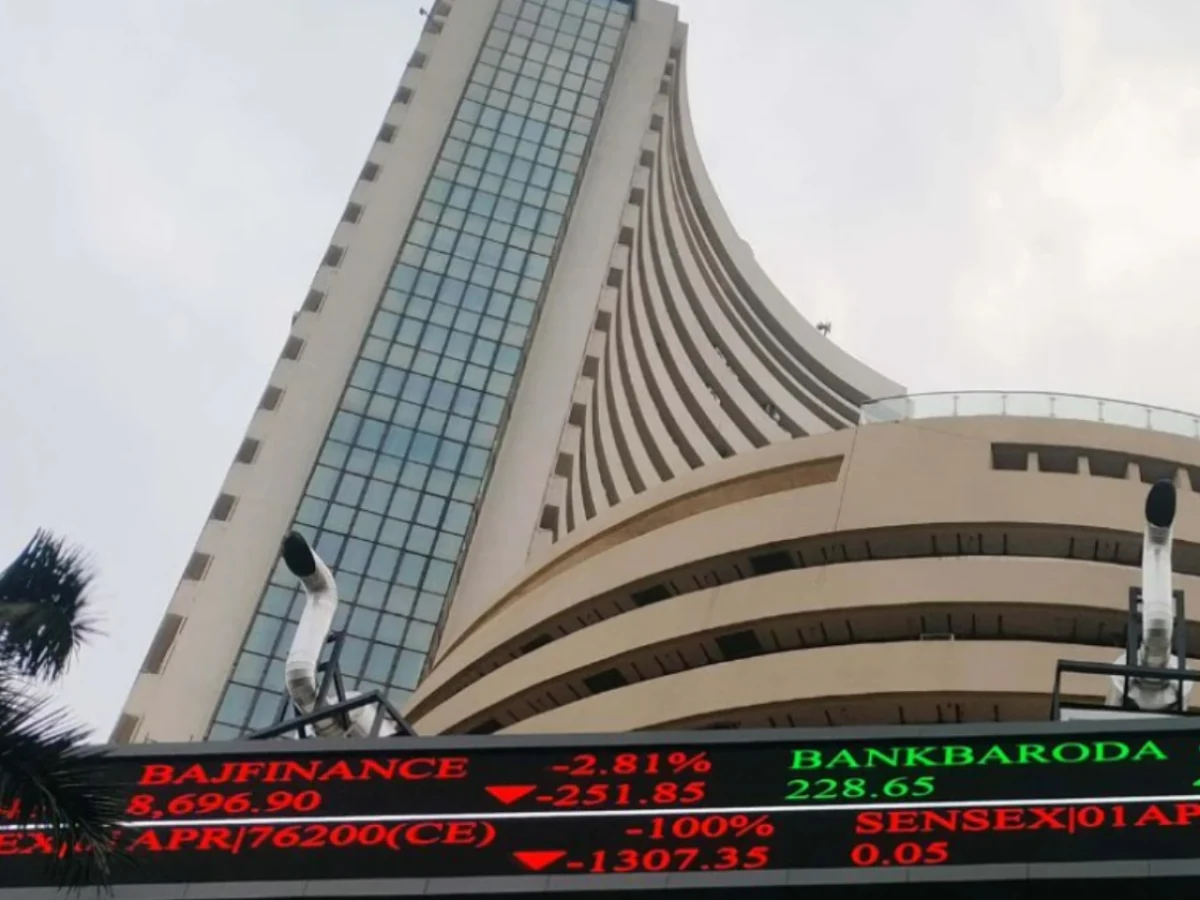
Mumbai, India – India’s benchmark equity indices, the BSE Sensex and NSE Nifty, embarked on a robust upward trajectory on Friday, demonstrating significant resilience amidst a complex global economic landscape. The morning session witnessed a strong opening, which gradually gained momentum, culminating in a substantial mid-day surge that left both indices comfortably above their previous closing levels. This spirited performance, predominantly spearheaded by heavyweight IT and financial stocks, has ignited discussions among market analysts and investors regarding the sustainability of the current rally and the prudent strategies for navigating the evolving market dynamics.
As of 1:54 PM IST, the BSE Sensex had surged an impressive 649.18 points, or 0.84%, showcasing a broad-based positive sentiment permeating across various sectors. Concurrently, the NSE Nifty climbed 161.10 points, marking a 0.67% gain. This synchronized upward movement underscores renewed investor confidence, driven by a confluence of domestic catalysts and an easing of certain global anxieties, even as other international headwinds persist. The market’s ability to absorb profit-booking at higher levels and maintain its upward bias signals a underlying strength that has captured the attention of both institutional and retail participants.
The Day’s Trading Chronicle: A Resilient Ascent
The trading day for Indian equities commenced with an air of cautious optimism, despite lingering concerns emanating from international markets. The SGX Nifty, an early indicator of market sentiment, had hinted at a positive opening, setting the stage for domestic benchmarks. As the opening bell rang, both the Sensex and Nifty immediately reflected this positive inclination, establishing themselves above their prior closing marks and signaling an intent for upward movement.
Morning Momentum and Sectoral Leadership:
The initial hours of trading saw a steady accumulation of gains. Early buying interest was notably concentrated in the information technology (IT) and financial services sectors. Major IT behemoths, sensing an opportunity from improving global technology spending forecasts and a softening stance on interest rates in key Western economies, began to attract significant capital inflows. Simultaneously, India’s robust domestic economic indicators and stable banking sector health provided a fertile ground for financial stocks to flourish. This early leadership provided the necessary impetus for the broader market to consolidate its gains.
)
Mid-Day Surge and Broadening Participation:
By the mid-day trading session, the initial momentum had evolved into a decisive surge. The Sensex breached key psychological levels, propelled by sustained buying across a wider array of stocks. The 1:54 PM IST mark, as reported, captured the indices near their intra-day highs, with the Sensex up nearly 650 points and the Nifty gaining over 160 points. This phase was characterized not just by the continued strength of IT and financials but also by participation from other sectors like fast-moving consumer goods (FMCG) and select auto stocks, suggesting a broadening of the rally. Large-cap stocks, often seen as safer bets in times of uncertainty, led the charge, instilling greater confidence among investors. The positive sentiment was palpable, with traders and analysts observing a shift towards risk-on assets within the Indian market.
Afternoon Dynamics and Consolidation:
While the initial surge was significant, the market also experienced phases of measured profit-booking as the afternoon progressed. However, unlike previous instances where such activity might have led to a sharp reversal, the Indian market demonstrated remarkable resilience. Each dip was met with renewed buying interest, preventing any substantial erosion of the day’s gains. This sustained demand underscored the conviction of domestic institutional investors (DIIs) and a segment of retail participants who viewed minor corrections as opportunities to enter or accumulate positions. The market largely maintained its elevated levels, signaling a strong closing for the week and potentially setting a positive tone for the week ahead, provided global cues do not deteriorate significantly.

Supporting Data: Deep Dive into Sectoral Performance and Macro Triggers
The impressive gains on Friday were not merely numerical surges but were underpinned by distinct drivers across various market segments and a supportive macroeconomic backdrop. The BSE Sensex’s 0.84% jump and the NSE Nifty’s 0.67% climb reflected a targeted buying strategy, particularly evident in the IT and financial sectors.
Leading the Charge: IT and Financial Heavyweights
The rally was emphatically led by segment-defining companies within the IT and financial sectors.
)
- Information Technology (IT): Companies like Tech Mahindra, TCS, Infosys, and HCLTech were among the top performers. Tech Mahindra, in particular, stood out, driven by robust first-quarter earnings that reported a substantial 28.4% surge in consolidated net profit. This strong performance resonated across the sector, with other major players also benefiting from improved global demand forecasts and a more favorable interest rate environment in key client markets such as the US and Europe. The prospect of increased global technology spending and a potential moderation in inflation in major economies has revitalized investor interest in this export-oriented sector.
- Financial Services: Banking majors and non-banking financial companies (NBFCs) also posted significant gains. Reliance Industries, a market heavyweight with substantial financial services interests through Jio Financial Services, saw its shares surge, contributing significantly to the indices’ overall rise. Other prominent gainers included Kotak Bank, HDFC Bank, ICICI Bank, Axis Bank, and SBI, alongside Bajaj Finance. The resilience of India’s banking sector, characterized by healthy credit growth, improving asset quality, and a stable regulatory environment, continues to attract investor confidence. Expectations of sustained economic growth within India further bolster the outlook for these financial institutions.
Other Notable Contributors:
Beyond the core IT and financial sectors, other companies contributed to the positive momentum:
- HUL (Hindustan Unilever Ltd.): A bellwether in the Fast-Moving Consumer Goods (FMCG) sector, its gains might reflect expectations of improving rural demand and consumer spending, especially with favorable monsoon forecasts.
- M&M (Mahindra & Mahindra): This automotive and farm equipment giant’s rise could be attributed to strong sales figures in its auto division and an optimistic outlook for the agricultural sector.
Stocks Under Pressure:
While the overall market sentiment was positive, some stocks bucked the trend:
)
- Tata Steel: Fell, possibly due to global commodity price fluctuations, concerns over demand from key markets like China, or specific operational challenges.
- Bharti Airtel: Declined by 0.91%, facing potential pressures from intense competition in the telecom sector or regulatory uncertainties.
- UltraTech Cement: A leading cement producer, its dip could be linked to concerns over input costs or a temporary slowdown in construction activity in certain regions.
- Eternal, Sun Pharma, and NTPC: Also ended lower, indicating that the rally was not universal and company-specific or sector-specific headwinds persisted for some entities.
Macroeconomic Foundations:
The broader market strength is firmly rooted in India’s stable and improving macroeconomic indicators. "Continuous domestic institutional purchases in combination with solid macroeconomic indicators and stable inflation helped improve investors’ confidence," notes Piyush Jhunjhunwala, Founder & CEO, Stockify. India’s robust GDP growth projections, resilient manufacturing and services Purchasing Managers’ Indices (PMIs), and relatively contained inflation figures (Consumer Price Index – CPI) have painted an attractive picture for investors. Furthermore, the sustained buying by Domestic Institutional Investors (DIIs), fueled by consistent inflows into mutual funds and systematic investment plans (SIPs), has provided a crucial counterbalance to any potential outflows from Foreign Institutional Investors (FIIs), offering a strong structural support to the market.
Official Responses and Expert Commentary: Navigating the Nuances
The market’s strong performance has elicited varied but insightful commentary from industry experts, shedding light on the underlying drivers and potential future trajectories.
)
Domestic Catalysts and Global Headwinds:
Piyush Jhunjhunwala of Stockify highlights that the current surge is a "result of several positive developments in the domestic market and a change in global sentiment." He pinpoints the "renewed interest in IT stocks" as a prime driver, attributing this to "expectations of higher global expenditures in the technology sector, reduction of worries over interest rates in major economic regions, and positive earnings projections for the segment." This confluence suggests that while domestic factors are strong, an improving outlook for India’s export-oriented sectors due to global shifts is equally vital.
Abhishek Bhilwaria, Partner at BhilwariaFinserv, further elaborates on this, stating that the rally was "heavily driven by strong first-quarter tech earnings – such as Tech Mahindra’s reported 28.4% surge in consolidated net profit – combined with optimism over softer-than-expected US inflation data." The impact of US inflation data is crucial; a softer reading reduces the likelihood of aggressive interest rate hikes by the Federal Reserve, which in turn alleviates pressure on global capital flows and makes emerging markets like India more attractive for foreign investment. This also directly benefits IT companies by reducing the cost of capital for their clients and potentially stimulating demand.
)
Caution Amidst Global Volatility:
Despite the domestic cheer, market experts also caution investors about persistent global headwinds. Sachin Gupta, VP-Technical Research at Choice Broking, notes that "global cues remain negative, which may keep investor sentiment cautious during the opening hour." He observes, "Despite the weak overseas backdrop, the domestic market continues to hold above important technical support levels, suggesting that the broader trend remains stable. However, the absence of strong follow-through buying and persistent profit booking near higher levels may keep the market confined to a range-bound trajectory through the session." This highlights the dichotomy between India’s internal strength and external vulnerabilities, suggesting that while major reversals might be averted due to strong technical supports, explosive, uninterrupted rallies could be limited by global uncertainties.
Akshat Siddhant, Lead Quant Analyst at Mudrex, provides a detailed global commodity perspective that underscores these external risks:
)
- Crude Oil: "Crude oil is set for a weekly gain of over 11%, trading above $79 a barrel after US strikes on an Iranian tanker and Trump’s warnings about Iranian infrastructure revived fears over Strait of Hormuz supply." Rising crude oil prices are a significant concern for India, a major oil importer. Elevated oil prices can lead to higher domestic inflation, increase the country’s import bill, widen the current account deficit, and negatively impact corporate margins across various sectors. The geopolitical tensions in the Middle East, particularly concerning the Strait of Hormuz, are critical to monitor for their potential to disrupt global oil supplies and exacerbate price volatility.
- Precious Metals: "On the other hand, Gold is trading below $4,000, down over 3% this week, while silver has slid below $56, losing more than 7%." The decline in precious metals like gold and silver often reflects a ‘risk-on’ sentiment, where investors move out of safe-haven assets and into riskier equities. However, it also signifies a stronger US dollar and expectations of higher interest rates, which make non-yielding assets less attractive. "Higher oil prices have reinforced expectations that the Fed will keep rates elevated for longer, with markets pricing in a roughly 51% chance of a September hike." This expectation of a prolonged period of high interest rates in the US could impact capital flows to emerging markets, potentially leading to currency depreciation and increased borrowing costs. The critical levels for these commodities – "Oil is testing the $80 level, while gold must hold $4,000 to avoid further downside" – are key technical points that traders will be closely watching.
Adding Further Perspective:
A technical analyst, not quoted directly but whose perspective is crucial, might point out that the Nifty’s ability to hold above its 200-day exponential moving average (EMA) or key Fibonacci retracement levels indicates underlying strength, despite the potential for short-term consolidation. Conversely, a global macroeconomist might emphasize the divergence between developed markets (facing recessionary fears) and emerging markets like India (showing robust growth), suggesting that capital reallocation towards more promising economies could be a sustained trend, albeit one susceptible to sudden reversals based on geopolitical events.
Implications and Key Takeaways for Investors
The current market environment, characterized by strong domestic performance juxtaposed with global uncertainties, presents both opportunities and challenges for investors. Experts offer crucial advice on how to navigate this complex landscape.
)
Prudent Portfolio Management and Global Vigilance:
Abhishek Bhilwaria advises investors to "closely monitor corporate quarterly results, balancing portfolio exposure, and tracking global macroeconomic and Federal Reserve cues that sustain or temper emerging market risk appetite."
- Corporate Earnings: Monitoring corporate results goes beyond just headline profit figures. Investors should delve into revenue growth, operating margins, commentary on future outlook, order books, and sector-specific trends. Strong earnings, particularly from market leaders, provide fundamental justification for stock prices and can drive future growth.
- Balancing Portfolio Exposure: This entails diversification across various asset classes (equities, debt, commodities, real estate), different market capitalizations (large-cap, mid-cap, small-cap), and crucially, across sectors. Over-reliance on a single sector, even a performing one like IT or financials, can expose a portfolio to undue risk if that sector faces headwinds.
- Global Macroeconomic and Federal Reserve Cues: The Federal Reserve’s monetary policy decisions, particularly regarding interest rates, have a profound impact on global liquidity and capital flows. Higher rates in the US can lead to a stronger dollar, making emerging market assets less attractive and potentially triggering capital outflows. Investors must also track other global economic indicators like inflation rates, GDP growth in major economies, and geopolitical developments, as these collectively influence investor sentiment towards emerging markets.
Strategic Investing Over Momentum Chasing:
Piyush Jhunjhunwala suggests caution despite the market’s growth, urging investors to "avoid buying shares based solely on momentum." He underscores a fundamental principle of investing: "Markets normally experience rotations between sectors, which means that leaders today may not be leaders tomorrow." This highlights the cyclical nature of markets and the risk of being caught on the wrong side of a sectoral shift. Instead, he advises: "Therefore, rather than trying to take advantage of short-term fluctuations, investors should make investments in companies with solid fundamentals, high visibility of earnings, and good corporate governance practices."
)
- Solid Fundamentals: This refers to a company’s financial health, including strong balance sheets, consistent profitability, healthy cash flows, and manageable debt levels.
- High Visibility of Earnings: Companies with predictable and sustainable earnings growth are generally preferred, as this reduces investment uncertainty. This often involves businesses with strong competitive advantages, established market positions, and clear growth drivers.
- Good Corporate Governance Practices: Transparency, ethical leadership, fair treatment of shareholders, and robust internal controls are crucial for long-term investor trust and sustainable business growth. Companies with poor governance can face significant reputational and financial risks.
The Imperative of Diversification and a Long-Term Vision:
Reiterating the significance of diversification in the current phase of investing, Jhunjhunwala adds that investors "should not limit themselves to sectors." This means looking beyond the currently performing sectors and exploring opportunities in others that might be undervalued or poised for future growth. Diversification mitigates risk by ensuring that a downturn in one sector or asset class does not disproportionately impact the entire portfolio.
He concludes with a powerful message for enduring success: "Only those investors who remain calm and take a long-term view are likely to benefit from the changes in the economic and financial situation of the country in the future." This emphasizes the importance of patience, discipline, and a focus on India’s long-term growth story, rather than getting swayed by short-term market noise or volatility. The Indian economy, with its demographic dividend, structural reforms, and burgeoning domestic consumption, presents a compelling long-term investment narrative that patient investors can capitalize on.
)
Potential Risks and Headwinds:
While the outlook appears positive, investors must remain cognizant of potential headwinds that could temper future gains:
- Global Economic Slowdown: A deeper or more prolonged global recession could impact India’s export-oriented sectors, particularly IT.
- Persistent Inflation: If global crude oil prices continue to rise or domestic inflation resurges, the Reserve Bank of India (RBI) might be compelled to maintain or even hike interest rates, impacting corporate borrowing costs and consumer spending.
- Geopolitical Tensions: Escalation of conflicts in regions like the Middle East or Eastern Europe could create global instability, affecting supply chains and investor confidence.
- Monsoon Performance: While current forecasts are favorable, any deviation from a normal monsoon could impact agricultural output, rural demand, and overall economic growth.
- Valuation Concerns: After significant rallies, certain sectors or individual stocks might become overvalued, increasing the risk of corrections.
In conclusion, Friday’s strong market performance in India, driven by the robust showing of IT and financial sectors, reflects a confluence of positive domestic developments and a nuanced global outlook. While the immediate sentiment is bullish, guided by expert advice, investors are encouraged to adopt a strategic, diversified, and long-term approach, keeping a close watch on both domestic fundamentals and evolving global cues, to navigate the complexities and capitalize on India’s growth trajectory.
