

BUSINESS
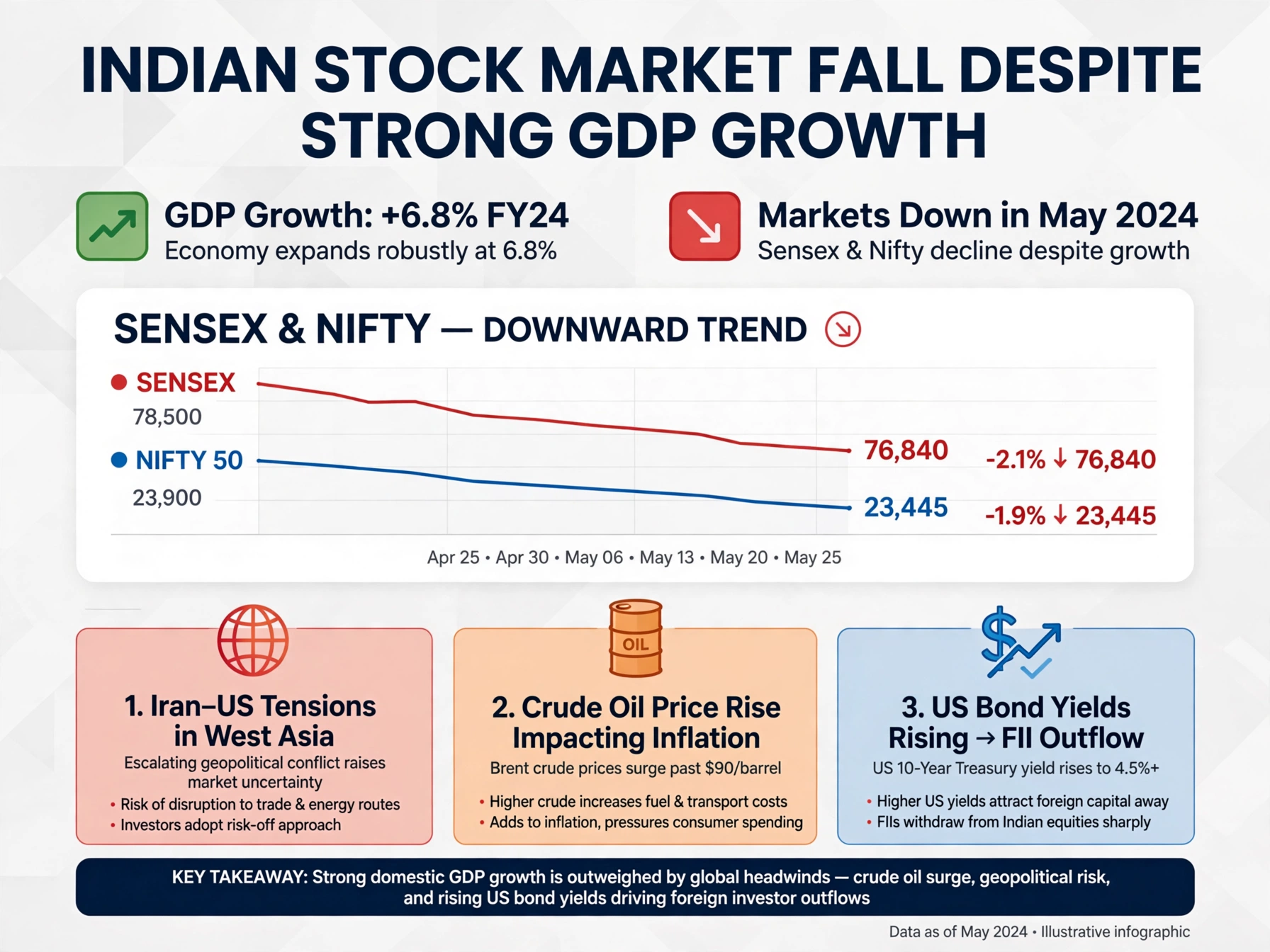
NEW DELHI – In a perplexing turn of events, Indian equity markets witnessed a significant downturn on Tuesday, with benchmark indices Sensex and Nifty plummeting despite the much-anticipated announcement of robust first-quarter GDP growth. The surprising disconnect between a strong domestic economic performance and a sharp market correction has left investors and analysts questioning the underlying anxieties gripping the financial world. While India’s economy showcased resilience, recording an impressive 7.8% growth in Q1 FY24, global instability and macroeconomic pressures appear to have overshadowed this domestic triumph, pushing the markets into a state of heightened volatility.
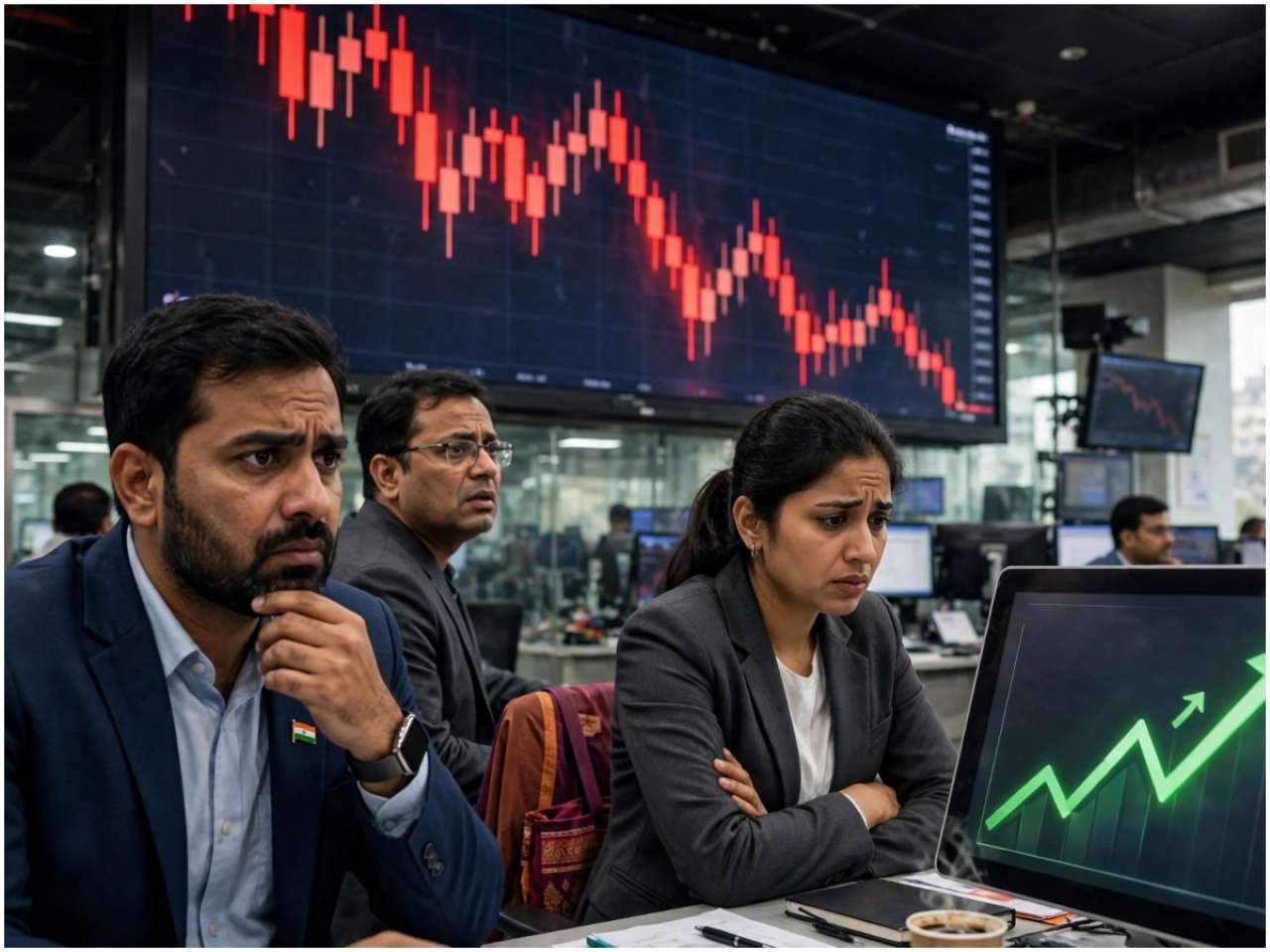
The fall, mirroring a broader global trend, underscores a critical shift in investor sentiment. No longer is strong economic data sufficient to instill confidence; instead, the spotlight has turned firmly on external risks – primarily escalating geopolitical tensions in West Asia, soaring crude oil prices, and the relentless rise in US bond yields. This complex interplay of international factors has created an environment of uncertainty, compelling investors to withdraw capital from emerging markets like India and seek safer havens. The crucial question now is whether these external pressures will continue to dictate market dynamics, potentially dampening the momentum of India’s otherwise promising economic narrative.
Main Facts: A Paradoxical Decline
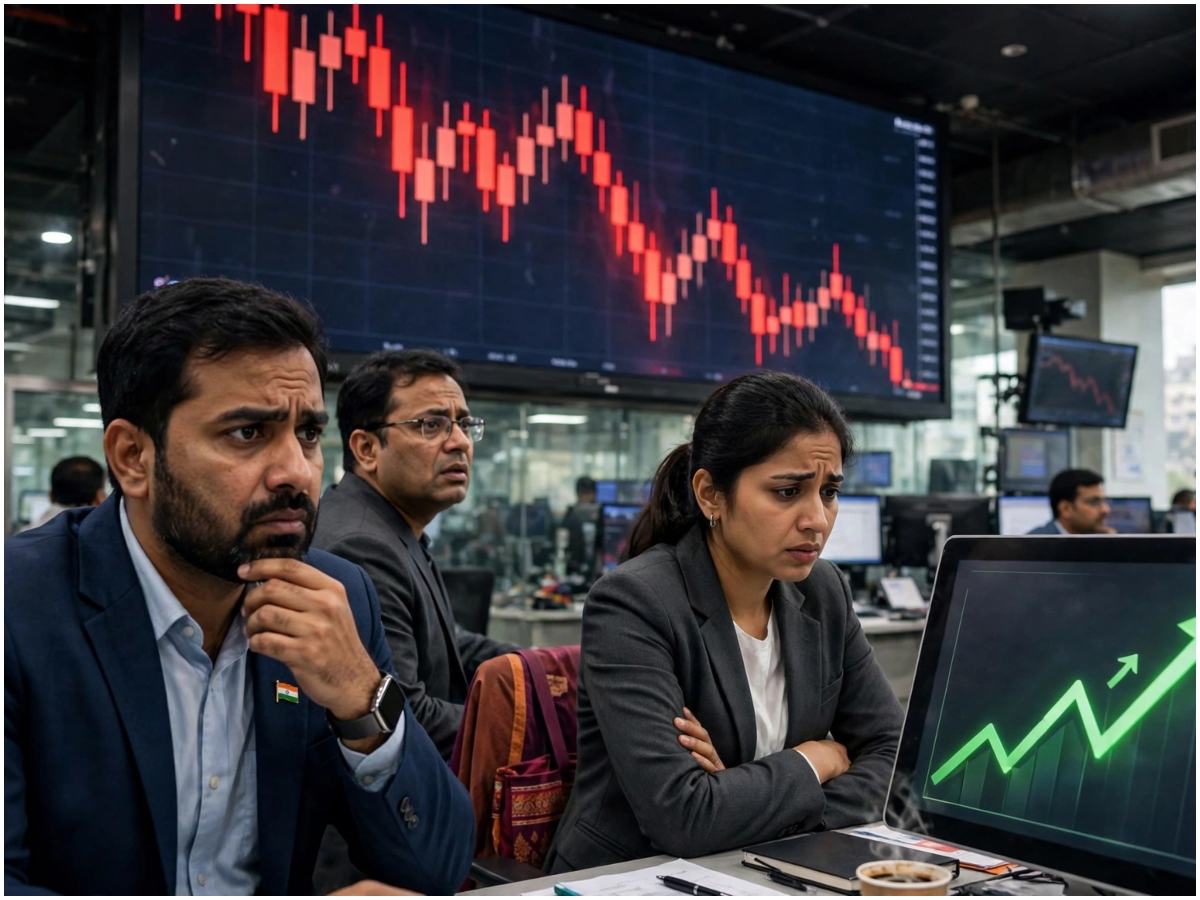
On Tuesday, September 2nd, the Indian stock market experienced a notable decline, defying the positive implications of a robust Gross Domestic Product (GDP) report for the first quarter of the fiscal year 2023-24. The S&P BSE Sensex, the bellwether index of the Bombay Stock Exchange, shed a significant number of points, while the Nifty 50, representing the National Stock Exchange, also registered a substantial fall. This downward movement was not isolated, reflecting a broader correction across global markets.
)
The core paradox lies in the timing: the market correction occurred on the very day India announced its Q1 GDP growth had surged to an impressive 7.8%, comfortably exceeding many analysts’ expectations and marking the fastest growth rate among major economies. Typically, such positive economic indicators would ignite investor confidence, leading to an upward trajectory in equity prices. However, the market’s adverse reaction signaled that domestic fundamentals, no matter how strong, were being overshadowed by a confluence of potent international concerns. These concerns primarily revolved around intensifying geopolitical friction between Iran and the United States in West Asia, which sent crude oil prices spiraling upwards, and the sustained increase in US Treasury bond yields, which made dollar-denominated assets more attractive, triggering capital outflows from riskier emerging markets like India. The market’s inability to capitalize on India’s economic strength highlights a prevailing risk-off sentiment, where global stability and macroeconomic indicators are holding greater sway than isolated pockets of domestic growth.
Chronology: The Day’s Unfolding and Global Triggers
The trading day on Tuesday began with a sense of cautious optimism, largely fueled by expectations surrounding India’s Q1 GDP data. Analysts had widely projected a strong growth figure, given the resilience observed in several high-frequency indicators. However, this underlying positive sentiment was quickly challenged by prevailing global cues. Asian markets had opened lower, reacting to overnight developments, particularly concerning the rise in US bond yields and renewed tensions in the Middle East.

Morning Jitters: As the Indian market opened, the Sensex and Nifty immediately showed signs of weakness, influenced by negative global sentiment. Initial attempts by bulls to push prices higher proved fleeting. Despite the anticipation of strong GDP numbers, the market was already grappling with the implications of rising global crude prices and the strengthening dollar. Traders were seen adopting a risk-averse stance, with early profit booking observed in sensitive sectors.
GDP Announcement and Muted Reaction: Mid-morning, the Ministry of Statistics and Programme Implementation announced India’s Q1 FY24 GDP growth at 7.8%. The figure was indeed impressive, surpassing the 6.1% recorded in the previous quarter and exceeding the consensus forecast of approximately 7.5%. For a brief period, there was a minor attempt at recovery in the indices, as some investors initially reacted positively to the headline number. However, this uptick was short-lived and lacked conviction. Instead of acting as a catalyst for a sustained rally, the GDP news was largely absorbed without significantly altering the dominant bearish mood. The market quickly reverted to its downward trajectory, indicating that the positive domestic news was insufficient to counteract the weight of external pressures.
)
Afternoon Sell-off: The latter half of the trading session saw an acceleration of selling pressure. Foreign Institutional Investors (FIIs), already net sellers in recent sessions, appeared to intensify their outflows. Domestic institutional investors (DIIs) provided some support but were unable to stem the tide. The sharp rise in international crude oil benchmarks, notably Brent crude crossing the $90 per barrel mark, fueled concerns about inflation and the current account deficit. Simultaneously, the persistent ascent of the US 10-year Treasury yield, which had recently hit multi-year highs, continued to draw capital away from emerging markets. This combination of factors led to a broad-based sell-off across sectors, with banking, metals, and IT stocks bearing the brunt of the decline.
The Global Backdrop: The immediate triggers for this market fragility were clearly international. Over the preceding days, reports of heightened diplomatic and military posturing between the United States and Iran had intensified. The rhetoric from both sides, coupled with incidents in key shipping lanes, had raised fears of supply disruptions in the critical oil-producing region of West Asia. This geopolitical premium immediately translated into higher crude oil prices. Simultaneously, the US Federal Reserve’s hawkish stance on interest rates, reinforced by robust US economic data, had pushed US bond yields higher. This made fixed-income investments in the US more attractive relative to equity investments in riskier emerging economies, prompting a global "flight to safety" and a rotation of capital out of assets perceived as volatile. The cumulative effect of these global developments created a formidable headwind that even India’s strong GDP growth could not overcome.
)
Supporting Data: Deconstructing the Driving Forces
The market’s seemingly irrational reaction to strong GDP data can be understood by meticulously dissecting the various data points and factors that coalesced to create this environment of fear and uncertainty.
India’s Q1 FY24 GDP Performance:
India’s economy expanded by an impressive 7.8% year-on-year in the April-June quarter (Q1 FY24), making it the fastest-growing major economy globally. This growth was primarily driven by a robust performance in the services sector, particularly financial, real estate, and professional services, which grew by 12.2%. The manufacturing sector also showed resilience, expanding by 4.7%. Private consumption, a key growth engine, recorded a healthy 6% growth, indicating sustained domestic demand. Gross Fixed Capital Formation (GFCF), a proxy for investment, grew by 8.0%, suggesting an uptick in capital expenditure. The government’s own expenditure also contributed positively, rising by 2.6%. While agricultural growth remained steady at 3.5%, concerns about uneven monsoons and their potential impact on future food inflation lingered. Despite these strong headline numbers, analysts noted that the growth was somewhat uneven, with certain rural consumption indicators showing signs of moderation.
)
Geopolitical Tensions and Crude Oil Prices:
The escalating tensions between Iran and the United States in West Asia have emerged as a significant destabilizing factor. Reports of naval exercises, drone incidents, and increased rhetoric regarding sanctions enforcement in the Strait of Hormuz – a critical chokepoint for global oil shipments – have created a substantial geopolitical risk premium in crude oil markets. On Tuesday, benchmark Brent crude futures surged past $90 per barrel, marking its highest level in months, while West Texas Intermediate (WTI) crude also climbed significantly. This rapid ascent in oil prices is particularly detrimental to India, which imports over 85% of its crude oil requirements. Every $10 increase in crude oil prices typically adds approximately 0.4% to India’s Consumer Price Index (CPI) and widens the current account deficit by about $15 billion annually. Higher oil prices translate directly into increased import bills, higher inflation (especially fuel and transportation costs), and potential depreciation of the Indian Rupee, thereby eroding corporate profitability and household purchasing power.
Rising US Bond Yields and Capital Outflows:
The yield on the US 10-year Treasury note, a global benchmark, has been on an upward trajectory, recently touching multi-year highs, surpassing 4.2% and at times nearing 4.3%. This surge is primarily driven by expectations of a more hawkish stance from the US Federal Reserve, robust US economic data suggesting continued inflationary pressures, and an increasing supply of government bonds. Higher US bond yields make dollar-denominated assets more attractive for global investors, leading to a "risk-off" environment where capital is withdrawn from emerging markets in favor of safer, higher-yielding US treasuries. This phenomenon, known as "capital flight" or "carry trade reversal," significantly impacts countries like India, which rely on foreign capital inflows to finance growth and maintain currency stability. Foreign Institutional Investors (FIIs) have been net sellers in the Indian equity market in recent sessions, with substantial outflows observed on Tuesday, directly contributing to the downward pressure on indices.
)
Other Contributing Factors:
Beyond these primary drivers, other global and domestic factors are also at play. Concerns about the health of the Chinese economy, particularly its property sector and manufacturing output, have cast a shadow over global growth prospects. A slowdown in China, a major global consumer and producer, can have ripple effects on commodity prices and international trade. Domestically, while inflation showed signs of cooling in some areas, the potential impact of crude oil on food inflation (due to transport costs) and the overall CPI remains a worry for the Reserve Bank of India (RBI). Furthermore, some analysts suggest that the Indian market, particularly after a strong rally in the preceding months, was due for a correction, making it more susceptible to negative global cues. Profit booking by institutional investors, leveraging the strong domestic growth narrative for exits, also contributed to the selling pressure.
Official Responses: Navigating the Global Crosscurrents
The sharp market correction despite positive domestic economic news has prompted various stakeholders to offer their perspectives and strategies to navigate the prevailing global crosscurrents.
)
Government’s Stance:
The Ministry of Finance acknowledged the strong Q1 GDP growth as a testament to India’s economic resilience and prudent policy measures. However, senior officials also recognized the global challenges. "While our domestic fundamentals remain robust, as evidenced by the impressive 7.8% GDP growth, we are not immune to global headwinds," stated a spokesperson from the Finance Ministry. "The government is closely monitoring crude oil prices and geopolitical developments. Our fiscal policies are designed to absorb external shocks, and we remain committed to maintaining macroeconomic stability and attracting foreign investment." They emphasized ongoing efforts to boost manufacturing, enhance infrastructure, and foster a conducive business environment to insulate the economy from external volatility.
Reserve Bank of India’s Perspective:
The Reserve Bank of India (RBI), while not issuing an immediate statement specifically on the market’s reaction to GDP, has consistently highlighted the dual challenge of managing growth and inflation amidst global uncertainties. In recent policy reviews, the RBI has expressed concerns about volatile crude oil prices and their potential impact on the inflation trajectory. Governor Shaktikanta Das has reiterated the RBI’s commitment to price stability, indicating that monetary policy decisions would remain data-dependent and adaptable to evolving global and domestic conditions. The central bank’s stance suggests a cautious approach, ready to intervene if rising crude prices or currency depreciation threaten to derail inflation targets.
)
Market Analysts and Economists:
Leading economists and market strategists have largely echoed the sentiment that global factors have taken precedence over domestic strengths. "The market’s reaction clearly indicates that investors are currently more concerned with risk management than growth opportunities," remarked Dr. Anjali Sharma, Chief Economist at Zenith Capital. "The rise in US bond yields offers a compelling alternative to emerging market equities, while geopolitical risks in West Asia add a layer of uncertainty that no amount of positive GDP data can immediately offset."
Mr. Rajesh Kumar, Head of Equities at Alpha Investments, highlighted the shift in focus. "For the time being, the narrative has moved from ‘India’s growth story’ to ‘global stability concerns.’ Investors are consolidating positions and moving into safer assets. This isn’t a reflection of India’s economic health, but rather a response to the external environment." He added that FII flows would remain sensitive to crude prices and the US dollar index in the short term. Many analysts predict continued volatility until there is greater clarity on the trajectory of global inflation, interest rates, and geopolitical tensions. They also pointed out that while the headline GDP number was strong, the underlying components indicated that some segments of the economy, particularly rural consumption, might face pressure if inflation remains elevated.
)
Implications: The Road Ahead for Investors and the Economy
The current market dynamics carry significant implications for various stakeholders, from individual investors to the broader Indian economy, necessitating a nuanced understanding of the challenges and opportunities ahead.
For Investors:
The immediate implication for investors is the heightened level of market volatility. This period demands caution, strategic asset allocation, and a long-term perspective. Short-term traders might find opportunities in price swings, but retail investors are advised against panic selling. Instead, a focus on fundamentally strong companies with resilient business models and healthy balance sheets might prove beneficial during such corrections. Sectoral impacts will be diverse:
)
- Negatively impacted: Sectors heavily reliant on imported raw materials like chemicals, or those with high fuel costs such as airlines and logistics, will face margin pressures from elevated crude oil prices. Companies with significant foreign debt might also struggle with a depreciating rupee.
- Potentially resilient: Export-oriented sectors, particularly IT services, might benefit from a weaker rupee, though global slowdown fears could temper gains. Domestic consumption-driven sectors might show resilience if inflation remains contained.
- Opportunities: Corrections often present buying opportunities for long-term investors in quality stocks at attractive valuations. Diversification across asset classes (equities, debt, gold) can help mitigate risks.
For the Indian Economy:
The confluence of global factors poses several challenges to India’s macroeconomic stability:
- Inflationary Pressures: Sustained high crude oil prices will undoubtedly fuel inflationary pressures, particularly through increased fuel and transportation costs. This could lead to a broader rise in the Consumer Price Index (CPI), impacting household budgets and potentially prompting the RBI to maintain a tighter monetary policy or even consider further rate hikes, which could dampen economic growth.
- Current Account Deficit (CAD): A higher crude oil import bill will inevitably widen India’s current account deficit, putting pressure on the Rupee and potentially depleting foreign exchange reserves. A widening CAD can also make the economy more vulnerable to external shocks.
- Fiscal Burden: The government may face increased pressure to either absorb some of the crude oil price shock through tax cuts (impacting revenue) or pass it on to consumers, risking social unrest and higher inflation. This can complicate fiscal consolidation efforts.
- Currency Depreciation: The Indian Rupee is likely to remain under pressure against the US dollar due to capital outflows and a widening CAD. While a weaker Rupee can boost exports, it makes imports more expensive and adds to inflation.
- Corporate Earnings: Higher input costs and potentially weaker consumer demand (due to inflation) could impact corporate profitability across various sectors, leading to revised earnings forecasts and potentially lower stock valuations.
Global Context and What to Watch:
India’s situation is not unique; many emerging markets are grappling with similar challenges of capital flight, currency depreciation, and inflationary pressures driven by global factors. The resilience of the Indian economy will be tested in its ability to navigate these crosscurrents.
)
Key indicators that investors and policymakers will be closely monitoring include:
- Crude Oil Prices: Any de-escalation of West Asian tensions or increased supply could bring down oil prices, providing significant relief.
- US Bond Yields and Federal Reserve Policy: Clarity on the Fed’s interest rate trajectory and any signs of softening in its hawkish stance could reduce capital outflow pressures.
- FII Flows: The trend in foreign institutional investment will be a crucial barometer of global risk appetite towards India.
- RBI’s Monetary Policy: The central bank’s decisions on interest rates and liquidity management will be critical in balancing growth and inflation.
- Domestic Inflation Data: Regular updates on CPI and WPI will indicate the extent to which global pressures are translating into domestic price rises.
In conclusion, while India’s first-quarter GDP growth painted a picture of domestic economic strength, the market’s subdued reaction highlights a powerful truth: in an increasingly interconnected global economy, no nation operates in isolation. The pursuit of growth must now contend with the formidable forces of geopolitical instability, commodity price volatility, and the gravitational pull of advanced economies’ monetary policies. The coming months will likely be characterized by continued vigilance, as investors and policymakers alike strive to find equilibrium amidst these complex and often unpredictable global dynamics. For now, it is clear that robust economic growth, while fundamentally important, is not sufficient to guarantee market buoyancy when global stability hangs in the balance.
)
Find your daily dose of All Latest News including Sports News, Entertainment News, Lifestyle News, explainers & more. Stay updated, Stay informed- Follow DNA on WhatsApp.
