

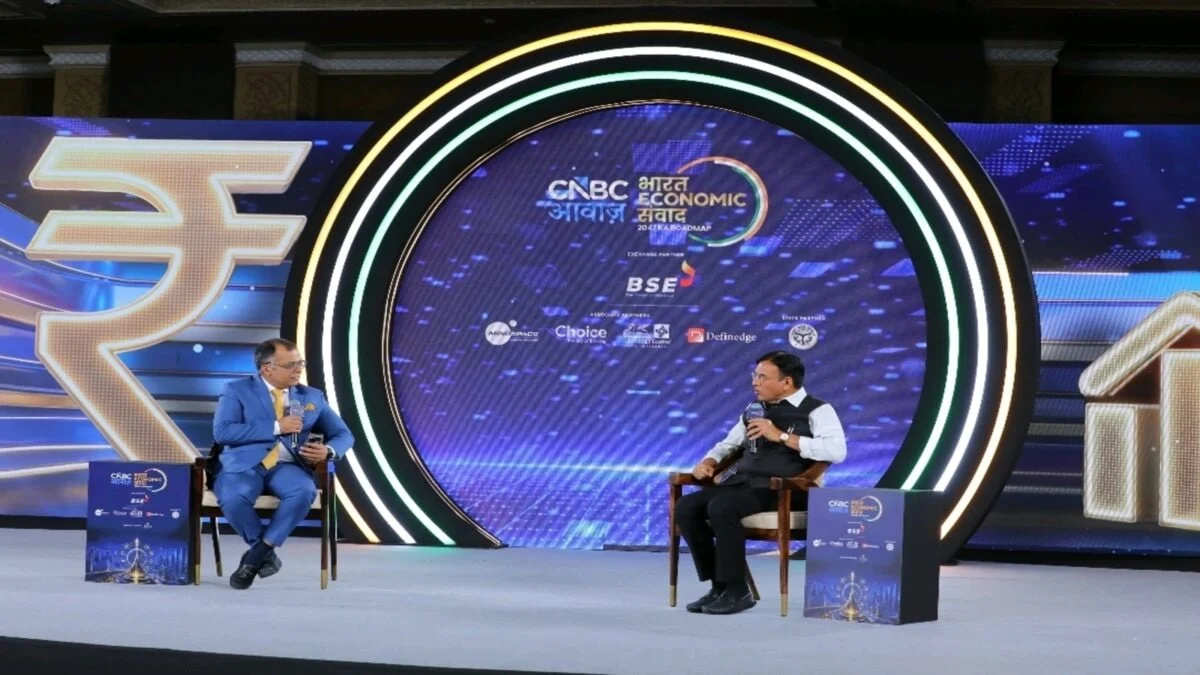
Mumbai, India – May 29, 2026 – CNBC-AWAAZ, a leading voice in India’s business and financial news landscape, successfully convened the Bharat Economic Samvaad on May 26, 2026. This landmark conclave in Mumbai brought together an unparalleled assembly of India’s most influential policymakers, astute business leaders, and insightful economists for a comprehensive dialogue on the nation’s ambitious journey towards becoming a ‘Viksit Bharat’ – a developed India – by 2047. The day-long summit meticulously examined the myriad opportunities and formidable challenges that lie on this transformative path, offering a crucial platform for strategic deliberation amidst a rapidly evolving global economic order.
The Samvaad’s central theme resonated with the national aspiration of a developed India, providing a dynamic forum for discussions that transcended mere headlines, instead delving into grounded, forward-looking perspectives essential for India to unlock its full economic potential. Against the backdrop of a global economy grappling with shifting power dynamics, technological disruptions, and climate imperatives, the conclave served as a vital crucible for substantive dialogue on India’s most pressing growth themes, from the vibrancy of its capital markets to the future of manufacturing, the promise of artificial intelligence, the complexities of cryptocurrency, the stability of commodities, the imperative of urban infrastructure development, and the burgeoning emergence of India as a formidable global brand.
A Confluence of Minds: Charting India’s Growth Trajectory
The Bharat Economic Samvaad commenced with a palpable sense of purpose, reflecting the urgency and optimism surrounding India’s economic future. Anuj Singhal, Managing Editor, CNBC-AWAAZ, set an inspiring tone with his welcome address, articulating the collective aspirations for India’s journey towards Viksit Bharat 2047. His opening remarks underscored the critical role of informed discourse and collaborative action in steering the nation towards its ambitious goals, emphasizing that the path to development is paved not just with policy and capital, but with shared vision and collective determination.
The initial sessions quickly transitioned into high-level addresses from senior government representatives, whose insights provided crucial perspectives on the policy frameworks and strategic initiatives underpinning India’s growth narrative. These addresses were foundational, laying out the government’s vision and highlighting specific areas of focus designed to accelerate the nation’s developmental trajectory.
Harnessing India’s Demographic Dividend: Youth Power as an Economic Engine
Union Minister Mansukh Mandaviya, holding the portfolios for Youth Affairs & Sports and Labour & Employment, delivered a compelling address on the immense potential of India’s youthful demographic. His speech centered on the strategic imperative of transforming India’s vast youth population into a powerful engine of economic growth. Mandaviya articulated a vision where a skilled, healthy, and engaged youth force would drive innovation, entrepreneurship, and productivity across all sectors. He emphasized the government’s ongoing efforts in skill development, vocational training, and educational reforms aimed at equipping young Indians with the competencies required by a rapidly changing job market. The Minister highlighted initiatives designed to foster entrepreneurship and provide avenues for meaningful employment, thereby ensuring that the demographic dividend translates into sustained economic prosperity rather than a demographic burden.
In a significant announcement, Minister Mandaviya revealed that from the following month, the facility to withdraw EPFO (Employees’ Provident Fund Organisation) funds through UPI (Unified Payments Interface) would become available. This groundbreaking integration will allow subscribers to conveniently withdraw up to 75% of their accumulated amount using ATM and Aadhaar authentication. This move is poised to significantly enhance financial accessibility and ease for millions of EPFO subscribers, streamlining a previously cumbersome process and bringing it into the ambit of India’s robust digital payment infrastructure. Furthermore, he noted the government’s proactive steps in developing WhatsApp-based automated services. These services are designed to provide users with effortless access to EPFO-related information, including claims status and other crucial details, thereby democratizing access to essential financial services and promoting greater transparency and efficiency in the system. These digital initiatives underscore the government’s commitment to leveraging technology for public welfare and economic inclusion.
Weaving a Global Future: Textile Export Diversification and Resilience
Union Minister Giriraj Singh, overseeing the crucial Ministry for Textiles, presented a robust case for India’s textile export diversification strategy and its integral role in achieving Viksit Bharat 2047. Minister Singh recounted a strategic decision to reduce India’s over-reliance on a single major market, specifically the United States, which at one point accounted for approximately 30% of the nation’s textile exports. He candidly admitted, "About 30% of our textile exports were going to the US, and I felt that this was not right and the diversification was necessary." This foresight, he explained, proved critical in building resilience within the sector.
The Minister proudly shared the tangible results of this strategic shift: "Today, we are seeing the result of that very decision, as even in these circumstances we have not fallen. We did take a hit, but we recovered." This resilience, he elaborated, was evident in India’s broadened export footprint, now encompassing 523 districts and reaching across 180 countries. This remarkable expansion is a testament to the sector’s adaptability, the government’s supportive policies, and the entrepreneurial spirit of Indian textile manufacturers. Singh’s address underscored the sector’s importance not only as a significant contributor to GDP but also as a massive employer, particularly in rural and semi-urban areas, making its sustained growth and global competitiveness vital for inclusive national development.
Navigating New Horizons: Challenges and Opportunities on the Path to 2047
Anuradha Thakur, Secretary, Department of Economic Affairs (DEA), provided a nuanced perspective on the new opportunities and inherent challenges that define India’s trajectory towards Viksit Bharat 2047. Her address, informed by her pivotal role in economic policy formulation, delved into the intricacies of macroeconomic management, fiscal prudence, and structural reforms necessary to sustain high growth rates. Thakur highlighted India’s robust economic fundamentals, including its strong domestic consumption, burgeoning digital economy, and increasing integration into global supply chains, as significant opportunities.
However, she also acknowledged the persistent challenges, such as managing inflationary pressures, ensuring equitable wealth distribution, addressing infrastructure deficits in certain areas, and navigating geopolitical uncertainties that can impact trade and investment flows. The Secretary emphasized the DEA’s focus on creating an enabling policy environment that attracts foreign direct investment, fosters domestic entrepreneurship, and promotes innovation across all sectors, thereby strategically positioning India to overcome hurdles and capitalize on its unique strengths.
India’s Growth Story 2.0: Anchored in Capital, Consumption, and Confidence
Dr. Ashok Kumar Lahiri, Vice Chairman, NITI Aayog, delivered a profound keynote address on "India’s Growth Story 2.0," articulating its foundation around the crucial pillars of capital, consumption, and confidence. Dr. Lahiri posited that sustained economic growth hinges on the robust availability and efficient deployment of capital for investment, the steady rise in domestic consumption fueled by a growing middle class, and crucially, a high degree of confidence among investors, businesses, and consumers alike. He elaborated on how these three interconnected factors create a virtuous cycle that propels economic expansion.
Beyond these fundamental drivers, Dr. Lahiri outlined a strategic roadmap for accelerating India’s progress towards Viksit Bharat 2047. He stressed, "Not just to face current challenges, but to fast-track the progress of Viksit Bharat 2047, we need to sharpen our focus on 100% foundational literacy and numeracy, primary healthcare for all, and reduction of logistics costs through better roads, railways, ports, and affordable electricity." This prescriptive approach highlighted the indispensable role of human capital development and efficient physical infrastructure in underpinning long-term sustainable growth. Achieving universal foundational literacy and numeracy would unlock the full potential of India’s workforce, while comprehensive primary healthcare would ensure a healthier, more productive populace. Simultaneously, a drastic reduction in logistics costs, facilitated by modernizing and expanding India’s transportation networks and ensuring access to affordable energy, would significantly boost the competitiveness of Indian industries on both domestic and global stages.
Dynamic Discussions: Shaping Policy and Industry Landscapes
Following the insightful addresses, the Samvaad transitioned into a series of high-powered panel discussions and high-impact fireside chats, featuring an eclectic mix of industry titans, financial mavens, and policy implementers. These sessions were designed to facilitate granular discussions, offering practical insights and actionable strategies from those at the forefront of India’s economic transformation.
Capital Markets: The Engine of Growth
A dedicated panel discussion on Indian capital markets brought together leading figures whose expertise shapes the nation’s financial landscape. Participants included Ajay Sharma, President, Edelweiss Financial Services, Singapore; Nilesh Shah, MD, Kotak Mahindra Asset Management; Navneet Munot, MD & CEO, HDFC AMC; Utpal Sheth, Founder & Mentor, Trust Group; and Kamal Poddar, MD, Choice. The discussion delved into the vibrancy of India’s equity and debt markets, their increasing attractiveness to domestic and international investors, and their critical role in mobilizing capital for infrastructure development, corporate expansion, and technological innovation.
The experts explored the impact of regulatory reforms, the influx of retail investors, and the growing maturity of institutional participants. They debated the opportunities presented by India’s robust economic outlook and discussed strategies to further deepen market liquidity, enhance transparency, and safeguard investor interests. The consensus was clear: a strong, well-regulated capital market is indispensable for funding the ambitious projects required for Viksit Bharat and for ensuring equitable wealth creation for its citizens.
Industrial Visionaries and Policy Architects
The fireside chats provided intimate platforms for leaders to share their personal insights and strategic blueprints. Anil Agarwal, Chairman, Vedanta Group, offered his perspective on the role of resource industries in national development and sustainable growth. His views highlighted the importance of domestic resource security and value addition for industrial self-reliance. Tarun Garg, MD & CEO, Hyundai Motor India, shed light on the dynamics of India’s automotive sector, discussing innovation, market trends, and the transition towards electric mobility, a critical component of India’s green growth agenda.
Rajesh Agrawal, Secretary, Department of Commerce, provided insights into India’s trade policy, export promotion strategies, and efforts to enhance global competitiveness. His discussion centered on navigating international trade complexities and opening new markets for Indian goods and services. Ishtiyaque Ahmad and Anna Roy, both Program Directors at NITI Aayog, offered detailed perspectives on specific policy initiatives, technological interventions, and strategic planning within the government’s premier think tank. Their contributions illuminated the rigorous analytical work that informs national policy decisions.
Venk Krishnan, CEO, Nuware and President, TiE Bengaluru, brought the entrepreneurial and technological perspective, discussing the startup ecosystem, innovation drivers, and the potential of Indian tech talent on the global stage. Alok Rungta, MD & CEO, Generali Central Life Insurance, addressed the crucial role of the insurance sector in providing financial security, mobilizing long-term savings, and contributing to capital formation, underscoring its foundational importance for a developed economy. The diverse voices from these sessions painted a comprehensive picture of the collaborative efforts between policy shapers and industry leaders, all working towards a common national goal.
Unpacking India’s Pressing Growth Themes
The Bharat Economic Samvaad meticulously explored a wide array of growth themes, extending beyond conventional discussions to encompass the cutting-edge and the foundational. The depth of these discussions reflected India’s multifaceted approach to development.
Beyond Traditional Sectors: Emerging Avenues
The conclave dedicated significant attention to Artificial Intelligence (AI), recognizing its transformative potential across industries. Discussions centered on India’s burgeoning AI talent pool, the ethical considerations of AI deployment, and the strategic investments required to position India as a global leader in AI research, development, and application. Experts debated how AI could revolutionize sectors from healthcare and education to manufacturing and agriculture, driving efficiency and innovation.
Cryptocurrency also featured prominently, reflecting the global debate surrounding digital assets. While acknowledging the inherent volatility and regulatory challenges, the sessions explored the underlying blockchain technology’s potential for secure transactions, financial inclusion, and decentralized applications. The dialogue aimed to foster a balanced understanding of crypto’s risks and opportunities within India’s evolving financial landscape.
The stability and strategic importance of Commodities were also thoroughly examined. India’s role as a significant consumer and producer of various commodities necessitates robust policies to manage price volatility, ensure supply chain resilience, and leverage commodity markets for economic growth. Discussions touched upon energy security, agricultural commodities, and mineral resources, all vital for India’s industrial and developmental needs.
Urban Infrastructure and Global Branding
The imperative of Urban Infrastructure development was a recurring theme. With rapid urbanization, India faces the monumental task of building smart, sustainable cities capable of supporting its growing population and economic activity. Discussions covered sustainable urban planning, smart city initiatives, public-private partnerships in infrastructure projects, and the critical need for efficient transportation, housing, sanitation, and digital connectivity to enhance the quality of life and productivity in urban centers.
Finally, the Samvaad explored India’s emergence as a Global Brand. This theme encompassed India’s rising geopolitical influence, its growing prowess in technology and services, its cultural soft power, and its potential to become a global manufacturing hub. The discussions highlighted strategies to enhance India’s brand equity on the international stage, attracting greater foreign investment, boosting tourism, and fostering a positive perception of Indian products, services, and talent worldwide. These forward-looking discussions emphasized moving beyond incremental improvements to envisioning a truly globally competitive and influential India.
The Road Ahead: Implications and Outlook
The CNBC-AWAAZ Bharat Economic Samvaad was more than just a gathering of eminent personalities; it was a potent demonstration of India’s commitment to introspective dialogue and collaborative problem-solving on its path to becoming a developed nation. The comprehensive nature of the discussions, spanning policy, finance, industry, and emerging technologies, underscored the multifaceted approach required to achieve the Viksit Bharat 2047 vision.
The implications of such a high-caliber dialogue are profound. It reinforces the significance of public-private partnerships and the essential role of intellectual discourse in shaping national development strategies. By bringing together diverse perspectives, the Samvaad helped to identify both consensus areas and points of divergence, fostering a more nuanced understanding of complex economic issues. The insights shared by Union Ministers, NITI Aayog officials, and industry leaders provide invaluable guidance for future policy formulation and investment decisions. The specific announcements regarding EPFO and the emphasis on textile diversification highlight tangible policy actions already underway or planned, which will directly impact millions of citizens and businesses.
Looking ahead, the momentum generated by the Bharat Economic Samvaad is expected to translate into continued efforts towards strengthening India’s economic fundamentals. The focus on human capital development (literacy, healthcare), infrastructure modernization (logistics costs), and leveraging digital technologies will remain paramount. The engagement of the private sector, as evidenced by the participation of leading corporate figures, signals a shared responsibility and commitment to national growth. Such platforms are crucial for aligning government policies with industry needs and fostering an ecosystem conducive to innovation and sustainable growth. The Samvaad ultimately served as a powerful reminder that the journey to Viksit Bharat is a collective endeavor, requiring sustained effort, strategic vision, and collaborative spirit from all stakeholders.
A Collaborative Endeavor: Acknowledging Key Partners
The successful execution and profound impact of the CNBC-AWAAZ Bharat Economic Samvaad were made possible through the invaluable support and collaboration of its esteemed partners. CNBC-AWAAZ extends its sincere gratitude to BSE, which served as the Exchange Partner, underscoring the critical role of capital markets in India’s growth story. The event also benefited from the generous contributions of Mindspace Business Parks REIT, Choice, Generali Central Life Insurance, and Definedge as Associate Partners, reflecting their commitment to national economic dialogue. Furthermore, the significant backing from the Government of Uttar Pradesh as the State Partner highlighted the crucial role of states in driving India’s overall development. Finally, the consistent support of Reliance Industries as an Associate Partner further reinforced the collective commitment to bringing this vital national conversation to life. These partnerships were instrumental in creating a platform for meaningful exchange and advancing the discourse on India’s economic future.
