

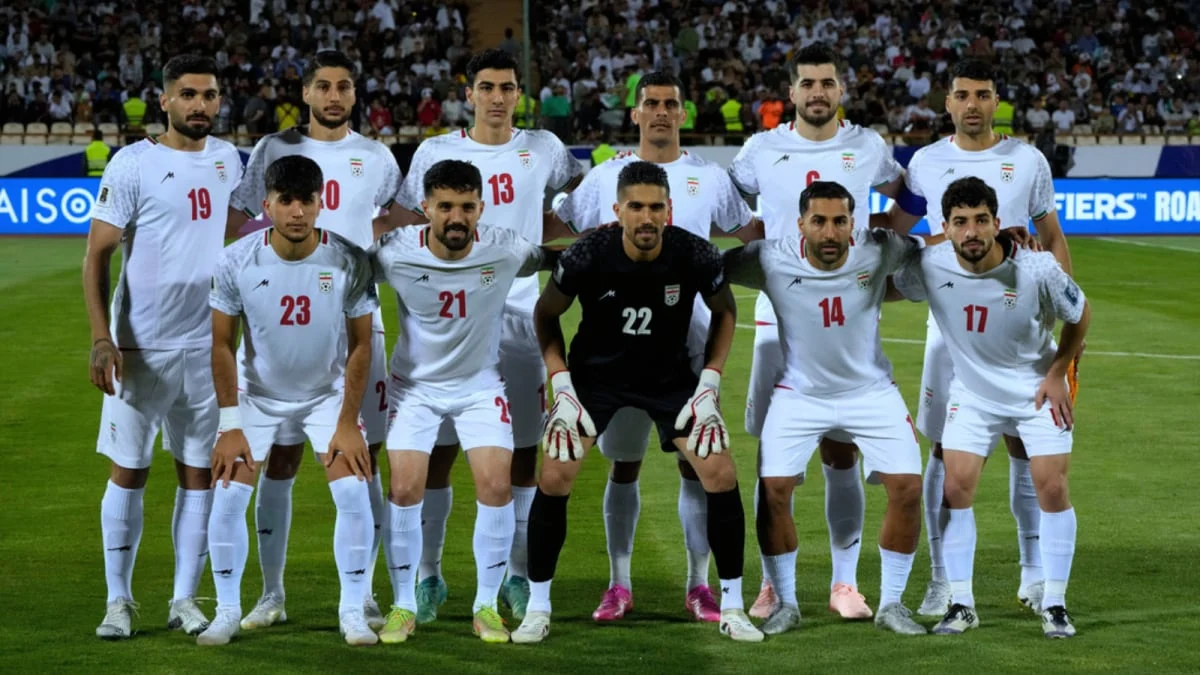
New Delhi, India – May 9, 2026 – The Iranian Football Federation (IFF) has officially confirmed its national team’s participation in the upcoming 2026 FIFA World Cup, co-hosted by the United States, Canada, and Mexico. However, this confirmation comes with an unprecedented set of demands directed primarily at the United States, signalling a complex intersection of international sports, diplomacy, and geopolitical friction. The IFF has explicitly stated that while Team Melli will "definitely" compete, its attendance is contingent upon the hosts, particularly the U.S., accommodating its "concerns" and respecting Iranian "beliefs, culture, and convictions."
This announcement, made on May 9, 2026, casts a significant shadow over the preparations for the global spectacle, which is scheduled to kick off on June 11, 2026, and run until July 19, 2026. The IFF’s ten conditions include critical guarantees ranging from assured visas for all delegation members, irrespective of their past affiliations, to enhanced security and respectful treatment of national symbols. The contentious nature of these demands, particularly regarding individuals linked to the Islamic Revolutionary Guard Corps (IRGC), has immediately elevated the discussion from a sporting event to a high-stakes diplomatic challenge.
Chronology of Escalation and Diplomatic Precedents
The current standoff is not an isolated incident but rather the latest development in a series of events highlighting the deep-seated political tensions between Iran and Western nations, particularly the United States and Canada. These tensions have increasingly spilled over into the realm of international sports, challenging the long-held ideal of sports as a unifying, apolitical force.
Early 2026 – Resurfacing Middle East Conflict: The backdrop to Iran’s current demands is the resurgence of conflict in the Middle East, specifically military strikes by the United States and Israel in February 2026. While the original article does not detail the nature or specific targets of these strikes, their occurrence evidently exacerbated regional instability and further strained diplomatic relations between Iran and the U.S. Such geopolitical developments inherently raise concerns for any nation’s delegation travelling to a country perceived as an adversary, impacting perceived security and the potential for political demonstrations or adverse treatment. For Iran, these events underscore a heightened sense of national vulnerability and a desire to ensure its representatives are shielded from any repercussions of broader international disputes.
April 2026 – The Canada Incident: A crucial precursor to Iran’s current demands occurred in April 2026 when Canada denied entry to a high-ranking official of the Iranian Football Federation ahead of the FIFA Congress. This refusal was explicitly tied to the official’s alleged links to Iran’s Islamic Revolutionary Guard Corps. In 2024, Ottawa officially designated the IRGC as a terrorist organisation, a move that legally empowered Canadian authorities to deny entry to individuals associated with the entity. This incident served as a stark demonstration to Tehran of the practical implications of such designations on international travel and participation, particularly for individuals who may have fulfilled mandatory military service within the IRGC or hold administrative positions. The Canadian action undoubtedly galvanized Iran’s resolve to seek concrete guarantees from the other North American hosts, especially the U.S., where similar legal frameworks concerning the IRGC exist.
May 2026 – Iran’s Official Stance: Following the Canadian precedent and against the backdrop of ongoing Middle East tensions, the Iranian Football Federation formalized its position. On May 9, 2026, the IFF issued its definitive statement, confirming participation but unequivocally linking it to the satisfaction of its ten conditions. This move transformed what would typically be a routine confirmation into a significant diplomatic hurdle, placing FIFA and the host nations, particularly the United States, in a delicate position. The timing, just over a year before the tournament, allows for a window of negotiation but also introduces an element of uncertainty that FIFA would prefer to avoid.
The Core Demands: A Deeper Dive into Contentious Points
Iranian Football Federation President Mehdi Taj elaborated on the ten conditions laid down by Tehran during an interview with state television on Friday. These demands are not merely procedural but touch upon fundamental issues of national sovereignty, cultural identity, and legal jurisdiction, creating a complex web of challenges for the host nations.
1. Unconditional Visa Guarantees, Including for IRGC-Linked Individuals: This is arguably the most contentious demand. The IFF insists that all players and technical staff, specifically mentioning prominent players like Mehdi Taremi and Ehsan Hajsafi, who may have served their mandatory military service in the IRGC, must be granted visas "without any problems."
- The US Legal Dilemma: The United States, like Canada, has designated the IRGC as a Foreign Terrorist Organization (FTO) since 2019. Under U.S. immigration law, individuals associated with or having provided material support to an FTO are generally inadmissible. This presents a significant legal quandary for the U.S. government. Granting waivers for individuals with IRGC ties could be seen as undermining its own counter-terrorism policies and potentially facing domestic political backlash. Conversely, denying visas to key players could lead to Iran’s withdrawal, a major embarrassment for the World Cup and FIFA.
- Military Service vs. Active Affiliation: A key point of contention is likely the distinction between mandatory military service, which is compulsory for most Iranian men, and active, voluntary affiliation with the IRGC. While the U.S. designation generally covers "members" and "affiliates," the application to individuals whose only link is conscription is a grey area that may require diplomatic negotiation or specific legal interpretations.
2. Respectful Treatment of National Symbols and Delegation: Iran demands "respectful treatment of the national team staff, flag and anthem during the tournament." This encompasses various aspects:
- Fan Behavior: Concerns exist over potential protests or disrespectful displays by anti-Iranian government expatriates or activists within the host nations, particularly in the U.S., which has a large Iranian diaspora with diverse political views.
- Media Portrayal: Iran seeks assurances that its team, culture, and nation will be portrayed respectfully by the media, avoiding politicization or negative stereotypes.
- Ceremonial Protocols: Ensuring proper protocol for the Iranian flag and anthem during matches and official events is paramount to national pride. Any perceived slight could be interpreted as a deliberate act of disrespect.
3. Enhanced Security Measures: The IFF has requested "enhanced security at airports, hotels and on routes to the stadiums where Iran will play." Given the heightened geopolitical climate and the potential for demonstrations or threats, this demand is understandable.
- Targeted Security: This goes beyond general World Cup security and implies specific measures tailored to the Iranian delegation, potentially including dedicated security personnel, secure transport routes, and controlled access at their accommodations.
- Addressing Threats: The demand likely stems from a genuine concern for the safety of its players and staff in a country with which it has strained relations, especially in light of the February 2026 Middle East conflict.
4. Non-Retreat from Beliefs, Culture, and Convictions: This overarching condition, stated by the federation as participating "without any retreat from our beliefs, culture and convictions," is broad and open to interpretation.
- Cultural Sensitivity: It likely implies an expectation that Iranian cultural and religious practices (e.g., prayer times, dietary restrictions, dress codes) will be respected and accommodated, and that the team will not be pressured to conform to Western social norms that conflict with their values.
- Political Neutrality: It could also be a subtle demand that the team not be drawn into political statements or activities that conflict with the Iranian government’s stance, and that the focus remains purely on football.
These demands collectively present a significant diplomatic and logistical challenge, requiring careful negotiation and potential compromises from all parties involved.
Official Responses and FIFA’s Dilemma
The Iranian demands have elicited cautious responses, particularly from the United States, and have placed FIFA in a difficult mediating role.
United States’ Position – A Diplomatic Tightrope: US Secretary of State Marco Rubio, while insisting that Iran’s footballers would be welcome at the tournament, also reiterated the U.S. government’s firm stance on its legal obligations. Rubio "cautioned that the United States could still deny entry to members of the Iranian delegation linked to the IRGC," which Washington also classifies as a terrorist organization.
- Balancing Act: The U.S. administration faces a delicate balancing act. On one hand, it wants to uphold its commitment as a host nation for a major international event, promoting sports diplomacy and avoiding the political fallout of a potential Iranian withdrawal. On the other hand, it must adhere to its domestic laws and maintain the integrity of its national security policies, particularly concerning designated terrorist organizations.
- Negotiation Path: This suggests that while a blanket ban is unlikely, a case-by-case review process, potentially involving waivers or special exemptions granted at the highest diplomatic levels, might be the path forward. Such a process would likely involve intense back-channel negotiations.
FIFA’s Role as Mediator: As the global governing body of football, FIFA finds itself at the epicenter of this diplomatic storm. Its core mission includes organizing the World Cup as a unifying event, free from political interference.
- Statutes and Principles: FIFA’s statutes explicitly prohibit political interference in football and promote universal participation. However, they also rely on host nations to facilitate entry for all participating teams.
- Precedents and Challenges: FIFA has a history of navigating political complexities, from dealing with apartheid-era South Africa to managing relations with Russia following its invasion of Ukraine. In this instance, the challenge is distinct: a host nation’s domestic laws clashing directly with a participating nation’s demands. FIFA will likely attempt to mediate a solution, urging both sides towards compromise while emphasizing the importance of the tournament’s integrity and universality.
- Potential Sanctions/Withdrawal: If a resolution cannot be found, FIFA could face the unprecedented scenario of a participating nation withdrawing due to visa issues, or potentially having to intervene more forcefully, which could include sanctions on the host nation (though highly unlikely for a World Cup host) or a decision to uphold the host’s sovereignty, leading to Iran’s exclusion.
Canadian and Mexican Implications: While the focus of Iran’s demands is primarily on the United States due to its legal framework and historical tensions, the tripartite hosting arrangement means Canada and Mexico are also implicated. Canada has already demonstrated its willingness to act on its IRGC designation. Should Iran progress to play matches in Canada, similar visa issues could arise. Mexico, while generally having more cordial relations with Iran, would also be bound by the overall host agreement and might face diplomatic pressure to align its stance. The logistical complexity of a multi-nation World Cup is amplified by such geopolitical friction.
Broader Implications and Precedents
The situation surrounding Iran’s participation in the 2026 FIFA World Cup extends far beyond a single tournament, carrying significant implications for international sports, diplomacy, and the future of global events.
The Enduring Tension Between Sports and Politics: This episode is a stark reminder that the idealistic notion of sports as an apolitical unifier often clashes with geopolitical realities. While organizations like FIFA strive to keep politics out of sports, national interests, domestic laws, and international relations inevitably influence major global events. This incident highlights the growing difficulty of maintaining such a separation in an increasingly interconnected and politically charged world. It underscores the fact that major sporting events are often leveraged as platforms for political statements, symbolic gestures, or diplomatic leverage.
Player Welfare and Focus: For the Iranian players, this political entanglement introduces an unwelcome distraction. Their focus should ideally be solely on athletic performance. Instead, they face uncertainty regarding their ability to even enter the host country, potential scrutiny over their past, and the psychological burden of representing a nation embroiled in diplomatic disputes. Such external pressures can significantly impact a team’s morale and performance, detracting from the spirit of fair competition.
Fan Experience and Security Concerns: The political climate could also affect the fan experience. The presence of a significant Iranian diaspora in the U.S., with varying political leanings, raises the potential for protests or counter-protests around match venues. This necessitates heightened security measures not only for the Iranian delegation but also for all attendees, adding to the logistical and financial burden on the host cities. The specter of political demonstrations could deter some fans, impacting the celebratory atmosphere of the World Cup.
Precedent for Future Multi-Nation Hosting: The 2026 World Cup is the first to be hosted by three nations, a model that FIFA might seek to replicate in the future. However, the current predicament with Iran could set a challenging precedent. It demonstrates the complexities of coordinating immigration policies, security protocols, and diplomatic sensitivities across multiple host countries, especially when dealing with nations that have strained international relations. Future bidding nations with complex foreign policy landscapes might face similar scrutiny and demands, potentially complicating the selection process for future tournaments.
Challenge to FIFA’s Authority: This situation tests FIFA’s ability to ensure universal participation, a cornerstone of its philosophy. If a resolution isn’t found, it could undermine FIFA’s authority and its capacity to guarantee that all qualified teams can participate without undue political obstacles. The organization will need to demonstrate strong diplomatic leadership to navigate this crisis, potentially setting a new standard for how it handles similar geopolitical conflicts in the future.
Economic and Reputational Impact: While a full Iranian boycott or exclusion is a remote possibility, even the prolonged uncertainty and diplomatic wrangling could have minor economic repercussions, such as decreased sponsorship interest or fan engagement related to Iran’s matches. More significantly, it could affect the overall reputation of the World Cup as an inclusive global festival, should the diplomatic challenges overshadow the sporting achievements.
Historical Context of Sports Diplomacy: Throughout history, sports have been both a victim and a tool of political conflict. From the boycotts of the Olympic Games during the Cold War to specific visa disputes for athletes from certain nations, the intertwining of sports and politics is a recurring theme. The current situation with Iran is a modern iteration of this dynamic, highlighting the ongoing struggle to separate athletic competition from the broader international political arena. It reinforces the idea that true "sports diplomacy" requires significant goodwill and compromise from all parties, often at the highest levels of government.
Conclusion
The Iranian Football Federation’s conditional confirmation for the 2026 FIFA World Cup represents a significant challenge to the organizers and FIFA. It underscores the delicate balance required to host a global event in an era of complex international relations, where geopolitical tensions can easily spill over into the realm of sports.
For the United States, Canada, and Mexico, finding a resolution will require astute diplomacy, a nuanced understanding of international law, and a willingness to engage in high-level negotiations. The U.S. government must reconcile its domestic legal frameworks concerning the IRGC with its commitment to facilitating a truly global sporting spectacle. For Iran, the demands are a reflection of its national pride and a desire to ensure respectful treatment and security for its delegation on foreign soil, especially amidst regional instability.
As the countdown to June 2026 continues, the eyes of the world will not only be on the teams preparing for football’s ultimate prize but also on the diplomatic efforts unfolding behind the scenes. The outcome of these negotiations will not only determine Iran’s participation but could also set a crucial precedent for how future major international sporting events navigate the persistent and often unavoidable entanglement of sports and global politics. The hope remains that the unifying power of football will ultimately prevail over the divisions of diplomacy, allowing Team Melli to take its rightful place on the world stage.
