

Thiruvananthapuram, India – May 13, 2026, 23:25 IST – The political landscape of Kerala is on tenterhooks as the Congress party-led United Democratic Front (UDF) prepares to announce its Chief Ministerial candidate on Thursday, May 14. Following a resounding landslide victory in the recent state assembly elections, the euphoria of triumph has given way to days of intense internal deliberations, power struggles, and public displays of factionalism, culminating in a crucial meeting of the Congress Legislature Party (CLP) scheduled for 1 PM in Thiruvananthapuram.
The high command of the Indian National Congress, headquartered in Delhi, has reportedly finalized its choice after extensive consultations, a process that saw party president Mallikarjun Kharge meet with senior leader Rahul Gandhi on Wednesday. Congress General Secretary in-charge Communications, Jairam Ramesh, confirmed that all discussions had concluded and the decision would be revealed on Thursday, signaling the end of a prolonged period of suspense that has captivated political observers across the nation.
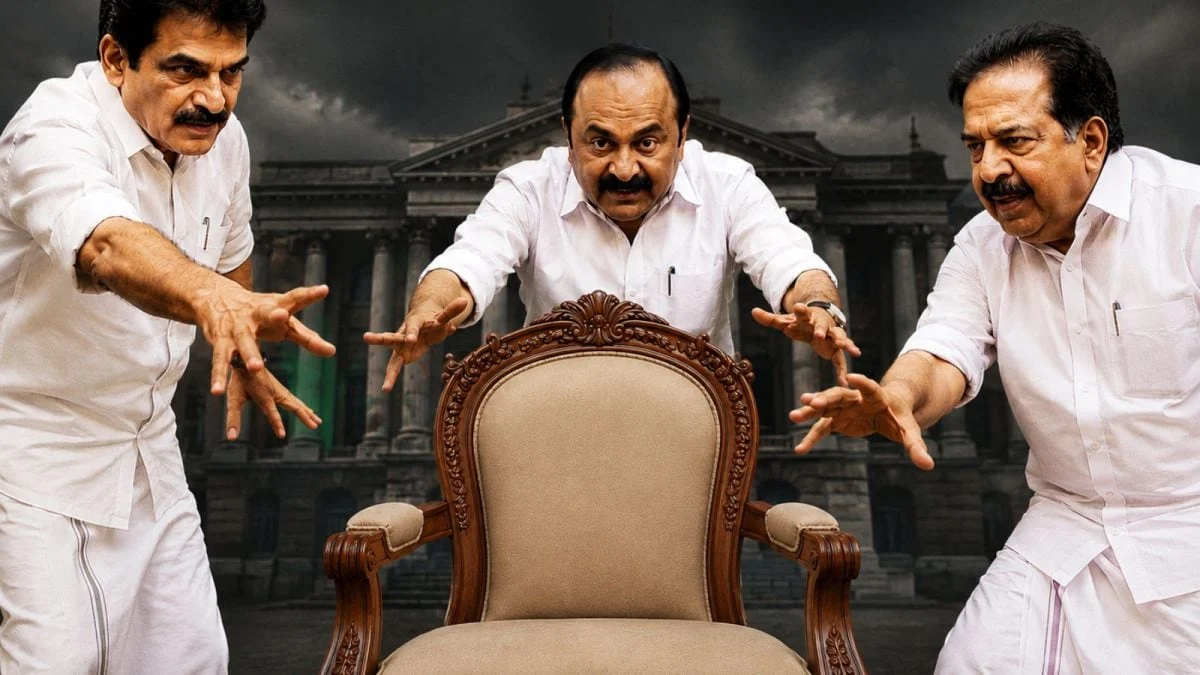
The contest for the top executive post in the southern state has narrowed down to a few prominent figures, most notably AICC General Secretary K.C. Venugopal, the incumbent Leader of Opposition V.D. Satheesan, and seasoned legislator Ramesh Chennithala. Their respective camps have engaged in vigorous lobbying, while supporters at the grassroots have taken to the streets and gathered outside their leaders’ residences, adding a palpable sense of drama to the selection process. The situation has drawn parallels to the intricate power-sharing arrangement seen in Karnataka following the Congress’s victory there, highlighting the Grand Old Party’s recurring challenge in navigating leadership transitions after electoral successes.
The Anticipation Builds: Kerala Awaits Congress CM Pick
The state of Kerala, renowned for its politically aware electorate and a history of alternating governments between the UDF and the Left Democratic Front (LDF), now finds itself in a unique moment of anticipation. The Congress-led UDF’s decisive win, securing a more than two-thirds majority in the Kerala Assembly elections, was a clear mandate for change and a significant booster for the party’s national morale. However, the subsequent delay in naming a Chief Minister has tested the patience of party workers and the public alike, turning the focus from electoral triumph to internal party dynamics.
A Landslide Victory, A Difficult Choice
The UDF’s performance in the recent elections was nothing short of spectacular, exceeding many pre-poll predictions. This overwhelming mandate, while celebrated, has ironically presented the Congress high command with a delicate balancing act. The sheer scale of the victory means there is a deep bench of experienced and ambitious leaders, each with their own claims to the Chief Minister’s chair based on seniority, organizational experience, legislative performance, or perceived public appeal. The party’s central leadership is tasked with making a choice that not only ensures stable governance but also maintains unity within the state unit, which has historically been prone to factionalism.
The High Stakes in Thiruvananthapuram
The capital city of Thiruvananthapuram is set to be the epicenter of political activity on May 14. The announcement of the Chief Minister is not merely a procedural formality; it is a critical juncture that will shape the future trajectory of the Congress in Kerala and potentially influence its national standing. The chosen leader will face the immediate challenge of forming a stable cabinet, addressing the state’s pressing economic and social issues, and fulfilling the promises made during the election campaign. Furthermore, the decision will send a strong message about the party’s internal democratic processes and its ability to manage aspirations within its ranks.
A Day of Intense Deliberations in Delhi
The eve of the announcement was marked by a flurry of high-level meetings in the national capital, as the Congress leadership worked to iron out the final details of its decision. Delhi became the nerve center where the fates of Kerala’s potential leaders were being decided, far from the bustling crowds of Thiruvananthapuram.
Kharge and Gandhi: Sealing the Fate
On Wednesday, Congress President Mallikarjun Kharge held a crucial meeting with former party president Rahul Gandhi. This interaction was widely interpreted as the final stage of consultations before the official announcement. Rahul Gandhi, who had previously held separate discussions with various Kerala leaders and former state Congress chiefs, played a pivotal role in assessing the political situation and the merits of each contender. His involvement underscores the Gandhi family’s continued influence in key party decisions, particularly in states where the party has a strong presence or significant electoral success. The meeting between Kharge and Gandhi was expected to have "sealed the fate" of the leaders vying for the top post, indicating that the decision was no longer open for further debate or negotiation.
The Official Announcement Timeline
Following the high-level meeting, Congress General Secretary Jairam Ramesh confirmed to the media that the party’s high command had concluded all necessary discussions. He stated unequivocally that the decision regarding Kerala’s next Chief Minister would be announced on Thursday. Simultaneously, Kerala Pradesh Congress Committee (KPCC) chief Sunny Joseph issued a statement confirming that the Congress Legislature Party (CLP) meeting would convene at 1 PM on May 14 in Thiruvananthapuram. While the CLP meeting is traditionally where MLAs formally elect their leader, in the Congress party’s hierarchical structure, such meetings often serve to ratify the choice already made by the central high command, presenting a united front to the public.
The Frontrunners and Their Factions
The race for the Chief Minister’s position has been dominated by three prominent figures, each bringing a distinct set of experiences, political capital, and a loyal following to the table. Their candidacies reflect the diverse power centers within the Kerala Congress.
K.C. Venugopal: The High Command’s Man?
K.C. Venugopal, currently a General Secretary of the All India Congress Committee (AICC), holds a significant position within the party’s national leadership. His proximity to the high command, particularly to Rahul Gandhi, often positions him as a strong contender in state leadership roles. Venugopal’s organizational skills and experience in managing party affairs at a national level are well-regarded. However, his national responsibilities have kept him away from active state politics for some time, leading to questions about his direct connection with the grassroots sentiments in Kerala. Despite this, his influence within the party hierarchy makes him a formidable candidate, often seen as the preferred choice of the central leadership for ensuring compliance with national party directives.
V.D. Satheesan: The Voice of Opposition
V.D. Satheesan, the Leader of Opposition in the outgoing Kerala Assembly, has garnered considerable support for his articulate and incisive criticisms of the previous government. His performance in the assembly and his public engagements have established him as a strong and dynamic leader capable of challenging political adversaries effectively. Satheesan is often seen as a representative of the younger, reform-oriented faction within the party, appealing to those who seek a fresh approach to leadership. His supporters laud him as a "guardian of secularism," emphasizing his progressive stance and commitment to inclusive politics. His leadership during the UDF’s time in opposition has undoubtedly boosted his credentials for the top job.
Ramesh Chennithala: The Veteran’s Claim
Ramesh Chennithala, a senior party leader and former Leader of Opposition, brings a wealth of experience to the table. His long political and organizational career, including stints as a state minister and KPCC president, provides him with a strong claim based on seniority and extensive public service. Chennithala enjoys a loyal base of supporters, particularly from his home constituency of Haripad and other districts, who view him as the "natural choice" due to his deep understanding of state politics and administrative affairs. His camp emphasizes his consistent presence and contribution to the party over several decades, arguing that his experience is crucial for leading the state at this juncture.
Beyond the Triumvirate: Other Considerations
While Venugopal, Satheesan, and Chennithala are the most prominently discussed names, the Congress’s internal deliberations often involve assessing a broader pool of talent. The party’s need to balance regional representation, caste dynamics, and representation of various community interests could also influence the final decision, even if indirectly. The chosen candidate will not only need to command the support of the majority of MLAs but also unite the various factions within the party to ensure a stable and effective government.
Groundswell of Support and Dissent
The leadership tussle in Kerala has not been confined to the corridors of power in Delhi or the private discussions of senior leaders. It has spilled onto the streets, manifesting in fervent displays of support for various contenders and even outright dissent against certain aspects of the high command’s perceived leanings.
Scenes Outside Contenders’ Residences
Throughout Wednesday, the residences of Ramesh Chennithala and V.D. Satheesan in Thiruvananthapuram became focal points for anxious supporters. Crowds gathered, waiting for any glimmer of news from Delhi. From Chennithala’s home constituency of Haripad to districts like Wayanad and Alappuzha, party workers arrived in large numbers, their eyes glued to television channels and mobile phones for updates. The atmosphere was a mix of strong hope, excitement, and palpable tension. Supporters of Chennithala voiced their belief that his "long political and organizational experience" made him the most deserving candidate.
Meanwhile, at Satheesan’s home, the day began with visits from Congress MLAs, including Mohammed Shiyas. As the day progressed, the crowd swelled, erupting into slogans in favor of Satheesan as the expected time of the announcement drew nearer. Waving party flags, his supporters passionately described him as the "guardian of secularism," underscoring his appeal to a segment of the party that values progressive leadership. These gatherings underscore the deep emotional investment of grassroots workers in the leadership selection process and the direct connection they feel with their chosen leaders.
The Wayanad Uproar: Posters and Warnings
Adding a sharp edge of controversy to the leadership debate were posters that appeared near the Wayanad District Congress Committee office. These posters were overtly critical of Rahul Gandhi and K.C. Venugopal, with some messages directly targeting the Gandhi siblings. They warned that "Kerala would not forgive their foolish decisions" and emphatically stated that they should "forget Wayanad," claiming the Gandhi siblings would not win from the constituency again.
This unusual public display of dissent, particularly against the party’s top national leadership, highlights the intensity of the factionalism and the frustration among certain sections of the party. Wayanad is Rahul Gandhi’s parliamentary constituency, making the direct challenge from within his own electoral base particularly significant. The posters signal a deep-seated unhappiness over perceived attempts by the central leadership to impose a Chief Minister without adequate consideration of local sentiments or the preferences of grassroots workers, especially if the chosen candidate is perceived as an outsider or not the popular local choice.
Echoes of Karnataka: A Familiar Dilemma
The "catch-22" situation in Kerala, as described in the original article, strongly mirrors the power struggle witnessed in Karnataka after the Congress’s victory there. In Karnataka, the party faced a similar dilemma in choosing between veteran Siddaramaiah and dynamic state chief D.K. Shivakumar for the Chief Minister’s post. The protracted negotiations, the high command’s intervention, and the eventual decision to implement a power-sharing formula showcased the challenges the Congress faces in managing success. The Kerala situation, therefore, is not an isolated incident but part of a recurring pattern where electoral triumph is followed by internal strife over leadership, testing the party’s organizational strength and its ability to project a united front. The Wayanad posters, in particular, could be interpreted as a warning that a similar heavy-handed approach could backfire, potentially alienating key constituencies.
The Chronology of Decision-Making
The path to Thursday’s announcement has been a winding one, marked by several stages of internal party processes and external pressures.
Post-Election Euphoria to Leadership Impasse
The UDF’s landslide victory in the Kerala Assembly elections was initially met with widespread jubilation across the state. The clear mandate was seen as a strong endorsement of the Congress and its allies. However, this euphoria quickly transitioned into a period of uncertainty as the party leadership began the complex process of selecting a Chief Minister. Unlike some states where a clear frontrunner emerges organically, Kerala’s political landscape, coupled with the Congress’s internal dynamics, led to an immediate impasse. The very strength of the UDF’s victory, with many capable leaders, became a challenge rather than an advantage.
High Command’s Consultative Marathon
Following the initial celebrations, the focus shifted to Delhi, where the Congress high command initiated a comprehensive consultative marathon. Central observers were dispatched to Thiruvananthapuram to gather feedback from newly elected MLAs and various party functionaries. This information was then relayed to the central leadership. Rahul Gandhi, in particular, engaged in extensive one-on-one discussions with several key Kerala leaders, including potential CM candidates and former state Congress chiefs. These meetings were designed to gauge the political temperature, understand the aspirations of different factions, and assess the strengths and weaknesses of each contender before the central leadership moved towards a final decision. The process was protracted, reflecting the gravity of the decision and the need to achieve a consensus, or at least manage dissent effectively.
The Eve of the Announcement
Wednesday, May 13, marked the culmination of these intensive deliberations. The meeting between Mallikarjun Kharge and Rahul Gandhi was the final, decisive step in the selection process. This meeting signaled that all internal discussions had been exhausted and a firm decision had been reached. The subsequent announcement by Jairam Ramesh confirmed the high command’s resolution and set the stage for Thursday’s formal declaration. The final hours leading up to the CLP meeting are often a period of heightened tension, as party workers and leaders alike await the official word, hoping their preferred candidate emerges victorious.
Implications for Congress and Kerala
The decision on Kerala’s next Chief Minister carries profound implications, not just for the state but for the Congress party’s national standing and its future strategies.
The Challenge of Unity
Perhaps the most immediate and critical implication is the challenge of maintaining party unity. The intense lobbying and public displays of support and dissent underscore the deep divisions within the Kerala Congress. The chosen Chief Minister will need to skillfully navigate these internal rivalries, bringing together disgruntled factions and ensuring that the defeated contenders and their supporters do not feel marginalized. A failure to foster unity could lead to internal sabotage, undermining the government’s stability and effectiveness, and potentially weakening the party in future electoral battles. The Wayanad posters serve as a stark reminder of the potential for internal backlash if the decision is perceived as unjust or imposed.
Governing a Victorious State
The new Chief Minister will inherit a state with high expectations and pressing challenges. Having secured a strong mandate, the UDF government will be under immense pressure to deliver on its electoral promises, which likely include economic revival, job creation, addressing social welfare issues, and sustainable development initiatives. The chosen leader’s administrative acumen, ability to work with coalition partners, and vision for the state will be rigorously tested from day one. Effective governance will be crucial not only for the welfare of Kerala’s citizens but also for solidifying the Congress’s position in the state for years to come.
National Ramifications for the Grand Old Party
For the Indian National Congress, a party grappling with a series of electoral setbacks at the national level, the Kerala victory is a vital morale booster. However, the manner in which the Chief Minister is selected and the subsequent stability of the government will have significant national ramifications. A smooth transition and a united government in Kerala could provide a template for managing successes in other states and project an image of a party capable of effective governance. Conversely, a prolonged period of internal bickering or an unstable government could further damage the party’s already fragile national image, reinforcing perceptions of disunity and indecisiveness. The high command’s handling of this decision will be closely watched as an indicator of its leadership effectiveness.
The Road Ahead for the UDF
The United Democratic Front is a coalition of several parties, and the selection of the Congress CM will inevitably impact the dynamics within the alliance. The new Chief Minister will need to foster strong relationships with constituent parties, ensuring their voices are heard and their interests are represented. Maintaining a cohesive coalition is paramount for stable governance and for presenting a united front against political opposition. The ability of the new leadership to strengthen the UDF will be critical for its long-term viability and electoral success in the state.
Expert Perspectives and Political Commentary
Political analysts and commentators have been closely observing the developments in Kerala, offering insights into the complexities of the Congress’s decision-making process.
Navigating Factionalism
Experts note that factionalism has been a perennial challenge for the Congress in Kerala. "The party’s strength often lies in its diverse leadership, but this diversity can also become its Achilles’ heel when it comes to leadership selection," observed Dr. Priya Menon, a political science professor at the University of Kerala. "The high command’s task is not just to pick a leader, but to ensure that the process doesn’t alienate key factions, which could lead to internal sabotage down the line." The public displays of support and dissent are indicative of the deep-seated loyalties and rivalries that the new CM will have to skillfully manage.
The Role of the High Command’s Authority
The intervention of the central leadership, particularly Rahul Gandhi and Mallikarjun Kharge, underscores the centralized nature of decision-making within the Congress. While this ensures party discipline and a unified approach, it also raises questions about local autonomy and the democratic process within the state unit. "The high command’s decision, while necessary for resolving a stalemate, risks being perceived as an imposition, especially by those whose preferred candidate is overlooked," commented veteran journalist Rajeev Sharma. "The challenge for the chosen Chief Minister will be to quickly establish their authority and legitimacy, proving that they are not merely a ‘high command pick’ but a leader capable of uniting and governing the state effectively."
As May 14 dawns, all eyes remain fixed on Thiruvananthapuram, awaiting the announcement that will not only name Kerala’s new Chief Minister but also set the tone for the Congress party’s governance in the state and its broader political narrative in India. The stakes are undeniably high, and the chosen leader faces the formidable task of translating a popular mandate into stable, effective, and unified governance.
