

New Delhi, India – In a move that signals a significant shift in the hierarchy of the Indian automotive sector, Kia India has reported its strongest-ever monthly performance since its inception in the country. The South Korean automaker’s wholesale volumes for September 2026 reached a staggering 32,017 units, marking a pivotal moment in its growth trajectory. This record-breaking figure not only underscores the brand’s resonance with the Indian consumer but also highlights its successful navigation of an increasingly competitive and diversifying market.
With a year-on-year (YoY) growth of 41.04% and a consecutive monthly victory over Toyota Kirloskar Motor in sales volume, Kia has firmly established itself as the fifth-largest car manufacturer in India. As the industry moves toward the final quarter of the year, Kia’s aggressive product refreshes and its pivot toward sustainable mobility appear to be paying substantial dividends.
Main Facts: A Landmark Month in Indian Automotive History
The September 2026 sales figures represent a watershed moment for Kia India. The 32,017 units sold in September 2026 stand in stark contrast to the 22,700 units recorded in September 2025—an absolute increase of 9,317 vehicles. This 41% jump is one of the highest growth rates recorded by a major OEM in the current fiscal year.
Sequential growth also remained robust. Comparing September to August 2026, which saw 29,042 units, Kia registered a 10.24% increase. This steady climb indicates that the demand is not merely a seasonal spike but a sustained upward trend. Perhaps most significantly for industry analysts, Kia has now outpaced Toyota India for the second month in a row. Toyota, long considered the benchmark for reliability and premium positioning in India, is finding its market share challenged by Kia’s rapid expansion into the SUV and EV segments.
Kia’s current market standing as the 5th largest brand is a testament to its "Premium-Value" strategy. By offering feature-rich vehicles that bridge the gap between mass-market and luxury segments, Kia has managed to capture a demographic that is increasingly looking for technology, safety, and aesthetic appeal.
Chronology: The Road to 2.53 Lakh Units
The success of September 2026 is the culmination of a highly productive nine-month period. To understand the momentum, one must look at the quarterly and year-to-date (YTD) performance.
The Third Quarter Surge (July–September 2026)
During the third quarter of 2026, Kia India reported sales of 89,259 units. When compared to the 64,443 units sold during the same period in 2025, the growth rate sits at a formidable 38.51%. This quarter was particularly crucial as it saw the ramp-up of several new variants and the initial market stabilization of the newly launched Sorento and the Syros EV.
Year-to-Date Dominance (January–September 2026)
Cumulative sales for the first nine months of 2026 have crossed the quarter-million mark, reaching 2,53,008 units. This is a significant leap from the 2,06,582 units sold between January and September 2025. This 22.47% YTD growth translates to an additional 46,426 units on Indian roads compared to the previous year.
The chronology of these sales suggests that Kia’s growth is accelerating as the year progresses. While the first half of the year focused on consolidating the gains of the Seltos and Sonet facelifts, the second half has been defined by the expansion of the "Clavis" and "Syros" platforms, alongside the entry into the premium SUV space with the Sorento.
Supporting Data: The Pillars of Growth
Kia’s portfolio strategy has been surgical in its precision, targeting high-volume segments with the Seltos and Sonet while exploring niche but high-margin segments with its EVs and premium SUVs.
The Core: Seltos and Sonet
The Seltos remains the crown jewel of Kia’s Indian operations. Since the launch of the updated model in January, it has maintained an average monthly volume exceeding 10,000 units. The Seltos has successfully fended off competition in the mid-size SUV segment by offering a plethora of engine and transmission options, including the highly popular ADAS Level 2 features.
Similarly, the Sonet continues to be a dominant force in the sub-compact SUV segment. Its recent updates, focusing on "connected car" technology and rugged styling, have kept it fresh in a segment that sees a new competitor almost every quarter.
Diversification: The Carens and Clavis Ecosystem
Kia’s "family vehicle" strategy has expanded significantly. The Carens, originally a lifestyle MPV, has morphed into a multi-energy platform. The introduction of the Carens CNG and the Carens Clavis CNG has allowed Kia to tap into the "efficiency-first" buyer who wants the premium feel of a Kia without the high running costs of petrol.

The Clavis, and its electric counterpart the Clavis EV, represent Kia’s strategy of offering "choices without compromises." By providing the same body style across ICE (Internal Combustion Engine), CNG, and EV powertrains, Kia is ensuring that no customer is left behind due to their fuel preference.
The New Frontiers: Syros EV and Sorento
The Syros EV is quickly becoming a success story in the mass-market electric vehicle space. With the infrastructure for EVs growing, the Syros has seen a steady uptick in demand, helping Kia solidify its reputation as a forward-thinking brand.
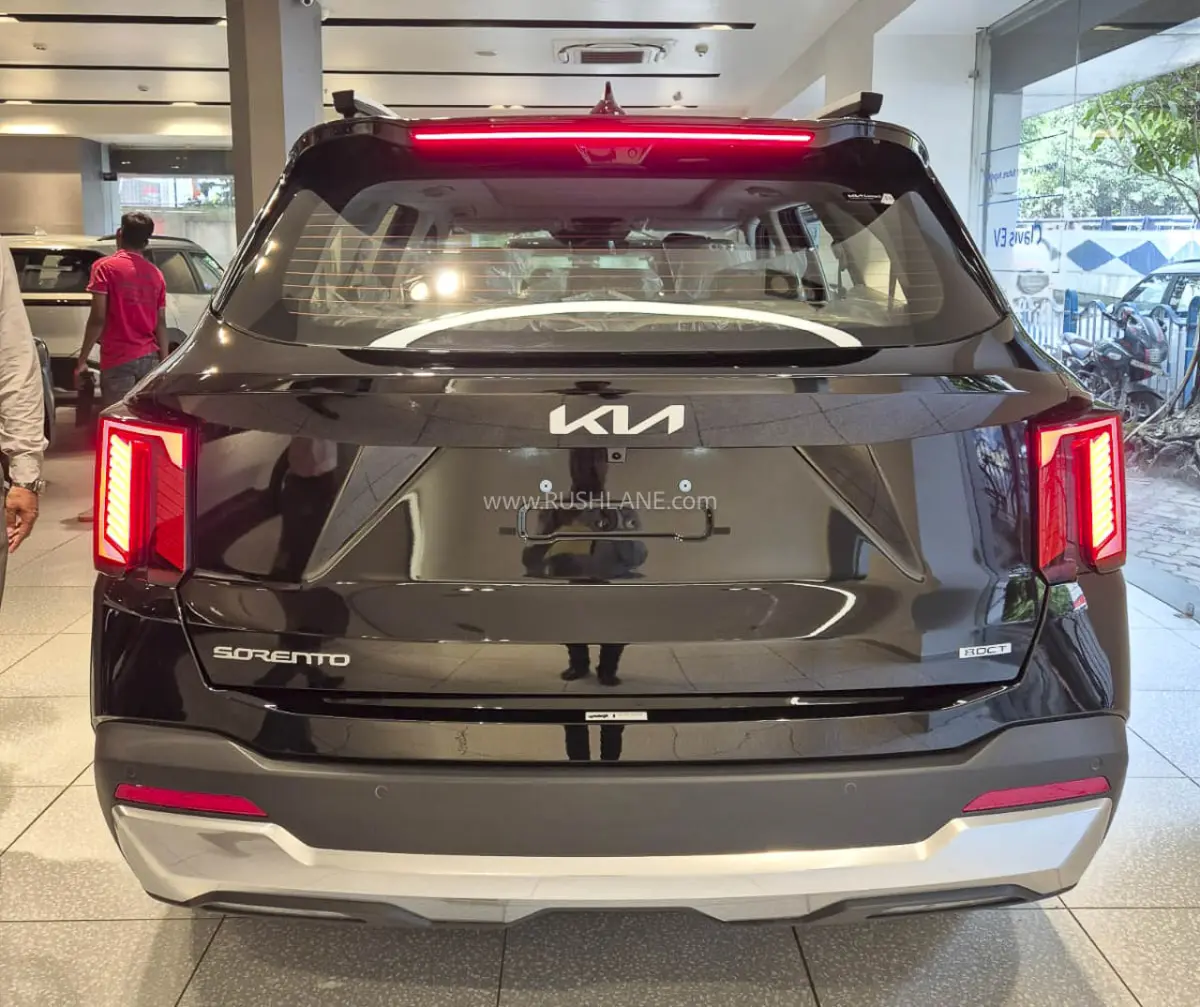
At the other end of the spectrum is the newly launched Sorento. Aimed at the premium SUV buyer, the Sorento offers both diesel and hybrid powertrains. The hybrid variant, in particular, has seen high interest from buyers who are not yet ready for full electrification but want the environmental benefits and fuel efficiency of a self-charging hybrid system.
Official Responses: Strategic Vision
The leadership at Kia India attributes this success to a combination of product excellence and a customer-centric service approach. Atul Sood, Senior Vice President of Sales & Marketing at Kia India, provided insight into the brand’s current trajectory.
"Our record-breaking performance in September is a reflection of the deep trust Indian consumers have placed in our brand," Sood stated. "While the Seltos and Sonet remain our bedrock, the exceptional response to our newer models like the Sorento and the Syros EV proves that the Indian market is ready for premium, high-tech, and sustainable mobility solutions."
Sood also highlighted that the growth was not just about the vehicles themselves but about the "ecosystem of ownership" Kia has built. He emphasized that the company’s focus on diverse powertrains—ranging from traditional ICE to CNG, Hybrids, and EVs—has allowed them to capture a wider audience than ever before.
Implications: A New Era for Kia and the Indian Market
Kia’s performance has several long-term implications for the Indian automotive landscape:
1. The Challenge to the Status Quo
By overtaking Toyota for two consecutive months, Kia has signaled that brand longevity is no longer a shield against agile, tech-forward competitors. This shift will likely force other legacy manufacturers to accelerate their feature updates and electrification plans.
2. The Democratization of EV Ownership
Kia’s ownership programs are perhaps as influential as the cars themselves. By offering "Battery-as-a-Service" (BaaS), Kia has decoupled the cost of the battery from the vehicle’s sticker price, significantly lowering the entry barrier for EV buyers. When combined with their "Assured Buyback" program and "Lifetime High Voltage Battery Warranty," Kia is systematically removing the "fear factors" associated with EV adoption (high cost, resale anxiety, and battery degradation).
3. Strengthening the Service Backbone
Kia’s rapid expansion is backed by a physical network that now includes 915 touchpoints across 425 cities. This ensures that even as sales volumes skyrocket, the after-sales service remains accessible. Furthermore, the 137 "Certified Pre-Owned" (CPO) outlets are a strategic move to manage the lifecycle of Kia vehicles, ensuring high resale values and providing an entry point for first-time buyers into the Kia family through used cars.
4. The Rise of the Hybrid and EV Mix
The success of the Sorento Hybrid and the Syros EV suggests that the Indian consumer is no longer purely price-sensitive but is becoming increasingly value-sensitive. Buyers are willing to pay a premium for technology that offers a better driving experience and lower environmental impact.
Conclusion: Looking Ahead
As Kia India enters the final quarter of 2026, the momentum appears unstoppable. With 2.53 lakh units already sold this year, the company is on track to set a new annual sales record. The upcoming festive season is expected to further bolster these numbers, especially with the full-scale availability of the CNG and Hybrid variants.
Kia has successfully transitioned from being a "new entrant" to a market leader that dictates trends in design, technology, and ownership models. In the high-stakes game of the Indian automotive industry, Kia is no longer just playing; it is setting the rules. Whether it is through the rugged appeal of the Seltos or the silent efficiency of the Syros EV, Kia’s "Power to Surprise" remains fully intact as it drives toward a record-breaking 2026.
