

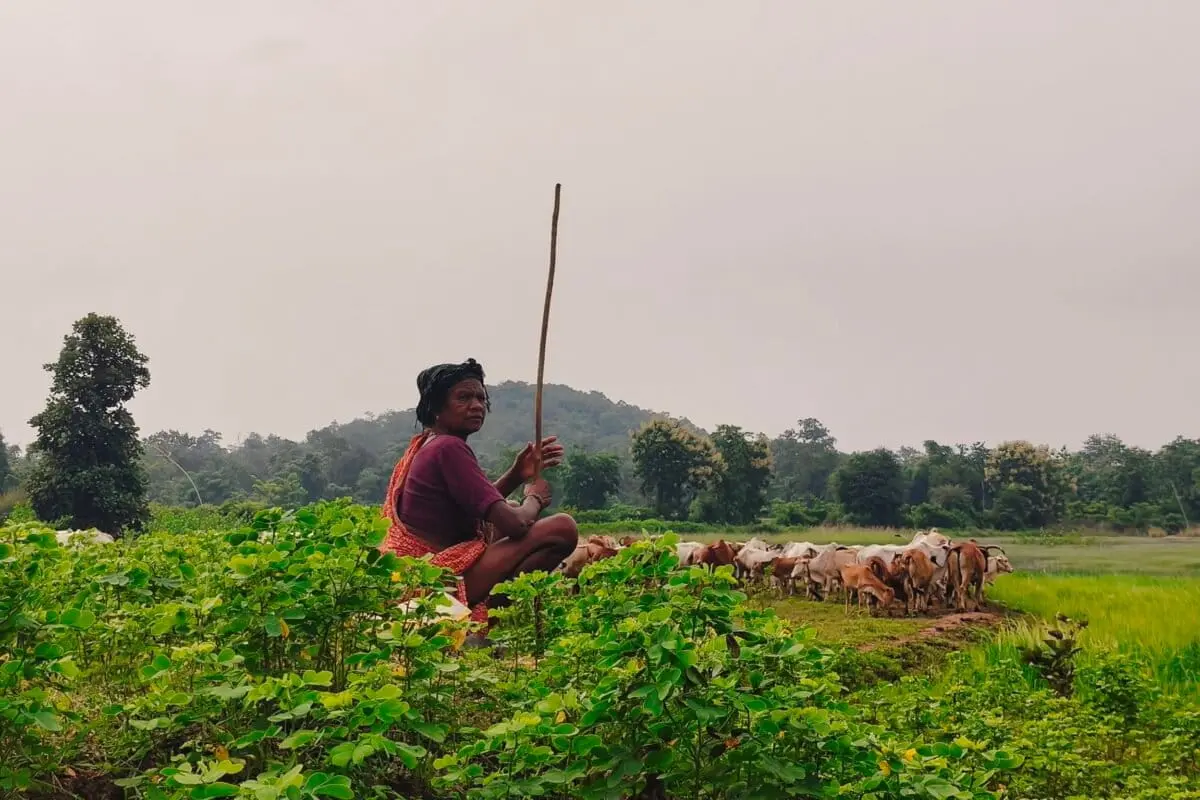
MUMBAI — In a historic shift for Indian agriculture, the state of Maharashtra is set to begin the formal issuance of Women Farmers Certificates (WFC) on October 2, 2026. This initiative, launched under the newly enacted Women Farmer’s Empowerment Act 2026, marks the first time a state government has legally decoupled the identity of a "farmer" from the ownership of land. By doing so, Maharashtra aims to bring millions of "invisible" women workers into the formal fold of the agricultural economy, granting them access to credit, subsidies, and resources that were previously out of reach.
For decades, the cultural and legal image of the Indian farmer has been synonymous with the male landholder. However, the ground reality tells a different story. As men increasingly migrate to urban centers for non-farm employment, the "feminization of agriculture" has seen women take over the bulk of cultivation, livestock management, and harvesting. Despite this, their lack of land titles has historically relegated them to the status of "agricultural laborers," denying them the institutional support necessary to thrive.
Main Facts: A New Legal Identity
The Women Farmer’s Empowerment Act 2026 is a pioneering piece of legislation designed to rectify a long-standing gender imbalance. The primary instrument of this Act is the Women Farmers Certificate (WFC), which recognizes any woman engaged in agriculture or allied activities—including crop husbandry, poultry, fisheries, agroforestry, and primary processing—as a formal farmer.
Crucially, the Act acknowledges that land ownership is not a prerequisite for being a farmer. By focusing on the labor and management performed rather than the title held, the WFC opens doors to a suite of government benefits, including:
![Maharashtra formally recognises women farmers regardless of land ownership [Commentary]](https://imgs.mongabay.com/wp-content/uploads/sites/30/2026/09/01002543/IMG_20260924_221913_Mahesh-Maske-1200x800.jpg)
- Institutional credit and lower interest rates.
- Subsidized agricultural inputs like seeds, fertilizers, and irrigation pumps.
- Crop and livestock insurance.
- Inclusion in digital databases such as "Agristack," which were previously linked exclusively to land records.
The rollout on October 2—deliberately chosen to coincide with Gandhi Jayanti—symbolizes a commitment to rural empowerment and grassroots justice.
Chronology: From Advocacy to Law
The journey toward this legislative milestone was remarkably swift, characterized by a rare alignment of political will and expert advocacy.
- September 2025: The process began with a high-level meeting between Dr. Soumya Swaminathan, Chair of the M.S. Swaminathan Research Foundation (MSSRF), and Maharashtra Chief Minister Devendra Fadnavis. The discussion focused on the urgent need to address the agrarian crisis through a gendered lens.
- Late 2025: A formal Memorandum of Understanding (MoU) was signed between the Government of Maharashtra and MSSRF. A technical advisory group was formed, with the Vidhi Centre for Legal Policy joining as the drafting partner to ensure the Bill met constitutional and administrative standards.
- January 2026: Extensive regional consultations commenced in Mumbai. These were followed by meetings in Pune, Chhatrapati Sambhajinagar, and Nagpur. These sessions were not merely academic; they featured frontline government officials, bankers, and, most importantly, women farmers themselves who shared their lived experiences of exclusion.
- Monsoon Session, 2026: Following several rounds of revisions based on stakeholder feedback, the Bill was approved by the Cabinet and tabled in the Legislative Assembly.
- July 2, 2026: The Bill achieved a rare feat in modern politics, passing unanimously in both the Legislative Assembly and the Legislative Council.
- October 2, 2026: The official commencement of WFC distribution across the state.
Supporting Data: The Case for Recognition
The necessity of this Act is underscored by stark statistical disparities in both the national and state-level agricultural sectors.
According to the Periodic Labour Force Survey (PLFS), women now constitute nearly 60% of the total agricultural workforce in India. However, they hold less than 15% of land titles. This gap is even more pronounced in Maharashtra, where 82% of the rural female workforce is engaged in agriculture, yet women own only approximately 15.5% of operational farmland.
![Maharashtra formally recognises women farmers regardless of land ownership [Commentary]](https://imgs.mongabay.com/wp-content/uploads/sites/30/2026/09/26113827/Potato_harvest_in_Himachal_Pradesh_India_2011-768x512.jpg)
The data suggests that while women are the primary drivers of food security, they operate with a fraction of the resources available to men. In regions like Vidarbha, which has been the epicenter of India’s agrarian distress and farmer suicides, the burden on women is even greater. When male heads of households perish or migrate, widows and daughters are often left to manage debts and farms without the legal status required to negotiate with banks or government agencies.
The MSSRF’s work under the Mahila Kisan Sashaktikaran Pariyojana (MKSP) in Wardha and Yavatmal demonstrated that when women are organized into "samitis" (collectives) and provided with training, their productivity increases. However, these initiatives often hit a "glass ceiling" because the women lacked a formal ID that recognized them as farmers. The 2026 Act is designed to shatter that ceiling.
Official Responses and Administrative Structure
The Maharashtra government has emphasized that the Act is not merely a symbolic gesture but is backed by a robust administrative framework. To ensure the law translates into tangible benefits, the Act provides for:
- Women Farmer Empowerment Cell: A state-level body dedicated to policy formulation and the protection of women farmers’ rights.
- State Level Monitoring Committee: Tasked with overseeing the implementation of the Act and ensuring that various departments (Agriculture, Revenue, Finance) are aligning their schemes with the new definition of a farmer.
- Women Farmers’ Database: A comprehensive digital registry of all WFC holders, which will be integrated with the central government’s digital initiatives to ensure women are not excluded from national schemes like PM-KISAN.
- District and Block Assistance Officers: Dedicated personnel stationed at the local level to help women navigate the application process for WFCs and guide them toward relevant entitlements.
Officials have noted that the Act also seeks to reform existing programs. For example, there are plans to amend the Lakshmi Mukti Yojna to further incentivize families to add women’s names to family land records, and to lower interest rates for credit taken specifically in a woman’s name.
![Maharashtra formally recognises women farmers regardless of land ownership [Commentary]](https://imgs.mongabay.com/wp-content/uploads/sites/30/2026/09/01002851/IMG20260908140958-768x512.jpg)
Implications: A Paradigm Shift in Rural Economy
The implications of the Women Farmer’s Empowerment Act extend far beyond administrative paperwork; they touch upon the very core of gender justice and economic resilience.
Breaking the Cycle of Debt
By recognizing women as farmers, the Act allows them to access institutional credit. Historically, women have been forced to rely on informal moneylenders who charge exorbitant interest rates because they could not provide land as collateral to banks. The WFC serves as a form of "social collateral," allowing women to enter the formal banking system.
Climate Resilience and Adaptation
Women are often the first to feel the impacts of climate change, such as droughts and unseasonal rains, yet they are also the most adept at resource management. The Act facilitates training in climate-resilient farming and seed conservation. When women are empowered to make decisions, they often prioritize diversified crops and sustainable practices that ensure long-term soil health and family nutrition.
Challenges in the Market
Agricultural markets, or mandis, remain heavily male-dominated. Women often face mobility issues and lack access to real-time price information, leading to distress sales to middlemen. The Act encourages the formation of Women-led Farmer Producer Organisations (FPOs) and cooperatives. By pooling their resources and using their new legal status, women can bypass middlemen and negotiate better prices for their produce.
![Maharashtra formally recognises women farmers regardless of land ownership [Commentary]](https://imgs.mongabay.com/wp-content/uploads/sites/30/2026/10/01090819/IMG20260904113755_Mahesh-Maske-768x512.jpg)
The Path to Land Ownership
While the WFC is a revolutionary step in delinking identity from ownership, experts—including Dr. Soumya Swaminathan—warn that it should not be the final destination. True empowerment requires gender-equitable land governance. The Act serves as a "pathway" to rights, but the ultimate goal remains the widespread adoption of joint land titles. Legal rights over land provide women with a permanent safety net that persists even if they marry, move, or exit the workforce.
Conclusion: A Model for the Nation
Maharashtra’s move to recognize women farmers is a bold experiment in social engineering. It acknowledges that the "feminization of agriculture" is not a temporary trend but a fundamental shift in how food is produced in the 21st century.
As the first certificates are handed out this October, the eyes of the nation will be on Maharashtra. If successful, this model could provide a blueprint for other states—and indeed other developing nations—to recognize the backbone of their agricultural sectors. The challenge now lies in implementation: ensuring that the village-level bureaucracy accepts the WFC and that the banking sector honors the spirit of the law.
By redefining the image of the farmer to include the woman in the field, the woman at the fishery, and the woman tending livestock, Maharashtra is not just changing a definition; it is attempting to rewrite the future of the Indian village. As Dr. Swaminathan aptly noted, "Recognition is the first step toward justice." With the 2026 Act, that step has finally been taken.
