

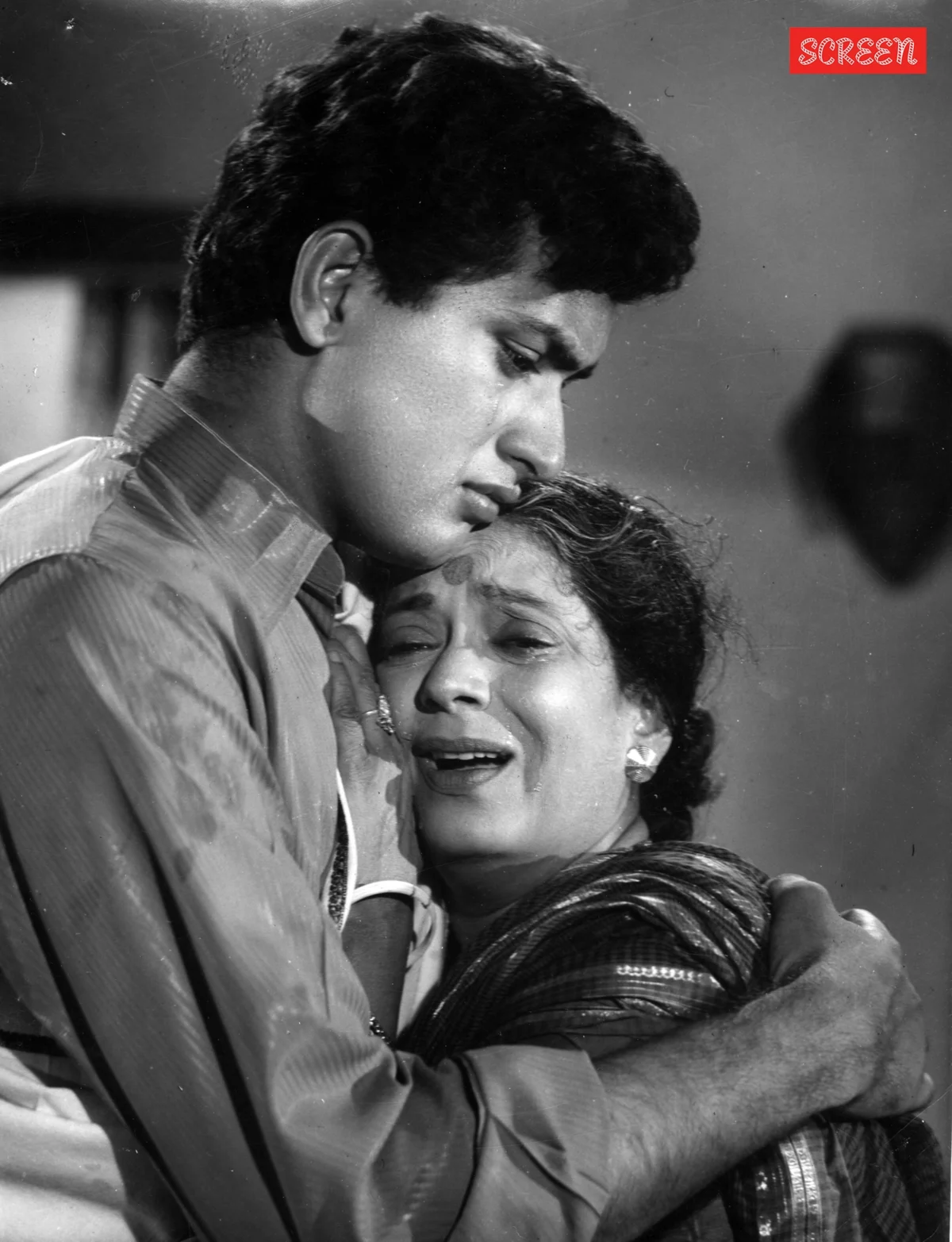
The enduring legacy of a woman who defied convention, mastered diverse roles, and paved the way for generations of actresses.
In the annals of Indian cinema, few names resonate with the quiet strength and profound influence of Leela Chitnis. A pioneer whose career spanned from the nascent years of sound in the 1930s to the burgeoning dynamism of the 1980s, Chitnis was more than just an actress; she was a trailblazer who shattered societal expectations and carved an indelible mark on the industry. Born in 1909, a time when female education was a rarity, let alone a career in the performing arts, Chitnis possessed a rare combination of intellect and artistic passion that propelled her to stardom and inspired countless leading ladies who followed in her footsteps. Her journey, marked by personal resilience, artistic evolution, and a deep commitment to her craft, offers a compelling narrative of ambition, talent, and the ever-evolving landscape of Indian cinema.
From Academia to the Silver Screen: A Formidable Beginning
Leela Chitnis’s early life painted a picture of privilege and intellectual pursuit, a stark contrast to the often gritty realities of the film world she would later conquer. Born into a family that valued education, she achieved a significant milestone for women of her era by earning a Bachelor of Arts degree. This academic accomplishment, however, did not shield her from the traditional societal dictates of the time. Her father, a professor of English Literature, arranged her marriage at the tender age of sixteen to Gajanan Yeshwant Chitnis, a doctor. The union, rooted in their shared Brahmo Samaj community, soon saw the arrival of four sons, a testament to the societal expectation of early matrimony and prolific childbearing.
Beyond personal milestones, the Chitnis household also harboured a spirit of intellectual curiosity and political engagement. The family’s progressive leanings were evident in their act of providing refuge to the prominent Marxist freedom fighter M.N. Roy, an action that underscored their commitment to India’s struggle for independence against the British Raj. This early exposure to progressive thought and societal activism likely sowed the seeds for Chitnis’s own independent spirit, a quality that would later define her personal and professional life.
However, the idyllic picture of family life was soon to be tested. The marriage, burdened by her husband’s struggles with alcoholism, eventually fractured. Facing the daunting prospect of single-handedly raising four young sons, Leela Chitnis demonstrated remarkable fortitude. As a woman with a university education, a rarity in those times, she initially found solace and financial stability by teaching in a school. Yet, her true calling lay not in the quiet halls of academia but on the vibrant stage. Her prior training in theatre, particularly with the progressive Marathi group Natyamanwantar – an ensemble deeply influenced by the dramatic philosophies of theatrical giants like Stanislavski, Ibsen, and Shaw – had ignited a passion for performance that could no longer be contained. This background provided her with a strong foundation in acting techniques, preparing her for the challenges and triumphs that awaited her in the burgeoning world of Indian cinema.
The Crucible of Early Cinema: Navigating the Path to Stardom
Leela Chitnis’s entry into the Hindi film industry was far from a fairytale ascent. In an era where opportunities for women, especially those from respectable backgrounds, were limited and often fraught with societal judgment, her initial steps were marked by perseverance. She began her cinematic journey as an extra, a silent presence in the background, diligently honing her craft and absorbing the nuances of filmmaking. Her breakthrough arrived with Gentleman Daku (1937), a film where she notably took on an action role, even donning male attire, a bold move that hinted at her willingness to defy conventions.
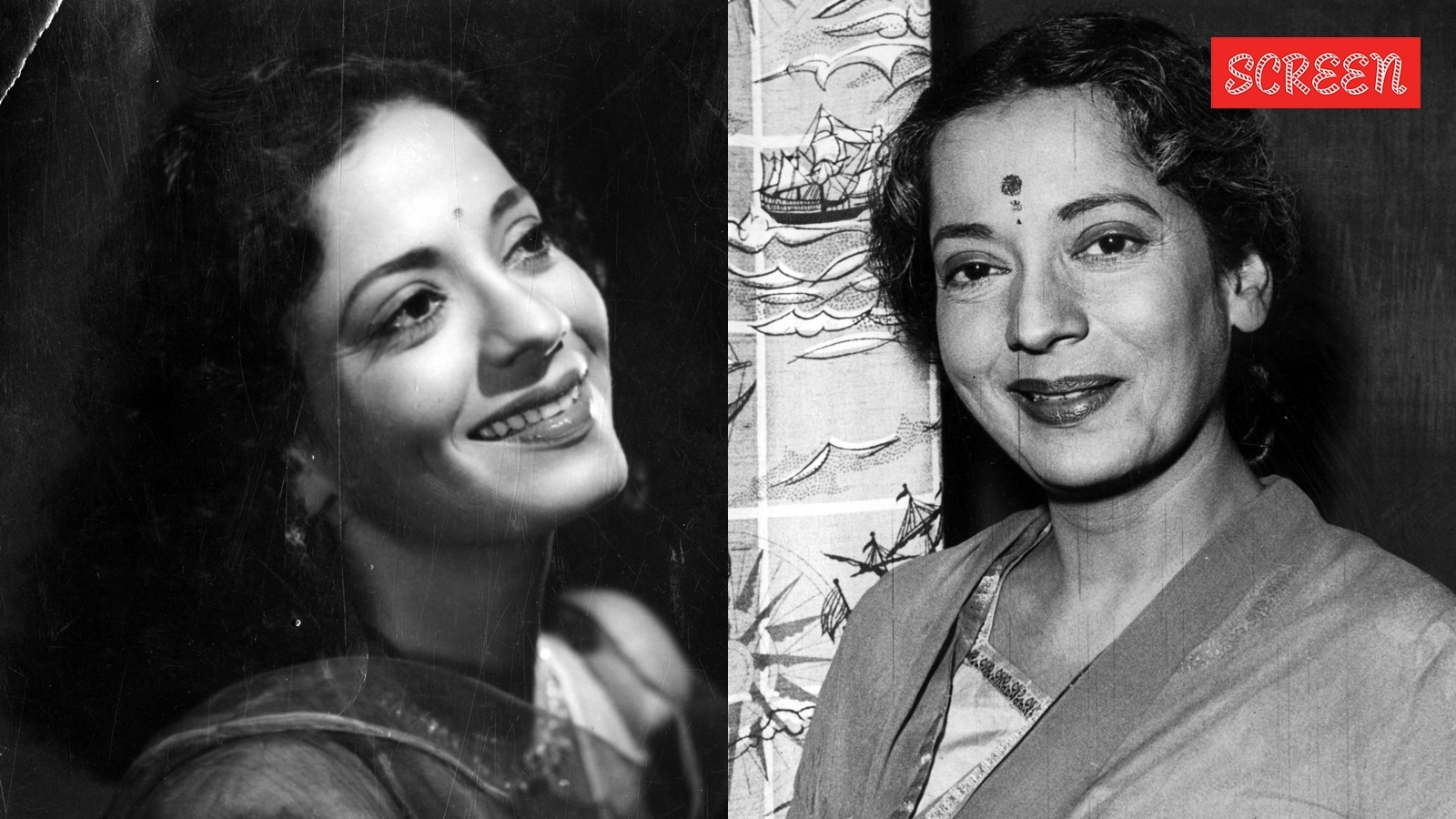
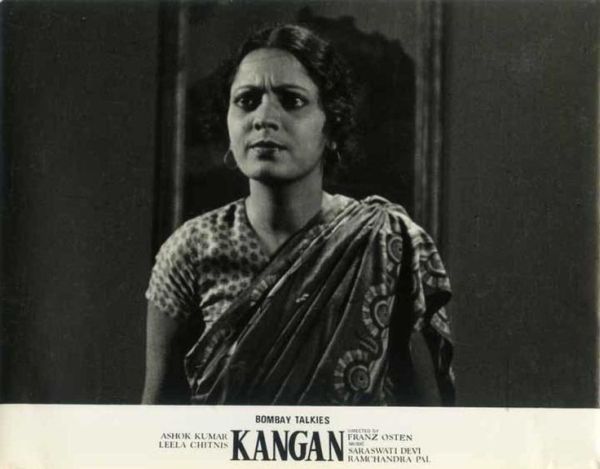
However, it was the box-office triumph of Kangan in 1939 that truly catapulted Leela Chitnis into the spotlight, solidifying her position as a leading lady. In this pivotal film, she portrayed the daughter of a Hindu priest who defies her father’s wishes to pursue a love match with the son of a local landlord. The film, produced by the renowned Bombay Talkies, was more than just a commercial success; it represented a significant victory for a studio that consistently challenged societal norms through its cinematic narratives. With Kangan, Chitnis not only achieved stardom but also effectively replaced the iconic Devika Rani as the face of Bombay Talkies, a testament to her burgeoning appeal and talent. This transition marked a significant shift, positioning her as a prominent figure in an industry that was rapidly gaining national prominence.
The Golden Era: Collaborations and Landmark Achievements
The late 1930s and early 1940s witnessed Leela Chitnis at the zenith of her career as a leading lady. Her on-screen chemistry with Ashok Kumar, another luminary of Bombay Talkies, became a celebrated pairing. Together, they starred in a series of critically acclaimed and commercially successful films, including N.R. Acharya’s Bandhan (1940) and Azad (1940), and Gyan Mukherjee’s Jhoola (1941). These films, often tackling prevalent societal issues and family dynamics, resonated deeply with audiences and showcased Chitnis’s ability to portray complex female characters with grace and conviction. Ashok Kumar himself later acknowledged the profound impact of their collaboration, admitting that he learned the art of conveying emotion through his eyes from his frequent co-star.
Beyond her cinematic achievements, Leela Chitnis made history in 1941 by becoming the first Indian actress to endorse the prestigious luxury soap brand, Lux. This endorsement, previously the exclusive domain of Hollywood beauties, was a significant recognition of her widespread appeal and marketability. It signaled a growing confidence in Indian talent and a burgeoning national pride in its own cinematic icons. However, as the Hindi film industry began to welcome a new wave of emerging talent in the early 1940s, Chitnis, like many leading ladies of her time, began to experience the ephemeral nature of stardom, a reality often dictated by the limited shelf-life of prominent actresses in those decades.
Evolution and Resilience: The Transformative Shift to Character Roles
The fading of her leading lady status did not diminish Leela Chitnis’s passion for acting. Instead, it marked the beginning of a new and equally impactful phase of her career. Demonstrating remarkable adaptability and a commitment to her artistic pursuit, she seamlessly transitioned into character roles, a move that allowed her to continue contributing to the cinematic landscape for decades. Her foray into character acting proved to be a masterstroke, allowing her to explore a wider spectrum of emotions and character archetypes.
Her performance as the ailing mother of the protagonist, played by Dilip Kumar, in Ramesh Saigal’s Shaheed (1948) was a poignant portrayal that cemented her presence in these roles. This marked the beginning of her association with the archetypal "sacrificial mother" trope, a role later popularized by stalwarts like Nirupa Roy. Chitnis’s nuanced performances endowed these maternal figures with depth and authenticity, making them relatable and emotionally resonant for audiences.
Her versatility was further showcased in her collaborations with some of the most celebrated filmmakers and actors of the era. She shared the screen with Prithviraj Kapoor in Raj Kapoor’s seminal 1951 crime drama Awaara, a film that remains a landmark in Indian cinema. She played the mother of Bharat Bhushan in Bimal Roy’s touching 1952 social family drama Maa, and later portrayed the mother of Dev Anand in Phani Majumdar’s Baadbaan (1954) and Chetan Anand’s noir film Kala Bazar (1960). Her presence in iconic films like Hum Dono (1961) and Yash Chopra’s masterful 1965 romance Guide further solidified her reputation as a dependable and impactful character actress.
A Brief Sojourn into Direction and Continued Reign as the Screen Mother
In a testament to her multifaceted talent, Leela Chitnis ventured into direction with Aaj Ki Baat in 1955, starring opposite Ajit. While this directorial endeavor may not have yielded the desired commercial results, it underscored her ambition and her desire to explore different facets of filmmaking. Nevertheless, she returned to her forte, continuing to captivate audiences with her portrayals of mothers to the era’s leading stars.
She reunited with acclaimed filmmaker B.R. Chopra, playing Dilip Kumar’s mother in the iconic 1957 film Naya Daur, and later portrayed Sunil Dutt’s mother in Chopra’s Sadhna. Her association with the Chopra family extended to Yash Chopra’s directorial debut, Dhool Ka Phool (1959), where she once again essayed a pivotal maternal role. Within the same year, she played mothers to both Raj Kapoor in Main Nashe Mein Hoon and his younger brother Shammi Kapoor in Ujala, demonstrating her remarkable range in portraying maternal figures across different family dynamics.
Her reach extended to mothers of leading ladies as well, including Asha Parekh in Ghunghat (1960), Sadhana in Yash Chopra’s Waqt (1965), and Nutan in Dulhan Ek Raat Ki (1967). By the 1970s, Leela Chitnis continued to be a familiar face, playing mothers to a new generation of actors like Dharmendra in Jeevan Mrityu (1970) and Biswajeet in Mehmaan (1973).
A Gracious Retirement and an Enduring Legacy
Leela Chitnis’s illustrious acting career spanned over five decades, with her swansong performance in Rakesh Kumar’s Dil Tujhko Diya (1985), where she played the grandmother to Kumar Gaurav. At the age of 75, she gracefully retired from acting, choosing to spend her twilight years with her grown-up sons in the United States. She passed away in Connecticut in 2003, at the venerable age of 93, leaving behind a legacy that transcends her on-screen performances.
Leela Chitnis was not merely an actress; she was a symbol of resilience, intellectual curiosity, and artistic evolution. Her journey from a highly educated woman in a restrictive society to a celebrated film star and a respected character actor is a testament to her indomitable spirit. She challenged conventions, embraced change, and consistently delivered performances that enriched Indian cinema. Her ability to adapt and reinvent herself, from a glamorous leading lady to a poignant maternal figure, showcased a depth of talent that continues to inspire. As we reflect on her contributions, Leela Chitnis stands as a pioneering artist whose influence continues to resonate, a true trailblazer who paved the way for the diverse and dynamic female talent that graces the Indian screen today. Her life story is a powerful reminder of the courage it takes to forge one’s own path and the enduring impact of a life dedicated to art and self-expression.
