

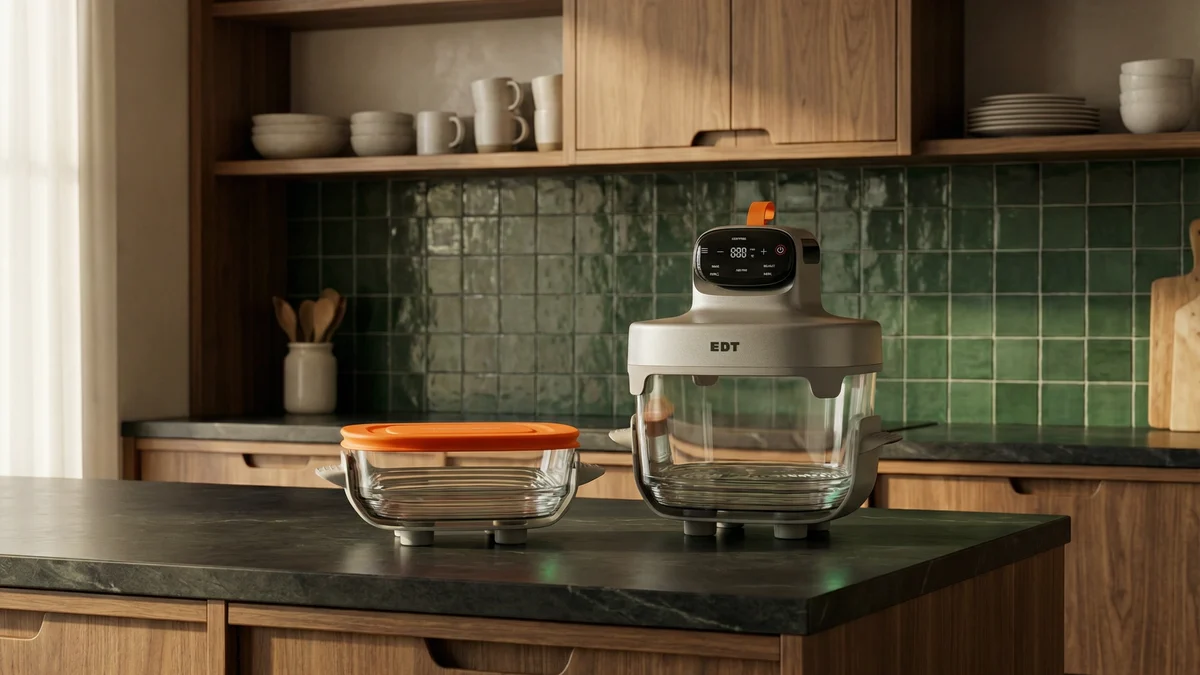
In the ever-evolving landscape of kitchen appliances, air fryers have ascended to a level of near-ubiquitous desire, akin to the status once held by high-tech vacuum cleaners. These countertop marvels promise a healthier, faster, and more convenient way to achieve that coveted crispy texture, transforming everyday ingredients into restaurant-quality fare with minimal fuss. For a growing segment of home cooks, the air fryer has become an indispensable tool, streamlining meal preparation and expanding culinary possibilities. Into this burgeoning market steps LUMA by EDT, an innovative air fryer that boldly eschews the conventional, offering a transparent glass bowl that allows users to witness the magic unfold, a feature that elevates both functionality and aesthetic appeal.
The allure of the air fryer is undeniable. It champions a method of cooking that utilizes hot air circulation to mimic the effects of deep-frying, requiring little to no oil. This health-conscious approach, coupled with its compact size compared to traditional ovens and its ability to effortlessly render humble potatoes into golden fries, has cemented its place in modern kitchens. LUMA by EDT enters this arena with a proposition that is difficult to ignore: its signature transparent, thick glass bowl replaces the standard non-stick coated metal basket. This visual transparency not only adds an element of culinary theatre to the cooking process but also positions LUMA as a handsome appliance, one that diners might not feel compelled to conceal within cabinetry.
This review delves into the performance and practicalities of the LUMA air fryer, examining its design, functionality, and the culinary outcomes it delivers. After an extensive period of testing on a variety of dishes, from quick snacks to more involved recipes, the LUMA has demonstrated its potential to be a valuable kitchen companion, albeit one that requires a degree of user adaptation to unlock its full capabilities.
Design and Dimensions: A Compact Elegance
One of the most striking aspects of the LUMA by EDT is its design. The appliance boasts a substantial, non-toxic glass bowl, yet it manages to occupy a surprisingly modest footprint on the kitchen counter. The dual-bowl configuration, featuring a 4.5-litre and a 2.5-litre bowl that share a single heating unit, measures approximately 29.2cm in width, 23.8cm in depth, and 28.2cm in height. For comparative context, a popular 4.1-litre Philips Airfryer measures around 36cm by 26.4cm by 29.5cm. This comparison highlights LUMA’s advantage in terms of counter space efficiency; it is indeed more compact.
However, this aesthetic and spatial efficiency comes with a trade-off in weight. At 6kg, the LUMA is considerably heavier than its 4.5kg Philips counterpart. While it doesn’t demand an expansive kitchen counter, its heft suggests that a permanent placement would be ideal. Relocating the unit, especially when accommodating the second glass bowl, can become a somewhat tiresome endeavor. This is a consideration for users in smaller kitchens where counter space is at a premium, and frequent repositioning of appliances is a necessity. The robust construction, however, contributes to a sense of durability and premium quality, aligning with its stylish appearance.

Trial Mechanics: Unveiling the Cooking Process
The initial foray into cooking with the LUMA involved preparing a tofu stir-fry with peppers. This dish, requiring minimal complex steps, seemed a fitting starting point. Cubes of tofu were tossed with sliced peppers, a touch of oil, and seasoning before being entrusted to the air fryer. The absence of a complex recipe and the elimination of the need for constant stovetop supervision were immediate benefits. The included steel wire rack was utilized, with the crucial lesson learned the hard way: greasing the rack is paramount to prevent tofu from sticking, a common pitfall in air frying that LUMA’s transparent bowl makes readily apparent.
As cooking sessions progressed, it became evident that understanding LUMA’s specific operational mechanics was key to achieving optimal results. The heating element is integrated into the lid, directing concentrated heat from above. This design necessitates a heightened awareness of cooking times and temperatures, as food can brown and burn more rapidly if subjected to excessive heat or prolonged periods. For dishes where charring or burning is undesirable, vigilant monitoring of temperature, utilizing the taller bowl, and employing a mid-cook shake become essential practices.
Navigating the Culinary Workflow: Practical Considerations
The transparency of the LUMA’s glass bowl, while aesthetically pleasing and informative, introduces certain practical considerations into the cooking workflow. The substantial glass bowl, though durable, is surprisingly heavy. Similarly, the lid, which houses the heating element and features small grooves for lifting, also becomes hot and carries significant weight. This becomes particularly noticeable when preparing dishes that require frequent checks or interventions, such as the aforementioned tofu stir-fry.
What might be a simple instruction – "shake halfway through" – can translate into a more involved process. It necessitates lifting the hot lid and carefully placing it aside, then firmly gripping the heavy glass bowl to shake its contents, before reassembling the appliance. While this action can become routine with practice, these minor inconveniences can accumulate, especially in the context of smaller Indian kitchens that often contend with limited counter space. The transition from a standard metal basket, which can be easily removed and shaken, to a heavy glass bowl requires a recalibration of user habits and expectations.
Culinary Versatility: Beyond the Basics
The LUMA’s capabilities extend beyond conventional air-fried fare. An unexpected yet successful application was the preparation of roasted tomato soup. Tomatoes, garlic, and onions were roasted within the LUMA until softened and caramelized, imparting a deeper, sweeter flavor profile than typically achieved through stovetop cooking. These roasted ingredients were then blended to create a rich and nuanced soup. This demonstrates LUMA’s potential as a versatile appliance for flavor enhancement, moving beyond simple crisping.

Baking, however, presents a different set of challenges, primarily related to spatial constraints. Standard cake tins may not fit comfortably within the bowl’s dimensions. For those intending to incorporate baking into their LUMA routine, a search for smaller, appropriately sized baking vessels will likely be necessary.
Despite these limitations, the LUMA proves particularly well-suited for small-batch baking. The ability to prepare a single mug cake, a few cookies, or a modest portion of brownies for one or two people is a distinct advantage. There is a unique satisfaction in being able to indulge cravings with precisely the right quantity, without the need to preheat and utilize a full-sized oven. This micro-baking capability caters to modern lifestyles and individual dietary needs, offering a convenient and efficient solution for small-scale sweet treats.
Conclusion: Familiarity Breeds Culinary Affinity
The LUMA by EDT is best understood as an appliance that rewards a degree of familiarity and experimentation. Once users acclimatize to its unique operational mechanics – particularly the weight and handling of the glass bowl and the concentrated top-down heating – it seamlessly integrates into everyday cooking routines. For smaller households, or individuals who are particularly cautious about cooking with non-stick coatings like Teflon, the LUMA presents a compelling and healthier alternative. Its transparent design not only enhances the aesthetic appeal of the kitchen but also provides a visual connection to the cooking process, fostering a deeper understanding of how food transforms.
The dual-bowl system offers added flexibility, allowing for simultaneous cooking of different items or the preparation of larger quantities. While the initial learning curve might involve a few minor adjustments, the LUMA ultimately delivers on its promise of convenient, healthier, and visually engaging cooking. It stands as a testament to innovative design in the appliance sector, offering a transparent glimpse into the future of air frying.
Availability and Pricing
EDT’s LUMA air fryer is readily available for purchase online through their official website, edtworld.com, and also on Amazon. The dual-bowl setup is priced at ₹11,998, while the single-bowl configuration is available for ₹8,999. These price points position LUMA within the competitive mid-range market for air fryers, offering a unique blend of design innovation and functional versatility.
