

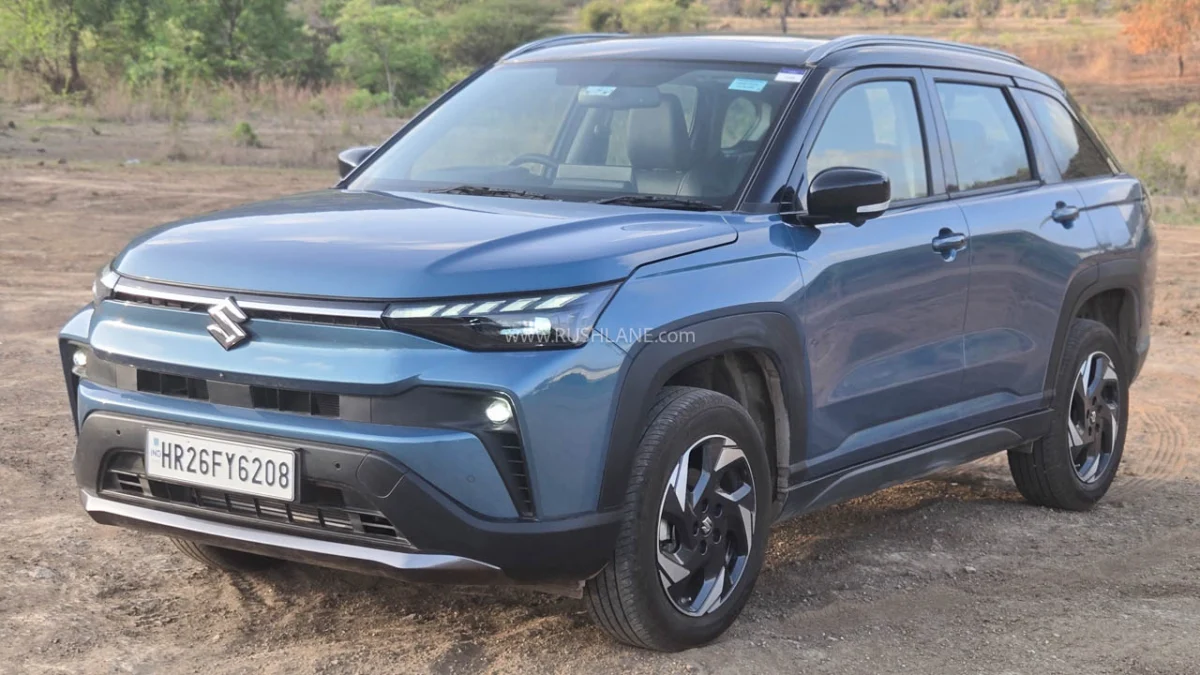
New Delhi, July 2026 – In a move that has sent ripples through the Indian automotive industry, Maruti Suzuki India Limited (MSIL) has announced a significant price reduction for its flagship Arena SUV, the Victoris. Despite the vehicle’s burgeoning popularity and its status as one of the top-performing models in the highly competitive C-segment, the company has opted to slash prices by up to ₹38,900 on specific high-end variants. This decision is particularly noteworthy as it defies the standard industry practice of periodic price hikes, especially for models maintaining strong sales momentum.
The Maruti Suzuki Victoris, which debuted in 2025, has rapidly ascended the sales charts, currently holding the position of the second best-selling mid-size SUV in the country. By outselling its own stablemates and badge-engineered counterparts, the Victoris has redefined Maruti Suzuki’s presence in the premium SUV space.
Main Facts: The Specifics of the Price Adjustment
The price revision for July 2026 is surgical in its application. Rather than a blanket reduction across the entire lineup, Maruti Suzuki has targeted the premium "Option" (O) trims of the Victoris.
Targeted Variants
The price cut of ₹38,900 applies exclusively to the following versions:
- Victoris ZXi (O) NA Petrol Manual Transmission (MT)
- Victoris ZXi (O) NA Petrol Automatic Transmission (AT)
- Victoris ZXi Plus (O) NA Petrol Manual Transmission (MT)
- Victoris ZXi Plus (O) NA Petrol Automatic Transmission (AT)
Unaffected Models
Interestingly, the entry-level and mid-spec trims—LXi, VXi, ZXi, and the standard ZXi Plus—remain at their original price points. Furthermore, Maruti Suzuki has chosen not to alter the pricing for the Victoris CNG variants or the Strong Hybrid configurations. These models continue to command their premium positioning due to their high fuel efficiency and environmental credentials.
Percentage Analysis
When broken down by percentage, the ₹38,900 reduction represents a varying degree of value enhancement:
- ZXi (O) MT: This variant sees the most significant impact, with a price reduction of approximately 2.76%.
- ZXi (O) AT: Receives a reduction of 2.49%.
- ZXi Plus (O) MT: Adjusted downward by 2.46%.
- ZXi Plus (O) AT: Represents the lowest percentage drop among the four, though the absolute value remains the same.
Chronology: The Rise of the Victoris
To understand the significance of this price cut, one must look at the timeline of the Victoris’ market journey.
- Mid-2025: The Launch: Maruti Suzuki introduced the Victoris as its flagship offering for the Arena dealership network. It was designed to bridge the gap between the compact Brezza and the Nexa-exclusive Grand Vitara, offering a more rugged, feature-rich alternative for the mass-market consumer.
- Late 2025: Market Penetration: Within six months of its launch, the Victoris climbed into the top three of the C-SUV segment, challenging the long-standing dominance of the Hyundai Creta and Kia Seltos.
- Early 2026: Sales Milestone: By the end of Q1 2026, the Victoris officially became the second best-selling C-segment SUV in India. It notably began outselling the Grand Vitara and the Toyota Urban Cruiser Hyryder, proving that the Arena brand equity remained potent in the SUV space.
- July 2026: The Strategic Cut: Amidst a period of stable demand, Maruti Suzuki announced the current price revision, catching competitors and analysts by surprise.
Supporting Data: Market Positioning and Features
The Victoris is not merely another SUV in Maruti’s stable; it is the most technologically advanced vehicle the company has ever manufactured independently (excluding collaborative projects with Toyota). Its success is rooted in a blend of traditional Maruti reliability and modern luxury.
Flagship Features
The Victoris stands out as the only "home-grown" Maruti Suzuki product to offer:
- Advanced Driver Assistance Systems (ADAS): A first for the Arena lineup, providing Level 2 autonomous features such as autonomous emergency braking and lane-keep assist.
- Powered Tailgate: A convenience feature usually reserved for luxury segments.
- 10.1-inch Infotainment System: The largest screen available in their current portfolio, featuring high-definition graphics and wireless connectivity.
- Underbody CNG Tank: A revolutionary engineering feat that allows for a CNG powertrain without sacrificing significant boot space, a common pain point for Indian families.
- Full TFT Instrument Cluster: Replacing traditional analog dials with a customizable digital display.
Comparative Sales Performance
In the May-June 2026 period, the Victoris maintained a monthly average of approximately 12,000 to 14,000 units. In comparison, the Grand Vitara hovered around 9,000 units, while the Toyota Hyryder saw sales in the range of 5,000 units. This internal "cannibalization" or rather, segment dominance, highlights the Victoris’ role as the primary volume driver for Maruti in the ₹15-20 lakh price bracket.
Official Responses and Market Rationale
While Maruti Suzuki has not issued an exhaustive press release detailing the "why" behind the cut, industry insiders and dealership sources suggest a two-pronged strategy.

Corporate Strategy: "Value Realignment"
A senior spokesperson for Maruti Suzuki hinted that the move is aimed at "realigning the value proposition" for the top-end trims. As the initial "early adopter" surge for the flagship variants stabilizes, the company seeks to attract the "value-conscious premium buyer" who might otherwise opt for mid-spec variants of rivals.
Analyst Perspectives
Automotive analysts suggest that the price cut is a preemptive strike against upcoming launches from competitors. With new generations of rival SUVs expected in late 2026, Maruti Suzuki is leveraging its manufacturing efficiencies to make the Victoris "Option" trims—which house the most profitable tech features—more accessible.
"It is a classic Maruti move," says Rajesh Kumar, a veteran auto sector analyst. "They are not waiting for sales to drop. They are using their scale to lower the entry barrier for high-tech features like ADAS, effectively making it harder for competitors to justify their premium pricing."
Implications: What This Means for the Industry
The Victoris price cut is likely to have several far-reaching implications for the Indian automotive landscape.
1. Pressure on Competitors
The C-SUV segment is the "gold mine" of the Indian market. By lowering the price of the ADAS-equipped ZXi (O) and ZXi Plus (O) variants, Maruti Suzuki is forcing rivals like Hyundai, Kia, and Honda to reconsider their pricing strategies. If the #2 player becomes more affordable, the #1 player (Creta) and others may have to offer similar discounts or value-added kits to maintain their market share.
2. Technology Democratization
By making the ADAS and 10.1-inch screen variants cheaper, Maruti is accelerating the democratization of safety and infotainment technology in India. This move signals to the consumer that high-end features are no longer exclusive to the "luxury" price bracket.
3. Future of the Grand Vitara
The prompt mentions that several features found in the Victoris are expected to trickle down to the Grand Vitara in the future. The current price cut on the Victoris might be a precursor to a wider portfolio refresh. If the Victoris becomes more affordable, it creates a "price ceiling" that the Grand Vitara must navigate, potentially leading to a more distinct separation between the "Rugged/Mass Market" Arena branding and the "Premium/Sophisticated" Nexa branding.
4. Resale Value and Consumer Sentiment
For existing owners of the Victoris ZXi (O), a mid-cycle price cut can be a double-edged sword, potentially impacting immediate resale value. However, for the broader market, it reinforces Maruti Suzuki’s image as a brand that passes on "efficiency gains" to the customer, fostering long-term brand loyalty.
5. The CNG and Hybrid Factor
The decision to keep CNG and Strong Hybrid prices unchanged is a clear indicator of where the demand is most inelastic. Maruti Suzuki knows that buyers seeking 25-28 km/l fuel efficiency are willing to pay a premium. By cutting prices only on the NA Petrol variants, they are stimulating demand in the "traditional" internal combustion engine (ICE) segment, which faces the stiffest competition from new entrants.
Conclusion
The July 2026 price revision for the Maruti Suzuki Victoris is a masterclass in proactive market management. Rather than resting on the laurels of its "second best-seller" status, Maruti Suzuki is tightening its grip on the C-SUV segment. By making its most advanced, feature-laden trims more affordable, the company is not just selling a car; it is selling a statement that high technology and high value can coexist.
As the Victoris continues to outsell its badge-engineered cousins and put pressure on the segment leaders, the Indian consumer emerges as the ultimate winner, gaining access to flagship-level features at a more palatable price point. Whether this move will trigger a full-scale price war in the SUV segment remains to be seen, but for now, Maruti Suzuki has once again proven why it remains the most dominant force on Indian roads.
