

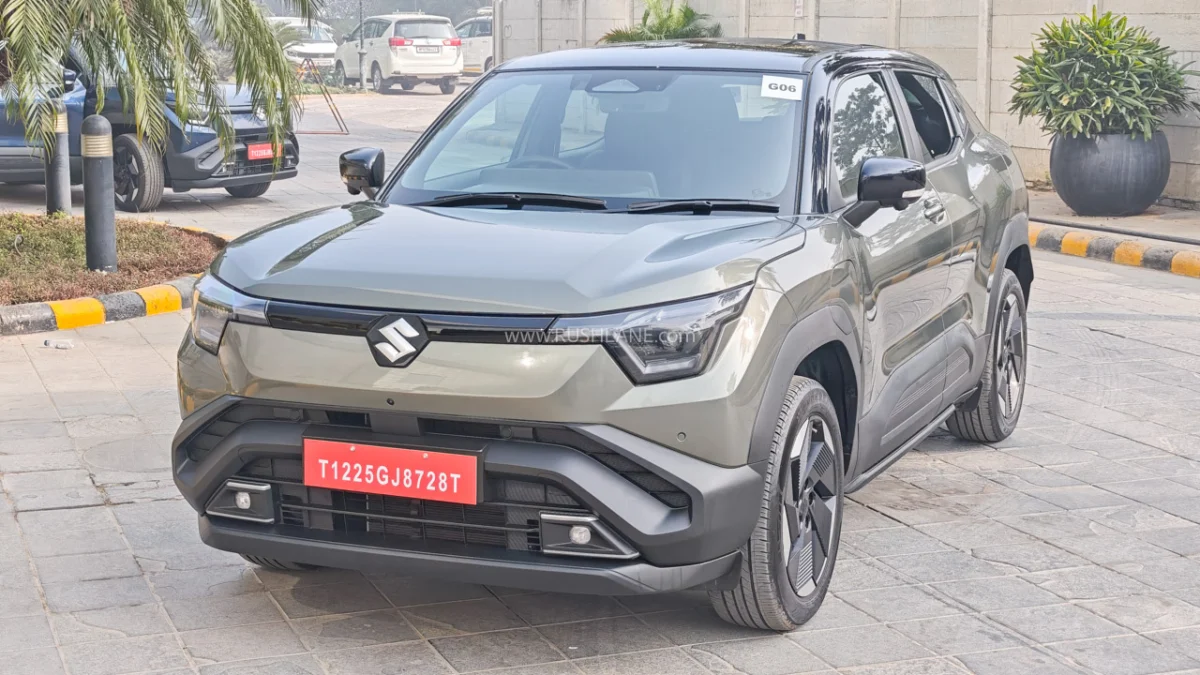
New Delhi, India — Maruti Suzuki India Limited (MSIL), the nation’s largest automaker, has officially announced its first proactive service campaign for its flagship electric vehicle, the e Vitara. This move comes just six months after the vehicle’s high-profile entry into the Indian electric SUV market. The campaign is centered around a software-related rectification within the vehicle’s Integrated Display System (IDS), specifically targeting an error in the calculation of energy efficiency metrics.
The company has emphasized that this is not a mechanical recall but a "proactive service measure" aimed at ensuring data accuracy for its customers. As the e Vitara represents Maruti Suzuki’s strategic pivot toward electrification, the brand is leaving no stone unturned in maintaining its reputation for reliability and customer transparency.
I. Main Facts: Understanding the IDS Software Glitch
The core of the service campaign involves a software error in the Integrated Display System (IDS) control program. The IDS is the digital nerve center of the e Vitara, responsible for relaying critical information to the driver, including speed, battery percentage, range estimation, and real-time power consumption.
The Nature of the Error
According to official communications sent to owners via the premium Nexa dealership network, the IDS control program contained a bug that caused the "average power consumption" to be displayed incorrectly. Specifically, the values shown on the instrument cluster were lower than the actual energy being consumed by the vehicle.
For an EV owner, power consumption (usually measured in Wh/km or km/kWh) is the equivalent of a fuel efficiency gauge in an internal combustion engine (ICE) vehicle. An under-reported consumption figure could lead a driver to believe the vehicle is performing more efficiently than it actually is, potentially leading to slight discrepancies in planned charging stops during long-distance travel.

Performance and Safety Clarifications
Maruti Suzuki has been explicit in stating that the issue is strictly limited to the information display. The following systems remain entirely unaffected:
- Battery Pack Integrity: No issues have been reported with the 49 kWh or 61 kWh battery units.
- Powertrain: The electric motors and drivetrain performance remain within factory specifications.
- Charging Systems: Both AC home charging and DC fast charging protocols are functioning correctly.
- Safety Systems: Critical safety components, including the ADAS suite, ABS, and Airbags, are not part of this software update.
II. Chronology: From Concept to the First Service Update
To understand the significance of this service campaign, one must look at the timeline of the e Vitara’s development and its market journey.
- January 2023: Suzuki Motor Corporation unveils the eVX concept at the Auto Expo in Delhi, signaling the design direction for its first global EV.
- January 2025: The production-ready e Vitara makes its debut at the Bharat Mobility Global Expo. Maruti Suzuki announces a competitive starting price and introduces the "Battery as a Service" (BaaS) model to lower the entry barrier.
- February 2026: Official customer deliveries commence across India. The vehicle is positioned as a premium offering, sold exclusively through Nexa outlets.
- March 2026: The e Vitara records its highest monthly sales to date, with 2,254 units retailed, riding on the wave of initial enthusiast demand and financial year-end purchases.
- July 2026: Cumulative sales reach nearly 10,000 units. Maruti Suzuki’s internal quality control and feedback loops identify the IDS software discrepancy.
- August 2026: Maruti Suzuki officially initiates the service campaign, reaching out to owners via letters and digital communication to schedule software reprogramming.
III. Supporting Data: Market Performance and Technical Specifications
The e Vitara was launched into one of the most competitive segments of the Indian automotive market, facing off against established players like the Tata Nexon EV, MG ZS EV, and the Mahindra XUV400.
Sales Momentum
Since its launch in February 2026, the e Vitara has maintained a steady sales trajectory:
- Total Retail Sales (Feb – July 2026): 9,861 units.
- Average Monthly Volume: ~1,643 units.
- July 2026 Performance: 1,600 units, representing a stable hold on the market despite the entry of newer competitors.
Technical Variations
The service campaign applies to all variants of the e Vitara, regardless of the battery configuration. The SUV is offered in two primary battery sizes:

- 49 kWh Battery: Aimed at urban commuters, offering a balance between weight and range.
- 61 kWh Battery: Targeted at long-distance travelers, featuring higher energy density and faster charging capabilities.
The IDS software is standardized across these variants, which is why the update is being rolled out across the entire production batch manufactured between the launch date and recent weeks.
IV. Official Responses and Dealership Protocols
Maruti Suzuki’s response to the software glitch has been characterized by "proactive transparency," a strategy often used by market leaders to prevent a minor technicality from snowballing into a brand-damaging "recall" narrative.
The Nexa Communication
The letters sent to owners characterize the update as a "Service Campaign" rather than a "Recall." In the automotive industry, a recall is typically reserved for safety-critical defects, whereas a service campaign addresses non-safety improvements or minor technical corrections.
The letter states: "Due to an error in the IDS control program, the displayed average power consumption may appear lower than the actual value. We are committed to providing a seamless ownership experience and request you to bring your vehicle to the nearest Nexa workshop for a free software update."
Workshop Procedure
- Reprogramming Time: The software update is expected to take between 30 to 60 minutes, depending on the dealership’s diagnostic throughput.
- Cost: The update is provided entirely free of charge.
- Warranty Status: Maruti Suzuki has confirmed that this update will have no impact on the vehicle’s standard or extended warranty.
- Appointment System: Nexa has optimized its service booking app to allow e Vitara owners to prioritize this update.
V. Implications: The Rise of Software-Defined Vehicles (SDVs)
The e Vitara service campaign highlights a broader shift in the automotive industry: the transition from mechanical machines to "Software-Defined Vehicles."

1. The Normalization of Software Recalls
In the era of internal combustion engines, a recall usually involved replacing a physical part—a fuel pump, a brake pad, or a gasket. In the EV era, the majority of "recalls" are software-based. Brands like Tesla and Volkswagen have frequently used "Over-the-Air" (OTA) updates to fix similar issues. While Maruti Suzuki is performing this update at dealerships, it underscores the increasing complexity of automotive coding.
2. Protecting the "Maruti Reliability" Brand
For Maruti Suzuki, the e Vitara is more than just a car; it is a proof of concept for their future EV roadmap. By identifying and fixing a display error within the first six months, the company is signaling to its massive customer base that it is monitoring its EV performance with the same rigor it applies to its legendary ICE lineup. This proactive stance is crucial for converting traditional Maruti loyalists into EV adopters.
3. Impact on Consumer Trust
While some may view a service campaign so early in a product’s life cycle with skepticism, industry analysts suggest it builds long-term trust. Accuracy in energy consumption data is vital for managing "range anxiety." By ensuring the display reflects reality, Maruti is helping owners better understand their vehicle’s limits, which ultimately leads to a more satisfied user base.
4. Future Outlook
As Maruti Suzuki prepares to expand its EV portfolio—with rumors of an electric MPV and a compact electric hatchback in the pipeline—the lessons learned from the e Vitara’s IDS glitch will likely be integrated into future development cycles. The company is also expected to enhance its OTA (Over-the-Air) update capabilities in future iterations to allow such fixes to be deployed without requiring a physical visit to a service center.
Conclusion
The Maruti Suzuki e Vitara remains a pivotal product in the Indian automotive landscape. While the current service campaign addresses a minor calculation error in the display system, it serves as a reminder of the precision required in the digital age of motoring. Owners are encouraged to coordinate with their Nexa representatives to ensure their vehicles are running the latest, most accurate software. As the e Vitara approaches the 10,000-unit sales milestone, this proactive measure ensures that the vehicle’s journey toward mass-market electrification remains on a stable and transparent path.
