

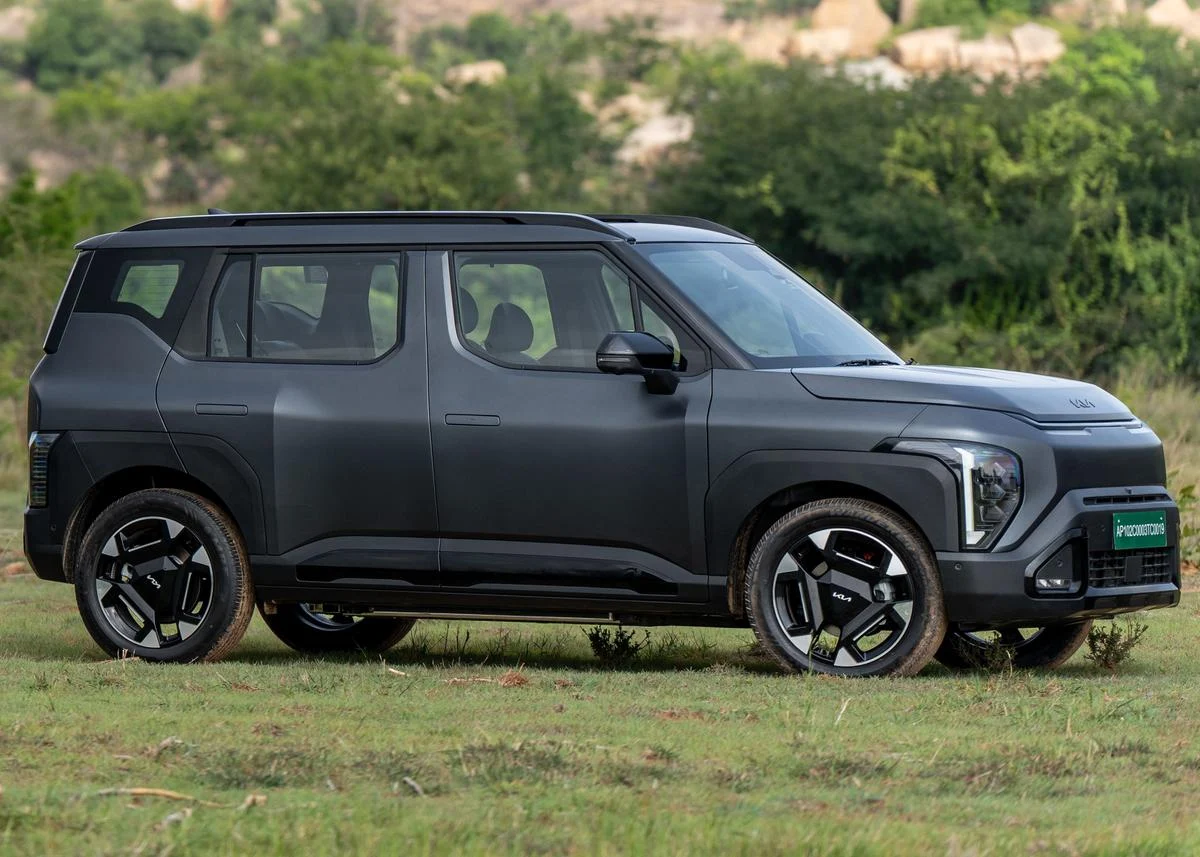
The Indian automotive landscape is currently undergoing a seismic shift, transitioning from internal combustion engines (ICE) to sustainable electric mobility. At the heart of this transformation is the compact SUV segment—a category that dominates Indian roads due to its blend of practicality, status, and tax efficiency. Kia India, a brand that has consistently punched above its weight since its inception, has now introduced the Kia Syros EV.
Priced between ₹13.50 lakh and ₹20.00 lakh (ex-showroom), the Syros EV is not merely an electric version of a sub-four-metre car; it is a calculated attempt to redefine what a "premium compact" vehicle should be. By balancing high-end performance, sophisticated technology, and class-leading interior packaging, Kia is challenging the status quo, most notably taking aim at the upcoming Maruti Suzuki e Vitara and the established Tata Nexon EV.
1. Main Facts: The Syros EV at a Glance
The Kia Syros EV arrives as a multifaceted solution for the modern Indian family. While its footprint remains within the tax-friendly sub-four-metre limit, its technical specifications and feature list suggest a vehicle from a segment above.
Key Specifications:
- Dimensions: Length of 3,995 mm with a generous 2,550 mm wheelbase.
- Battery Variants: A 42 kWh entry-level pack and a 51.4 kWh long-range pack.
- Range: Up to 526 km (MIDC) for the larger battery; 443 km for the smaller unit.
- Performance: 171 PS of power and 255 Nm of torque (51.4 kWh variant).
- Acceleration: 0 to 100 km/h in a brisk 8.1 seconds.
- Charging: 10% to 80% in approximately 39 minutes using a 100 kW DC fast charger.
- Practicality: Up to 465 litres of boot space, aided by sliding and reclining rear seats.
The Syros EV’s primary objective is to eliminate the "compromise" factor often associated with compact EVs. It provides the instant torque and refinement of an electric drivetrain without sacrificing the utility required for a primary family vehicle.

2. Chronology: The Evolution from Syros to Syros EV
The development of the Syros EV follows Kia’s global strategy of "Opposites United," adapted specifically for the Indian market. The journey began with the conceptualization of a tall-boy SUV that could maximize vertical space within a four-metre length constraint.
Phase 1: The Foundation
The standard Kia Syros was developed to bridge the gap between the Sonet and the Seltos. Its boxy, upright stance was a deliberate design choice to provide maximum cabin volume. When the decision was made to electrify this platform, Kia opted for a "parallel design" approach rather than a radical departure.
Phase 2: Electric Adaptation
Unlike some manufacturers who create entirely different aesthetics for their EVs, Kia chose to retain the Syros’s distinctive silhouette. The chronology of the EV’s design involved "smoothing out" the ICE version. This included:
- Developing a closed-off front fascia to reduce aerodynamic drag.
- Redesigning the bumpers to incorporate cleaner lines.
- Introducing aerodynamic alloy wheels to squeeze extra kilometres out of the battery pack.
Phase 3: Market Integration
The Syros EV was launched into a market that is increasingly crowded but still lacks a "perfect" all-rounder. By positioning the EV shortly after the ICE version’s debut, Kia capitalized on the brand’s momentum, offering a clear upgrade path for tech-savvy consumers looking to move away from fossil fuels.

3. Supporting Data: Performance, Technology, and Ergonomics
To understand why the Syros EV is being hailed as a "well-judged package," one must look at the data points that differentiate it from its rivals.
The Powertrain Advantage
The 171 PS output is a significant figure in the sub-four-metre segment. For comparison, most ICE compact SUVs hover around the 110–120 PS mark. This surplus of power, combined with 255 Nm of instantaneous torque, ensures that the Syros EV feels effortless. In urban environments, the ability to close gaps in traffic is instantaneous, while on the highway, the 8.1-second sprint to 100 km/h provides the confidence needed for high-speed overtaking.
Interior Versatility and Space
The Syros EV’s 2,550 mm wheelbase is remarkably long for a car under four metres. Kia has utilized this to create a "flexible cabin."
- Sliding Rear Seats: This is the Syros’s "secret weapon." By allowing the rear bench to move forward or backward, owners can prioritize legroom or luggage space (up to 465 litres) depending on the day’s requirements.
- Verticality: The tall body provides ample headroom, making the cabin feel airy and larger than it is.
Technology and Safety Suite
Kia has equipped the Syros EV with a dual-screen setup—two 12.3-inch displays that handle instrumentation and infotainment. Unlike competitors who are moving toward "all-screen" interfaces, Kia has retained a separate, physical-touch interface for climate control. This decision is backed by ergonomic data suggesting that physical or dedicated controls reduce driver distraction.

On the safety front, the inclusion of Level 2 ADAS (Advanced Driver Assistance Systems) is a major selling point. The system includes:
- Forward Collision Avoidance: Uses radar and cameras to prevent accidents.
- Adaptive Cruise Control: Essential for reducing fatigue on India’s new expressways.
- Blind View Monitor: Projects a camera feed of the blind spot onto the instrument cluster when the turn signal is activated.
4. Official Responses and Competitive Positioning
Kia’s official stance on the Syros EV emphasizes "versatility over niche appeal." Company representatives have noted that while the EV identity is important, the car must first succeed as a great SUV.
The Maruti Suzuki e Vitara Factor
The elephant in the room is the Maruti Suzuki e Vitara. As India’s largest carmaker enters the EV space, Kia has positioned the Syros EV as the "sophisticated alternative." While Maruti may leverage its vast service network, Kia is banking on a more premium interior, better performance figures (171 PS vs. the e Vitara’s projected outputs), and a more comprehensive feature list.
Pricing Strategy
The ₹13.50 lakh starting price is a strategic move to undercut the mid-range variants of the Tata Nexon EV, while the ₹20.00 lakh top-end variant competes with the MG ZS EV. By offering two battery sizes, Kia is effectively targeting two different types of buyers:

- The Urban Commuter: Who prioritizes the lower entry price of the 42 kWh pack.
- The Inter-City Traveler: Who requires the 51.4 kWh pack and 100 kW fast-charging capabilities.
5. Implications: What the Syros EV Means for the Indian Market
The arrival of the Kia Syros EV has several long-term implications for the Indian automotive industry and the consumer experience.
1. The Democratization of Premium Features
Until recently, features like ventilated seats, Level 2 ADAS, and 170+ PS power outputs were reserved for vehicles costing upwards of ₹25 lakh. The Syros EV brings these features into a more accessible price bracket, forcing other manufacturers to up their game.
2. The Death of the "Second Car" Myth
Historically, EVs in India were viewed as secondary vehicles for short city hops. With a 526 km MIDC range (translating to a realistic 350–380 km on the highway) and 39-minute fast charging, the Syros EV is positioned as a "primary" vehicle. It has the space for a family of four and the range to handle weekend trips.
3. Engineering for Indian Chaos
The inclusion of all-wheel disc brakes and electronic stability control (ESC) as standard across the range reflects a growing awareness of Indian road safety requirements. Furthermore, the Syros EV’s suspension tuning—designed to handle the extra weight of the battery while absorbing the impact of broken urban roads—sets a benchmark for "EV ride quality" in the budget-premium segment.

4. Infrastructure Pressure
As Kia and its competitors release more EVs with 50+ kWh batteries, the demand for reliable 100 kW DC fast chargers will skyrocket. The Syros EV’s capability to charge quickly is only useful if the infrastructure exists. This release will likely accelerate private and public investments in high-speed charging corridors across India.
Final Verdict: A New Benchmark
The Kia Syros EV is a rare example of a car that understands its target audience perfectly. It doesn’t try to be a futuristic spaceship; instead, it tries to be the best possible version of a compact SUV that happens to be electric.
By offering a blend of performance (171 PS), utility (465L boot), and range (526 km), Kia has created a package that is difficult to ignore. For the Indian buyer, the Syros EV represents a shift from "buying an EV because it’s green" to "buying an EV because it’s simply a better car." At ₹13.50 lakh to ₹20.00 lakh, it is not just a competitor in the market—it is the new benchmark for the segment.
Disclaimer: Technical specifications and pricing are based on the latest available data from the manufacturer at the time of publication. Real-world range may vary based on driving conditions and battery health.
