

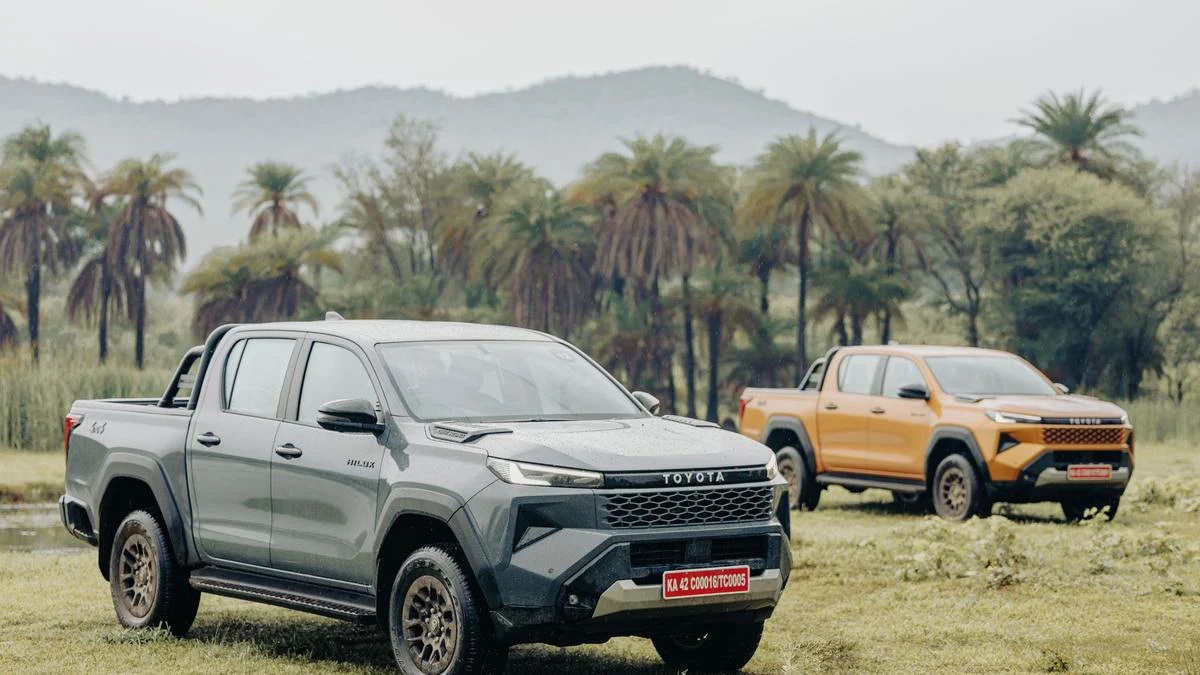
The Toyota Hilux occupies a rarefied space in the global automotive pantheon. It is not merely a vehicle; it is a mechanical testament to endurance, a tool that has transcended its utilitarian roots to become a cultural phenomenon. In India, where the "lifestyle pickup" segment remains a niche but growing frontier, the Hilux stands as a colossus. It is a vehicle classified by its open load bed but defined by its refusal to break.
Recently updated for the Indian market, the Hilux continues to challenge the conventional wisdom of what a premium vehicle should be. While modern SUVs increasingly lean toward "soft-roading" and digital gimmicks, the Hilux doubles down on its rugged DNA, offering a blend of futuristic design and old-school mechanical grit.
Main Facts: The Core of the Update
The latest iteration of the Toyota Hilux in India represents a strategic refinement rather than a ground-up revolution. Toyota’s engineers and designers have focused on three primary pillars: visual modernization, interior connectivity, and powertrain simplification.

The most striking change is the adoption of the "Cyber Sumo" design language, a bold departure from the conservative aesthetics of its predecessor. This is paired with a significant tech upgrade inside the cabin, most notably a larger infotainment system that addresses previous criticisms regarding connectivity.
Mechanically, the 2.8-litre turbocharged diesel engine remains the heart of the beast, but the lineup has been streamlined. Toyota has transitioned the Hilux to an exclusively automatic transmission range, even for the 4×2 variants, signaling a shift toward ease of use for the urban-dwelling adventurer. However, this modernization comes with a paradox: to maintain its competitive pricing (ranging from INR 31.99 lakh to INR 36.69 lakh ex-showroom), Toyota has swapped several premium "creature comforts" for more utilitarian alternatives.
Chronology: The Evolution of a Legend
To understand the current Hilux, one must understand the weight of its history. Since its global debut in 1968, the Hilux has been the workhorse of choice for everyone from construction foremen to Antarctic explorers. It earned its "indestructible" moniker through decades of service in the world’s most inhospitable environments.

In the Indian context, the Hilux arrived relatively late, launching in early 2022 to much fanfare. Its arrival was seen as a challenge to the Isuzu D-Max V-Cross, which had long enjoyed a monopoly on the lifestyle pickup segment. The 2024-2025 update marks the first significant aesthetic and functional refresh since its Indian debut.
This update follows a global trend where Toyota is attempting to bridge the gap between "commercial utility" and "lifestyle luxury." By introducing the "Cyber Sumo" look, Toyota is aligning the Hilux with its more aggressive global truck portfolio, such as the Tacoma and Tundra sold in North America, while ensuring the mechanical underpinnings remain localized for Indian conditions.
Design and Aesthetics: The "Cyber Sumo" Philosophy
The term "Cyber Sumo" might sound like something out of a science fiction novel, but it accurately describes the Hilux’s new physical presence. The design is characterized by a flatter, more muscular bonnet that provides the driver with a commanding view of the road—and the obstacles ahead.

Exterior Highlights:
- The Grille: The redesigned front grille is larger and more angular, flanked by revised LED headlamps that give the truck a piercing, modern "gaze."
- The Silhouette: Sharper body lines run along the flanks, emphasizing the vehicle’s length. The black 17-inch alloy wheels are a masterstroke in design, providing a stealthy, "adventure-ready" look that complements the rugged tires.
- Practicality at the Rear: One of the most thoughtful additions is the integrated side step built into the cargo bed. For a vehicle this tall, accessing the load area was previously a chore; this simple mechanical addition significantly enhances daily usability.
The Hilux remains a massive vehicle. Its ladder-frame chassis ensures it sits high above the ground, and its sheer length means it will dominate any parking space it occupies. This is not a vehicle designed for the faint of heart or the narrow of garage.
Interior Refinement vs. Functional Austerity
Inside, the Hilux tells a story of two halves. On one hand, Toyota has modernized the "touchpoints"—the areas where the driver interacts with technology. On the other, they have stripped away luxury features to focus on durability.
The Tech Upgrade
The centerpiece of the dashboard is the significantly larger touchscreen infotainment system. For the first time, it supports wireless Apple CarPlay and Android Auto, a feature that has become a non-negotiable for the modern Indian buyer. The center console has been cleaned up, looking more premium and less like a commercial truck’s dashboard. The new squarer steering wheel design feels substantial in the hands and ties the interior to the "Cyber Sumo" exterior theme.

The Trade-offs
In a move that has surprised some, Toyota has removed several features found in the previous high-end trims:
- Upholstery: Leather seats have been replaced by high-grade fabric. While less "luxurious," fabric is arguably better suited for the extreme heat of Indian summers and the dusty environments the Hilux is designed to inhabit.
- Climate Control: The automatic climate control system has been replaced by a manual unit.
- Seating: The electrically adjustable driver’s seat is gone, replaced by manual adjustment.
- Rear Comfort: There are still no dedicated AC vents for rear passengers, though the seating cushioning has been improved for better long-distance support.
While these omissions might look disappointing on a spec sheet for a 36-lakh-rupee vehicle, Toyota’s gamble is that the Hilux buyer isn’t looking for a "limousine with a bed." They are looking for a vehicle that can be hosed out after a weekend of mud-plugging.
Supporting Data: Powertrain and Performance
Under the hood lies the venerable 2.8-litre, four-cylinder turbocharged diesel engine. This engine is the backbone of Toyota’s heavy-duty lineup, also found in the Fortuner.

Performance Specifications:
- Power: 201 PS
- Torque: 500 Nm
- Transmission: 6-speed Torque Converter Automatic (Now standard across the range).
- Acceleration: 0-100 km/h in approximately 12 seconds.
- Fuel Efficiency: Real-world estimates hover around 10 km/l, depending on load and terrain.
The engine’s character is defined by its torque curve. There is a massive wave of pulling power available almost from idle, which is essential for low-speed off-roading and towing. Despite its bulk, the Hilux feels surprisingly brisk on the highway. Toyota has also made significant strides in Noise, Vibration, and Harshness (NVH) levels. Improved insulation means the "diesel clatter" is much more subdued, making it a viable long-distance cruiser.
Engineering and Off-Road Dominance
The Hilux’s reputation isn’t built on touchscreens; it’s built on its ladder-frame chassis and heavy-duty suspension. The rear features a leaf-spring setup designed to carry a payload of 500kg.
Off-Road Hardware:
- 4WD System: A shift-on-the-fly 4WD system with high and low-range ratios.
- Rear Differential: An electronically locking rear differential for extreme situations where wheels lose contact with the ground.
- Electronic Aids: Multiple terrain modes and a 360-degree camera system. The camera is particularly vital, acting as a "spotter" when navigating narrow trails or steep crests where the bonnet obscures the view.
In off-road testing, the Hilux proves its mettle. Its water-wading capability and generous approach/departure angles allow it to tackle terrain that would leave most luxury SUVs stranded. The hydraulic power steering, while heavier than the electric systems found in competitors, provides a level of mechanical feedback and durability that off-road purists prefer.

Official Philosophy and Market Implications
Toyota’s approach to the Hilux in India is clear: Capability over Comfort. By stripping away some interior luxuries, they have managed to keep the vehicle relatively accessible (in the context of its segment) while ensuring the mechanical hardware remains top-tier.
The primary competitor remains the Isuzu D-Max V-Cross. While the Isuzu is more affordable, the Hilux counters with the Toyota "QDR" (Quality, Durability, Reliability) promise and a significantly more powerful engine.
Implications for the Indian Market:
- The Rise of the "Overlander": The Hilux is the perfect canvas for the growing "overlanding" community in India—people who modify their vehicles with tents, snorkels, and winches to live out of them for weeks in the wild.
- Urban Challenges: The Hilux is not a city car. Its size makes it a liability in congested metropolitan areas like Mumbai or Bangalore. Its market will remain centered around farm owners, construction moguls, and adventure enthusiasts in tier-2 and tier-3 cities.
- Resale Value: Like the Fortuner, the Hilux is expected to hold its value exceptionally well, making the high initial investment more palatable for long-term owners.
Conclusion: The Emotional Purchase
At a price point of nearly INR 37 lakh, the Toyota Hilux is not a rational purchase for the average commuter. You can get more features, more seats, and more soft leather in a variety of SUVs for the same price.

However, the Hilux is an emotional purchase. It represents the freedom to point the steering wheel toward a mountain and know, with absolute certainty, that you will reach the top and—more importantly—make it back down. It is a vehicle for those who value the "peace of mind" that comes from decades of proven reliability.
As the automotive world moves toward electrification and software-defined vehicles, the Toyota Hilux remains a gloriously mechanical outlier. It demands compromises in the city, but it rewards you with a sense of invincibility that no other vehicle on sale in India can match. You don’t buy a Hilux because you need a pickup; you buy a Hilux because you need the legend.
