

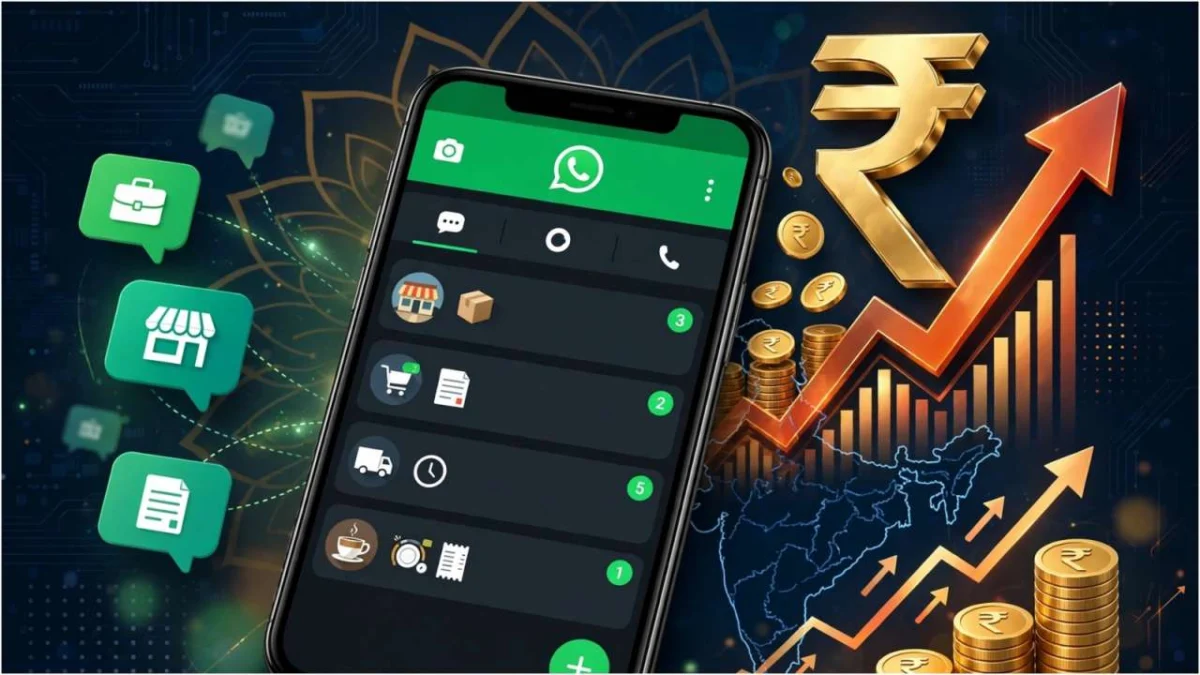
NEW DELHI, India – In a move poised to significantly reshape how businesses interact with their customers across the digital landscape, Meta Platforms Inc. has announced a substantial revision to its WhatsApp Business Platform pricing model in India. Effective October 1, the tech giant will introduce charges for a category of messages that were previously free, specifically targeting "utility messages" sent within the customary 24-hour customer service window. This strategic adjustment signals a deeper push by Meta to monetize its widely adopted business communication ecosystem, impacting thousands of enterprises that leverage the platform for customer engagement, transactional alerts, and support services.
The impending changes, which primarily affect businesses utilizing the sophisticated WhatsApp Business Platform (API) rather than the standard WhatsApp Business App, mark a critical juncture for digital customer relationship management in India. With WhatsApp’s unparalleled penetration in the Indian market, this revision is expected to prompt businesses of all sizes to re-evaluate their communication strategies, optimize message flows, and potentially explore alternative channels to manage costs while maintaining customer satisfaction.
Main Facts: A New Era for WhatsApp Business Communication
At its core, the pricing revision by Meta introduces a charge for certain types of messages sent by businesses on the WhatsApp Business Platform. Here are the key takeaways:
- Effective Date: The new pricing structure comes into effect on October 1.
- Target Audience: The changes specifically apply to businesses leveraging the WhatsApp Business Platform (API). It does not affect individual WhatsApp users or businesses using the free, standard WhatsApp Business App.
- Key Change: Previously, businesses could respond to customer-initiated conversations, including sending "utility messages" like order confirmations or delivery updates, for free within a 24-hour window. Under the new regime, these utility messages sent within that 24-hour window will become chargeable after a free monthly limit.
- Free Tier: Each unique business phone number registered on the platform will receive 1,000 free "service replies" per month.
- Chargeable Messages: Beyond the 1,000 free service replies, businesses will be charged for each additional utility message delivered.
- Cost Structure: The price for delivered messages in India is set at Rs 0.115 per message, exclusive of 18% Goods and Services Tax (GST).
- Exclusions: Crucially, replies to customer-initiated queries will continue to remain free, even after the pricing revision. This ensures that direct responses to inbound customer questions are not penalized.
- No Impact on Regular Users: The revised pricing has no bearing on regular WhatsApp users, who will continue to send and receive messages on the platform without incurring any charges from Meta. Similarly, businesses using the basic WhatsApp Business App will also remain unaffected.
This strategic pivot by Meta underscores the increasing value it places on the WhatsApp Business Platform as a powerful, yet increasingly premium, tool for enterprise communication. Businesses in India, a market where WhatsApp has become virtually synonymous with digital communication, will now need to meticulously manage their outgoing messages to control operational costs.
Chronology: The Evolution of WhatsApp Business and its Monetization Journey
The journey of WhatsApp from a simple messaging app to a sophisticated business communication platform reflects Meta’s broader strategy to integrate commerce and enterprise solutions into its vast ecosystem.
Early Days (Pre-2018): WhatsApp began as a free messaging application. Its explosive growth, particularly in markets like India, demonstrated its immense potential beyond personal communication. Businesses, informally at first, started using regular WhatsApp accounts to communicate with customers.
)
August 2018: Introduction of WhatsApp Business API: Recognizing the organic business usage and the need for more structured tools, Meta (then Facebook) launched the WhatsApp Business API. This was a game-changer, allowing medium to large enterprises to integrate WhatsApp directly into their existing CRM systems, automate messages, and manage customer interactions at scale. The initial pricing model was largely free for a set number of messages, with charges for messages initiated by businesses (templates) and those falling outside the 24-hour window. Crucially, responses to customer-initiated conversations within 24 hours were typically free. This model encouraged businesses to adopt the platform and experiment with its capabilities.
2018-2023: Growth and Expansion: Over these years, the WhatsApp Business Platform saw rapid adoption. E-commerce players, banks, logistics companies, healthcare providers, and numerous other sectors integrated the API for everything from order confirmations and delivery updates to appointment reminders and customer support. The "free within 24 hours" window for responses to customer queries, including utility messages, was a significant draw, allowing businesses to provide real-time, personalized support without incurring direct messaging costs for active conversations. This period was characterized by Meta focusing on scaling the platform and establishing its utility as a primary communication channel for businesses.
July 2023: Introduction of Conversation-Based Pricing: Meta refined its pricing model globally, moving towards a conversation-based pricing structure. Instead of charging per message, businesses were charged per 24-hour "conversation session." There were different conversation categories (e.g., utility, authentication, marketing, service) with varying price points. The first 1,000 service conversations per month were generally free. This move aimed to simplify pricing and align costs with the value of ongoing interactions.

October 1: The Latest Revision in India: The current announcement represents a further refinement specifically for the Indian market, impacting the definition and charging of "service replies" within the free conversation window. While the previous conversation-based model offered 1,000 free service conversations per month, this new change specifies 1,000 free service replies per month per business phone number, and importantly, now charges for utility messages within the 24-hour window after this free limit. This is a subtle but significant shift, as it moves from charging for the start of a conversation (in certain categories) to charging for individual messages of a specific type within an ongoing free conversation session, once the monthly free limit is exhausted. The crucial differentiator remains: replies to customer queries are still free. The charges specifically target utility messages that are often automated and proactive.
This chronological progression illustrates Meta’s consistent strategy: initially fostering widespread adoption through generous free tiers, then gradually refining and introducing more granular monetization as the platform matures and its value proposition to businesses solidifies.
Supporting Data: Understanding the New Cost Structure and Its Implications
The new pricing model for the WhatsApp Business Platform in India is designed to introduce a more direct cost-per-message for specific types of communication. Let’s break down the mechanics and illustrate its financial impact.
)
The "Service Reply" Category and Free Limit:
From October 1, each unique business phone number leveraging the WhatsApp Business Platform API will be allocated 1,000 free "service replies" every month. These are messages sent by a business in response to a customer’s query or interaction, falling within the 24-hour customer service window. The critical distinction is that utility messages (e.g., order confirmations, delivery updates, appointment reminders) that were previously free within this window will now count towards this 1,000-message limit, and subsequently be charged once the limit is exceeded.
The Cost Per Message:
For the Indian market, Meta has stipulated a charge of Rs 0.115 per delivered message. This is a base rate to which the Goods and Services Tax (GST) of 18% will be applied.
Calculating the Total Cost (with Examples):
)
Let’s consider scenarios to understand the financial implications:
-
Scenario 1: Business stays within the free limit.
- A business sends 800 utility messages (order updates, delivery notifications, etc.) to customers in a month, all within the 24-hour window.
- Since 800 is less than the 1,000 free service replies, the cost for these messages will be Rs 0.00.
-
Scenario 2: Business slightly exceeds the free limit.
)
- A business sends a total of 1,200 utility messages in a month.
- The first 1,000 messages are free.
- The remaining 200 messages will be charged.
- Cost per message: Rs 0.115
- Subtotal for 200 messages: 200 * Rs 0.115 = Rs 23.00
- GST (18% of Rs 23.00): Rs 4.14
- Total Cost: Rs 23.00 + Rs 4.14 = Rs 27.14
-
Scenario 3: Business with moderate message volume.
- A business sends 2,500 utility messages in a month.
- The first 1,000 messages are free.
- The remaining 1,500 messages will be charged.
- Subtotal for 1,500 messages: 1,500 * Rs 0.115 = Rs 172.50
- GST (18% of Rs 172.50): Rs 31.05
- Total Cost: Rs 172.50 + Rs 31.05 = Rs 203.55
-
Scenario 4: High-volume business.
- An e-commerce giant or logistics company sends 100,000 utility messages in a month.
- The first 1,000 messages are free.
- The remaining 99,000 messages will be charged.
- Subtotal for 99,000 messages: 99,000 * Rs 0.115 = Rs 11,385.00
- GST (18% of Rs 11,385.00): Rs 2,049.30
- Total Cost: Rs 11,385.00 + Rs 2,049.30 = Rs 13,434.30
These examples clearly demonstrate that while the per-message cost might seem low, it can accumulate significantly for businesses with high volumes of automated utility messages.
)
Comparison with Other Channels:
To put this into perspective, businesses often use SMS for transactional alerts. While SMS costs vary, they typically range from Rs 0.10 to Rs 0.50 per message depending on the volume and provider. Email, on the other hand, is largely free on a per-message basis, though it incurs costs for email service providers and infrastructure. WhatsApp offers richer media, higher engagement rates, and a more interactive experience compared to plain SMS, which businesses have valued. The new pricing brings WhatsApp’s utility messages into a competitive cost bracket with SMS, urging businesses to consider the ROI of each channel.
Impact on Different Business Sizes:
- Small Businesses: Those with fewer than 1,000 utility messages per month might not see any direct increase in costs, provided they manage their communication effectively. However, for growing small businesses, this could become an unexpected overhead.
- Medium Businesses: These are likely to be most impacted, as they often rely on automated messages for a significant portion of their customer interactions and might easily exceed the 1,000 free message limit. They will need to carefully monitor and optimize their messaging.
- Large Enterprises: While the absolute costs will be higher for large enterprises due to sheer volume, they often have the resources and technological infrastructure to absorb these costs or implement sophisticated automation and filtering to minimize unnecessary paid messages. Their focus will be on maximizing the value of each paid message.
The data unequivocally shows that businesses must now approach their WhatsApp communication strategy with a heightened awareness of cost efficiency, moving beyond the previous assumption of largely free utility messaging within the 24-hour window.
)
Official Responses and Rationale: Meta’s Strategic Imperative
While Meta has not issued a specific press statement elaborating solely on the India-specific pricing change, industry analysts and Meta’s broader strategy provide insights into the rationale behind such revisions. The move is widely interpreted as a natural progression in the monetization of a highly successful and deeply integrated platform.
Meta’s Stated Objectives for Business Messaging:
Meta has consistently articulated its vision for business messaging on WhatsApp: to provide a powerful, secure, and engaging channel for businesses to connect with their customers. This vision involves significant ongoing investment in infrastructure, security, new features (like interactive buttons, list messages, payment integrations), and API development. Monetization is essential to sustain and expand these investments.
Driving Value and Quality:
One of Meta’s primary objectives is to ensure that businesses use the platform efficiently and send messages that truly add value to the customer experience. By introducing a cost for utility messages beyond a certain threshold, Meta might be subtly encouraging businesses to:
)
- Optimize Message Frequency: Discourage spammy or overly frequent automated messages.
- Improve Message Relevance: Ensure each message is necessary and provides clear value to the recipient.
- Leverage Richer Features: Move beyond basic text to interactive templates that can resolve queries more quickly, reducing the need for multiple follow-up messages.
Sustainable Platform Growth:
Free services, while excellent for initial adoption, are not sustainable in the long run for a platform of WhatsApp’s scale and complexity. Monetization allows Meta to:
- Reinvest in Technology: Fund research and development for advanced features, AI capabilities, and robust security protocols.
- Support Developer Ecosystem: Provide resources and tools for the vast network of developers and solution providers building on the WhatsApp Business Platform.
- Maintain Service Quality: Ensure high deliverability, uptime, and performance for critical business communications.
Differentiating Service Levels:
The pricing structure also helps Meta differentiate between basic customer interaction and more advanced, automated, or proactive business-initiated communications. By keeping customer-initiated conversation replies free, Meta ensures that the core value of responsive customer service remains accessible. Charging for certain automated utility messages, however, positions them as a premium service for businesses that require high-volume, proactive outreach.
Market Maturity:
India is one of WhatsApp’s largest markets, with an estimated over 500 million users. The WhatsApp Business Platform has achieved significant maturity and adoption in the country. At this stage, businesses have largely integrated WhatsApp into their operational workflows and recognize its indispensable value. This makes the market ripe for a more structured monetization approach, as businesses are less likely to abandon a critical communication channel due to moderate cost adjustments.
)
Industry Analyst Perspectives:
Industry analysts generally view such pricing adjustments as standard practice for mature platforms. "This move by Meta is not unexpected," comments a leading tech analyst. "As a platform scales and becomes integral to business operations, a shift towards a more comprehensive monetization model is inevitable. The key for Meta is to balance revenue generation with maintaining the platform’s value proposition and accessibility for businesses." They further note that the 1,000 free messages provide a buffer, especially for smaller businesses, while the per-message charge for exceeding that limit is relatively competitive within the digital communication landscape.
In essence, Meta’s revised pricing for the WhatsApp Business Platform in India is a strategic decision rooted in the platform’s growth, the need for sustainable investment, and a desire to encourage efficient and high-value communication practices among its business users.
Implications: Reshaping Business Communication Strategies in India
The revised pricing structure for the WhatsApp Business Platform will have far-reaching implications across various sectors of the Indian economy, compelling businesses to adapt and innovate their communication strategies.
)
1. Increased Scrutiny on Message Utility and Relevance:
Businesses will now be forced to critically evaluate every utility message they send. The "spray and pray" approach will become cost-prohibitive. There will be a stronger emphasis on:
- Customer Opt-in: Ensuring customers genuinely want to receive specific types of messages.
- Message Consolidation: Combining multiple pieces of information into a single, comprehensive message where possible.
- Timeliness: Sending messages only when absolutely necessary and at the most impactful moment.
- Personalization: Tailoring messages to individual customer needs to maximize their perceived value.
2. Optimization of Automated Workflows:
Companies relying heavily on automated alerts (e.g., e-commerce order updates, delivery tracking, payment reminders, service notifications) will need to optimize their backend systems. This could involve:
- Conditional Messaging: Sending messages only if certain conditions are met (e.g., only sending a delivery update if the delivery status changes significantly, rather than multiple minor updates).
- Tiered Communication: Using WhatsApp for critical, high-value alerts and potentially switching to email or SMS for less urgent or lower-priority notifications, especially after the free limit is exhausted.
- AI and Chatbot Enhancement: Investing in more intelligent chatbots that can resolve queries autonomously, reducing the need for human intervention and subsequent message exchanges. This could also mean using AI to determine the most cost-effective channel for a given message.
3. Potential Shift in Communication Channel Mix:
While WhatsApp’s engagement rates are undeniable, the new costs might lead some businesses to re-evaluate their overall communication channel mix. For certain types of utility messages, particularly those with high volume and lower perceived individual value, businesses might consider:
)
- Increased Reliance on SMS: For basic transactional alerts where rich media or interactivity isn’t crucial.
- Enhanced Email Engagement: Driving customers to check emails for detailed updates or less time-sensitive information.
- In-App Notifications: For businesses with their own mobile applications, driving customers to use in-app notifications which are often "free" from a direct messaging cost perspective.
4. Impact on Customer Experience:
The implications for customer experience are two-fold. On one hand, customers might receive fewer irrelevant messages, leading to a cleaner and more focused communication stream. On the other hand, if businesses become overly aggressive in cost-cutting, it could lead to reduced communication for legitimate updates, potentially causing customer frustration or lack of information. The balance will be crucial.
5. Innovation in Customer Service Models:
Businesses might innovate by:
- Encouraging Customer-Initiated Interactions: Since replies to customer queries remain free, businesses might design their workflows to encourage customers to initiate conversations, effectively shifting the cost burden.
- Self-Service Portals: Directing customers to self-service options on websites or apps for common queries, reducing the need for message-based support.
- Proactive Problem Resolution: Focusing on resolving issues before they become customer queries, thereby minimizing the need for reactive messaging.
6. Competitive Landscape:
This move could potentially open up opportunities for competing messaging platforms or communication service providers to offer more competitive pricing for similar services. However, WhatsApp’s sheer user base and ecosystem integration remain formidable barriers to entry.
)
7. Data Analytics and ROI Measurement:
The new pricing will necessitate more robust data analytics capabilities for businesses. They will need to meticulously track message volumes, delivery rates, engagement metrics, and ultimately, the return on investment (ROI) for their WhatsApp communications to ensure that every paid message delivers tangible business value.
In conclusion, Meta’s revised pricing strategy for the WhatsApp Business Platform in India is more than just a cost adjustment; it is a catalyst for strategic rethinking. Businesses are now tasked with the challenge of balancing efficient customer communication with judicious cost management, pushing them towards more intelligent, value-driven, and optimized digital engagement strategies in a market where WhatsApp continues to reign supreme.
