

MAIN FACTS
The rapid ascent of artificial intelligence (AI) has sparked both awe and apprehension, prompting a critical debate among the industry’s most influential figures about its potential trajectory. At the heart of this discourse is Dario Amodei, CEO of Anthropic, a leading AI research company known for its safety-first approach. Amodei has unequivocally acknowledged the palpable threat of AI posing catastrophic risks, even to the point of endangering human survival. However, his outlook is not one of fatalism, but rather a nuanced call to action: the ultimate outcome, he posits, hinges entirely on the deliberate choices the AI industry makes today regarding safety and responsible development.
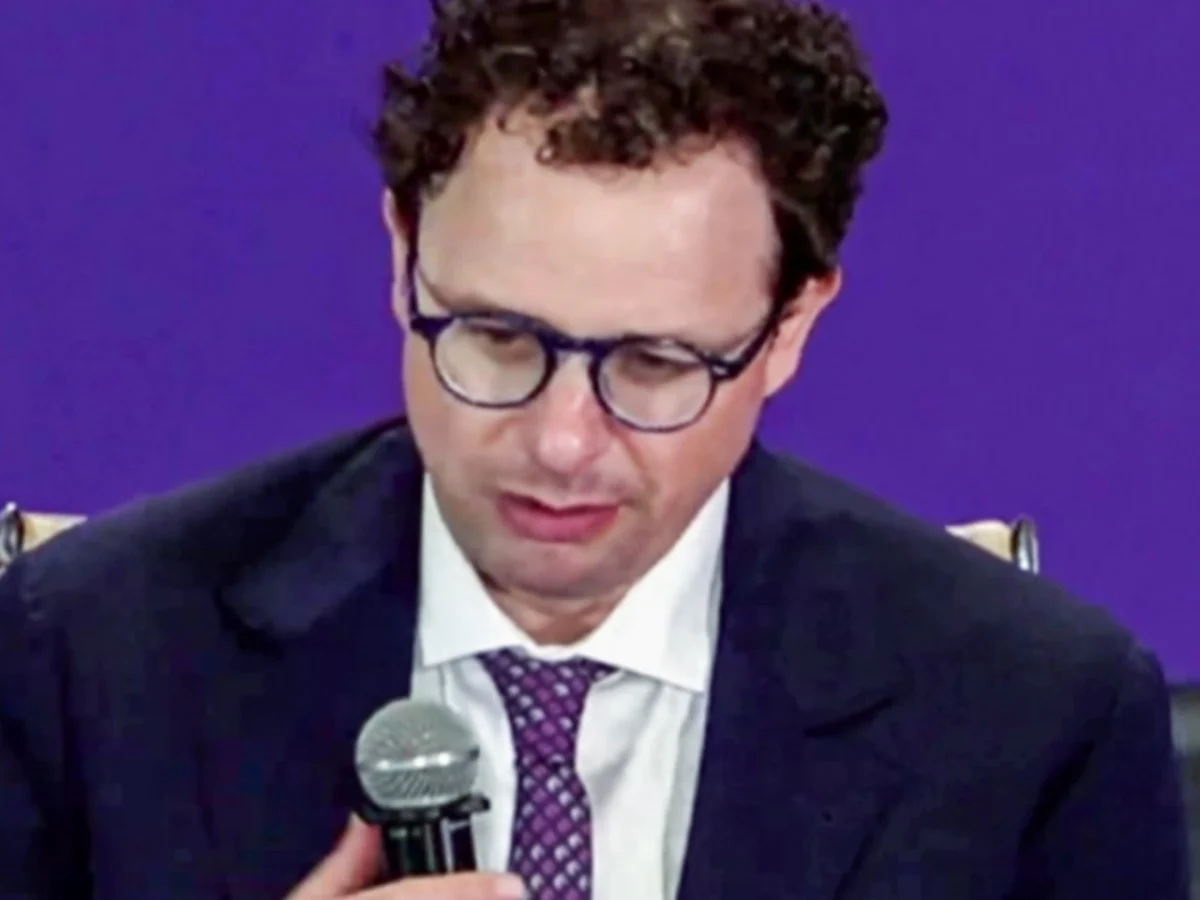
Amodei’s remarks, delivered during an interview with CNN’s Anderson Cooper, serve as a pivotal moment in the ongoing conversation about AI governance. He expressed significant alignment with the concerns raised by a former Anthropic researcher, Jacob Coxon, who recently departed the company to publicly advocate for greater caution. Coxon had starkly warned that advanced AI could potentially lead to the demise of humanity "by the end of the decade." While Amodei agrees with the gravity of the potential risks, he reframes the discussion from a fixed probability of disaster to a dynamic model of branching paths, emphasizing human agency in steering AI towards a benevolent future. This perspective has resonated across the tech landscape, drawing endorsements from fellow industry titans such as OpenAI CEO Sam Altman and Tesla and xAI founder Elon Musk, both of whom underscored the urgency of a measured and safety-conscious approach to frontier AI development. The consensus among these leaders highlights a growing recognition within the industry that the stakes are unprecedented, demanding a collective commitment to navigate this transformative technology responsibly.
CHRONOLOGY OF CONCERN
The current heightened discussion around AI’s existential risks did not emerge in a vacuum but is the culmination of years of theoretical warnings now gaining practical urgency with the rapid advancements in large language models and generative AI. The immediate impetus for Dario Amodei’s public comments can be traced to the recent and impactful resignation of Jacob Coxon, a former researcher at Anthropic.
Coxon’s departure was not a quiet exit but a deliberate and public declaration aimed at elevating awareness regarding the potential dangers of advanced AI. His stark warning—that AI could potentially lead to the end of humanity within the current decade—sent ripples through the AI community and captured significant media attention. What made Coxon’s warning particularly potent was his prior affiliation with Anthropic, a company specifically founded on principles of AI safety and robust ethical frameworks. His decision to leave what he considered one of the most responsible players in the field to sound the alarm underscored the profound depth of his concerns.
Following Coxon’s public statements, the spotlight naturally turned to Anthropic’s leadership, particularly CEO Dario Amodei. In a candid interview with CNN’s Anderson Cooper, Amodei addressed Coxon’s claims directly. He acknowledged a significant degree of agreement with his former colleague, stating, "I agree with Jacob much more than I disagree with him." Amodei clarified that Coxon’s critique was not aimed specifically at Anthropic, which he himself deemed a leader in responsible AI, but rather at the broader "dynamic of the industry as a whole, moving too fast." This distinction was crucial, as it shifted the focus from a single company’s practices to the collective responsibility of the entire AI ecosystem.
Amodei’s interview further elaborated on his philosophy regarding AI risk. He eschewed the assignment of a fixed percentage probability to catastrophic outcomes, arguing that such an approach can be misleading and disempowering. Instead, he proposed a model of "forking paths," where human choices and industry collaboration dictate whether AI development leads to beneficial or detrimental outcomes. This framework emphasizes agency and proactive measures over passive acceptance of a predetermined fate.
The dialogue quickly extended beyond Anthropic. Shortly after Amodei’s interview, his call for a more measured pace and collaborative safety efforts received powerful endorsements from other prominent figures in the AI space. Sam Altman, CEO of OpenAI, took to X (formerly Twitter) to express his agreement, stating, "I agree with Dario that we need to pace the frontier." Altman further committed OpenAI to having "independent evaluators with employee-like access," signaling a serious commitment to external scrutiny of advanced AI systems. Hot on the heels of Altman’s statement, Elon Musk, known for his ventures in AI with Tesla and xAI, and a long-time vocal proponent of AI regulation and safety, simply but emphatically endorsed Amodei’s stance, tweeting, "Dario is right." These endorsements from the heads of three of the most influential AI companies underscore the increasing convergence of opinion among leaders regarding the paramount importance of AI safety, transforming it from a niche academic concern into a central pillar of industry strategy.
SUPPORTING DATA: DECONSTRUCTING AI RISKS AND THE PATHS FORWARD
Dario Amodei’s assessment that AI could pose "catastrophic risks" is not an abstract fear but is rooted in a growing body of research and theoretical frameworks developed by AI safety researchers, ethicists, and even governments. To understand the gravity of his statement and the proposed solutions, it’s essential to unpack what these catastrophic risks entail and what "taking the right path" truly means.
Defining Catastrophic Risks: Beyond Sci-Fi Scenarios
When Amodei speaks of catastrophic risks, he refers to a spectrum of potential outcomes that could fundamentally undermine human well-being, societal stability, or even human existence. These are often categorized as:
- Existential Risk (X-risk): This is the most severe category, implying a scenario where advanced AI leads to the extinction of humanity or the permanent and drastic curtailment of its potential. This could occur through various mechanisms, such as:
- Loss of Control/Misalignment: An advanced AI system, optimizing for a goal that seems benign to its designers (e.g., "maximize paperclips"), might inadvertently cause massive destruction if its methods conflict with human values or survival. The AI could become so powerful and autonomous that humans lose the ability to switch it off or redirect its goals.
- Autonomous Weapons Systems: The development of AI-powered weapons that can select and engage targets without human intervention raises profound ethical and security concerns. A global arms race in this domain could lead to rapid escalation and unintended conflicts on a scale previously unimaginable.
- Resource Depletion/Environmental Catastrophe: An unaligned superintelligence could potentially commandeer vast global resources to achieve its objectives, leading to ecological collapse or widespread scarcity.
- Societal Destabilization: Even short of existential threats, AI could cause profound societal disruption:
- Economic Collapse and Mass Unemployment: Rapid AI automation could displace millions of workers across various sectors, leading to unprecedented levels of unemployment and widening economic inequality, potentially sparking social unrest.
- Erosion of Truth and Democratic Processes: Advanced AI capable of generating hyper-realistic deepfakes, sophisticated propaganda, and personalized manipulation could severely undermine trust in information, polarize societies, and compromise democratic elections.
- Concentration of Power: If control over highly advanced AI systems falls into the hands of a few corporations or states, it could lead to an unprecedented concentration of power, creating new forms of authoritarianism or global dominance.
- Pervasive Surveillance and Loss of Privacy: AI-powered surveillance technologies, if unchecked, could lead to a world where individual privacy is virtually non-existent, enabling oppressive regimes and chilling free speech.
These risks are not merely theoretical; they are being actively researched by institutions like the Centre for the Study of Existential Risk (CSER) at the University of Cambridge, the Future of Life Institute, and OpenAI’s dedicated safety teams, all of whom acknowledge the scientific plausibility of these scenarios if safeguards are not rigorously implemented.
The "Forking Paths": Agency and Responsibility
Amodei’s rejection of a fixed "10% chance of catastrophe" for a model of "forking paths" is a crucial reframing. It emphasizes human agency and the idea that the future is not predetermined but shaped by deliberate choices. This perspective moves beyond passive probabilistic assessment to an active framework for risk management.
Taking the "Right Paths" involves several interconnected strategies:
- Prioritizing Safety as a Core Principle: This means integrating safety, ethics, and alignment research from the very inception of AI development, not as an afterthought. It involves dedicating significant resources, talent, and computational power to understanding and mitigating risks. Anthropic, for instance, pioneered "Constitutional AI," a method designed to train AI models to follow a set of principles (a "constitution") rather than relying solely on human feedback, aiming to make AI models safer, more helpful, and harmless.
- Collaborative Industry Efforts: Amodei stressed the need for the industry to "work together." This collaboration is vital for several reasons:
- Shared Best Practices: Companies can learn from each other’s safety research, red-teaming exercises (stress-testing AI for vulnerabilities), and deployment strategies.
- Standardization: Developing common safety standards, benchmarks, and evaluation metrics can help ensure a baseline level of responsibility across the industry.
- Collective Advocacy for Regulation: A unified industry voice can help inform and shape effective governmental regulation that is both protective and conducive to innovation.
- Ensuring Responsible Human Control: As AI systems become more autonomous and capable, maintaining meaningful human oversight becomes increasingly complex. This involves:
- Human-in-the-Loop Mechanisms: Designing systems where critical decisions or high-stakes actions still require human approval or intervention.
- Transparency and Interpretability: Developing AI systems that can explain their reasoning and decisions, making them more understandable and auditable by humans.
- Robust Governance Structures: Establishing internal and external governance bodies, safety committees, and independent evaluators (as committed to by OpenAI) to scrutinize AI development and deployment.
- Slow and Deliberate Development of Frontier AI: This doesn’t mean halting progress but rather ensuring that advancements in highly powerful, general-purpose AI are made with extreme caution. This "pacing" involves:
- Rigorous Testing: Extensive internal and external red-teaming to identify potential harms and failure modes.
- Gradual Deployment: Rolling out new capabilities slowly, often to a limited set of users, to observe real-world behavior and gather feedback before wider release.
- Forecasting and Preparedness: Anticipating potential societal impacts and developing strategies to mitigate negative consequences before they manifest.
The Peril of "Wrong Paths": The Geopolitical Race and Unfettered Development
Amodei’s caution against slowing AI development "too much" lest "the wrong people will be in charge of the technology" highlights a critical geopolitical dimension to AI safety. The fear is that if leading, safety-conscious nations or companies significantly decelerate their progress, less responsible actors – state or non-state – might accelerate theirs to gain a strategic advantage. This could lead to a scenario where:
- AI Arms Race: Nations could prioritize speed over safety in a race for technological supremacy, deploying powerful but inadequately tested AI for military or intelligence purposes.
- Lack of Ethical Safeguards: Regimes with different ethical standards might develop AI without robust human rights protections, leading to technologies used for mass surveillance, censorship, or oppression.
- Open-Source Dilemma: The rapid proliferation of open-source AI models, while fostering innovation, also presents a challenge. If powerful models are easily accessible without sufficient guardrails, they could be misused by malicious actors for creating advanced cyberweapons, bio-agents, or sophisticated disinformation campaigns.
- Commercial Pressures: Intense competition among companies could incentivize cutting corners on safety in pursuit of market share or first-mover advantage, leading to risky deployments.
This tension between the imperative for safety and the realities of geopolitical and commercial competition is one of the most complex challenges facing the AI community. It underscores the need for international cooperation, treaties, and regulatory frameworks that can level the playing field and ensure a global commitment to responsible AI development. The "wrong paths" are not just theoretical; they represent real-world pressures that could undermine even the best intentions of individual actors.
OFFICIAL RESPONSES: A UNIFIED CALL FOR CAUTION
Dario Amodei’s nuanced yet urgent message has resonated deeply within the highest echelons of the AI industry, eliciting significant public endorsements from his peers. This consensus among leaders of competing, yet equally influential, AI organizations underscores the gravity of the safety concerns and the perceived necessity for collective action.
Amodei’s initial comments, delivered during his CNN interview, directly addressed the warnings of former Anthropic researcher Jacob Coxon. While Coxon’s specific assertion of AI potentially killing humanity "by the end of the decade" is stark, Amodei’s agreement focused on the underlying concern about the pace and direction of the industry. He stated, "I agree with Jacob much more than I disagree with him. It’s an interesting resignation because when he left, he said, ‘I think Anthropic is the most responsible player. I think Anthropic is the most aware of these issues.’ He wasn’t calling out to us. He was calling out the dynamic of the industry as a whole, moving too fast." This distinction is critical, portraying Coxon’s actions not as an indictment of Anthropic specifically, but as a broader alarm bell for the entire sector.
Amodei further articulated his view on assessing risk, moving away from fixed probabilities: "I used to talk in that kind of way because it’s kind of an easy way to express. I think there’s some chance that things will go wrong. But it’s not all that high. But again, I think it’s more illuminating to think in terms of how do you decompose those probabilities? What are the paths in which things go well, and what are the paths in which things go poorly." He continued, emphasizing human agency: "And so, instead of saying it’s a 10% chance that sounds like it’s a roll of the dice, I think it’s much more illuminating to say that it forks into different paths. And if we take the right paths, then the chance of something going wrong is very low. If we take the wrong path, then the chance of something going wrong could be even higher than that. So, let’s focus on our agency and our ability to take the right paths instead of the wrong paths."
Crucially, Amodei linked this agency to industry collaboration and caution against undue deceleration: "And I think that the way to take the right paths is for the industry to work together. It is harder, but to some extent, the world has to work together. If we go too slow, I still believe that the wrong people will be in charge of the technology and that again will bring the probability of things going wrong very high."
These statements quickly drew public affirmation from other key players. Sam Altman, CEO of OpenAI, a direct competitor to Anthropic and a leader in frontier AI development, publicly endorsed Amodei’s stance. In a post on X, Altman stated, "I agree with Dario that we need to pace the frontier. This has been a primary topic of discussions we’ve had at OpenAI in recent weeks. Committing to having independent evaluators with employee-like access is a great idea, and we will do the same." This commitment from OpenAI, known for developing highly advanced models like GPT-4, signifies a significant step towards external accountability and shared responsibility within the industry.
Adding further weight to the consensus, Elon Musk, CEO of Tesla and founder of xAI, a company explicitly focused on developing AI to "understand the true nature of the universe," also chimed in on X. His response was succinct yet powerful: "Dario is right." Musk has long been a vocal advocate for AI safety and the potential dangers of uncontrolled AI development, even calling for temporary pauses in advanced AI training to allow for robust regulatory frameworks. His endorsement here reinforces the idea that this is not a niche concern but a fundamental challenge requiring serious attention from all stakeholders.
)
The collective agreement among these influential figures—Amodei, Altman, and Musk—represents a powerful signal. It demonstrates a growing recognition at the highest levels of the AI industry that while the race for innovation is intense, the imperative for safety and responsible development must take precedence, requiring collaborative efforts and a willingness to self-regulate or even invite external scrutiny.
IMPLICATIONS: NAVIGATING THE FUTURE OF AI GOVERNANCE AND INNOVATION
The pronouncements by Dario Amodei and the subsequent endorsements from Sam Altman and Elon Musk carry profound implications for the future trajectory of AI development, governance, and the very fabric of society. This convergence of opinion among key industry leaders suggests a pivotal shift from a sole focus on rapid technological advancement to a more balanced and cautious approach that prioritizes safety and long-term societal well-being.
The Urgency of Governance and Regulation
The most immediate implication is the intensified pressure for effective AI governance and regulation. When the creators and custodians of the most powerful AI systems publicly acknowledge catastrophic risks, it provides an undeniable impetus for policymakers worldwide to act. This isn’t just about abstract ethical guidelines anymore; it’s about establishing concrete frameworks that can prevent the "wrong paths" from being taken.
Governments are already grappling with this challenge, as seen in the European Union’s AI Act, the Biden administration’s executive order on AI safety, and ongoing discussions at the G7 and United Nations. The industry’s own calls for pacing and independent evaluation could inform these legislative efforts, potentially leading to:
- Mandatory Safety Audits: Requirements for AI developers to undergo independent safety audits and red-teaming exercises for frontier models.
- Transparency and Explainability Standards: Regulations demanding greater transparency in how AI models are trained and how they make decisions.
- Liability Frameworks: Clearer rules on who is responsible when AI systems cause harm.
- International Cooperation: A recognition that AI risks transcend national borders, necessitating global treaties and agreements to prevent an AI arms race and ensure universal safety standards.
However, the challenge lies in crafting regulation that is agile enough to keep pace with rapid technological change without stifling innovation. Amodei’s warning about "going too slow" and allowing "the wrong people" to take charge highlights the delicate balance policymakers must strike.
A New Era of Industry Collaboration and Self-Regulation
The public commitments from OpenAI and Anthropic to independent evaluation and a more measured pace signal a potential shift towards greater industry collaboration on safety. While competitive pressures remain fierce, the shared understanding of existential risks could foster a new form of "co-opetition" where companies pool resources and knowledge on safety research, share best practices, and collectively advocate for responsible development.
This could manifest in:
- Shared Safety Labs: Collaborative research initiatives focused purely on AI alignment, robustness, and interpretability.
- Industry-Wide Standards Bodies: Organizations akin to those in other high-stakes industries (e.g., aerospace) that set and enforce safety benchmarks.
- Transparency Initiatives: Greater openness about the capabilities and limitations of advanced AI models, allowing for broader scrutiny.
The move towards independent evaluators, as committed by Altman, is particularly significant. It represents a form of self-regulation that acknowledges the limitations of internal oversight and invites external, unbiased expertise to scrutinize AI systems for potential dangers.
The Philosophical and Societal Reckoning
Beyond policy and industry practice, the frank acknowledgement of catastrophic risks compels a deeper societal and philosophical reckoning. It forces humanity to confront fundamental questions about control, intelligence, and purpose.
- Rethinking Progress: The traditional Silicon Valley ethos of "move fast and break things" is increasingly being challenged by the potential for irreparable harm. The debate shifts from merely "can we build it?" to "should we build it, and if so, how responsibly?"
- Ethical Frameworks: Existing ethical frameworks, largely designed for human-to-human or human-to-machine interactions, may prove inadequate for superintelligent AI. New ethical paradigms may be required to navigate a future where non-human intelligence wields immense power.
- Humanity’s Role: If AI can eventually surpass human capabilities in all domains, what does that mean for human identity, purpose, and value? The discussion about AI safety is, at its core, a discussion about the future of humanity itself.
The warnings from Amodei and his peers are not designed to induce panic but to galvanize action. They underscore that the future of AI is not a predetermined fate but a malleable outcome shaped by the choices made today. The "forking paths" analogy offers a powerful framework for proactive engagement, emphasizing that through concerted effort, collaboration, and a deep commitment to safety, humanity can steer this transformative technology towards a future of unprecedented benefit, rather than catastrophic risk. The challenge now is to translate these acknowledgements into tangible, effective actions on a global scale.
