

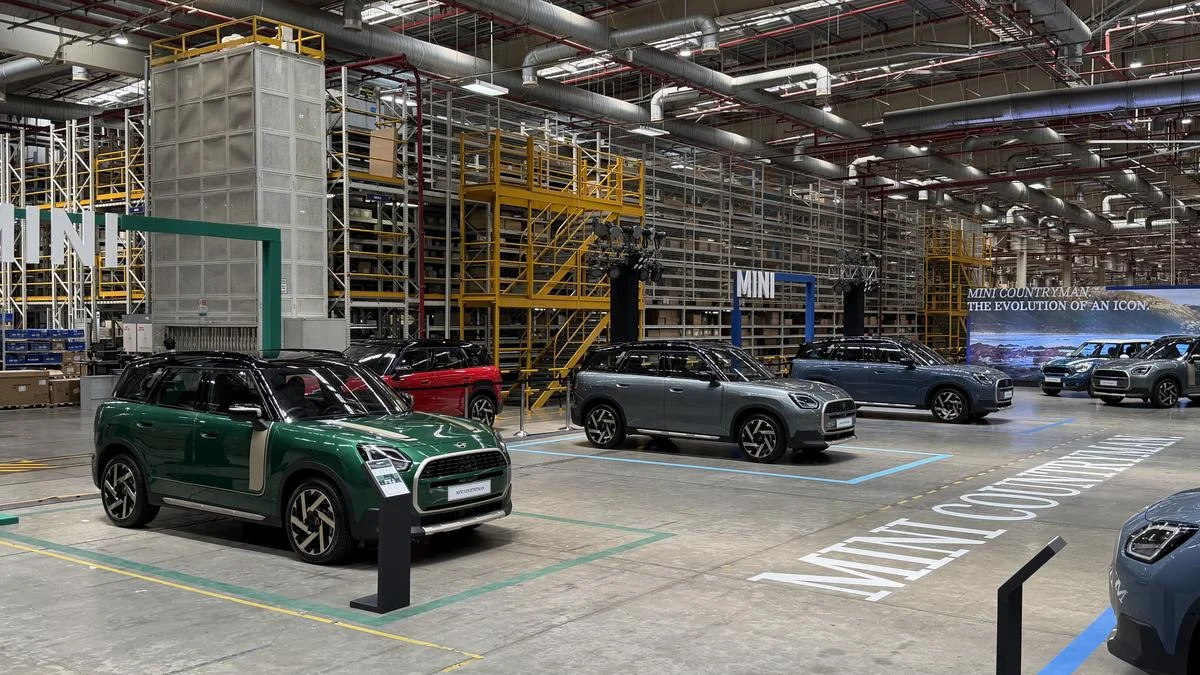
The landscape of India’s premium compact SUV segment underwent a significant transformation this week as MINI, the storied British marque under the BMW Group umbrella, officially launched the all-new Countryman C in Chennai. This launch is not merely an addition to a product portfolio; it represents a strategic pivot for the brand in South Asia. For the first time in the model’s history, the petrol variant of the Countryman is being manufactured locally at the BMW Group Plant Chennai.
Priced at an aggressive ₹47.50 lakhs (ex-showroom), the Countryman C aims to bridge the gap between avant-garde lifestyle aesthetics and the pragmatic demands of the Indian luxury car buyer. By transitioning from a Completely Built-Up (CBU) import model to a locally produced unit, MINI is signaling a long-term commitment to the Indian market, optimizing its value proposition while maintaining the premium craftsmanship the brand is known for globally.
Main Facts: The Evolution of a "Big" MINI
The new MINI Countryman C arrives as the largest and most versatile member of the MINI family to date. While the brand has historically been synonymous with compact, urban "go-karts," the new Countryman C embraces a "New Kind of Big" philosophy. This iteration is taller, wider, and longer, designed to compete directly with established rivals like the BMW X1, Audi Q3, and Mercedes-Benz GLA.
Key Specifications at a Glance:
- Engine: TwinPower Turbo Petrol, 1.5-liter, 3-cylinder.
- Performance: 156 hp and 240 Nm of torque.
- Transmission: 7-speed dual-clutch Steptronic Sport transmission.
- Cargo Capacity: 505 liters, expandable to 1,450 liters.
- Technology: Circular OLED display with MINI Operating System 9.
- Price: ₹47.50 Lakhs (Ex-showroom India).
The vehicle is offered in five distinct color variants, catering to a demographic that values personalization as much as performance. The shift to local production at the Chennai plant is the cornerstone of this launch, allowing MINI to navigate India’s complex tax structures more effectively and offer a more competitive price point to the consumer.
Chronology: From Boutique Import to Local Mainstay
The journey of the MINI Countryman in India reflects the broader evolution of the Indian luxury car market. To understand the significance of the new Countryman C, one must look at the timeline of the brand’s presence in the subcontinent.
2012–2018: Establishing the Niche
MINI officially entered the Indian market in 2012, debuting at the Delhi Auto Expo. Initially, the brand was perceived as a "boutique" offering, primarily catering to enthusiasts in metros like Mumbai and Delhi. The Countryman was introduced as the "rugged" MINI, but as a CBU import, its high price tag limited its reach.

2018–2023: The First Steps Toward Localization
Recognizing the potential of the SUV-hungry Indian market, BMW Group India began exploring local assembly for the Countryman. While some variants saw limited local intervention, the core of the lineup remained heavily dependent on global supply chains. During this period, MINI successfully cultivated a "lifestyle" image, moving beyond just being a car to being a fashion statement.
2024–Present: The "Made in India" Milestone
The launch of the Countryman C in June 2026 (as per the latest reports) marks the culmination of a multi-year strategy to integrate MINI into the BMW Group’s Indian manufacturing ecosystem. By producing the petrol variant in Chennai, MINI has effectively de-risked its supply chain and shortened delivery timelines for Indian customers. This move follows the broader industry trend of "In India, for India," ensuring that the vehicle’s suspension and cooling systems are optimized for local road conditions and climate.
Supporting Data: Engineering, Digital Innovation, and Utility
The Countryman C is a departure from the "retro" aesthetics of previous generations, moving toward what the brand calls "Charismatic Simplicity." Every design element serves a dual purpose of form and function.
Performance and Drivetrain
Under the hood, the Countryman C is powered by the latest generation of the BMW Group’s TwinPower Turbo petrol engines. The 156 hp output, while modest compared to high-performance "S" or "JCW" variants, is tuned for the stop-and-go realities of urban Indian traffic while providing enough punch for highway cruising. The 240 Nm of torque is available low in the rev range, ensuring that the SUV feels light on its feet. The 7-speed dual-clutch transmission (DCT) offers lightning-fast shifts, maintaining the "go-kart" feel that enthusiasts demand.
A Digital Revolution: The Circular OLED
The interior is dominated by a world-first in the automotive industry: a high-resolution circular OLED display. This 240mm diameter screen acts as the nerve center for the vehicle.
- MINI Operating System 9: Developed in-house by the BMW Group, this OS is based on an Android Open Source Project (AOSP) software stack, allowing for seamless integration of apps.
- Experience Modes: Drivers can choose from several modes (Core, Green, Go-Kart, Personal, etc.) that change the interior ambient lighting, the soundscape of the engine, and the graphics on the OLED screen.
- Intelligent Personal Assistant: By saying "Hey MINI," drivers can control navigation, climate, and media, reducing the need for physical buttons and enhancing safety.
Practicality for the Indian Family
One of the primary criticisms of earlier MINI models was the lack of rear-seat space. The Countryman C addresses this head-on. The rear seats can slide longitudinally by up to 13 centimeters, allowing owners to prioritize either rear legroom or boot space. The 505-liter boot is among the best in its class, and the inclusion of a "fisheye" in-cabin camera allows occupants to take "car-fies" or monitor the interior via a smartphone app, adding a layer of tech-savvy convenience.

Official Responses: Leadership Perspectives
At the launch event in Chennai, the leadership team of BMW Group India emphasized that the Countryman C is a vehicle designed to expand the brand’s demographic.
Hardeep Singh Brar, President and CEO of BMW Group India, remarked on the vehicle’s dual personality:
"The all-new MINI Countryman C is a new kind of BIG. It is larger, bolder, and more technologically advanced than ever before. By producing this variant locally at our Chennai plant, we are not just bringing a world-class product to India; we are ensuring that it is accessible and tailored to the needs of our Indian patrons. This model represents the perfect balance between the iconic MINI spirit and the practical requirements of a family SUV."
Brar also highlighted that the local production of the petrol variant is a response to the shifting consumer preference in India, where petrol engines have regained dominance in the luxury segment following the tightening of emission norms and the gradual phasing out of small-capacity diesels.
Engineers at the Chennai plant noted that the local assembly process involves rigorous quality checks that mirror those at MINI’s Oxford plant in the UK. The "Made in India" tag, they insisted, is a badge of quality, not a compromise.
Implications: Changing the Premium SUV Landscape
The local production of the MINI Countryman C has several far-reaching implications for the Indian automotive industry and the luxury consumer.

1. Disrupting the Pricing Equilibrium
At ₹47.50 lakhs, the Countryman C sits in a "sweet spot." It is priced lower than many of its CBU competitors and even some locally assembled rivals. This pricing strategy is likely to attract "upgraders"—customers moving from mass-market SUVs like the Jeep Compass or Hyundai Tucson into the luxury segment.
2. The "Lifestyle" vs. "Utility" Debate
Historically, buyers chose the BMW X1 for utility and the MINI for style. With the increased dimensions of the Countryman C, that distinction is blurring. The Countryman now offers enough space to serve as a primary family vehicle, potentially cannibalizing sales from its stablemate, the BMW X1, while offering a more "expressive" alternative to the conservative designs of Audi and Mercedes-Benz.
3. Sustainability and Local Ecosystems
Local production reduces the carbon footprint associated with shipping fully assembled vehicles across oceans. Furthermore, it bolsters the local component manufacturing ecosystem in Tamil Nadu, often referred to as the "Detroit of India." While many high-tech components are still imported, the assembly process supports local jobs and technical skill development.
4. Digital Sovereignty
The introduction of MINI OS 9 and the digital key features signals a shift toward "Software Defined Vehicles" in India. As Indian consumers become more tech-centric, the Countryman’s focus on connectivity, remote upgrades, and app integration sets a new benchmark for what is expected in the sub-50-lakh luxury segment.
Conclusion
The launch of the locally produced MINI Countryman C is a landmark moment for the BMW Group in India. It signifies the maturation of the MINI brand from a niche enthusiast choice to a mainstream luxury contender. By combining the emotional appeal of the British marque with the industrial might of the Chennai production facility, MINI has created a product that is uniquely positioned to capture the imagination of the modern Indian professional. As the premium compact SUV segment continues to grow, the Countryman C stands as a testament to the fact that you can, indeed, be both "big" and a "MINI" at the same time.
