

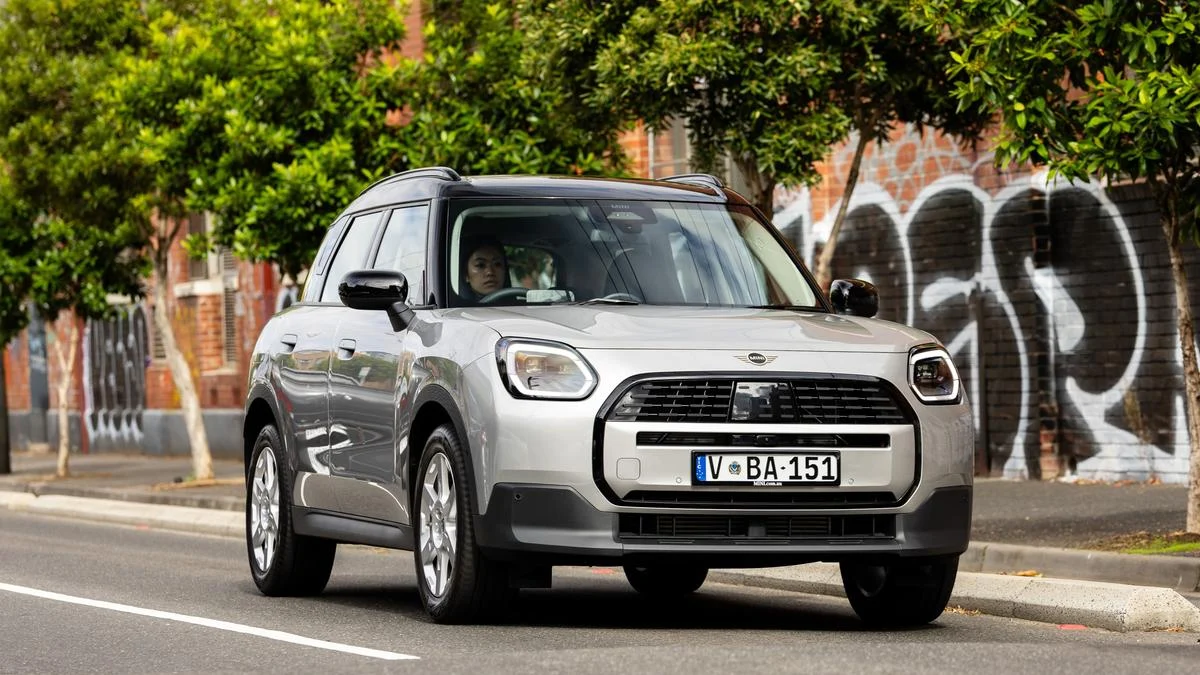
For decades, the MINI brand has occupied a unique, almost untouchable niche in the global automotive landscape. It was the "fashion statement on wheels"—a vehicle purchased not for its cargo capacity or rear-legroom, but for its kart-like handling, unmistakable silhouette, and the sheer emotional resonance of the British motoring heritage. In India, this narrative held true for years. To own a MINI was to prioritize personality over pragmatism.
However, the arrival of the all-new MINI Countryman C, priced at ₹47.50 lakh (ex-showroom), signals a tectonic shift in the brand’s strategy. No longer content with being a "lifestyle accessory," MINI is positioning the Countryman C as a formidable, practical, and technologically advanced contender in the premium compact SUV segment. By bridging the gap between whimsical design and everyday utility, the Countryman C aims to transform MINI’s fortunes in one of the world’s most competitive luxury markets.
The Main Facts: A Grown-Up MINI for a Mature Market
The new MINI Countryman C represents the third generation of the model, and it is, by far, the most significant departure from the original concept. While the previous iterations were often described as "slightly overgrown hatchbacks," the new model fully embraces its identity as a proper SUV.
Key highlights of the new Countryman C include:

- Price Point: Launched at an aggressive ₹47.50 lakh (ex-showroom), positioning it directly against established rivals.
- Increased Dimensions: The vehicle has grown significantly, measuring approximately 13 centimeters longer and 6 centimeters taller than its predecessor. This growth translates directly into cabin volume.
- Powertrain: It is powered by a sophisticated 1.5-litre, three-cylinder turbocharged petrol engine, integrated with mild-hybrid technology to balance performance with efficiency.
- Manufacturing: The vehicle benefits from local production strategies, which allow for more competitive pricing and better availability in the Indian market.
- Interior Revolution: The cabin introduces a world-first circular OLED display and a focus on sustainable, high-quality textile materials rather than traditional plastics.
Chronology: From Niche Icon to SUV Contender
To understand the importance of the Countryman C, one must look at the trajectory of the MINI brand in India since its official entry in 2012.
- The Early Years (2012–2015): MINI entered India as a niche import. The Cooper and the Convertible were the heroes, appealing to a thin slice of urban elites who wanted a "second or third car" for weekend jaunts. Practicality was an afterthought.
- The First Countryman (2013–2018): Recognizing the Indian obsession with ground clearance, MINI introduced the first Countryman. It was a success by MINI standards but still felt cramped compared to the luxury sedans available at the same price point.
- The Second Generation (2018–2023): This era saw MINI begin to experiment with local assembly at the BMW Group plant in Chennai. The Countryman became more refined, but it still sat on the fringes of the SUV conversation, often overshadowed by its cousin, the BMW X1.
- The 2024 Pivot: The launch of the Countryman C marks the final stage of this evolution. MINI has stopped trying to make a "big small car" and has instead built a "premium compact SUV" that happens to be a MINI. This shift is a direct response to the decade-long trend in India where luxury buyers have decisively moved away from executive sedans in favor of versatile SUVs.
Supporting Data: Engineering, Dimensions, and the Tech Suite
The Countryman C is built on the BMW Group’s highly flexible UKL2 platform, which it shares with the current BMW X1. This shared DNA is a massive advantage in the Indian context, as the platform is already optimized for the country’s varied road conditions.
Dimensions and Practicality
The "C" in Countryman C could easily stand for "Capacious." The increased footprint has solved the brand’s oldest criticism: space.
- Wheelbase: The extended wheelbase provides genuine legroom for three adults in the rear, a first for the brand.
- Boot Space: The luggage compartment is now generous enough to handle full-sized suitcases for airport runs or weekend getaways, moving away from the "grocery bag only" reputation of the smaller Coopers.
- Seating: The rear seats are now adjustable, allowing owners to prioritize either passenger comfort or cargo volume depending on the requirement.
Performance and Efficiency
Under the hood, the 1.5-litre TwinPower Turbo engine might raise eyebrows among enthusiasts accustomed to larger displacements. However, the data suggests a different story. The engine is tuned to deliver a punchy low-end torque, essential for navigating Indian city traffic.

- Drivability: The integration of a 48V mild-hybrid system provides an electric boost during acceleration and smoothens the start-stop function, enhancing fuel economy.
- Transmission: A 7-speed dual-clutch Steptronic transmission ensures lightning-fast gear shifts, maintaining the "Go-Kart feeling" that is central to the MINI DNA, despite the vehicle’s larger size.
The Digital Experience
The centerpiece of the interior is the 240mm circular OLED display. This isn’t just a screen; it’s a high-definition hub running the MINI Operating System 9.
- MINI Experience Modes: Drivers can toggle between modes like ‘Core’, ‘Green’, and ‘Go-Kart’. Each mode changes the ambient lighting, the soundscape of the engine, and the graphic interface of the OLED screen.
- Sustainability: In a bold move, MINI has replaced many plastic and leather surfaces with recycled polyester textiles. These materials are not only eco-friendly but offer a tactile, "home-furniture" feel that distinguishes the cabin from the cold, clinical interiors of German competitors.
Official Responses and Market Strategy
While official statements from MINI India emphasize "Charismatic Simplicity"—the brand’s new design language—the underlying strategy is clearly focused on broadening the demographic.
According to industry analysts, the BMW Group (which owns MINI) has recognized that the Indian luxury buyer is getting younger but also more demanding of value. By pricing the Countryman C at ₹47.50 lakh, MINI is positioning itself as an alternative to the BMW X1, the Audi Q3, and the Mercedes-Benz GLA.
The strategy is two-fold:

- Retention: Keeping existing MINI fans within the brand as they start families and require more space.
- Acquisition: Attracting buyers who find the traditional luxury brands too "stuffy" or "predictable" but were previously deterred by MINI’s lack of practicality.
Local production at the Chennai plant remains a cornerstone of this strategy. It allows MINI to bypass the heavy duties associated with Completely Built Units (CBUs), ensuring that the technology-packed Countryman C remains price-competitive.
Implications: A New Era for the Premium Compact Segment
The launch of the Countryman C has several long-term implications for the Indian automotive market:
1. The End of the "Compromise" Purchase
Historically, buying a MINI was an emotional decision that required sacrificing utility. The Countryman C removes this barrier. If it can prove its mettle as a primary family vehicle, it could significantly increase MINI’s market share in India, moving it from a "boutique" brand to a high-volume luxury player.
2. A Challenge to Conventional Luxury
The success of the Countryman C’s interior—specifically its use of textiles and the circular OLED—could force other luxury manufacturers to rethink their cabin designs. In a market where "luxury" has long been defined by leather and chrome, MINI’s "warm and organic" approach offers a refreshing alternative that appeals to the environmentally conscious Gen Z and Millennial buyers.

3. The SUV-ification of Everything
The Countryman’s transition into a full-fledged SUV confirms that in India, the SUV body style is no longer a trend—it is the standard. Even a brand as rooted in small-car history as MINI has had to adapt its flagship to meet the demand for high seating positions and rugged road presence.
4. Reshaping Brand Perception
If the Countryman C succeeds, MINI will no longer be viewed as just a "fun" brand. It will be seen as a sophisticated engineering powerhouse capable of delivering luxury, technology, and utility. This sets the stage for the brand’s upcoming electric transition, as the Countryman platform is also designed to house fully electric powertrains in the future.
Conclusion
The all-new MINI Countryman C is more than just a new car; it is a declaration of intent. By retaining the "playful character" and "distinctive design cues" that made the brand famous, while adding the space, technology, and ground clearance that Indian buyers demand, MINI has created its most relevant product for the Indian market to date.
At ₹47.50 lakh, it offers a compelling blend of BMW-engineered reliability and British-inspired soul. Whether it is navigating the congested streets of Mumbai or cruising the highways toward a weekend retreat, the Countryman C finally feels like a MINI that doesn’t ask its owner to choose between their heart and their head. It is a grown-up vehicle for a brand that has finally found its footing in the heart of the Indian luxury SUV segment.
