

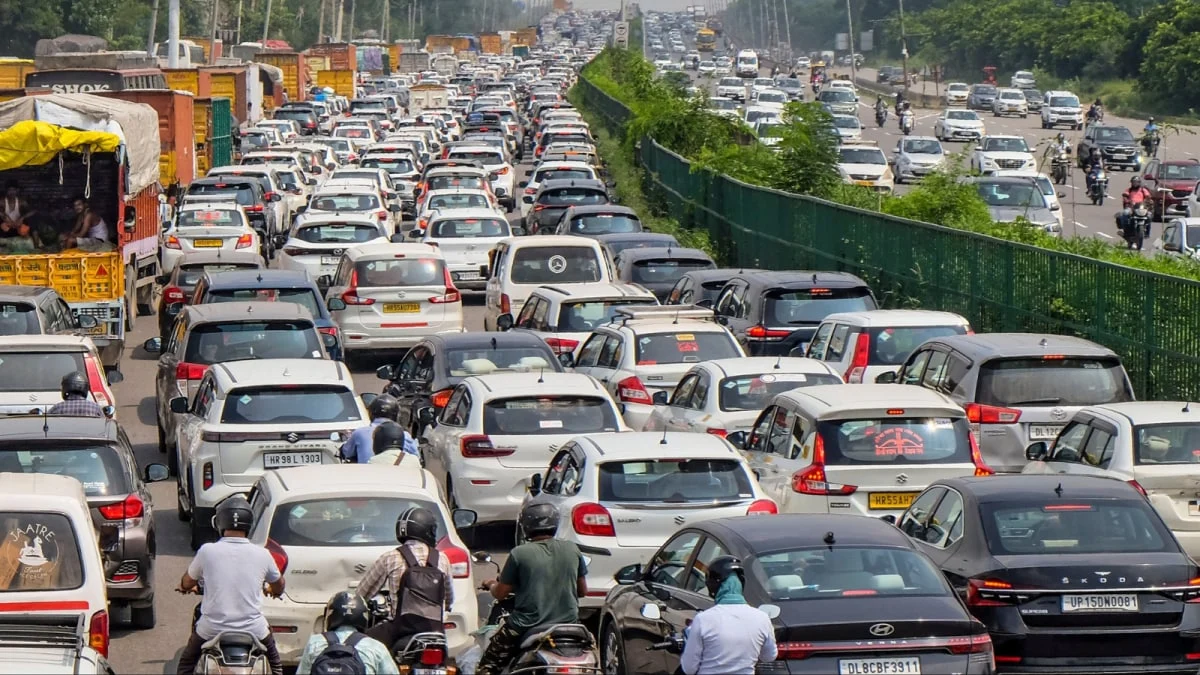
MUMBAI – In a decisive move to address the escalating crisis of vehicular congestion and ensure the unhindered movement of emergency services, the Mumbai Traffic Police (MTP) have announced the implementation of a rigorous odd-even parking scheme and localized parking prohibitions across three critical sectors of the metropolis. The new regulations, which target high-traffic corridors in Sakinaka, Worli, and the Bhandup-Mulund belt, represent a significant shift in the city’s approach to managing its overburdened infrastructure.
As Mumbai continues to grapple with a vehicle population that has surged past 4.5 million, the local authorities are increasingly turning to tactical urbanism and localized traffic management orders to prevent total gridlock. These latest measures, effective through August 2024, are designed to reclaim the "right of way" on narrow arterial roads that have long been stifled by haphazard roadside parking.
I. Main Facts: The Scope of the New Parking Mandates
The Mumbai Traffic Police department has issued a series of executive notifications under the powers vested in them to regulate public safety and order. The primary objective is to transform chaotic stretches of road into streamlined conduits for both private and public transport.
The Targeted Corridors
The intervention focuses on three distinct geographical and socio-economic hubs:
- Sakinaka (Technology Street): A vital industrial and commercial artery.
- Worli (GM Bhosle Road): A crucial link connecting major residential pockets with the city’s commercial nerve centers.
- Bhandup-Mulund (Jungle Mangal Road): An internal residential-commercial corridor that serves as a secondary bypass for the LBS Marg and Eastern Express Highway.
The Mechanism of Control
The authorities have deployed two primary tools:
- Odd-Even Parking: Under this system, parking is permitted on one side of the road on odd-numbered dates of the month and on the opposite side on even-numbered dates. This prevents the "choke effect" caused by vehicles parked on both sides simultaneously.
- Heavy Vehicle Bans: Recognizing that large trucks and tempos often act as permanent barricades on narrow streets, the MTP has prohibited the parking of all heavy vehicles in these zones for the duration of the trial.
- Total Prohibitions: On specific stretches where the road width is insufficient to accommodate even a single row of parked cars without causing a bottleneck, "No Parking" zones have been strictly enforced.
II. Chronology of Implementation
The rollout of these restrictions follows a data-driven assessment of traffic flow patterns and emergency response times conducted over the first quarter of 2024.
- May 7, 2024: The first phase of the crackdown commenced in Sakinaka and Worli. Notifications were posted, and traffic wardens were deployed to educate the public before the issuance of fines began.
- May 12, 2024: The second phase was initiated in the Bhandup-Mulund region. This date marked the official start of the odd-even regime on Jungle Mangal Road.
- May 12 – August 2024: This period serves as the "active monitoring phase." The police have indicated that these measures are currently temporary, with their expiry dates staggered between August 4 and August 11, depending on the specific location.
- Post-August 2024: Traffic authorities will conduct a post-implementation review. If the data shows a significant reduction in travel time and a decrease in accidents, these "temporary" measures are likely to be converted into permanent traffic laws.
III. Supporting Data: The Anatomy of a Bottleneck
To understand why these specific streets were chosen, one must look at the density of Mumbai’s road network. According to recent urban planning reports, Mumbai has approximately 2,000 kilometers of roads, but it also has one of the highest vehicle densities in the world, with over 2,300 vehicles per kilometer.
The Sakinaka Crisis
Technology Street in Sakinaka is a prime example of urban friction. Stretching from the Olympia Building to Gopal Chandrabhan Circle, this road is flanked by manufacturing units, corporate offices, and warehouses. Data suggests that during peak hours, the average speed on this stretch had dropped to less than 7 km/h. The primary culprit was identified as "double parking," where delivery vans would park alongside already-parked private cars, leaving only a single lane for moving traffic.
The Worli Connectivity Gap
GM Bhosle Road in Worli serves as a vital connector between PK Kurne Chowk and Acharya Atre Chowk (Worli Naka). As Worli has transformed into a high-rise luxury residential and commercial hub, the volume of cars has outpaced the available off-street parking. Traffic police observations noted that stationary vehicles were occupying nearly 40% of the main carriageway, leading to tailbacks that affected the flow on the nearby Annie Besant Road.
The Bhandup-Mulund Internal Pressure
Jungle Mangal Road, extending from Khot Gully to Shivaji Lake, represents the "internal" traffic struggle. Unlike the main highways, these roads are narrow. The Bhandup-Mulund belt has seen a massive increase in residential density. Without adequate parking facilities in older buildings, residents have defaulted to the streets. The MTP noted that on certain days, fire engines would find it impossible to navigate these turns, posing a catastrophic risk to public safety.
IV. Official Responses and Regulatory Intent
Senior officials from the Mumbai Traffic Police have been vocal about the necessity of these "drastic but essential" measures.
"Our priority is the ‘Golden Hour’ in emergency response," stated a senior traffic official during the briefing. "When an ambulance is stuck behind a line of parked cars on Technology Street, it isn’t just a traffic issue; it’s a life-and-death issue. We have received numerous complaints from the Fire Brigade and local hospitals regarding the inability to reach destinations in Sakinaka and Bhandup due to haphazardly parked vehicles."
The police have also clarified the legal standing of these orders. Under the Maharashtra Police Act and the Motor Vehicles Act, the Commissioner of Police has the authority to restrict vehicle movement and parking to prevent "danger, obstruction, or inconvenience to the public."
Official Directives Issued:
- Compliance: Residents and visitors are urged to check the date before parking. Failure to comply with the odd-even rule will result in immediate e-challans and potential towing.
- Alternative Parking: The MTP is working with the Brihanmumbai Municipal Corporation (BMC) to identify nearby Public Parking Lots (PPLs) where displaced vehicles can be accommodated, though they admit that the city’s parking capacity remains a challenge.
V. Implications: Impact on Commuters, Residents, and the City’s Future
The introduction of these rules carries far-reaching implications for various stakeholders in the Mumbai ecosystem.
1. Impact on the Business Community
In Sakinaka, the ban on heavy vehicle parking is a double-edged sword. While it clears the road for commuters, it creates a logistical hurdle for businesses that rely on loading and unloading goods. Local trade associations have expressed concerns that without dedicated loading bays, the cost of logistics might rise as vehicles are forced to park further away or operate only during late-night hours.
2. The Residential Dilemma
In the Bhandup-Mulund and Worli areas, the odd-even rule effectively halves the available street parking for residents. For those living in older "pagdi" system buildings or societies without internal parking, this creates a daily "musical chairs" scenario. There is an expected surge in demand for private parking rentals in the vicinity, which could drive up local real estate costs.
3. Emergency Services and Public Safety
The most positive implication is the anticipated improvement in emergency response. By clearing the "Jungle Mangal" and "Technology Street" bottlenecks, the MTP expects a 15-20% improvement in response times for fire and medical emergencies in these specific pockets. This move aligns Mumbai with international "Green Corridor" standards for essential services.
4. A Precedent for Future Urban Planning
This three-month trial is widely seen as a litmus test for the rest of the city. If successful, the MTP is expected to roll out similar odd-even and heavy vehicle restrictions in other congested neighborhoods like Andheri West, Dadar, and Borivali. It signals a move away from "expanding roads" (which is often impossible in land-starved Mumbai) toward "optimizing existing space."
5. Technological Integration
The enforcement of these rules will heavily rely on Mumbai’s vast CCTV network and the "MTP App." By automating the detection of parking violations, the police aim to reduce human error and corruption, ensuring that the rules are applied uniformly to all vehicle owners, regardless of their socio-economic status.
Conclusion
The new parking restrictions in Sakinaka, Worli, and the Bhandup-Mulund belt are more than just a local traffic update; they are a microcosm of the challenges facing rapidly urbanizing global cities. As Mumbai attempts to balance the needs of its motoring public with the fundamental requirement for safety and mobility, the success of these measures will depend on public cooperation and the consistent enforcement by the authorities.
For the residents of these areas, the next three months will be a period of adjustment. For the rest of Mumbai, it is a glimpse into the future of urban commuting—where the convenience of parking at one’s doorstep is increasingly being traded for the greater good of a city that needs to keep moving.
Summary Table of Restrictions (May – August 2024)
| Location | Affected Stretch | Rule Imposed | Duration |
|---|---|---|---|
| Sakinaka | Olympia Bldg to Gopal Chandrabhan Circle | Odd-Even Parking / Heavy Vehicle Ban | May 7 – Aug 6 |
| Worli | PK Kurne Chowk to Acharya Atre Chowk | Strict No-Parking Zones | May 7 – Aug 4 |
| Bhandup-Mulund | Khot Gully to Shivaji Lake | Odd-Even Parking / Heavy Vehicle Ban | May 12 – Aug 11 |
Commuters are advised to stay updated via the Mumbai Traffic Police’s official social media handles and the MTP app for real-time changes to these regulations.
