

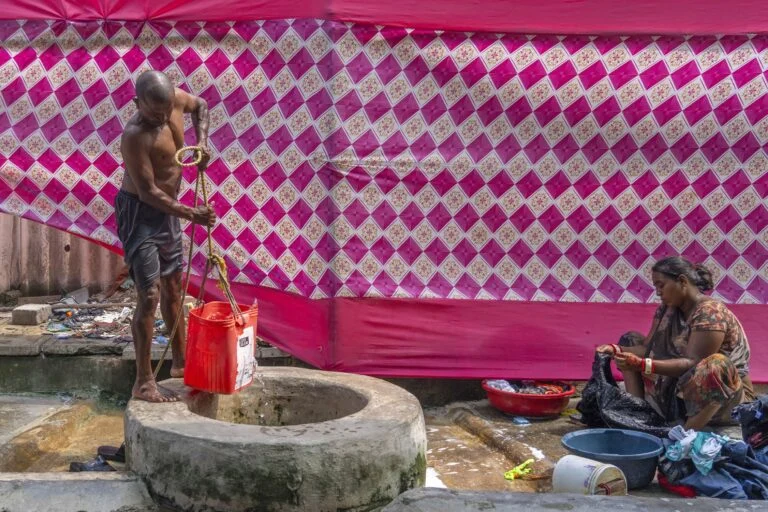
MUMBAI — As the mercury climbs and the arrival of the monsoon remains a distant hope, Mumbai is grappling with a dual crisis: a shrinking surface water supply and a chaotic, largely unregulated groundwater economy that the city has come to rely upon for its very survival.
Since May 15, the Brihanmumbai Municipal Corporation (BMC) has enforced a 10% water cut across the metropolitan area. This move comes as water levels in the seven critical lakes that serve the city—Tulsi, Vihar, Modak Sagar, Tansa, Upper Vaitarna, Middle Vaitarna, and Bhatsa—have plummeted to alarming lows. While seasonal water cuts are a recurring feature of Mumbai’s summers, the 2026 season has exposed a deeper, more systemic fragility in how the "Maximum City" manages its most precious resource.
The Chronology of a Crisis: From Supply Cuts to Tanker Strikes
The current crisis escalated rapidly in early June. While citizens were already adjusting to reduced municipal supply, the secondary pillar of Mumbai’s water infrastructure—the private tanker industry—abruptly gave way.
On June 7, the Mumbai Water Tanker Association (MWTA) launched a flash strike, effectively halting the delivery of over 500 million liters of water daily. The strike was a response to a series of stringent notices issued by the state government. These orders mandated that all ring-well and borewell operators immediately cease operations until they obtained fresh licenses from the Central Ground Water Authority (CGWA).
For two days, construction sites stalled, high-rise housing societies faced dry taps, and the hospitality sector scrambled for alternatives. The deadlock was only broken on June 9, following a high-level intervention by Maharashtra’s leadership. However, the resolution remains a temporary truce rather than a permanent fix.

Following the strike’s conclusion, political battle lines were drawn. Shiv Sena (UBT) leader Aaditya Thackeray addressed a formal letter to Union Jal Shakti Minister C.R. Patil, characterizing the CGWA’s regulations as "impractical and highly restrictive" for a city as densely populated as Mumbai. Thackeray’s intervention highlighted the tension between federal environmental oversight and the ground-level reality of urban water scarcity.
Supporting Data: The 565 MLD Shortfall
To understand why a tanker strike can paralyze Mumbai, one must look at the stark gap between demand and official supply.
Mumbai currently receives approximately 4,100 million liters per day (MLD) from the BMC’s reservoir system. However, the estimated daily demand for the city stands at 4,665 MLD. This leaves a persistent shortfall of 565 MLD—a deficit nearly equal to the total water consumption of a mid-sized Indian city.
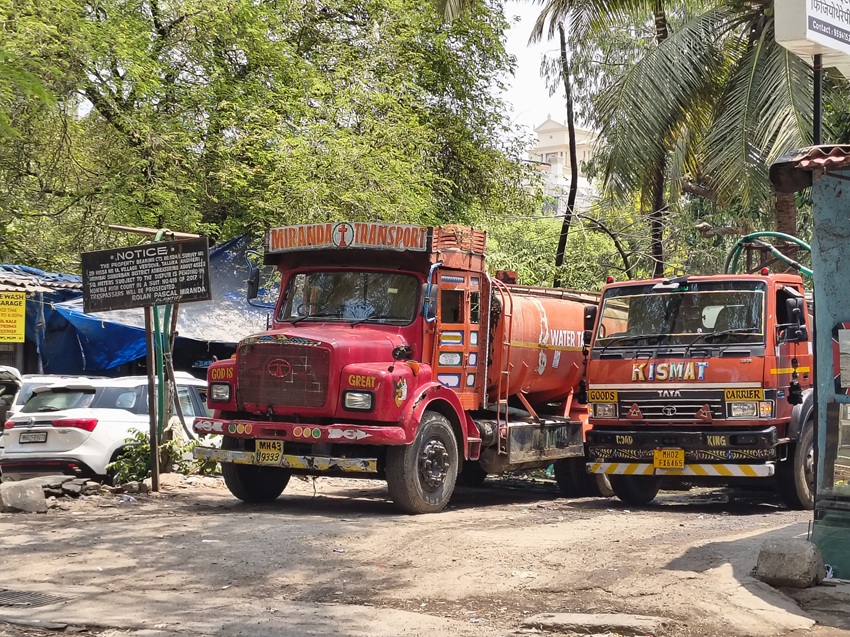
This gap is filled almost entirely by a fleet of 2,100 private water tankers owned by 500 different operators. According to Ankur Sharma, spokesperson for the MWTA, these tankers provide the lifeblood for non-potable needs in malls, hotels, and the city’s ubiquitous construction projects.
"We supply around 550 MLD to Mumbai every day," Sharma noted. While some of this water is purchased legally from BMC hydrants, the vast majority is extracted from the city’s underground aquifers via thousands of private wells.
The Regulatory Void: A "Planned Data Gap"
The most startling aspect of Mumbai’s groundwater reliance is the lack of official oversight. Data obtained through Right to Information (RTI) applications by groundwater activist Suresh Kumar Dhoka reveals that Mumbai has more than 17,364 wells used for the commercial sale of water.

Despite a 2015 mandate by the National Green Tribunal (NGT) requiring all commercial groundwater users to obtain No Objection Certificates (NOCs) from the CGWA, compliance is nearly non-existent. As of May 2025, only 619 wells—mostly borewells—had received the necessary NOCs.
This means that over 96% of the commercial water extraction in Mumbai is operating in a legal gray zone. Earlier this year, an investigation triggered by Dhoka’s complaints found that in the R/C Central division alone, 27 wells were extracting water without any legal standing. Under the Environment Protection Act of 1986, such extraction is a punishable offense involving fines or imprisonment, yet enforcement remains sporadic.
Sitaram Shelar, convener of the Pani Haq Samiti, describes this lack of monitoring as a "planned data gap." He alleges that a complex nexus exists between borewell contractors, housing society committees, and municipal officials.
"The Pest Control Officers (PCO) from the BMC permit the digging of a borewell to prevent mosquito breeding, but they claim they aren’t authorized to monitor how much water is being pulled out," Shelar explained. "Meanwhile, the engineers who are supposed to inspect the sites often overlook the hundreds of boreholes rigged without permissions."
Environmental Implications: Deep Basements and Saline Intrusion
The crisis is not merely administrative; it is ecological. Environmentalists point to the changing architectural landscape of Mumbai as a primary driver of groundwater depletion.
"Unlike earlier times, modern basements are now at least four floors deep," says activist Zoru Bhathena. "Constructing these requires ‘dewatering’—pumping out the groundwater from the construction site and the surrounding area. When you have hundreds of such sites active at once, you are essentially draining the city’s sponge."
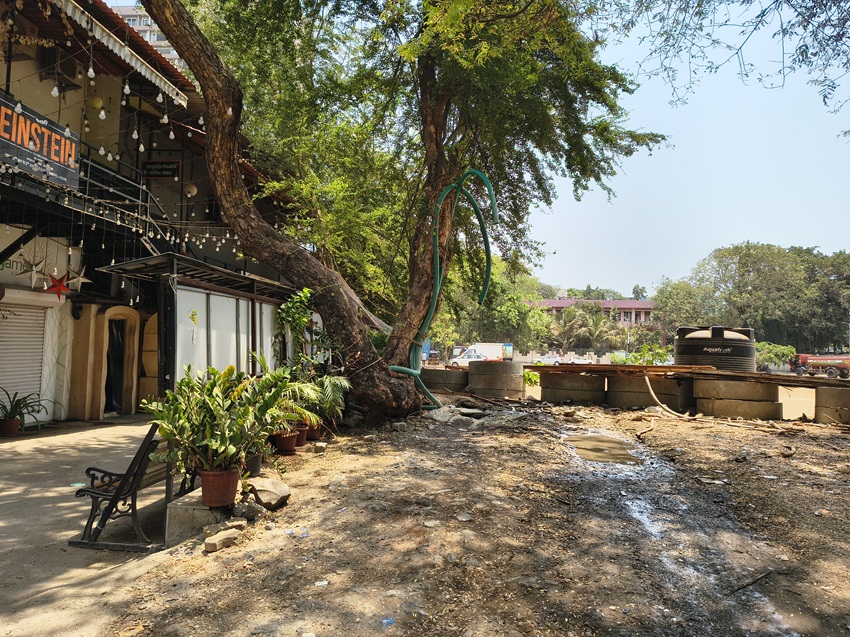
This massive extraction is coupled with "relentless concretization." As Mumbai’s surface is paved over, the natural ability of the ground to recharge through rainwater is lost. For a coastal city, this depletion carries a secondary risk: saline-water intrusion. As the freshwater table drops, seawater from the Arabian Sea begins to seep into the aquifers, potentially ruining the city’s backup water supply for generations.
Official Responses and the Hydrogeological Challenge
Experts argue that the BMC, while efficient at managing dams and pipelines, lacks the specialized knowledge to manage what lies beneath the surface.
"The water supply department is predominantly shaped by civil engineers who focus on surface water—dams and pipes," says Sachin Tiwale, a fellow at the Ashoka Trust for Research in Ecology and the Environment (ATREE). "We need hydrogeologists who can map aquifers. You cannot manage what you do not understand."
This sentiment echoes the 1994 recommendations of the Madhav Chitale committee, which urged the establishment of a dedicated geo-hydrological unit within the municipal administration. Thirty-two years later, that unit has yet to be fully realized.
However, there are signs of a shift in strategy. In May 2025, the BMC launched its first-ever aquifer mapping pilot project in the upper catchment of the Mithi River. This project, a collaboration between WRI India, ACWADAM, and Pani Haq Samiti, aims to move beyond "source-based" management to "system-based" management.
The Mithi River Pilot: Mapping the Future
The pilot project is a year-long exercise intended to integrate groundwater management into Mumbai’s broader climate adaptation planning. By identifying springs and discharge zones in the Mithi River’s upper catchment, researchers hope to establish the first accurate flow patterns of Mumbai’s underground water.
"Groundwater is invisible and therefore easily ignored," says Himanshu Kulkarni, a leading hydrogeologist and co-founder of ACWADAM. "Your entire perspective changes when you study the aquifers. It connects the groundwater to surface water bodies, showing they are part of the same system."
While the pilot is a scientific milestone, its success will depend on how the data is used. Deepti Talpade of WRI India notes that while macro-level surveys exist for rural regions around Mumbai, detailed city-scale data is virtually non-existent. The challenge will be translating this scientific mapping into enforceable policy.
Conclusion: A City at a Crossroads
As Mumbai waits for the clouds to break, the message from activists and experts is clear: the era of treating groundwater as an infinite, free resource must end.
The 10% water cuts and the tanker strikes of 2026 are symptoms of a city outgrowing its traditional infrastructure. Without strict regulation, the commercial exploitation of wells will continue to deplete the very aquifers that Mumbai needs as a buffer against climate change and erratic monsoons.
"Mapping is only the beginning," warns Suresh Kumar Dhoka. "Without accountability and the political will to shut down illegal operations, even the best maps will only show us how quickly we are running dry."
For the millions of Mumbaikars who rely on the hum of a pump or the arrival of a yellow tanker, the hope is that the city’s "invisible" resource finally receives the visibility—and the protection—it deserves.
