

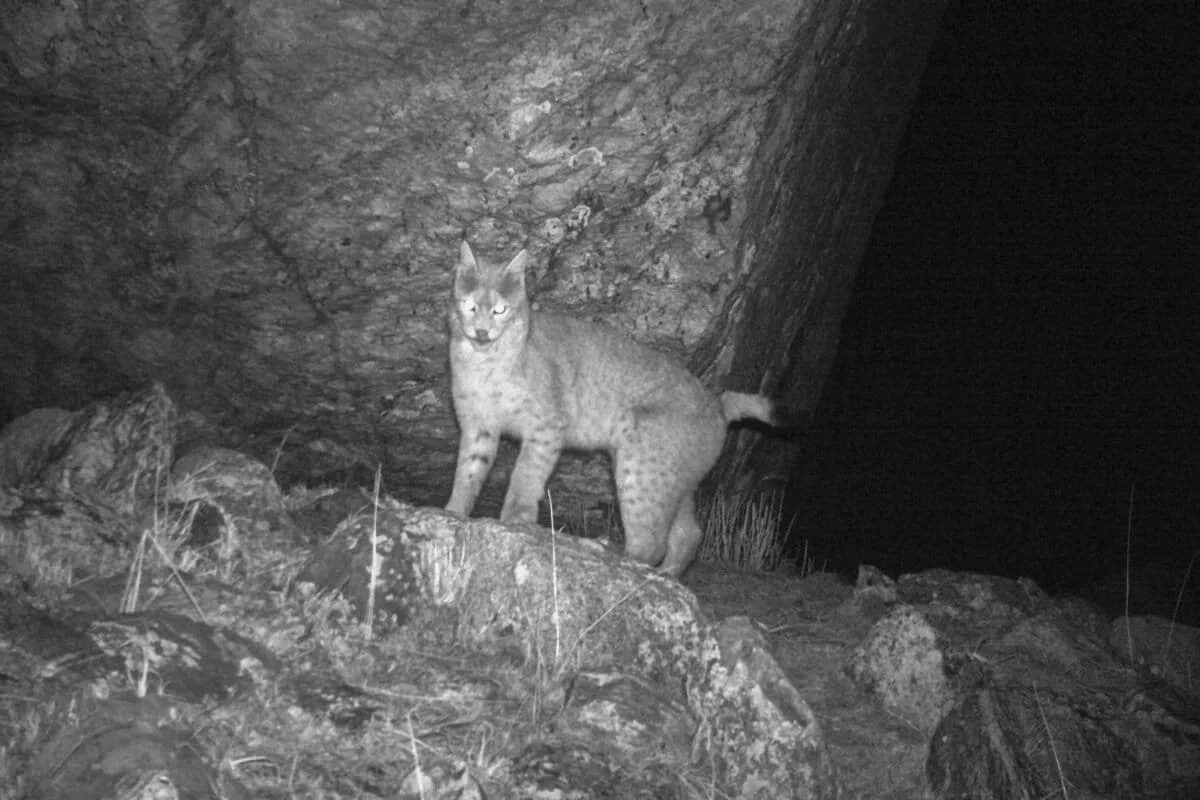
MANGAN, SIKKIM – In a landmark discovery for Himalayan biodiversity, researchers have confirmed the first-ever photographic evidence of the Eurasian lynx (Lynx lynx) in the state of Sikkim. Captured at a staggering altitude of 5,250 metres on the Tso Lhamo plateau, the image represents a significant breakthrough in our understanding of the distribution of this elusive felid in the Eastern Himalayas.
The sighting, which occurred in January 2026, was recorded via a remote camera trap as part of a joint monitoring initiative by the Sikkim Forest and Environment Department and WWF-India. The discovery not only adds a new species to the state’s documented fauna but also challenges long-standing perceptions of high-altitude rangelands as "ecological wastelands."
Main Facts: A Rare Encounter at the Roof of the World
The Eurasian lynx is a medium-sized wild cat characterized by its iconic tufted ears, powerful build, and a short "bobbed" tail with a black tip. While the species has a vast global range spanning from Western Europe through the Russian Taiga to Central Asia, its presence in the Indian subcontinent has historically been documented primarily in the western trans-Himalayan regions of Ladakh and parts of Himachal Pradesh.

The new evidence from the Tso Lhamo plateau in Mangan district marks only the second time the species has been photographically recorded in the entire Eastern Himalayan region. The image shows a solitary lynx traversing a rocky, sparsely vegetated slope—a habitat typical of the harsh, high-altitude environment it inhabits.
Key Details of the Sighting:
- Location: Tso Lhamo Plateau, Mangan District, Sikkim.
- Altitude: Approximately 5,250 metres (17,224 feet) above sea level.
- Date of Capture: January 2026.
- Methodology: Passive infrared camera trapping.
- Project: Long-term snow leopard and trans-Himalayan rangeland monitoring programme.
The Tso Lhamo region, often referred to as the "Cold Desert" of Sikkim, is a high-altitude plateau that borders the Tibetan Autonomous Region of China. The confirmation of the lynx here suggests that the region serves as a vital, though poorly understood, corridor for transboundary wildlife movement.
Chronology: Mapping the Lynx in the Eastern Himalayas
For decades, the presence of the Eurasian lynx in the Eastern Himalayas was based largely on anecdotal reports or historical sightings that lacked definitive visual proof. The timeline of its recent "re-discovery" in this part of the world highlights the increasing efficacy of modern conservation technology.

- Pre-2020s: Scientific literature regarding the lynx in India focused almost exclusively on the Ladakh region. The Eastern Himalayas were largely considered outside the species’ primary range in India, despite its known presence across the border on the Tibetan Plateau.
- 2025 – The Arunachal Breakthrough: A joint survey conducted by the Arunachal Pradesh Forest Department and WWF-India achieved the first-ever photographic record of the Eurasian lynx in the Eastern Himalayas. This discovery shifted the scientific focus toward the possibility of a wider distribution across the high-altitude border states.
- January 2026 – The Sikkim Record: During a routine check of camera traps placed for snow leopard monitoring, researchers retrieved the image from the Tso Lhamo plateau.
- August 2026 – Official Confirmation: Following rigorous verification and analysis of the habitat data, the Sikkim Forest Department and WWF-India formally announced the record, cementing Sikkim’s place on the map for this rare carnivore.
Supporting Data: The "Ecotone" and Predator-Prey Dynamics
The discovery of the lynx is not an isolated event but rather a symptom of a healthy, functioning ecosystem. Researchers emphasize that Tso Lhamo is a unique "ecotone"—a transition zone where two distinct biological worlds meet.
The Junction of Two Worlds
According to Rohan Pradeep Pandit, Associate Coordinator at WWF-India, the plateau sits at the geographic juncture where the vertical, rugged Trans-Himalaya meets the rolling, flat expanse of the Tibetan Plateau. This allows for a unique overlap of species:
- Steppe Species: Those evolved for open, flat terrain (like the Tibetan gazelle).
- Cliff Species: Those adapted to sheer rocky faces (like the blue sheep).
A Robust Food Web
The presence of the lynx brings the count of wild felids in the Tso Lhamo landscape to three. The area is now confirmed to support:

- The Snow Leopard (Panthera uncia): The apex predator of the high cliffs.
- The Pallas’s Cat (Otocolobus manul): A small, fluffy felid adapted to rocky outcrops.
- The Eurasian Lynx (Lynx lynx): A medium-sized predator capable of covering vast distances.
In addition to these cats, camera traps have recorded a diverse array of wildlife, including the Tibetan wolf, Tibetan sand fox, Tibetan argali (the world’s largest wild sheep), and the Southern kiang (Tibetan wild ass). The existence of three distinct predators in the same landscape indicates a "high-quality and largely intact" predator-prey system, capable of supporting multiple species at different levels of the food chain.
Official Responses: Conservation and Community
The discovery has been met with enthusiasm from both government officials and conservationists, who view it as a validation of long-term monitoring efforts.
Udai Gurung, Sikkim’s Chief Conservator of Forests (Wildlife), highlighted the strategic importance of the find. "This record reinforces our commitment to protecting these fragile ecosystems," Gurung stated. He also pointed out the critical role of local governance: "The cooperation of the Lachen Dzumsa—the traditional local self-governance body—in facilitating access to these remote areas has been instrumental. Conservation in these landscapes is impossible without the support of the people who live there."

Rishi Kumar Sharma, Head of the Himalayas Program at WWF-India, noted that while the photo is a triumph, it raises more questions than it answers. "What we have is a single photographic record after years of trapping. We cannot yet say if this is a resident, breeding animal or a disperser from Tibet. The next step is to establish the species’ status—how many are there, and how do they move across these valleys?"
Neeraj Mahar, a wildlife researcher specialized in high-altitude carnivores, suggested that the next phase of research must go beyond photography. "We need to combine camera trapping with non-invasive genetic identification—studying scat and DNA—to understand the lineage of these animals and how they are surviving alongside human infrastructure and pastoralist communities."
Implications: Challenges in a Border Landscape
While the discovery is a cause for celebration, it also brings to light the significant conservation pressures facing the Tso Lhamo plateau. Because it is a border region, the landscape is subject to unique stresses that differ from interior protected areas.

1. The Threat of Free-Ranging Dogs
One of the most immediate concerns cited by WWF-India is the presence of feral and free-ranging dog packs. These dogs, often associated with human settlements or military outposts, pose a triple threat:
- Direct Predation: They hunt wild herbivores like the Tibetan gazelle.
- Competition: They compete with the lynx and snow leopard for food.
- Disease: They act as vectors for lethal viruses like Canine Distemper, which can devastate wild cat populations.
2. Infrastructure and Tourism
As Sikkim promotes high-altitude tourism, the Tso Lhamo plateau has seen an increase in road traffic. This raises the risk of wildlife-vehicle collisions. Furthermore, the presence of border logistics and infrastructure can fragment habitats. Researchers are calling for "wildlife-friendly" traffic management and better waste disposal systems to ensure that predators like the lynx are not attracted to human refuse, which leads to habituation and potential conflict.
3. The Need for Transboundary Collaboration
The Eurasian lynx is a wide-ranging species that does not recognize international borders. Since Sikkim shares an open boundary with Tibet, conservationists argue that a "landscape-level" approach is necessary. Transboundary collaboration with Chinese researchers could reveal whether the Tso Lhamo lynx is part of a larger, interconnected population that moves between the two countries.

Conclusion: Beyond the "Barren" Myth
For decades, high-altitude rangelands like Tso Lhamo were dismissed by policymakers and some sections of the public as "barren deserts" of little ecological value. The photographic confirmation of the Eurasian lynx—alongside the snow leopard and Pallas’s cat—shatters this myth.
The discovery serves as a reminder that these remote, oxygen-thin landscapes are vibrant, productive ecosystems that host some of the planet’s rarest biodiversity. As the Sikkim Forest Department and WWF-India continue their monitoring, the focus now shifts from "discovery" to "documentation and protection." In the words of Rohan Pandit, the lynx is "one more line of evidence that the plateau is not an isolated pocket, but a corridor where the biodiversity of the Central Asian steppe meets that of the Eastern Himalaya."
The ghost of the trans-Himalaya has finally been caught on film, but the work to ensure its survival in the shadows of the world’s highest peaks has only just begun.
