

Ahmedabad, Gujarat – As India’s urban landscape undergoes a seismic shift toward decentralized growth, Ahmedabad has emerged as a primary beneficiary of infrastructure-led demand. From the high-octane commercial corridors of the SG Highway and the residential expansion in Bopal to the strategic industrial belt of Chandkheda and the globally-aligned GIFT City, the city’s real estate market remains a magnet for investors and end-users alike.
Central to this enduring appeal is Gujarat’s relatively affordable property tax regime. However, for any prospective homeowner, the price negotiated with the developer or seller is only part of the equation. To achieve legal title, buyers must navigate the twin pillars of state revenue: Stamp Duty and Registration Fees.
In 2026, Ahmedabad continues to offer one of the most competitive fiscal structures in the country, characterized by a flat stamp duty rate and a significant gender-based incentive that promotes female homeownership.
1. The Core Mandate: Understanding Stamp Duty and Registration
To understand the financial implications of buying property in Ahmedabad, one must first distinguish between the two primary government levies.
What is Stamp Duty?
Stamp duty is essentially a transactional tax levied by the Gujarat state government under the Gujarat Stamp Act, 1958. It is charged on the legal instrument—usually the Sale Deed—that transfers property rights from one party to another. Paying this duty is not merely a fiscal obligation; it is a legal necessity. A document that has not been properly "stamped" is generally not admissible as evidence in a court of law, meaning your claim to the property remains legally vulnerable.
What is the Registration Fee?
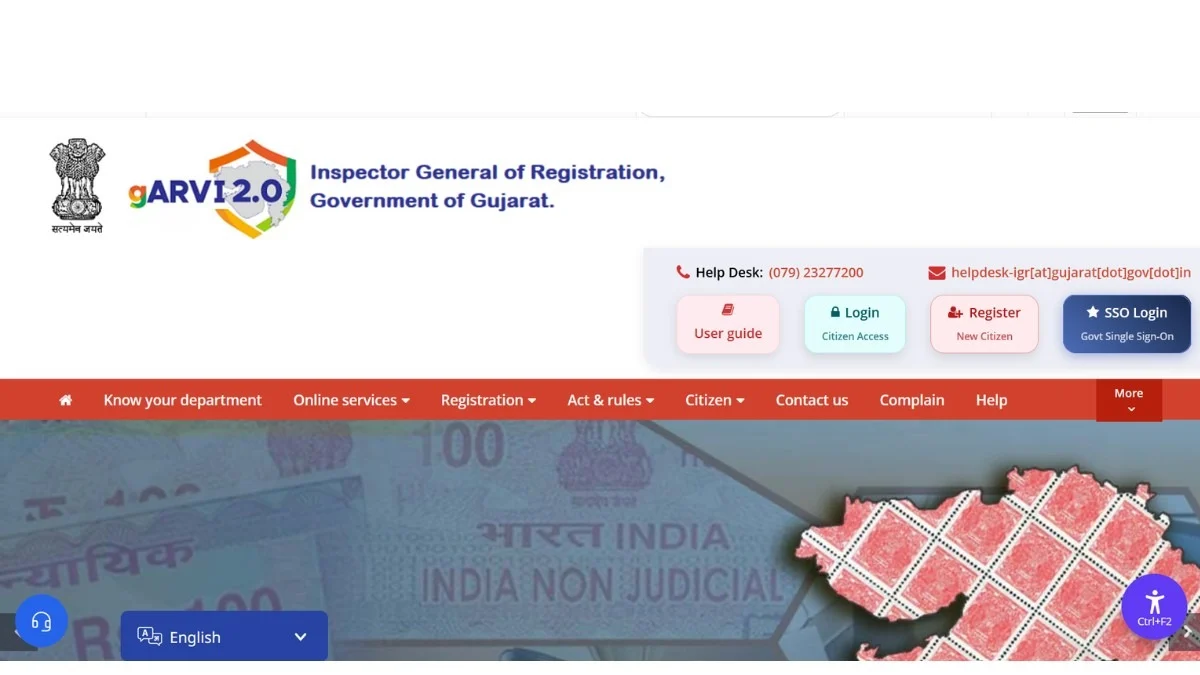
While stamp duty validates the document, the registration fee is the charge for the administrative act of recording that document in the state’s permanent land records. Governed by the Registration Act, 1908, this process is managed via the GARVI (Gujarat Administration of Registration, Viewing, and Information) system. Registration provides public notice of ownership, which is a prerequisite for securing home loans, utility connections, and future resales.
2. Chronology and Context: The Evolution of Rates in Ahmedabad
Historically, Gujarat has maintained a stable tax environment to encourage industrial and residential investment. The current 2026 rates are rooted in a major recalibration that occurred in 2023, when the state government revised the Jantri rates (the government’s base valuation of land) for the first time in over a decade.
The 2023 revision doubled the Jantri rates in many sectors to align them more closely with market realities. While this increased the effective outgo for buyers, the state maintained the percentage-based rates for stamp duty at 4.9%, ensuring that Ahmedabad remained significantly more affordable than Mumbai (where rates can hit 6-7%) or Bengaluru (approximately 7.5%).
3. Supporting Data: The 2026 Rate Structure
In 2026, the cost of registering a standard residential sale deed in Ahmedabad depends primarily on the gender of the sole owner.

Current Rate Breakdown
| Buyer Category | Stamp Duty | Registration Fee | Total Statutory Cost |
|---|---|---|---|
| Male Buyer | 4.9% | 1% | 5.9% |
| Female Buyer (Sole) | 4.9% | Waived (0%) | 4.9% |
| Joint (Male + Female) | 4.9% | 1% | 5.9% |
The "4.9 Percent" Math
The headline stamp duty of 4.9% is not a single figure but a composite of two parts:
- Basic Stamp Duty: 3.5%
- Surcharge: 1.4% (Calculated as 40% of the basic duty)
Note on Gender Incentives: Gujarat’s primary incentive for women is the total waiver of the 1% registration fee. It is a common misconception that women pay a lower stamp duty (some sources erroneously cite 3.9%). In practice, the stamp duty remains 4.9% for all, but the 1% registration saving for sole female owners provides a substantial financial cushion, especially in high-ticket transactions.
4. The Jantri Rate: The Floor of Property Valuation
No calculation of stamp duty in Ahmedabad is complete without referencing the Jantri Rate. This is the government-notified minimum value for a property in a specific area.
The "Higher of Two" Rule
The government calculates stamp duty and registration fees on the higher of:
- The actual transaction value (the price you paid).
- The Jantri rate for that specific locality.
For example, if you purchase a flat on SG Highway for ₹80 Lakh, but the Jantri valuation for that area totals ₹85 Lakh, you must pay taxes on the ₹85 Lakh figure. Conversely, if you buy a luxury unit for ₹2 Crore where the Jantri is only ₹1.2 Crore, you pay on the ₹2 Crore transaction value.
Factors Influencing Jantri:
- Location: Proximity to major roads (like the 132ft Ring Road) increases the rate.
- Property Type: Residential, commercial, and industrial plots have different base rates.
- Structure: Rates differ for high-rise apartments versus independent bungalows.
5. Financial Implications: Worked Examples for 2026
To visualize the impact of these rates, consider the following scenarios for property purchases in the current market.
Scenario A: A Mid-Segment Flat (₹60 Lakh)
- Male Buyer:
- Stamp Duty (4.9%): ₹2,94,000
- Registration (1%): ₹60,000
- Total: ₹3,54,000
- Female Buyer (Sole):
- Stamp Duty (4.9%): ₹2,94,000
- Registration: ₹0
- Total: ₹2,94,000 (Saving: ₹60,000)
Scenario B: A Premium Property in GIFT City Belt (₹1.5 Crore)
- Male Buyer:
- Stamp Duty (4.9%): ₹7,35,000
- Registration (1%): ₹1,50,000
- Total: ₹8,85,000
- Female Buyer (Sole):
- Stamp Duty (4.9%): ₹7,35,000
- Registration: ₹0
- Total: ₹7,35,000 (Saving: ₹1,50,000)
6. Beyond Residential: Gift Deeds and Other Instruments
The Gujarat Stamp Act also defines how other types of property transfers are taxed.
Gift Deeds
A Gift Deed is a popular way to transfer property within families.
- Blood Relatives: Transfers to parents, spouses, children, or siblings often attract a concessional rate. However, these concessions are subject to specific government notifications and may vary.
- Non-Relatives: If you gift a property to someone outside the immediate bloodline, the standard 4.9% stamp duty applies, as it is treated similarly to a sale.
Commercial and Agricultural Land
- Commercial Properties: These generally follow the 4.9% stamp duty plus 1% registration rule, though local municipal surcharges may vary.
- Agricultural Land: Often carries a lower stamp duty rate (approximately 3%), reflecting the state’s policy to protect agrarian interests, though converting such land to Non-Agricultural (NA) status for development triggers additional premium payments.
7. Official Process: The GARVI Portal and Registration Steps
The Inspector General of Registration (IGR) Gujarat has modernized the process through the GARVI portal. The days of manual queues and paper-heavy workflows have been replaced by a streamlined digital interface.

Step-by-Step Registration Guide:
- Valuation: Log onto the GARVI portal to calculate the Jantri value of your property.
- Data Entry: Input details of the buyer, seller, and the property description.
- Payment: Pay the Stamp Duty and Registration fees online via the integrated payment gateway (e-Stamping).
- Slot Booking: Schedule an appointment at the jurisdictional Sub-Registrar Office (SRO).
- Execution: On the appointed day, the buyer, seller, and two witnesses must visit the SRO for biometric verification (fingerprints and photos).
- Document Collection: Once verified, the registered deed is usually made available for download or collection within a few days.
Timeline Caution: A Sale Deed must be registered within four months of its execution. Failure to do so can result in heavy penalties, sometimes ranging up to ten times the original registration fee.
8. Documentation Checklist
To ensure a "straightforward" registration day, the following documents are mandatory:
Personal Identification:
- Aadhaar Cards: Of all parties (Buyer, Seller, Witnesses).
- PAN Cards: Mandatory for any property transaction exceeding ₹5 Lakh.
- Passport Photos: Recent color photographs.
Property Documents:
- The Original Sale Deed: Drafted and printed on e-stamp paper.
- 7/12 and 8-A Extracts: For verifying the historical ownership of the land.
- NA Order: For residential/commercial properties, proving the land is non-agricultural.
- Building Use (BU) Permission: Crucial for new constructions to prove the structure is legal for occupancy.
- No-Objection Certificate (NOC): Often required from the housing society.
9. Implications for Homebuyers: Tax Benefits and Planning
The upfront cost of stamp duty can be daunting, but the Indian tax code offers some relief. Under Section 80C of the Income Tax Act, a homebuyer can claim a deduction of up to ₹1.5 Lakh for expenses incurred toward stamp duty and registration.
Critical Caveats:
- This benefit is only available for residential properties.
- It must be claimed in the same financial year the payment was made.
- It is only applicable under the Old Tax Regime. Those opting for the New Tax Regime cannot claim this deduction.
- The property must not be sold within five years, or the tax benefit will be reversed.
10. Official Responses and Market Outlook
While government officials emphasize that these taxes are vital for funding Ahmedabad’s aggressive infrastructure projects—including the Metro Rail expansion and the Sabarmati Riverfront Phase II—real estate bodies like CREDAI often advocate for a temporary reduction in surcharges to further boost the "Affordable Housing" segment.
However, the state’s stance in 2026 remains firm: by keeping the base stamp duty at 4.9% and waiving registration for women, they have balanced revenue generation with social incentives.
Final Takeaway for 2026
Ahmedabad’s property market is no longer just a local play; it is a national investment destination. For a male buyer, budgeting approximately 6% over the purchase price for statutory costs is a safe bet. For a woman buying in her sole name, that figure drops to just under 5%.
As the city expands toward the GIFT City corridor, staying updated on the GARVI portal’s Jantri revisions is the single most important step a buyer can take. By understanding the math of the 4.9% duty and the 1% registration fee, and by leveraging the digital efficiency of the Gujarat government’s systems, homebuyers can ensure that their transition into the Ahmedabad property market is both legally secure and financially optimized.
