

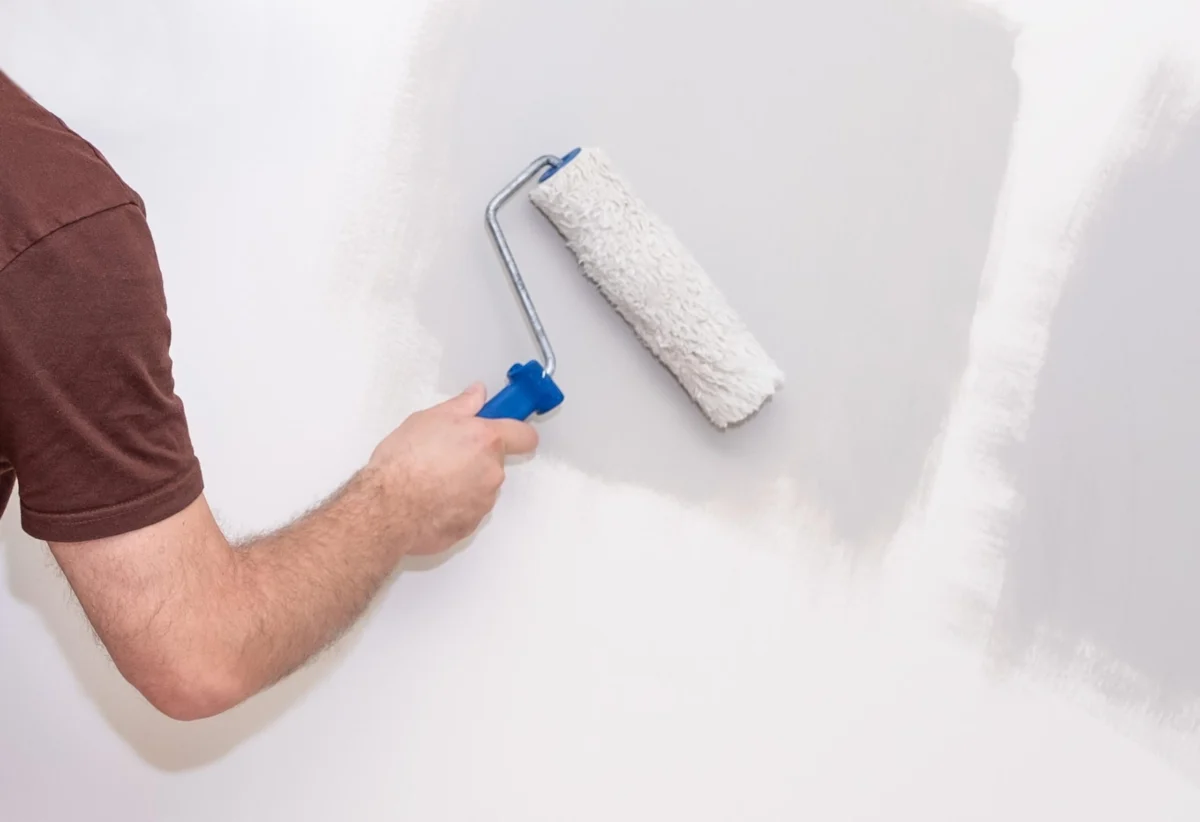
In the high-stakes world of home renovation and interior design, the average homeowner spends weeks agonizing over the perfect shade of "eggshell white" or "terracotta sunset." Yet, according to industry experts, the most critical decision in any painting project isn’t the color of the topcoat, but the quality of the invisible layer beneath it. Wall primer—often dismissed as an optional expense—is the primary determinant of a paint job’s longevity, aesthetic depth, and structural integrity.
As we move into 2026, the Indian paint industry has undergone a technological revolution, with advanced priming solutions becoming the standard for both new constructions and refurbishments. This guide explores the essential role of wall primers, the evolving market prices, and the technical expertise required to ensure a flawless finish.
Main Facts: Why Priming is Non-Negotiable
The fundamental purpose of a wall primer is to act as a preparatory coating that ensures better adhesion of paint to the surface, increases paint durability, and provides additional protection for the material being painted. To understand why it is essential, one must look at the microscopic reality of building materials.
The Problem of Porosity
Fresh plaster, bare concrete, and even old masonry are inherently porous. If a homeowner applies premium emulsion directly onto these surfaces, the wall acts like a sponge. It absorbs the liquid binders in the paint unevenly, leading to a "patchy" finish where some areas look glossy and others appear dull. Furthermore, this absorption weakens the paint film, making it prone to peeling and flaking within just 12 to 24 months.
The Adhesion Bridge
Primer serves as a chemical and mechanical bridge. It seals the pores of the substrate, creating a uniform, slightly "tacky" surface. This allows the topcoat to bond effectively rather than simply sitting on top of the dust and debris of the plaster.
Cost-Efficiency Through Coverage
While adding a layer of primer seems like an added cost, it is actually a cost-saving measure. By sealing the surface, the primer prevents the wall from "drinking" the expensive topcoat paint. In most scenarios, a well-primed wall requires only two coats of paint to achieve full opacity, whereas an unprimed wall might require four or five, significantly inflating the project’s total budget.
Chronology: The Evolution of Surface Preparation
The process of preparing a wall has evolved from the rudimentary "chuna" (lime wash) applications of previous decades to the multi-stage scientific systems used in 2026.
- The Pre-1990s Era: Painting was largely seen as a decorative luxury. Priming was often skipped in favor of multiple layers of cheap distemper.
- The Rise of Acrylics (2000s-2015): As the Indian middle class grew, so did the demand for plastic emulsions. This ushered in the era of water-based acrylic primers, which offered faster drying times and lower odors.
- The Integrated System Approach (2016-2024): Major players like Asian Paints and Berger began promoting "systems"—a specific sequence of putty and primer designed to work in tandem.
- The Modern Standard (2025-2026): We are now in an era of specialty primers. Priming is no longer a "one size fits all" step. Homeowners now choose primers based on regional humidity, specific substrate issues (like dampness), and environmental impact (VOC levels).
The Standard Application Sequence
To achieve a professional-grade finish in 2026, the following chronology is recommended by the Indian Paint Association:
- Surface Cleaning: Removal of dust, grease, and loose particles.
- Sanding: Using emery paper to level the surface.
- First Coat of Primer: To seal the base.
- Wall Putty (2 Coats): To fill hairline cracks and imperfections.
- Second Coat of Primer: To seal the putty and provide the final bonding surface for the paint.
Supporting Data: Categorization and Technical Specifications
Choosing the right primer requires an understanding of the different chemical bases available in the Indian market.
1. Water-Based (Acrylic) Primer
The "workhorse" of the Indian interior market. It is ideal for most residential projects involving plaster and brickwork.
- Pros: Dries in 2–4 hours, eco-friendly, low odor.
- Best For: Living rooms, bedrooms, and general interior masonry.
2. Oil-Based Primer
Known for its exceptional "tooth" (the ability of paint to grip the surface) and stain-blocking capabilities.
- Pros: Prevents tannins, smoke stains, and water marks from bleeding through.
- Best For: Wood, metal, and walls previously damaged by seepage or kitchen grease.
- Note: Requires 24 hours to dry and uses mineral spirits for cleanup.
3. Cement Primer
Specifically formulated for the harsh Indian climate, cement primers are designed to resist the alkalinity of fresh cement.
- Pros: Weather-resistant, prevents "efflorescence" (white salty deposits on walls).
- Best For: Exterior walls and new constructions.
4. Shellac-Based Primer
The "heavy-duty" solution for extreme cases.
- Pros: Blocks the most stubborn odors (smoke) and stains (rust/ink). Dries in under 45 minutes.
- Cons: High VOC levels and very strong odor.
5. Wall Putty
While often categorized separately, putty acts as a structural primer. In 2026, many contractors use "Primer-plus-Putty" combinations to save time, though the traditional two-step process remains the gold standard for luxury finishes.
Summary of Primer Characteristics (2026 Data)
| Primer Type | Best Application | Drying Time | VOC Level | Durability |
|---|---|---|---|---|
| Acrylic | Interior Plaster | 2–4 Hours | Low | High |
| Oil-based | Wood/Metal/Stains | 24 Hours | Med-High | Very High |
| Cement | Exterior Masonry | 4–6 Hours | Medium | Extreme |
| Shellac | Severe Damage | 45 Mins | High | High |
| Wall Putty | Surface Leveling | 6–12 Hours | Very Low | Moderate |
Market Dynamics: Wall Primer Price in India (2026 Projections)
As of early 2026, primer prices have stabilized following the supply chain fluctuations of previous years. The entry of new players like Birla Opus (Grasim Industries) has increased competition, leading to more aggressive pricing in the 20-liter bulk segment.
Price Per Litre (Small Projects)
For minor touch-ups or single rooms, the 1-liter or 4-liter packs are standard.
| Brand | Product Line | Approx. Price (Per Litre) |
|---|---|---|
| Asian Paints | Decoprime / TruCare | ₹130 – ₹200 |
| Berger | Seal-O-Primer / BP Primer | ₹140 – ₹190 |
| Nerolac | Excel / Impressions Primer | ₹140 – ₹195 |
| Dulux | Promise / Bluebird | ₹150 – ₹200 |
| Indigo Paints | Water Thinnable Primer | ₹120 – ₹170 |
| Birla Opus | All-Rounder Interior | ₹130 – ₹180 |
20-Litre Bulk Pricing (Whole Home Projects)
Buying in bulk typically offers a 15-20% saving compared to individual liter prices.
- Asian Paints (Acrylic): ₹1,800 – ₹2,500
- Berger (Seal O Primer): ₹1,700 – ₹2,200
- Nerolac (Acrylic): ₹1,700 – ₹2,000
- Dulux (Promise Interior): ₹1,800 – ₹2,400
- Indigo (Cement Primer): ₹1,500 – ₹1,800
Budgeting for Coverage
A standard 20-litre bucket of acrylic primer covers approximately 250–300 sq. ft. per coat on a smooth surface. When factoring in labor, homeowners should budget between ₹8 and ₹15 per sq. ft. for a standard priming job. Premium moisture-shield primers can push this cost to ₹18–₹20 per sq. ft.
Official Responses and Expert Insights
Industry veterans and paint technicians emphasize that the "Indian context" requires specific priming strategies that differ from Western standards.
The Monsoon Factor:
According to structural engineers in coastal cities like Mumbai and Kochi, painting during the monsoon (June to September) is the leading cause of primer failure. "When humidity exceeds 80%, the primer cannot bond with the substrate correctly," says Rajesh Varma, a senior consultant for urban housing. "The moisture gets trapped behind the primer film, leading to ‘bubbling’ once the sun comes out."
The Tinting Secret:
Professional painters suggest a "tinted primer" strategy. If you are painting a wall a deep navy blue, using a white primer will require more coats of the expensive blue paint. By mixing a small amount of the topcoat color into the primer (gray or light blue), you achieve the final color much faster, saving on material costs.
Health and Safety:
With the 2026 focus on "Green Homes," there is an official push toward Low-VOC (Volatile Organic Compound) primers. Brands are now required to display VOC content prominently. For families with children or elderly members, experts recommend sticking exclusively to water-based acrylic primers for interior spaces to avoid respiratory irritation.
Implications: The Long-term Impact of Proper Priming
The decision to use a high-quality primer has implications that stretch far beyond the initial renovation phase.
Property Value and Maintenance
A home that is primed correctly can go 7 to 10 years before requiring a repaint. In contrast, an unprimed home often shows signs of distress—peeling, chalking, or fading—within 3 to 4 years. For property investors, the "primed finish" preserves the aesthetic value of the asset and reduces the frequency of maintenance cycles.
Structural Protection
In many parts of India, "dampness" is a structural menace. Modern primers are now being infused with anti-fungal and silicon-based water-repellent properties. This means the primer isn’t just a base for paint; it’s a protective shield for the concrete itself, preventing the rebar (steel) inside the walls from corroding due to moisture seepage.
Conclusion
As we navigate the complexities of home improvement in 2026, the wall primer stands as the silent guardian of our living spaces. While it lacks the glamour of a designer color palette, its role in ensuring durability, cost-efficiency, and structural health is unmatched. For the Indian homeowner, investing in the right primer—whether it’s a water-based acrylic for a bedroom or a robust cement primer for an exterior façade—is the single most effective way to ensure that a house doesn’t just look like a home, but stays looking like one for a decade to come.
