

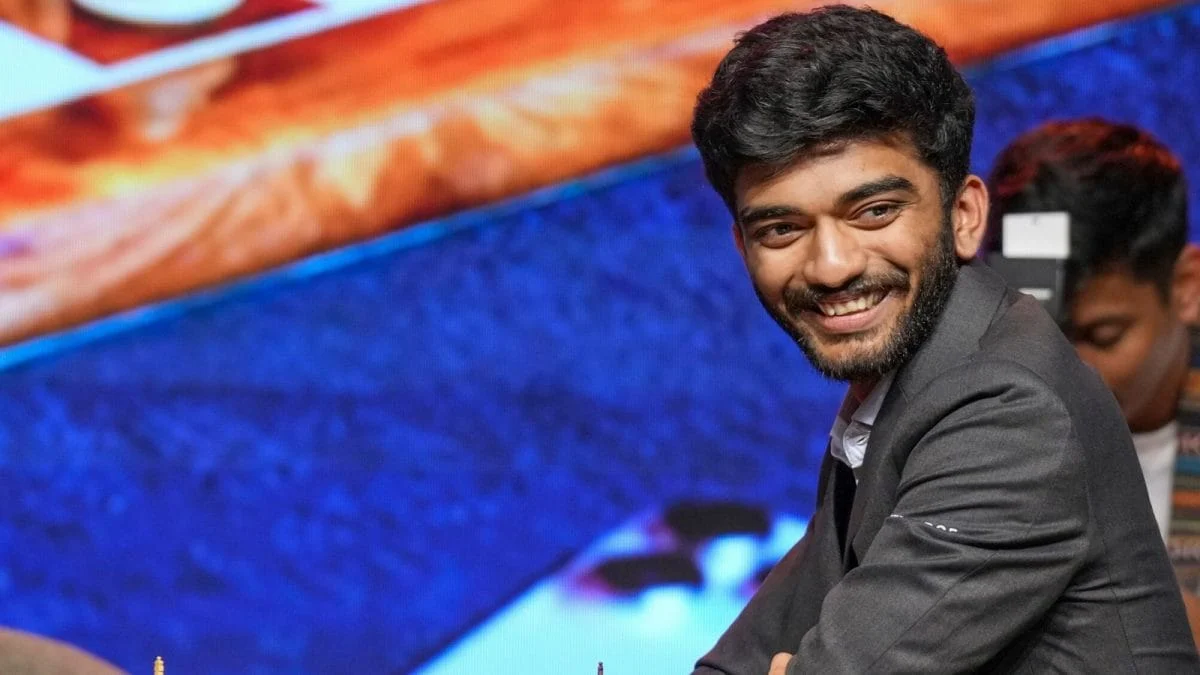
May 10, 2026 | News18 Sports Desk
In a dramatic conclusion to the Super Rapid and Blitz leg of the prestigious Grand Chess Tour, American prodigy Hans Moke Niemann emerged victorious, showcasing remarkable composure and tactical brilliance to clinch the title with a commanding 22.5 points. The event, eagerly watched by chess enthusiasts worldwide, saw Niemann fend off a formidable field, including seasoned Grandmasters and the reigning World Champion, D Gukesh. While Niemann celebrated a significant triumph, India’s D Gukesh, the youngest-ever World Champion, concluded his campaign in sixth place with 17 points, a performance that highlighted his ongoing adaptation to the demanding rapid and blitz formats.
The tournament, a crucial segment of the Grand Chess Tour, delivered a spectacle of high-speed chess, with every move carrying immense weight. Fabiano Caruana, also from the United States, secured a commendable second place with 22 points, narrowly missing out on the top spot, while fellow American Wesley So rounded out the top three with 21 points. The competitive landscape underscored the growing prowess of American chess, with three of their top players dominating the podium positions. For Gukesh, his participation marked a strategic pivot, focusing exclusively on the shorter time controls this year, a decision that comes with its own set of challenges and opportunities as he balances his World Championship duties with the pursuit of excellence across all chess formats.
Main Facts: A Triumphant Niemann and Gukesh’s Strategic Focus
The Super Rapid and Blitz tournament, a thrilling exhibition of strategic thinking under immense time pressure, culminated in a spectacular victory for Hans Moke Niemann. The young American Grandmaster displayed an impressive blend of aggression and precision throughout both the rapid and blitz segments, ultimately accumulating 22.5 points. His performance was particularly noteworthy for his ability to maintain composure during the critical final rounds, where the slightest misstep could have cost him the coveted title and the substantial prize money. Niemann’s triumph marks a significant milestone in his career, solidifying his reputation as a formidable force in the faster formats of chess and signaling his continued ascent in the global rankings. The win, accompanied by a hefty 50,000 USD first prize, not only boosts his financial standing but also provides a tremendous psychological advantage as he looks towards future high-stakes tournaments.
For D Gukesh, the reigning World Champion, the tournament represented a different kind of challenge and a deliberate strategic choice. Opting out of the main classical events of the Grand Chess Tour this year, Gukesh instead chose to focus his energies on the rapid and blitz segments. This decision reflects a broader trend among elite players to specialize or gain experience in formats that are increasingly popular and often determine tie-breaks in major championships. Gukesh concluded his campaign in sixth position with 17 points, a result that, while not a podium finish, provided valuable experience and insights into his performance at accelerated time controls. His score comprised 9 points from the rapid games and 8 points from the blitz encounters, indicating a relatively consistent performance across both formats, though perhaps lacking the explosive bursts needed to contend for the very top spots. The World Champion’s participation, even in a non-classical format, drew significant attention, with many observers keen to analyze how his classical prowess translates to the faster, more intuitive game. His journey through the tournament was a testament to the brutal demands of rapid and blitz, where consistency is often as crucial as brilliant individual moves.
Chronology: A Tournament of Twists and Turns
The Super Rapid and Blitz tournament unfolded over several days, each packed with high-octane chess and pivotal moments that shaped the final standings. From the initial rapid rounds to the climactic blitz battles, players navigated a minefield of tactical complexities and time constraints, making for a truly captivating spectacle.
The Rapid Phase: Building Momentum
The tournament kicked off with the rapid segment, where each win was worth two points, setting a high stakes environment from the outset. Early rounds saw a flurry of aggressive play, with several top contenders vying for an early lead. Hans Niemann quickly established himself as a player to watch, demonstrating an uncanny ability to convert small advantages into decisive wins. His opening performance was characterized by sharp tactical play and an unwavering focus, allowing him to accumulate crucial points. Fabiano Caruana and Wesley So also showed strong form, keeping pace with Niemann and signaling their intentions to challenge for the top spot.
D Gukesh’s performance in the rapid section was a mix of brilliant victories and frustrating draws or losses. While he showcased flashes of his world-class talent, particularly in converting complex positions, he also encountered resistance from a field hungry for upsets. His strategic decision to play only rapid and blitz meant that every game was a test of his adaptability. The pressure of being the World Champion, even in a non-classical format, undoubtedly weighed on him, as opponents often raise their game when facing such a high-profile adversary. Key rapid games saw him grappling with the swift decisions required, a different rhythm than the deep calculations of classical chess.
The Blitz Battleground: Niemann’s Steely Nerves and Gukesh’s Comeback
As the tournament transitioned into the blitz segment, where each win contributed one point, the pace intensified even further. Blitz chess is notorious for its unforgiving nature, often decided by split-second decisions and psychological resilience. This is where Niemann truly shone. Entering the blitz rounds with a strong rapid score, he faced immense pressure from the chasing pack. Yet, he held his nerve, delivering a series of critical performances that cemented his lead. His ability to navigate time scrambles and execute precise tactical sequences under extreme pressure proved to be the defining factor in his victory. Niemann’s final two rounds were particularly indicative of his championship mettle, where he secured crucial wins, including a decisive victory against Radoslaw Wojtaszek of Poland, to cross the finish line with an insurmountable lead.
Gukesh’s journey through the blitz rounds was a testament to his fighting spirit. Despite some setbacks, he demonstrated resilience, particularly in the final day’s play. His three victories on the last day, against formidable opponents like Wesley So, Hans Niemann himself, and Jan-Krzysztof Duda of Poland, were critical in salvaging his position and securing a respectable sixth place. The win against Duda in the very last round was particularly important, preventing him from slipping further down the standings and ending his campaign on a positive note. However, his overall blitz score of 8 points, while solid, suggested areas for further refinement in this high-speed format. A notable loss against Javokhir Sindarov, which resulted in a 2-1 mini-match defeat in their three encounters, highlighted the competitive intensity and the fine margins at play in such a strong field.
Supporting Data: The Numbers Behind the Story
The Grand Chess Tour’s Super Rapid and Blitz event utilizes a unique scoring system designed to reward strong performance across both formats. Rapid games, with their longer time controls compared to blitz, are weighted more heavily, each victory contributing two points. Blitz games, characterized by their lightning-fast pace, award one point per win. This system ensures that players must excel in both disciplines to contend for the overall title.
Hans Moke Niemann’s winning tally of 22.5 points was a result of a consistently strong performance throughout. While specific breakdown of his rapid vs. blitz wins wasn’t immediately available, his final score indicates a dominant run in both segments, allowing him to outpace the highly competitive field. The 50,000 USD prize money associated with the first place finish is a significant sum in the chess world, reflecting the prestige of the Grand Chess Tour and the caliber of players it attracts. This prize not only serves as a financial reward but also as a powerful incentive for top Grandmasters to participate and compete fiercely.
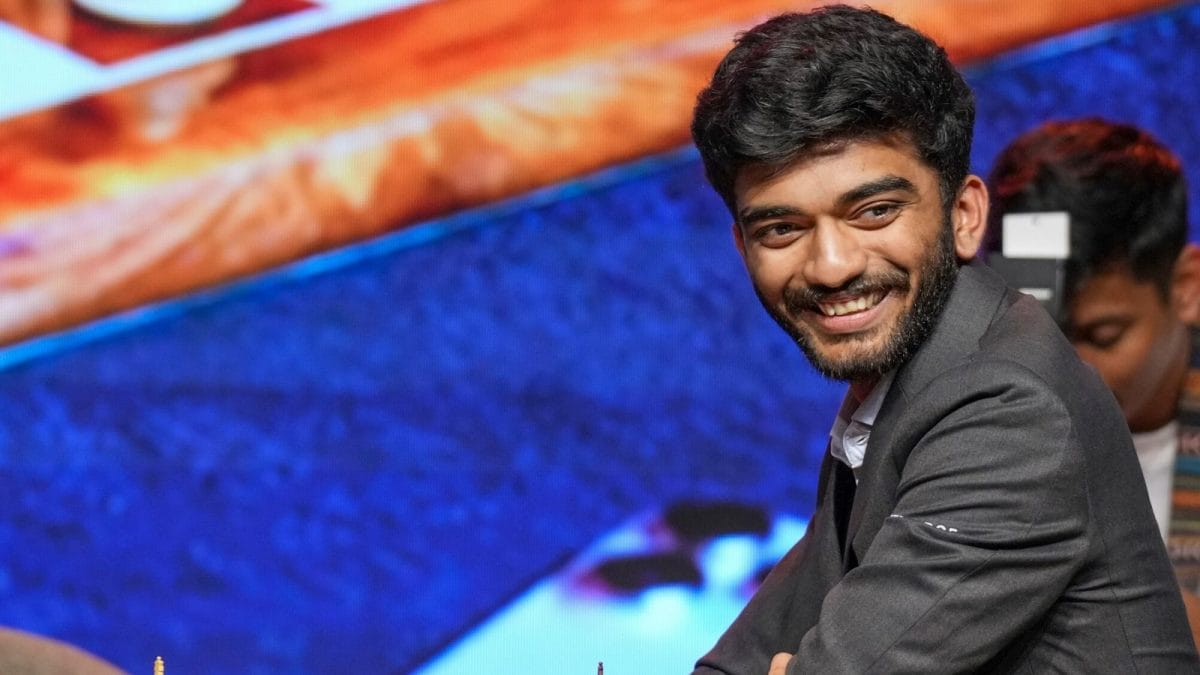
Fabiano Caruana’s second-place finish with 22 points, just half a point behind Niemann, underscores the razor-thin margins at the elite level. Caruana’s consistent play throughout the tournament demonstrated his versatility across different time controls, reaffirming his status as one of the world’s top players. Wesley So, with 21 points, secured third place, further cementing the American dominance at the top of the standings. This collective performance by the American contingent highlights the strength and depth of chess talent emanating from the United States.
D Gukesh’s 17 points comprised 9 points from the rapid games and 8 points from the blitz games. This translates to roughly 4-5 rapid wins (9 points / 2 points per win = 4.5, so likely 4 wins and 1 draw, or similar combinations) and 8 blitz wins. His overall performance saw him finishing ahead of established names like Jan-Krzysztof Duda and Maxime Vachier-Lagrave, both tied with 16.5 points, but behind Vladimir Fedoseev (18 points) and Alireza Firouzja (17.5 points). Gukesh’s record of three victories on the final day, including critical wins against Wesley So, Niemann, and Duda, prevented a lower finish and showcased his ability to perform under pressure when it mattered most. The individual mini-match loss against Javokhir Sindarov (2-1) serves as a reminder that even World Champions face stern challenges from rising talents, especially in formats that can be unpredictable. The full final standings paint a clear picture of the competitive intensity:
Final Standings:
- Hans Moke Niemann (Usa, 22.5 points)
- Fabiano Caruana (Usa, 22 points)
- Wesley So (Usa, 21 points)
- Vladimir Fedoseev (Slo, 18 points)
- Firouzja Alireza (Fra, 17.5 points)
- D Gukesh (Ind, 17 points)
7-9. Duda Jan-Krzystzof (Pol), Javokhir Sindarov (Uzb), Maxime Vachier-Lagrave (Fra) (16.5 points each) - Radoslav Wojtaszek (Pol, 12.5 points)
The cumulative points system and the diverse field of players ensured that every game was contested fiercely, with the standings constantly shifting until the very last move.
Official Responses: Voices from the Chess World
The conclusion of such a high-profile tournament inevitably elicits reactions from the players, organizers, and observers, providing valuable insights into the dynamics of the event and its broader implications.
Niemann’s Elation and Strategic Insight
Upon securing his victory, Hans Moke Niemann expressed a mix of relief and elation. "This is an incredible feeling," Niemann stated in a post-tournament interview. "The competition was fierce, and every game felt like a final. I tried to stay focused on my game plan, take it one move at a time, and not get too caught up in the standings. The last two rounds were particularly intense, but I managed to find my rhythm and execute under pressure. Winning against such a strong field, especially with the likes of Caruana, So, and the World Champion Gukesh, gives me immense confidence. It validates the hard work I’ve put into improving my rapid and blitz play." He also acknowledged the psychological aspect of the faster formats, noting, "It’s not just about calculation; it’s about intuition, managing your time, and not letting mistakes get to you. I’m proud of how I handled the pressure."
Gukesh’s Reflection and Forward Look
D Gukesh, while perhaps not fully satisfied with a sixth-place finish, offered a pragmatic assessment of his performance. "It was a challenging tournament, as expected," Gukesh commented. "The rapid and blitz formats demand a different kind of preparation and mindset compared to classical chess. There were moments of good play, and some where I felt I could have done better. My wins against strong players like Wesley So and Niemann show that I can compete at this level, but the consistency is something I’m still working on. The goal for me this year in the Grand Chess Tour rapid and blitz events is primarily to gain experience and fine-tune my game in these formats. It’s crucial for my overall development, especially with tie-breaks in major classical tournaments often being decided by rapid or blitz games." He further added, "I learned a lot from this experience, particularly about managing my energy and decision-making under severe time constraints. This will be invaluable for my upcoming match against Javokhir Sindarov and for Norway Chess later in the year."
Tournament Organizers’ Perspective
A spokesperson for the Grand Chess Tour echoed the excitement surrounding the event. "The Super Rapid and Blitz once again delivered an electrifying spectacle," the spokesperson remarked. "The caliber of play, the dramatic finishes, and the emergence of a new champion in Hans Moke Niemann underscore the enduring appeal of these faster formats. We are thrilled with the competitive spirit displayed by all participants, and the strong performance from the American players at home was particularly engaging for the local audience. The strategic decision by players like D Gukesh to focus on rapid and blitz segments adds another layer of intrigue, demonstrating the evolving demands on modern chess professionals. We look forward to carrying this momentum into the next leg of the tour in Bucharest."
Implications: A Shifting Landscape and Future Prospects
Hans Moke Niemann’s victory in the Super Rapid and Blitz event carries significant implications for his burgeoning career and for the broader chess world. For Niemann, this win is a monumental achievement, marking his first major title in the prestigious Grand Chess Tour. It firmly establishes him as a top contender in rapid and blitz chess and will undoubtedly boost his confidence and international profile. This success could lead to more invitations to elite tournaments and further opportunities to compete against the world’s best. It also serves as a strong rebuttal to any lingering doubts about his capabilities, proving his mettle on a grand stage.
For D Gukesh, his sixth-place finish, while not a celebratory outcome, is part of a deliberate long-term strategy. His decision to withdraw from the classical segments of the GCT this year to focus solely on rapid and blitz reflects a pragmatic approach to managing his immense workload as World Champion. It allows him to hone skills critical for tie-breaks in classical tournaments and to maintain a competitive edge across all formats without the exhaustive demands of repeated classical cycles. This strategy might be seen as a way to conserve energy for his upcoming critical engagements, notably his match against Javokhir Sindarov later this year and his participation in the highly anticipated Norway Chess tournament. His performance here, despite its inconsistencies, provides a clear roadmap for areas of improvement in rapid and blitz, which are essential for a truly well-rounded World Champion. The experience gained against such a strong field is invaluable for his development in these formats.
The Grand Chess Tour itself continues to evolve, adapting to the dynamic preferences of both players and fans. The success of the Super Rapid and Blitz format reaffirms its popularity and its role in showcasing a different facet of elite chess. As the Grand Chess Tour caravan now moves to the Romanian capital Bucharest for the Super Classic, attention will shift to the classical battles once more. For Indian chess fans, the focus will turn to R Praggnanandhaa, who will be the lone Indian representative in the Bucharest event. His participation highlights the depth of talent emerging from India and the country’s growing influence on the international chess scene. The continuous presence of young Indian Grandmasters at these elite events signals a bright future for Indian chess, with players like Gukesh and Praggnanandhaa leading the charge on the global stage, each carving out their unique path in the competitive world of professional chess.
