

<img decoding=”async” src=”https://images.indianexpress.com/2026/05/saini.jpg?w=1600″ alt=”Nayab Singh Saini” width=”650″ height=”366″>
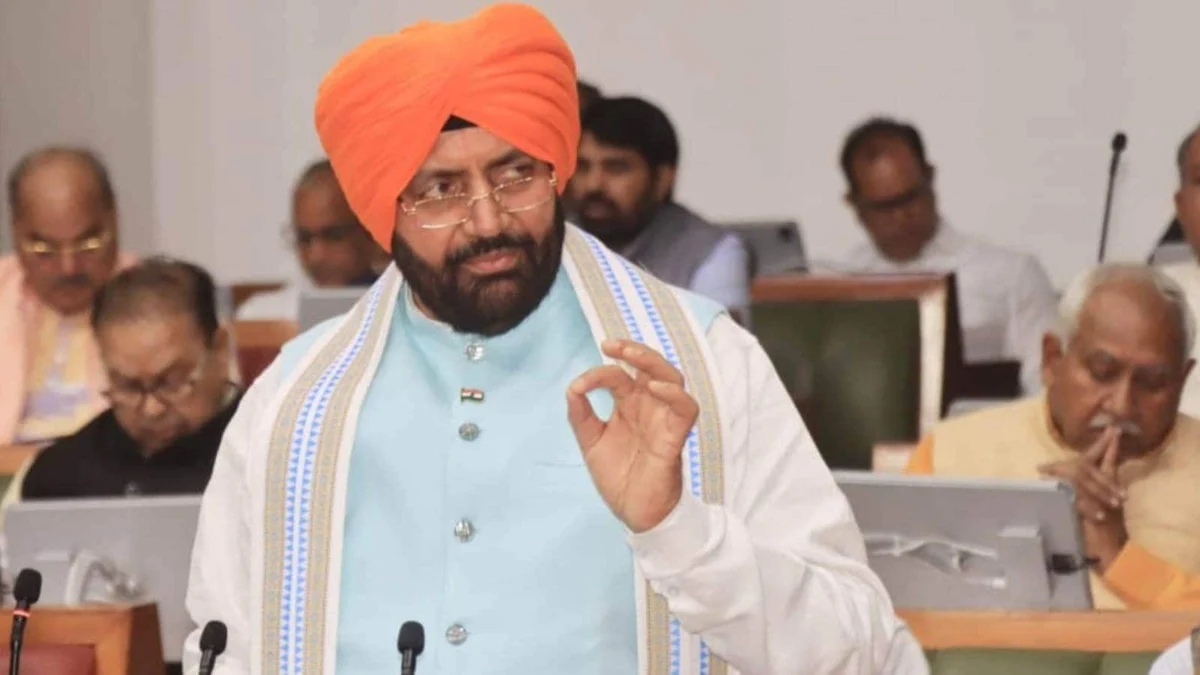
<span>Haryana CM Nayab Singh Saini said that the satirical political collective Cockroach Janata Party’s lifespan would be short-lived.</span>
</p>
<p>
<span>4 min read</span><span><em>New Delhi</em></span><span itemprop=”dateModified” content=”2026-05-25T18:13:18+05:30″>May 25, 2026 06:13 PM IST <span><i></i></span></span>
<span>
First published on: <span>May 25, 2026 at 06:08 PM IST </span>
</span>
</p>
<div id=”pcl-full-content”>
<p>
**New Delhi, May 25, 2026** – Haryana Chief Minister Nayab Singh Saini has vehemently dismissed the rising popularity of the Cockroach Janata Party (CJP), a satirical political collective, branding it as a transient, opposition-orchestrated narrative. Speaking in the national capital on Monday, Saini compared the digital phenomenon to the “Constitution in danger” campaign that preceded the 2024 Lok Sabha elections, confidently predicting its swift demise. His remarks come amidst a rapidly evolving political landscape where digital activism and satirical platforms are increasingly challenging traditional political discourse.
</p>
<h2>Chief Minister Dismisses Satirical Collective, Citing Short Lifespan</h2>
<h3>The Rise of the Cockroach Janata Party (CJP)</h3>
<p>
The Cockroach Janata Party (CJP), conceptualized and launched by digital strategist Abhijit Dipke, has emerged as an unexpected and formidable force in the online political sphere. Within days of its inception, the satirical collective has amassed an astounding following of over 22 million on Instagram, a figure that reportedly surpasses the combined digital footprint of India’s two largest national parties, the Bharatiya Janata Party (BJP) and the Indian National Congress. This meteoric rise underscores a growing appetite among a segment of the electorate, particularly the youth, for unconventional political expression and a platform to articulate disillusionment.
</p>
<p>
The CJP operates not as a traditional political party with a manifesto and candidates, but as a collective utilizing humor, memes, and sharp commentary to critique existing political structures and policies. Its name itself, evoking a creature known for its resilience and ability to thrive in adverse conditions, is a satirical jab at the perceived imperviousness of the political establishment. Its content often lampoons governmental decisions, political rhetoric, and societal issues, resonating deeply with a demographic often left feeling unheard by mainstream politics.
</p>
<h3>CM Saini’s Swift Dismissal</h3>
<p>
When questioned about the CJP’s unprecedented traction, Chief Minister Saini was unequivocal in his dismissal. “Cockroach ki ayu kitni hai (what is the lifespan of a cockroach)?” he retorted, a rhetorical question designed to diminish the movement’s perceived longevity and impact. His analogy suggests that while the CJP might be a nuisance, it lacks the fundamental substance and staying power of established political entities.
</p>
<p>
Saini characterized the CJP as merely “another narrative manufactured by the Opposition,” echoing a familiar political strategy of attributing independent movements or critical voices to rival parties. This interpretation aligns with his broader assertion that suggestions of widespread disenchantment among the youth are unfounded. “I interacted with youth this morning as well. I spoke to many of them. But I did not see any disappointment among them. Not even one young person told me he was frustrated,” Saini claimed, attempting to counter the narrative that the CJP’s popularity is a symptom of deeper societal discontent.
</p>
<h2>Chronology of a Digital Phenomenon and Political Response</h2>
<h3>From Launch to Viral Sensation</h3>
<p>
The CJP’s journey from a conceptual idea to a digital powerhouse has been remarkably swift. Abhijit Dipke, known for his incisive digital strategies and understanding of online trends, launched the collective with a clear intent: to use satire as a tool for political commentary. The timing of its launch, amidst ongoing debates about youth employment, economic opportunities, and the future of democratic discourse, proved opportune.
</p>
<p>
Initially gaining traction through a series of viral posts and memes, the CJP quickly tapped into a segment of the population that felt alienated from traditional political discourse. Its content, often humorous but underpinned by serious social commentary, was highly shareable and resonated across various digital platforms. The collective’s anonymity, or rather its focus on the collective identity over individual leaders, further contributed to its appeal, presenting it as a truly ‘people’s’ movement rather than one driven by individual political ambitions. The exponential growth in its Instagram following within a short span of time highlights the power of digital virality in contemporary politics.
</p>
<h3>The Establishment’s Reaction</h3>
<p>
The political establishment, initially perhaps slow to acknowledge its impact, has now clearly taken notice. CM Saini’s direct address to the CJP underscores the fact that such digital movements, even if satirical, can no longer be simply ignored. His comparison of the CJP to the “Constitution in danger” campaign of 2024 is significant. That campaign, spearheaded by the Opposition INDIA bloc, sought to galvanize voters by raising concerns that a BJP majority exceeding 400 seats would lead to fundamental changes in the Constitution, particularly regarding reservations and secular principles. By equating the CJP with this prior campaign, Saini attempts to frame it as a politically motivated tactic rather than an organic expression of public sentiment.
</p>
<p>
This reaction from a Chief Minister signals a broader challenge for traditional political parties: how to engage with and counter movements that thrive outside conventional political structures, often using humor and digital media to bypass traditional gatekeepers and reach a vast audience directly. The CJP’s success suggests a paradigm shift in how political messaging is received and disseminated, forcing established leaders to adapt their communication strategies.
</p>
<h2>Supporting Data: The Digital Divide and Youth Engagement</h2>
<h3>Measuring Online Influence</h3>
<p>
The CJP’s Instagram following of over 22 million stands as a stark testament to its digital reach. To put this into perspective, even established political parties, with decades of organizational history and vast resources, have struggled to achieve such rapid and widespread digital engagement. While exact real-time figures for BJP and Congress combined may vary, the CJP’s ability to surpass them within days speaks volumes about its viral appeal. This phenomenon is not merely about follower counts; it represents a significant mindshare among digitally native populations, a demographic increasingly crucial for electoral outcomes.
</p>
<p>
The youth, in particular, are heavy consumers of online content, often preferring short-form video, memes, and satirical commentary over traditional news formats or lengthy political speeches. The CJP’s content strategy caters precisely to this demographic, employing humor and easily digestible formats to convey complex political critiques. This bypasses the often formal and rigid communication styles of traditional parties, creating a more relatable and engaging experience for younger audiences.
</p>
<h3>The Debate on Youth Disenchantment</h3>
<p>
Saini’s assertion that he found no frustration among the youth during his interactions contrasts sharply with widely reported sentiments and survey data, which often indicate concerns regarding unemployment, economic stability, and access to quality education. While political leaders naturally aim to present an optimistic picture, the CJP’s rapid growth suggests an underlying current of dissatisfaction that finds an outlet in satirical activism.
</p>
<p>
According to various economic reports and public sentiment analyses, youth unemployment, especially among educated graduates, remains a significant challenge across India. Haryana, like many other states, faces the dual challenge of providing adequate job opportunities and addressing the aspirations of a large, young population. The perception of government inaction or insufficient progress on these fronts often fuels disillusionment, making platforms like the CJP appealing as a channel for expressing dissent, even if indirectly through humor.
</p>
<p>
The disconnect between Saini’s observations and the CJP’s popularity highlights a potential gap in understanding between political leadership and a segment of the electorate that expresses its views through non-traditional means. The “frustration” may not always manifest in direct, confrontational interactions with leaders but rather in online engagement with platforms that articulate similar sentiments.
</p>
<h2>Official Responses and Counter-Narratives</h2>
<h3>Defending the Constitutional Record</h3>
<p>
Chief Minister Saini dedicated a significant portion of his address to rebutting the “Constitution in danger” narrative, particularly targeting Leader of the Opposition in the Lok Sabha, Rahul Gandhi. Saini criticized Gandhi for carrying a copy of the Constitution while allegedly overlooking his own party’s history of amending it. “The Congress leader who carries a copy of the Constitution and says it is under threat has forgotten how many times his own party altered it in the past. I do not know who writes the script for him,” Saini remarked, aiming to undermine the credibility of the Opposition’s stance.
</p>
<p>
He further argued that Prime Minister Narendra Modi’s government, over the last eleven and a half years, has actively worked to protect and uphold the Constitution. Saini specifically cited the abrogation of Article 370 in Jammu and Kashmir as an act that strengthened constitutional principles, ensuring “One nation, one Constitution.” This counter-narrative seeks to recast the BJP as the true protector of the Constitution, contrasting it with the Opposition’s claims of constitutional erosion.
</p>
<p>
The “Constitution in danger” campaign was a cornerstone of the INDIA bloc’s strategy in the 2024 Lok Sabha elections. It leveraged fears that a supermajority for the BJP would enable them to unilaterally amend the Constitution, potentially impacting fundamental rights and the federal structure. While the BJP consistently denied these allegations, the narrative gained considerable traction, particularly among marginalized communities and liberal voters, influencing electoral discourse significantly.
</p>
<h3>Projecting Leadership: Modi for Punjab</h3>
<p>
Beyond addressing the CJP and constitutional debates, Saini pivoted to future electoral strategies, particularly for the upcoming Punjab Assembly elections in 2027. A senior BJP leader making frequent visits to Punjab, Saini declared that Prime Minister Narendra Modi would be the party’s primary face in the state, mirroring the strategy reportedly employed in West Bengal.
</p>
<p>
“He will be the face of the party and once we win the election, we will have a strong Chief Minister,” Saini asserted, drawing a parallel with West Bengal, where he claimed the BJP “scored a landslide victory and formed the government for the first time.”
</p>
<p>
**A note on Saini’s West Bengal assertion:** It is important to clarify that while the BJP significantly increased its vote share and emerged as the principal opposition in the 2021 West Bengal Assembly elections, it did not achieve a “landslide victory” nor did it form the government. The Trinamool Congress, led by Mamata Banerjee, retained power comfortably. Similarly, Suvendu Adhikari, while a prominent BJP leader and Leader of the Opposition in the West Bengal Assembly, is not the Chief Minister. Saini’s statement appears to be a strategic misrepresentation, likely intended to project an image of unstoppable momentum and successful leadership transfer after Modi’s campaign.
</p>
<p>
The BJP’s strategy of relying on PM Modi’s charisma in state elections is a well-established pattern, often deployed in states where the party lacks strong regional leadership or a clear local face. This approach seeks to nationalize state elections, leveraging Modi’s widespread appeal to overcome local challenges.
</p>
<h2>Implications for Future Politics and Electoral Strategies</h2>
<h3>The Challenge of Digital Dissent</h3>
<p>
The emergence and rapid ascent of the CJP present a new challenge for established political parties. Traditional mechanisms of political control and communication are proving less effective against decentralized, satirical, and digitally native movements. The CJP’s success implies that political legitimacy and influence are no longer solely confined to formal institutions or mainstream media. It underscores a shift towards a more fragmented, personalized, and often humorous political discourse online.
</p>
<p>
For parties like the BJP, which rely heavily on a strong organizational structure and a clear chain of command, understanding and responding to phenomena like the CJP will be crucial. Dismissing them outright, as Saini has done, might temporarily pacify the party base but risks alienating the very demographic that finds such platforms appealing. The long-term implication is that political engagement strategies must evolve to incorporate or effectively counter these new forms of digital dissent.
</p>
<h3>BJP’s Punjab Play: A High-Stakes Bet</h3>
<p>
The BJP’s ambition in Punjab, articulated through Saini, represents a significant strategic pivot. Historically, the BJP played a secondary role to its erstwhile ally, the Shiromani Akali Dal (SAD), in Punjab. The alliance fractured in 2021 over the now-repealed farm laws, leading the BJP to contest the 2024 Lok Sabha elections independently, where it failed to secure a single seat in the state. This setback highlights the formidable challenge the party faces in a state dominated by regional parties and with a distinct political-cultural identity.
</p>
<p>
Saini’s increasing visibility and strategic role in Punjab are noteworthy. His background – belonging to the Saini community (an OBC group with influence in parts of Punjab) and having a Jat Sikh mother (Jat Sikhs constitute a significant 20-30% of the state’s population) – positions him uniquely to bridge demographic divides. His assertion that “Haryana and Punjab are one” and that Punjabis are observing Haryana’s governance model reflects an attempt to build a cross-border narrative of shared interests and effective administration. He specifically criticized the Bhagwant Mann-led Aam Aadmi Party (AAP) government in Punjab for failing to meet public expectations, contrasting it with Haryana’s perceived successes.
</p>
<p>
The BJP currently holds only two seats in the 117-member Punjab Assembly, making its electoral ambitions a steep uphill climb. Saini’s mention of Haryana’s assistance to Punjab during floods, with instructions for district officials to adopt areas for relief coordination, is another tactical move to foster goodwill and demonstrate cross-state solidarity.
</p>
<p>
The reliance on PM Modi’s face, as articulated by Saini, underscores the BJP’s belief in the Prime Minister’s pan-India appeal to overcome local leadership deficits. While Saini again cited the West Bengal example (despite the factual inaccuracies regarding government formation), the strategy highlights a consistent approach for states where the party is weaker. The success of this strategy in Punjab will be a critical test for the BJP’s ability to expand its footprint beyond its traditional strongholds and establish itself as a significant player in states with complex socio-political dynamics. The next Punjab Assembly elections will reveal whether the Modi factor alone can translate into a “strong Chief Minister” for the BJP in a state where it has historically struggled to gain a dominant foothold.
</p>
</div>
