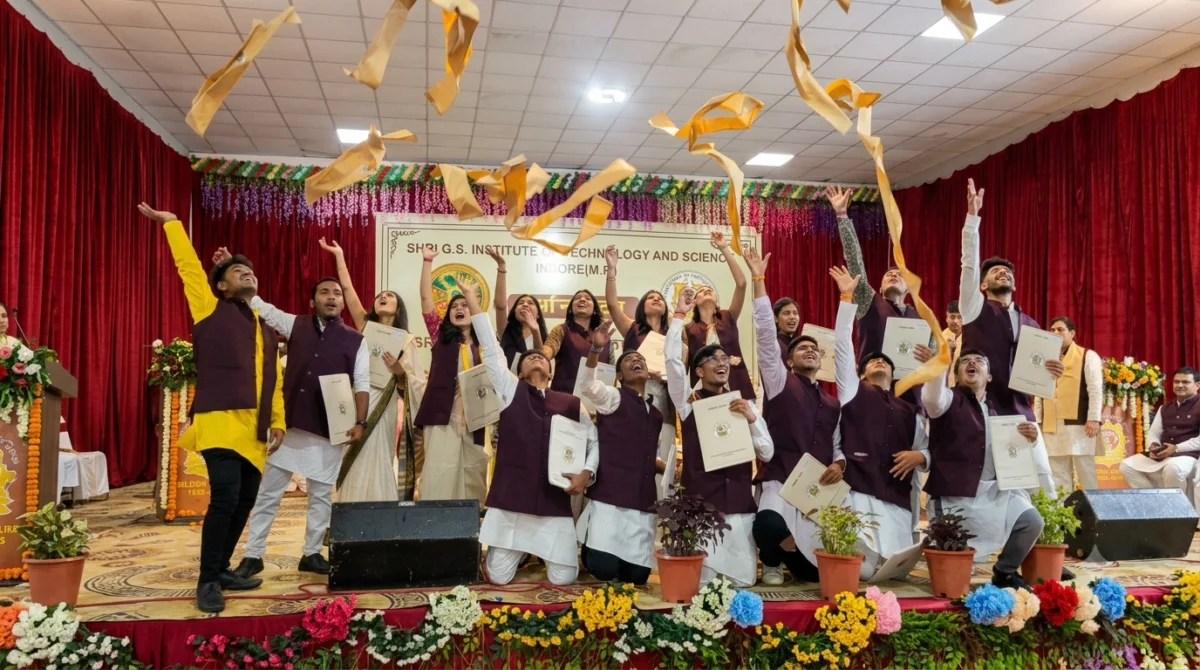
New Delhi, September 4, 2026 – In a landmark initiative aimed at democratizing technical education and aligning with the principles of the National Education Policy (NEP), Madhya Pradesh has officially launched its first-ever Hindi-medium Bachelor of Technology (B.Tech) program in Civil Engineering. This groundbreaking course, commencing from the current academic session, is being piloted at the prestigious Shri G S Institute of Technology and Science (SGSITS) in Indore, a prominent institution in central India. The program not only seeks to bridge the language barrier for students who have pursued their foundational education in Hindi but also offers a significant financial incentive, with enrolled students becoming eligible for a Rs 2 lakh grant from the state government upon reaching their final year.
This bold step represents a paradigm shift in engineering education, acknowledging the challenges faced by a substantial segment of students who, despite academic prowess, struggle with the predominantly English-medium curriculum of technical courses. The introduction of this Hindi-medium B.Tech program at SGSITS is poised to unlock the potential of countless aspiring engineers, fostering a more inclusive and equitable learning environment.
Laying the Foundation: The Genesis of a Historic Initiative
The decision to introduce a Hindi-medium B.Tech program in Civil Engineering is rooted in a deep understanding of the educational landscape and the aspirations of students across Madhya Pradesh. For years, educators and policymakers have observed a recurring challenge: students who excel in their secondary education conducted in Hindi often find themselves at a disadvantage when transitioning to engineering degrees, which are overwhelmingly taught in English. This linguistic hurdle has, in many instances, led to academic struggles, increased dropout rates, and a disheartening underutilization of talent.
The National Education Policy (NEP) 2020, with its emphasis on mother tongue instruction and making education more accessible, has provided a strong policy framework for such transformative initiatives. The launch at SGSITS is a direct manifestation of these NEP principles, aiming to ensure that language is no longer a barrier to accessing high-quality technical education.
A Dedicated Pathway: The SGSITS Civil Engineering Program
Shri G S Institute of Technology and Science (SGSITS), an aided autonomous institute with a rich legacy of academic excellence, has been chosen as the crucible for this pioneering endeavor. The institute has meticulously prepared for the introduction of this unique program, demonstrating a commitment to its successful implementation.
For the inaugural batch, 30 seats have been specifically reserved for the dedicated Hindi-medium Civil Engineering cohort. This focused approach ensures that the curriculum, teaching methodologies, and assessment patterns are tailored to cater to the specific needs of these students. As of the current reporting, approximately 20 students have already secured their admissions, signaling a promising start for the program.
The Rs 2 lakh incentive offered by the state government to students in their final year is a significant financial support mechanism. This not only alleviates the economic burden on students and their families but also serves as a powerful motivator, encouraging them to complete their degrees and contribute to the nation’s development. This incentive underscores the government’s commitment to nurturing engineering talent from diverse linguistic backgrounds.
The Journey of Preparation: Translating Knowledge, Training Minds
The establishment of a Hindi-medium engineering program is no small feat. It requires meticulous planning, substantial resource allocation, and a dedicated team. The faculty and administration at SGSITS have undertaken a multi-year effort to bring this vision to fruition.
A Rigorous Translation Process: The core of this preparation involved the painstaking translation of comprehensive English technical study materials into Hindi. Experts within the civil engineering department at SGSITS have been engaged in this rigorous process for the past four years. This extensive translation effort ensures that students have access to accurate, nuanced, and up-to-date learning resources in their preferred language. This is not merely a word-for-word translation but a deep conceptual adaptation to ensure clarity and comprehension.
Empowering Educators: Recognizing that effective teaching requires more than just translated textbooks, the institute has also invested in training its faculty. Workshops and training sessions have been organized to equip teachers with the pedagogical skills and subject matter expertise required to deliver engineering education effectively in Hindi. This includes developing strategies to explain complex technical terms, both in Hindi and English, fostering a bilingual understanding.
Student Testimonials: Voices of Hope and Opportunity
The impact of this initiative is already resonating with the students who have enrolled. Rohit Sharma, an engineering student in the new Hindi-medium batch, shared his perspective, highlighting the transformative difference it makes. "For me, studying civil engineering in English would have meant constantly relying on external aids like Google and ChatGPT to grasp difficult subjects," he explained. "But while studying in my mother tongue, Hindi, teachers can explain even the most technical terms in English with such clarity. This makes the learning process much more intuitive and less intimidating."
This sentiment underscores the core objective of the program: to make engineering education not just accessible, but also comprehensible and engaging for students who might otherwise be left behind.
Addressing Concerns: Ensuring Competitiveness in a Globalized World
A crucial aspect of introducing technical education in a regional language is to ensure that students remain competitive in a globalized job market that often favors English proficiency. The faculty at SGSITS has proactively addressed this concern by integrating essential English language skills development into the curriculum.
Bilingual Proficiency: Students enrolled in the Hindi-medium course are not being isolated from English. Instead, they are being provided with structured training in English language proficiency. This ensures that they develop the necessary communication skills to interact with a wider professional network, access international research, and thrive in diverse work environments.
The Objective: Empowerment, Not Exclusion: The overarching objective of offering Civil Engineering in Hindi is not to create a divide or distance students from English. Rather, it is to empower them with technical knowledge in their mother tongue, thereby strengthening their foundational understanding. Simultaneously, the program is designed to equip them with the essential English language skills that are indispensable for career advancement in the current global landscape. This balanced approach aims to produce well-rounded engineers who are proficient in both their technical domain and their communication abilities.
The Broader Implications: A Catalyst for Inclusivity and Innovation
The introduction of the Hindi-medium B.Tech program in Civil Engineering at SGSITS carries significant implications for the future of technical education in India, particularly in Madhya Pradesh.
Democratizing Access: This initiative directly addresses the historical disparity in access to higher technical education based on medium of instruction. By offering a recognized engineering degree in Hindi, the program opens doors for a vast pool of students who might have previously considered engineering an unattainable aspiration. This democratization of access is crucial for fostering a more inclusive and representative engineering workforce.
Unlocking Untapped Potential: India possesses a vast demographic dividend, with a significant portion of its youth pursuing education in Hindi-medium schools. This program has the potential to unlock the latent talent within this segment, channeling their aptitude and ambition into vital engineering fields. This could lead to a more diverse set of perspectives and innovative solutions in the civil engineering sector.
Strengthening Regional Engineering Capabilities: By enabling more students to pursue engineering in their mother tongue, the program could contribute to strengthening the engineering talent pool within Madhya Pradesh and potentially inspire similar initiatives in other states. This localized development of skilled professionals can be instrumental in driving regional growth and infrastructure development.
A Model for Future Expansion: The success of this pilot program at SGSITS could serve as a valuable model for other engineering disciplines and institutions across India. It demonstrates the feasibility and benefits of adapting technical education to the linguistic realities of the country, paving the way for a more diversified and accessible higher education system.
The Rs 2 Lakh Incentive: A Strategic Investment
The Rs 2 lakh incentive for final-year students is a strategic investment by the state government. This financial aid can be crucial for students to focus on their studies without undue financial stress, and it also acts as a powerful incentive to complete their degrees. Moreover, it can encourage students to pursue careers in the civil engineering sector, contributing to the development of the state’s infrastructure. This incentive signifies a proactive approach by the government to nurture and retain engineering talent within the state.
As the inaugural batch of the Hindi-medium B.Tech Civil Engineering program embarks on its academic journey at SGSITS, the nation watches with anticipation. This pioneering initiative at SGSITS is not just about a new course; it’s about a fundamental reimagining of how technical education can be delivered, making it more equitable, accessible, and ultimately, more impactful for a larger cross-section of Indian youth. The success of this program will undoubtedly pave the way for a more inclusive and innovative future for engineering education in India.