

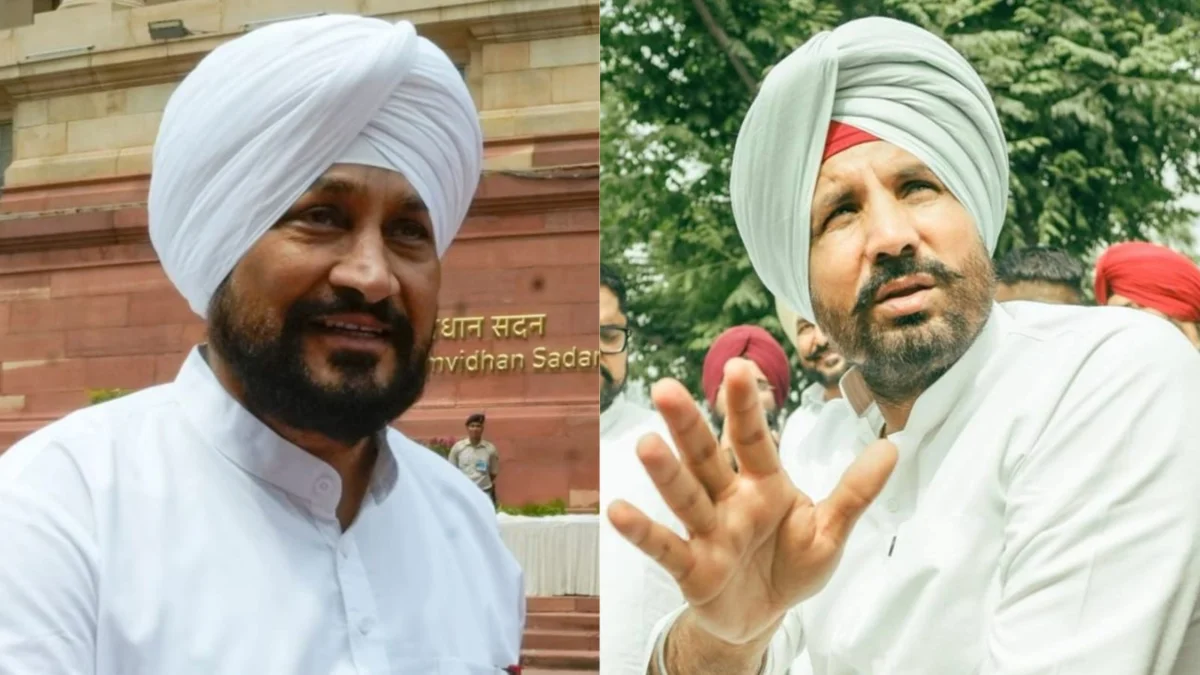
Chandigarh/New Delhi – The recent civic body elections in Punjab have delivered a stark and sobering reality check for the Indian National Congress, extending far beyond the immediate electoral arithmetic. While the ruling Aam Aadmi Party (AAP) capitalised on a formidable urban wave to secure a dominant victory, the principal Opposition Congress finds itself grappling with a deepening crisis of internal discord, its long-standing factional faultlines laid bare and exacerbated by the results. The fallout culminated in a stormy high-level meeting in Delhi, attended by none other than Lok Sabha Leader of the Opposition (LoP) Rahul Gandhi and Congress national president Mallikarjun Kharge, underscoring the gravity of the setback and its potential to critically damage the party’s organisational cohesion ahead of the crucial 2027 Assembly polls.
The elections, widely perceived as a semi-final litmus test for the state’s political landscape, have not only highlighted the AAP’s growing grassroots penetration but also starkly illuminated the Congress’s struggle to present a united front and a credible alternative narrative. Instead of galvanising the party, the poor performance has intensified a blame game among its top brass, diverting critical energy from strategy formulation and cadre mobilisation.
Main Facts: A Deepening Internal Rift
The core of the Congress’s current predicament lies in the contrasting electoral fortunes and subsequent public confrontations between its key state leaders. Punjab Congress president Amarinder Singh Raja Warring suffered a significant personal and political blow in Gidderbaha, his traditional stronghold, where the AAP swept an astonishing 17 out of 19 municipal council wards. This devastating defeat, despite Warring’s intensive campaigning efforts, became a focal point for internal criticism and questions regarding his leadership and organisational grip.
Conversely, former Chief Minister Charanjit Singh Channi emerged from the elections with impressive victories in his spheres of influence, notably Chamkaur Sahib and Morinda. These successes provided Channi with a powerful platform to challenge the existing state leadership, particularly Warring, and demand greater accountability. The ensuing verbal duels and visible expressions of discontent at the Delhi meeting signaled a significant escalation of pre-existing factional tensions, leaving the party’s national leadership with a formidable challenge to restore unity and purpose.
The Aam Aadmi Party’s comprehensive victory across urban centres underscores a significant shift in voter sentiment, solidifying its position as the dominant political force in the state. For the Congress, trailing considerably behind AAP but managing to edge past the Shiromani Akali Dal (SAD) and the Bharatiya Janata Party (BJP), the results are a bitter pill, exposing fundamental weaknesses in its strategy, leadership, and ability to connect with the urban electorate.
Chronology of Crisis: From Polls to Delhi Confrontation
The civic body elections, held across various municipal corporations and councils, unfolded against a backdrop of simmering discontent within the Punjab Congress. The party had been battling internal strife even before the polls, a chronic condition that previous high commands had struggled to cure. The AAP, having secured a landslide victory in the 2022 Assembly elections, entered these local contests with considerable momentum and the advantage of being the ruling party.
The Election Outcomes: AAP’s Urban Wave and Congress’s Mixed Bag
When the results were declared, the scale of the AAP’s triumph, particularly in urban areas, was undeniable. Riding what political analysts termed an "urban wave," the AAP demonstrated its ability to translate its Assembly mandate into local governance control. This performance was a clear indication that the party’s populist agenda and governance pitch were resonating with a significant segment of the electorate, particularly in the cities.
For the Congress, the results were a mixed bag that ultimately highlighted its overall decline. While the party managed to secure some notable victories, these were overshadowed by significant losses, especially in high-profile constituencies. The defeat in Gidderbaha, Warring’s home turf, was particularly symbolic. Despite his personal involvement and extensive campaigning, the AAP’s decisive win there sent shockwaves through the party ranks, directly challenging Warring’s authority and effectiveness as state president. The loss was not merely a local upset; it was perceived as a direct referendum on his leadership.
In contrast, Charanjit Singh Channi’s strong performance in areas like Chamkaur Sahib and Morinda offered a glimmer of hope, demonstrating that some Congress leaders could still deliver electoral victories. These contrasting outcomes immediately set the stage for a contentious internal review.
The Stormy Delhi Meeting: Faultlines Exposed
The internal discord reached a crescendo at a crucial meeting convened in Delhi on Friday. This high-stakes gathering brought together the national Congress leadership, including Rahul Gandhi and Mallikarjun Kharge, with key figures from the Punjab unit. The agenda was ostensibly to review the civic poll results and strategise for the future, but the meeting quickly devolved into a heated exchange, laying bare the deep-seated factionalism that plagues the state unit.
The atmosphere in the room was reportedly tense and charged. Charanjit Singh Channi, emboldened by his electoral successes, seized the opportunity to directly challenge the state leadership. He pointedly questioned how the party could realistically prepare for the 2027 Assembly polls when the state party chief’s own home constituency had been decisively overrun by the opposition. This was a direct broadside against Warring, demanding accountability for the Gidderbaha rout. Channi’s line of questioning resonated with others who felt that the party needed a stronger, more effective leadership.
Amarinder Singh Raja Warring, facing intense scrutiny, attempted to deflect the criticism by invoking a familiar narrative: accusing the ruling AAP of "misusing" official machinery to influence the local body polls. This argument, common in Indian local elections, suggested that the results were not a true reflection of the party’s performance but rather a consequence of administrative interference. However, this defence was swiftly challenged from within the party’s own ranks. Gurdaspur MP Sukhjinder Singh Randhawa reportedly questioned the validity of Warring’s argument, asking why such alleged "misuse" had not prevented Congress victories in other areas, such as Kapurthala and Chamkaur Sahib. Randhawa’s intervention further highlighted the internal disunity, demonstrating that Warring’s narrative lacked universal acceptance even among his colleagues.
The exchange escalated into a personal feud when Warring reportedly criticised Channi for his prolonged absence from Punjab during the election campaign period. Channi, in turn, cited personal reasons for his unavailability, but the accusation only intensified the animosity and underscored the deeply personal nature of the factional battles.
Adding another layer of drama to the meeting, the state Assembly’s Leader of Opposition, Partap Singh Bajwa, reportedly walked out midway through the proceedings. While this act was later downplayed by party general secretary in-charge of Punjab, Bhupesh Baghel, as "routine" and unrelated to anger, the optics of such a high-profile exit during a critical review meeting, especially one attended by the national high command, sent a strong signal of discontent and unease within the party. The presence of Rahul Gandhi and Mallikarjun Kharge throughout these confrontations indicated that the party’s top leadership was closely monitoring the volatility within the Punjab unit, signaling their serious concern about the state of affairs.
Supporting Data: A Closer Look at the Numbers and Dynamics
The civic poll results offer granular insights into the challenges and faint silver linings for the Congress. The AAP’s "urban wave" was not merely anecdotal; it translated into concrete numbers. While exact statewide percentages for municipal bodies are often hard to consolidate due to varying local dynamics, the sheer number of wards and councils won by the AAP, particularly in major urban centers, pointed to a significant consolidation of its voter base beyond its initial rural and semi-urban strongholds. This suggests a broadening appeal for the ruling party, potentially at the expense of traditional urban vote banks of both Congress and BJP.
Warring’s Gidderbaha Rout: A Symbol of Weakness
The defeat in Gidderbaha was perhaps the most stinging for the Congress. Warring, as the state party president, was expected to not only hold his bastion but also to lead the charge across the state. His failure to protect his home turf, where the AAP secured 17 of 19 wards, speaks volumes about the penetration of the ruling party and, critically, the perceived weakness of the Congress’s local organisation under Warring’s command. Gidderbaha, being a traditional Congress stronghold, made the loss all the more humiliating, turning it into a potent symbol of the party’s current organisational frailties. Warring’s subsequent invocation of the AAP’s "saam, daam, dand, bhed" (a strategy of using all means: conciliation, gifts, punishment, division) tactics, while expressing defiance for 2027, also betrayed a sense of vulnerability and a lack of a clear, alternative narrative beyond allegations of foul play.
Channi’s Successes: A Bid for Leadership
In stark contrast, Charanjit Singh Channi’s performance in Chamkaur Sahib and Morinda provided him with considerable leverage. While specific ward numbers for these locations are not detailed, the article mentions "impressive victories," which allowed him to confidently question Warring’s leadership. These successes underscore Channi’s continued popularity in his pocket boroughs and suggest that, despite his brief and controversial tenure as CM, he retains a base of support that can be mobilised for electoral gains. His ability to deliver wins in his areas, even as the party struggled elsewhere, positions him as a credible voice demanding accountability and potentially vying for a more prominent leadership role.
Silver Linings and Internal Complications
Beyond the headline losses, the Congress did register credible wins that complicate the internal narrative and fuel the factional fires. Sitting MLA Rana Gurjit Singh showcased his enduring influence in the Kapurthala Municipal Corporation, where the Congress secured a decisive victory, winning 31 out of 50 wards. This strong performance, much like Channi’s, amplifies Rana Gurjit’s position as a leader capable of delivering results. Similarly, strong showings in Shaheed Bhagat Singh Nagar district’s Nawanshahar Municipal Council, boosting ex-MLA Angad Singh, and respectable fights in Pathankot, Mukerian, and Patti provided scattered pockets of success.
These individual victories, while positive for the local leaders involved, ironically exacerbate the party’s internal problems. They create a narrative of "some leaders can win, others cannot," intensifying the scrutiny on those who failed. This further fuels the argument that the issue is not just the party’s overall appeal but also the effectiveness and popularity of its specific leaders and their organisational machinery. The fact that the Congress managed to perform better than the SAD and BJP overall offers little solace when compared to the AAP’s dominance, particularly as the focus remains on internal leadership failings.
The "Misuse of Machinery" Debate
Warring’s defence of "misuse of official machinery" is a common allegation in Indian local body polls. It typically refers to the ruling party leveraging administrative resources, influence over local officials, or even coercive tactics to sway voters or suppress opposition. However, Randhawa’s counter-argument—that if such misuse were truly systemic and effective, it would have prevented Congress wins elsewhere—exposes the weakness of this defence and indicates that many within the party view it as an excuse rather than a fundamental cause for their defeat. This internal rejection of a key narrative further weakens Warring’s position and highlights the lack of consensus on even basic post-mortem analyses.
Official Responses: Downplaying, Deflecting, and Denying
The immediate aftermath of the Delhi meeting saw various Congress leaders attempting to manage the narrative, often with conflicting statements that revealed more than they concealed.
Bhupesh Baghel, the Congress general secretary in-charge of Punjab, played the role of damage control. In his interactions with the media late Friday, he conspicuously chose not to comment on the visible infighting during the meeting. He downplayed Partap Singh Bajwa’s premature exit after a one-on-one meeting with Rahul Gandhi, terming it "routine" and assuring that there would be "no immediate leadership change." Baghel also offered a generic explanation for the overall results, stating that local body poll outcomes typically favour the ruling party, thereby attempting to normalise the Congress’s losses and reduce the internal pressure. His carefully chosen words aimed to project an image of calm and control, even as reports suggested deep divisions.
Partap Singh Bajwa, facing intense media scrutiny over his reported walkout, also moved to downplay the incident. On Saturday, he emphatically denied reports of leaving in anger or walking out. "I spoke for about 15 to 20 minutes on the situation in Punjab, how the party should function, and the current political scenario… I sought permission to leave and returned to Jalandhar the same night. Reports that I walked out of the meeting or left in anger are completely baseless," Bajwa stated. While his clarification aimed to quell speculation, the very need for such a detailed denial underscored the sensitivity surrounding the meeting and the perceived fragility of party unity.
Amarinder Singh Raja Warring’s public statements post-poll have been a mix of defiance and accusation. His immediate response was to attribute the AAP’s success to "saam, daam, dand, bhed" tactics, effectively shifting blame from his own organisational shortcomings. His assertion that the 2027 Assembly polls would be "different" hinted at a resolve to fight back but also subtly revealed the acknowledgment of a significant current disadvantage.
Charanjit Singh Channi, though not quoted directly after the meeting, effectively used the platform to voice his criticisms and position himself as a leader demanding accountability. His strategic highlighting of Warring’s Gidderbaha defeat against his own successes was a clear, if unspoken, bid for greater influence within the party.
The conspicuous silence from most other Congress leaders on the civic poll outcome and the resultant internal acrimony at the Delhi meeting speaks volumes. It suggests either a directive from the high command to avoid public commentary that could further exacerbate tensions or a genuine reluctance among leaders to be drawn into the ongoing blame game, fearing repercussions or further entrenchment in factional disputes.
Implications: A Precarious Path to 2027
The civic polls, far from being a mere local election, have amplified pre-existing chasms within the Punjab Congress rather than bridging them. The implications of this aggravated factionalism are profound and cast a long shadow over the party’s prospects for the 2027 Assembly elections.
Aggravated Factionalism and Organisational Paralysis
Factionalism has been a chronic affliction for the Congress in Punjab, historically undermining its strength and electoral potential. The current flare-up, post-civic poll debacle, threatens to push the party into deeper organisational paralysis. A party consumed by internal squabbles cannot effectively function as an opposition, hold the government accountable, or build a coherent strategy for future elections. The blame game, focused on individual absences, strongholds, and machinery misuse, diverts precious energy and resources from the fundamental tasks of cadre mobilisation, effective communication, and robust candidate selection. This internal strife risks creating a climate of distrust and disunity, potentially leading to further defections or acts of internal sabotage during critical electoral campaigns.
Struggle to Craft a Credible Alternative Narrative
One of the most significant challenges facing the Congress is its inability to craft a credible alternative narrative to the ruling AAP. The civic poll results, particularly the AAP’s "urban wave," suggest that the Congress is struggling to connect with an evolving electorate. Historically, the Congress has relied on its legacy and the anti-incumbency factor to gain ground. However, with the AAP still relatively new in power and managing to consolidate its governance pitch, the Congress finds it difficult to effectively capitalise on any nascent anti-incumbency sentiments. Without a clear vision, a unified voice, and a compelling agenda, the party risks appearing rudderless and irrelevant to voters looking for substantive solutions rather than internal bickering.
Leadership Crisis and High Command’s Dilemma
The Gidderbaha rout and the subsequent Delhi confrontation have undeniably weakened Amarinder Singh Raja Warring’s position as state president. While the high command has downplayed immediate leadership changes, the intense scrutiny and the open challenges to his authority make his tenure precarious. The high command faces a difficult dilemma: changing leadership could further destabilise the party and be perceived as an admission of weakness, but retaining a leader who lacks internal consensus could perpetuate the very problems the party is trying to solve. The contrasting performances of leaders like Channi and Rana Gurjit Singh also raise questions about who truly represents the party’s strongest face in Punjab, adding complexity to any future leadership decisions.
The Multi-Cornered Contest in 2027
The prospect of a multi-cornered contest in 2027 looms large. With the AAP consolidating its position, the Shiromani Akali Dal attempting a resurgence, the BJP making efforts to expand its base, and Independents continuing to act as spoilers, a divided Congress faces the severe risk of ceding further ground. In such a fragmented electoral landscape, even a marginal decline in vote share due to internal divisions can prove fatal. A unified and energised Congress would be essential to navigate this complex political terrain; a fractured one is likely to struggle significantly, potentially allowing its rivals to gain an insurmountable advantage.
Impact on National Congress
While the focus remains on Punjab, the ongoing crisis has broader implications for the national Congress. A setback in a historically significant state like Punjab, coupled with persistent internal issues, further dents the party’s national morale and its image as a viable national alternative. It reinforces narratives of a party struggling with leadership, unity, and strategic clarity, potentially impacting its performance in other states and its overall revival efforts.
In conclusion, the Punjab civic body elections have served as a critical wake-up call for the Congress. The "sobering reality check" has not just been about losing votes to the AAP, but about the profound damage inflicted by its own internal faultlines. Unless the party can urgently address its leadership crisis, foster genuine unity, and articulate a compelling vision for Punjab, its path to the 2027 Assembly elections appears fraught with peril, risking its further marginalisation in a state it once dominated. The high command’s continued vigilance and decisive intervention will be crucial in determining whether the Congress can stem the tide of internal decay and rebuild a credible political force in the state.
