

Rae Bareli, Uttar Pradesh – The philosophical ideal of transforming waste into valuable resources has transitioned from academic discourse to tangible reality at the Rajiv Gandhi Institute of Petroleum Technology (RGIPT). This esteemed institution has emerged as a beacon of innovation, establishing a comprehensive, campus-wide zero-waste ecosystem that redefines waste management and champions the principles of a circular economy. Under the visionary leadership of Professor Harish Hirani, RGIPT is systematically converting diverse waste streams into energy, materials, and reusable resources, demonstrating how higher education institutions can serve as dynamic "living laboratories" for sustainable development.
Main Facts: A Paradigm Shift in Waste Management
RGIPT’s pioneering initiative represents a fundamental departure from conventional linear waste management models, where materials are consumed and then discarded. Instead, the institute has meticulously crafted an integrated framework that views waste not as a liability, but as an untapped resource within a closed-loop system. This holistic approach, meticulously designed and implemented across the campus, aims to achieve a near-zero waste footprint while maximizing resource recovery and minimizing environmental impact.
At its core, the RGIPT model is a testament to the power of integration. Unlike traditional systems that treat waste streams in isolation, RGIPT’s methodology interconnects various processes to achieve unparalleled efficiency in resource utilization. Wastewater is treated and repurposed for non-potable uses like aquaculture, creating a sustainable water cycle. Organic waste undergoes anaerobic digestion to generate biogas, contributing to renewable energy production. Plastic waste, often a stubborn environmental challenge, is ingeniously valorized into durable utility products, significantly reducing landfill dependency and pressure on natural resources. These interconnected steps collectively illustrate a viable and replicable pathway towards a resource-efficient, circular campus.
Professor Harish Hirani, a distinguished figure with extensive experience in sustainable technologies and large-scale waste management from his previous work at CSIR-CMERI, has been the driving force behind this transformative change. His expertise has been instrumental in conceptualizing and implementing this practice-based ecosystem, which seamlessly integrates cutting-edge research, practical technological applications, and real-world sustainability practices. RGIPT’s efforts underscore the critical role academic institutions can play in not only developing but also demonstrating scalable solutions to pressing global environmental challenges.
)
Chronology: From Vision to Integrated Reality
The journey towards RGIPT’s integrated zero-waste ecosystem is a testament to sustained commitment and progressive implementation. The initial seeds of this transformation were sown through Professor Hirani’s foundational work at the Council of Scientific and Industrial Research – Central Mechanical Engineering Research Institute (CSIR-CMERI), where he honed his expertise in sustainable technologies and resource management. This extensive background provided the crucial intellectual and practical capital needed to envision and execute a similar, yet more comprehensive, model within an academic setting.
Upon his arrival at RGIPT, Professor Hirani embarked on a mission to translate theoretical sustainability concepts into a tangible, campus-wide operational reality. The initial phase involved a thorough assessment of the institute’s waste generation patterns, identifying key waste streams – organic, plastic, and wastewater – as primary targets for intervention. This diagnostic stage was followed by the design of an integrated system, emphasizing a closed-loop approach to resource recovery, a stark contrast to the prevalent siloed waste management practices.

Early implementations focused on establishing fundamental waste-to-resource pathways. This included setting up a robust sewage treatment system for wastewater reuse and initiating anaerobic digestion for organic waste. As the system matured, more sophisticated technologies were progressively introduced to enhance efficiency and broaden the scope of resource recovery. The integration of biochar manufacturing, for instance, addressed carbon management, while advanced membrane-based treatment systems further refined water purification processes. These innovations were not merely add-ons but carefully planned components designed to strengthen the overall climate-responsive aspect of the waste management approach, expanding beyond traditional methods to tackle larger environmental issues like emissions reduction and resource preservation.
The continuous evolution of the RGIPT model has been marked by a relentless pursuit of efficiency and sustainability. Each new technology, from nanofluid-assisted biogas upgrading to hydrothermal liquefaction, has been strategically incorporated to create a more robust and self-sufficient system. This phased development, underpinned by ongoing research and practical application, has allowed RGIPT to refine its processes, optimize resource flows, and continuously improve its environmental performance.
)
The culmination of these multi-year efforts will be prominently showcased on March 30th, International Zero Waste Day. On this significant occasion, RGIPT will open its doors to demonstrate its fully integrated waste management technologies, offering live exhibitions of the operational systems on campus. This event will serve not only as a celebration of the institute’s achievements but also as a crucial platform to advocate for wider adoption of these sustainable practices and circular economy principles across other institutions and communities. The journey from a conceptual dream to a fully functional, integrated system highlights RGIPT’s commitment to leading by example in the global sustainability movement.
Supporting Data: Deep Dive into Integrated Technologies
The success of RGIPT’s zero-waste ecosystem lies in the synergistic integration of several advanced technologies, each playing a vital role in transforming specific waste streams into valuable resources. This multi-faceted approach forms a cohesive circular bioeconomy, where the output of one process becomes the input for another, maximizing efficiency and minimizing environmental leakage.
)
1. The Circular Bioeconomy System: Harnessing Organic Waste
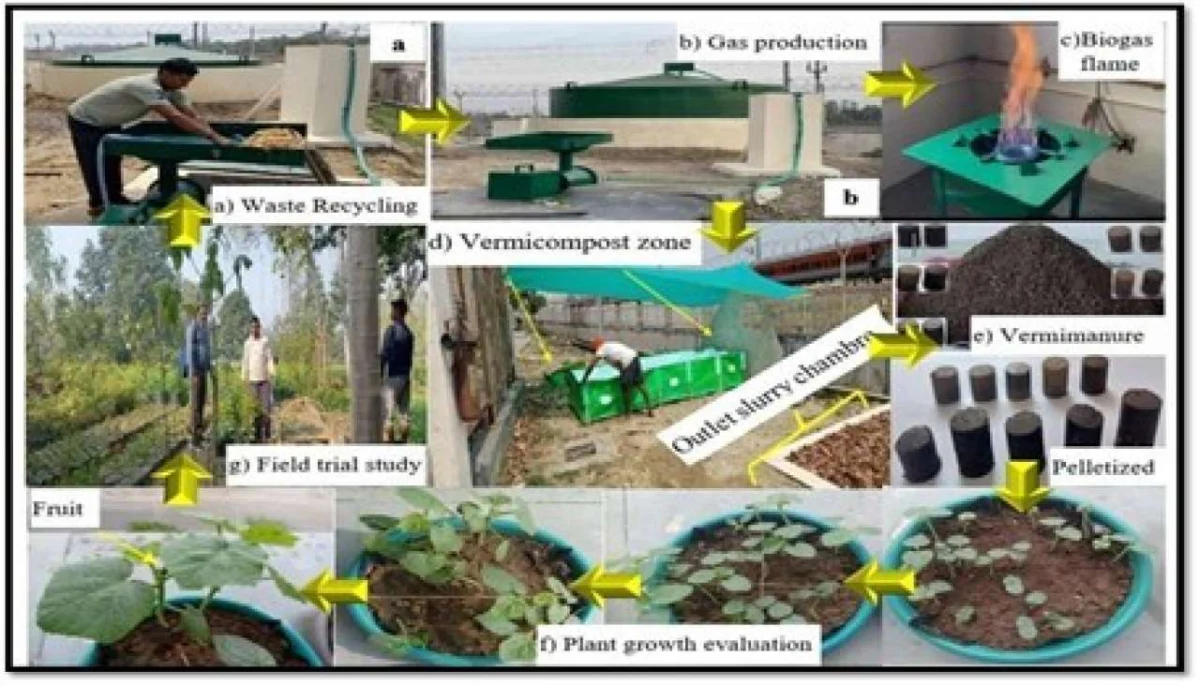
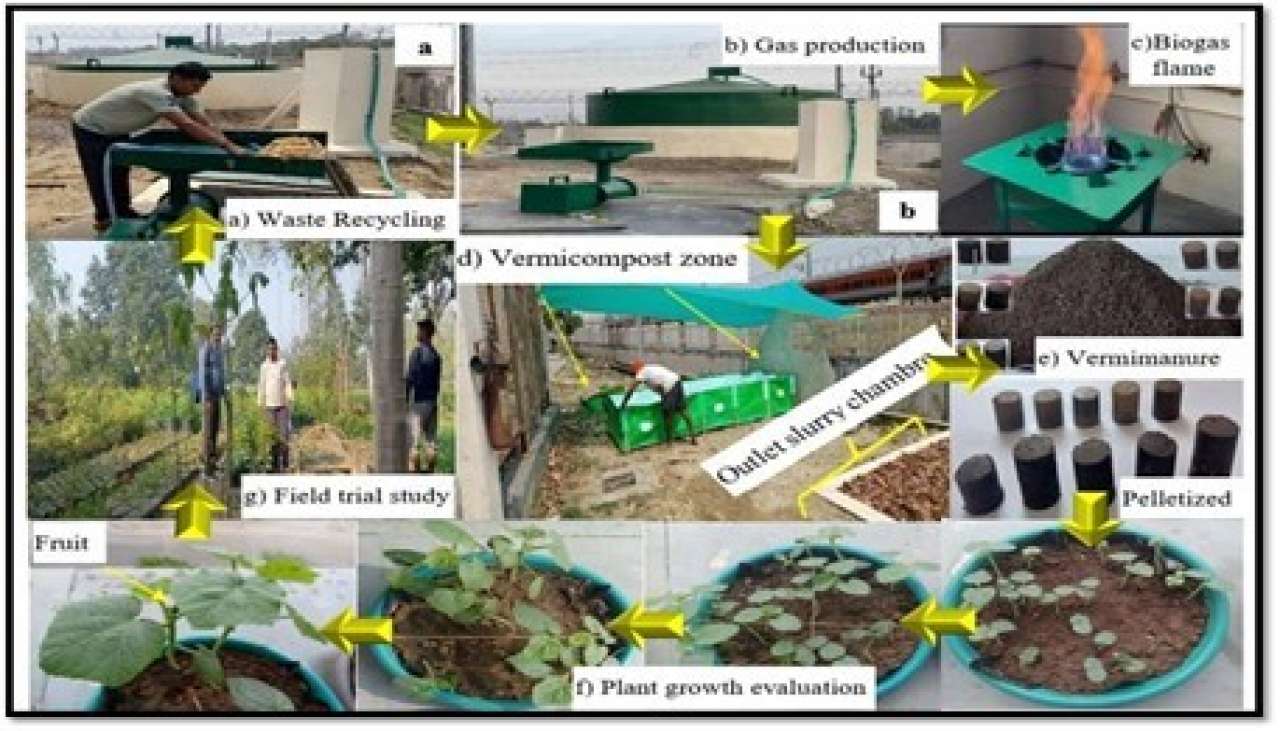
A central pillar of RGIPT’s framework is its sophisticated circular bioeconomy system, which expertly links organic waste management to energy generation and sustainable agriculture. All organic and food waste generated within the campus is systematically collected and subjected to anaerobic digestion. This biological process, occurring in the absence of oxygen, breaks down organic matter to produce biogas—a potent renewable energy source primarily composed of methane.
The remaining byproduct of anaerobic digestion, known as digestate, is not discarded but further processed and valorized. This nutrient-rich material is transformed into a range of high-value products, including vermicompost, particle manure, and nutrient-rich soil conditioners. These organic fertilizers are then effectively utilized in campus farming activities and landscaping, significantly improving soil fertility and supporting sustainable crop production. This closed-loop system not only ensures the efficient utilization of organic waste but also effectively recycles essential nutrients, drastically reducing reliance on external chemical fertilizers. This approach enhances the resilience and long-term sustainability of the entire campus ecosystem, demonstrating a truly regenerative model.
)
2. Advanced Biogas Upgrading: Maximizing Energy Potential
While biogas is a valuable renewable energy source, it typically contains impurities such as carbon dioxide (CO2) and trace gases, which lower its calorific value and overall efficiency. To address this challenge, RGIPT has implemented an innovative membrane-based biogas upgrading system, significantly enhanced by nanofluid-assisted separation.
This multi-stage setup is meticulously designed to selectively remove CO2 and other trace impurities while enriching the methane content. The introduction of nanofluids plays a crucial role by augmenting mass transfer rates and separation efficiency, allowing for a more effective purification process. Furthermore, a multi-pass operation within the system further refines the separation efficiency and boosts the concentration of methane. The result is upgraded biomethane with a significantly higher energy content and superior fuel quality, making it a more efficient and cleaner energy source. This advanced purification method represents a substantial leap over traditional techniques, contributing not only to enhanced energy efficiency but also to carbon capture efforts, thereby rendering the entire process more environmentally sensitive and impactful.
)
3. Hydrothermal Liquefaction (HTL): Transforming Mixed Waste into Biocrude
One of the most intractable problems in modern waste management is the efficient processing of mixed and low-value waste, particularly heterogeneous blends of plastic and organic matter that are often deemed non-recyclable and destined for landfills or incineration. RGIPT has embraced Hydrothermal Liquefaction (HTL) as a highly efficient pathway to transform these challenging waste streams into valuable liquid fuels.
Under optimized conditions involving elevated temperatures and pressures, HTL facilitates the conversion of mixed wastes into biocrude oil, alongside other useful byproducts such as hydrochar and gaseous components. The process has demonstrated a promising yield of approximately 10 wt.% biocrude, highlighting its potential as a viable alternative source of energy. This technology is particularly critical as it offers a sustainable and feasible channel for valorizing what would otherwise be considered non-recyclable waste. By converting such waste into energy, HTL significantly contributes to reducing landfill dependence and actively promotes resource efficiency, embodying a key principle of the circular economy.
)
4. Plastic Waste Valorization: From Refuse to Resourceful Products
The global challenge of plastic waste is directly addressed through RGIPT’s innovative plastic waste valorization program. Here, non-recyclable plastic waste is not merely disposed of but meticulously transformed into durable and functional utility products for campus use and beyond.
Through carefully controlled thermal and mechanical processing techniques, discarded plastics are repurposed into a range of robust items, including mats, tables, and stools. These products are engineered to exhibit superior strength, exceptional durability, and remarkable resistance to various environmental conditions. This initiative serves a dual purpose: it effectively tackles the pervasive problem of plastic waste disposal while simultaneously generating economically useful materials with tangible practical applications. By demonstrating a cost-effective and decentralized model, this approach offers a scalable solution for plastic waste management, particularly relevant for urban and semi-urban settings where conventional recycling infrastructure is often limited or underdeveloped.
)
5. Nano-Bio Wastewater Treatment: Closing the Water Loop
Water sustainability is a critical component of RGIPT’s integrated framework, achieved through an advanced integrated nano-bio wastewater treatment system. This innovative hybrid approach combines robust biological processes with cutting-edge nanofluid-assisted interactions and natural plant-based extracts.
This synergistic system is exceptionally effective in removing a wide spectrum of pollutants, including turbidity, dissolved solids, and various organic contaminants. It achieves impressive reductions of over 95% in Chemical Oxygen Demand (COD) and Biochemical Oxygen Demand (BOD) levels, ensuring the treated water meets stringent quality standards. The purified water is then safely reused for various non-potable campus applications such as irrigation, aquaculture, and general landscaping, thereby significantly reducing the demand for fresh potable water. Moreover, the biomass generated during the treatment process is not wasted; it is further utilized for energy recovery or enriching soil applications, ensuring minimal waste generation throughout the entire water treatment cycle. This system stands as a prime example of an effective and resource-efficient solution for successfully closing the water loop within a sustainable campus ecosystem.
)
Integrated Synergy: A Unified Resource Recovery Network
Collectively, these meticulously designed interventions form a highly cohesive and synergistic ecosystem. What truly distinguishes the RGIPT model is not merely the deployment of individual advanced technologies, but their seamless integration into a unified resource recovery network. Organic waste is efficiently converted into energy and nutrient-rich soil amendments. The biogas produced is upgraded into a high-quality fuel. Mixed waste, typically challenging to process, is transformed into valuable liquid and solid energy carriers. Plastic waste finds a new life as functional products, and campus wastewater is treated to be reused, drastically reducing freshwater consumption. This interconnected approach ensures optimal utilization of resources across multiple domains while simultaneously minimizing the environmental footprint. As this dynamic system continues to evolve, ongoing research and development efforts are focused on further improving process efficiencies, expanding recovery pathways, and strengthening the vital linkages between energy, water, and material cycles to achieve even greater levels of self-sufficiency and resilience.
Official Responses: A Vision for Sustainable Leadership
The profound shift at RGIPT is largely attributable to the unwavering vision and dedication of its leadership, particularly Professor Harish Hirani.
)
Professor Harish Hirani, the architect of this transformative initiative, articulates the core philosophy: "Our goal at RGIPT was to move beyond theoretical discussions of sustainability and build a truly practice-based, campus-wide ecosystem. We believe that higher education institutions have a unique responsibility to not only educate the next generation but also to serve as ‘living laboratories’ – demonstrating how cutting-edge research can be directly translated into impactful, scalable solutions for real-world environmental challenges. The integration of diverse waste streams into a cohesive circular economy is not just an academic exercise; it’s a blueprint for a sustainable future, proving that waste is indeed a resource waiting to be unlocked." He further emphasizes the institute’s commitment, stating, "This is just the beginning. We are continuously striving to enhance the efficiency of our systems, expand our recovery pathways, and strengthen the intricate linkages between energy, water, and material cycles to achieve complete self-sufficiency and offer a replicable model for the nation."
The RGIPT Administration, echoing Professor Hirani’s sentiment, affirms the institute’s strategic commitment to environmental stewardship. A spokesperson for the institute highlighted, "RGIPT is deeply committed to embedding sustainability into every facet of our operations, research, and education. This integrated zero-waste framework is a cornerstone of that commitment. It showcases our dedication to fostering innovation that not only benefits our campus but also provides tangible, scalable solutions for other institutions, urban communities, and even national policy initiatives. By leading in this domain, we aim to inspire a new generation of engineers and scientists who are equipped to build a resilient and circular economy for India." The administration also pointed to the upcoming International Zero Waste Day demonstration as a crucial step in sharing their advancements and fostering broader adoption of these sustainable practices.
)
Implications: A Blueprint for a Sustainable Future
The integrated zero-waste framework developed at RGIPT carries far-reaching implications, positioning the institute as a leading prototype for sustainable development, not just within India but globally. Its success offers a coherent and scalable pathway for transforming waste into valuable resources through scientifically designed and interconnected processes, thereby addressing multiple environmental and socio-economic challenges.
1. Replicability and Scalability: The RGIPT model is meticulously designed for replicability. Its decentralized and cost-effective approach to plastic waste valorization, for instance, is particularly relevant for urban and semi-urban settings struggling with inadequate conventional recycling infrastructure. The entire integrated framework provides a tangible blueprint that can be adopted by other academic institutions, industrial campuses, residential communities, and even entire cities seeking to transition towards more circular and resilient systems.
)
2. Contribution to National Sustainability Goals: India faces immense challenges in waste management, resource scarcity, and climate change. RGIPT’s model directly contributes to national goals by:
- Reducing Landfill Burden: Diverting significant amounts of waste from landfills, alleviating pressure on land resources and reducing methane emissions.
- Enhancing Energy Security: Generating renewable energy (biogas, biocrude) from waste, reducing reliance on fossil fuels.
- Promoting Water Security: Closing the water loop through advanced wastewater treatment and reuse, conserving precious freshwater resources.
- Fostering Resource Conservation: Maximizing the recovery and reuse of materials, promoting a circular economy, and reducing the demand for virgin resources.
- Climate Action: Contributing to carbon capture through biochar and reducing greenhouse gas emissions from waste decomposition and fossil fuel consumption.
3. Educational and Research Excellence: As a "living laboratory," RGIPT’s campus provides an unparalleled environment for experiential learning and cutting-edge research. Students gain hands-on experience with advanced sustainable technologies, preparing them to be future leaders and innovators in green industries. The ongoing operation of these systems generates valuable data for further research, leading to continuous improvements and new discoveries in waste valorization, energy efficiency, and environmental engineering.
)
4. Economic Benefits: The framework creates opportunities for local entrepreneurship and skill development in waste processing, resource recovery, and sustainable agriculture. By converting waste into valuable products and energy, it reduces operational costs for the institute and potentially creates new revenue streams, demonstrating the economic viability of circular economy principles.
5. Environmental Stewardship and Public Awareness: By openly demonstrating its integrated systems, especially on International Zero Waste Day, RGIPT plays a crucial role in raising public awareness about the potential of waste-to-resource technologies. It inspires behavioral change and encourages wider adoption of sustainable practices among individuals and communities.
)
In conclusion, the integrated framework at RGIPT is more than just a waste management system; it is a visionary statement on how innovation, integration, and institutional commitment can forge a path toward a truly sustainable future. As environmental pressures intensify globally, such integrated and technology-driven approaches, exemplified by RGIPT, will be instrumental in shaping resilient societies and preserving our planet for generations to come. The institute’s journey serves as a powerful testament that transforming waste into wealth is not merely a dream, but an achievable and essential reality.
Web Link for more information about the Program: https://rgipt.ac.in/IDZW-2026/
