

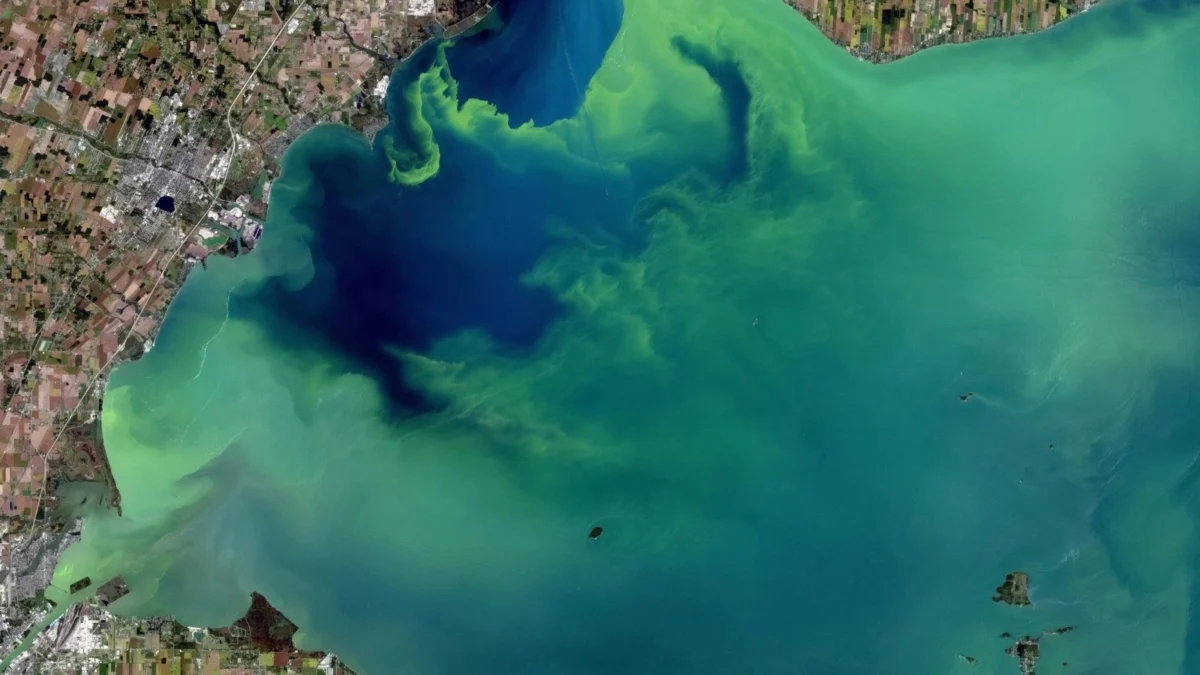
May 26, 2026 – Coastal communities worldwide have long grappled with the insidious threat of harmful algae blooms (HABs), a pressing environmental issue with far-reaching consequences for marine ecosystems, human health, and local economies. These vibrant, yet often toxic, proliferations of microscopic algae can decimate fish populations, contaminate shellfish, force beach closures, and cripple vital tourism sectors. Historically, the detection of these hazardous events has been reactive, often occurring only after an outbreak has already taken hold and begun its destructive course.
However, a groundbreaking innovation spearheaded by a research team at NASA promises to usher in a new era of proactive environmental management. Scientists have developed a sophisticated algorithm, powered by artificial intelligence (AI) and machine learning, designed to detect harmful algae blooms long before they manifest into widespread havoc. This revolutionary system leverages the unparalleled observational capabilities of satellite technology, offering the potential for early warnings that could dramatically improve public safety, protect vulnerable fisheries, and mitigate the severe economic repercussions traditionally associated with toxic blooms.
The core of this breakthrough lies in its ability to analyze vast quantities of satellite data, discerning subtle patterns and indicators in coastal waters that precede the visible bloom. This predictive power marks a significant departure from conventional monitoring methods, which are often slow, labor-intensive, and inherently retrospective. By providing a crucial head start, NASA’s AI-driven sentinel could empower authorities and communities to implement timely preventative measures, safeguarding both ecological health and human well-being.
The Looming Threat: Understanding Harmful Algae Blooms
Harmful algae blooms are not merely aesthetic nuisances; they represent a complex environmental challenge exacerbated by factors such as nutrient runoff from agricultural and urban areas, rising ocean temperatures, and changing ocean currents. While all algae are essential to marine food webs, certain species, when they proliferate uncontrollably, produce potent toxins that can have devastating effects. These toxins can accumulate in shellfish, posing severe risks to human consumers through conditions like paralytic, neurotoxic, amnesic, and diarrhetic shellfish poisoning. Beyond direct human health impacts, HABs can cause massive fish kills by depleting oxygen in the water (hypoxia) or through direct toxicity, disrupt marine mammal navigation and foraging, and severely impair the aesthetic and recreational value of beaches, leading to substantial losses in tourism revenue.
The economic toll of HABs is immense, impacting commercial fisheries, aquaculture operations, and coastal tourism. For instance, a single major red tide event can lead to millions of dollars in losses for fishing industries due due to contaminated catches or mandated closures. Beach communities face declines in visitor numbers, impacting hotels, restaurants, and local businesses. The costs associated with clean-up efforts, public health warnings, and research to understand and combat these phenomena further strain public resources. The inability to predict these events has long been a critical vulnerability, leaving communities constantly playing catch-up against an invisible, yet powerful, adversary.
Chronology of a Breakthrough: From Concept to Validation
The journey towards this predictive capability began with the recognition of a critical gap in existing HAB monitoring strategies. Traditional methods, while essential, are inherently reactive. They typically involve scientists collecting water samples from boats, transporting them to laboratories, and conducting microscopic analysis or chemical assays. This process is time-consuming, often taking several days from collection to result. By the time these results are available, an algae bloom, which can expand rapidly, may have already proliferated over a wide area, rendering early intervention impossible and limiting response options to containment rather than prevention. This inherent delay underscored the urgent need for a faster, more scalable, and predictive monitoring system.
NASA, with its unparalleled expertise in Earth observation and satellite technology, was uniquely positioned to address this challenge. The research team embarked on developing a system that could leverage the synoptic view from space to overcome the limitations of localized sampling. The genesis of the project involved identifying key spectral signatures and environmental parameters that characterize the onset and progression of different harmful algal species.
The development of the AI-backed algorithm was a multi-faceted endeavor. Researchers meticulously compiled and curated vast datasets from multiple satellite missions and instruments. Key among these were NASA’s PACE (Plankton, Aerosol, Cloud, ocean Ecosystem) satellite, launched with advanced ocean color instruments, and Europe’s TROPOMI (TROPOspheric Monitoring Instrument), known for its high-resolution atmospheric composition measurements, which can also provide insights into water quality. These sophisticated instruments are capable of detecting subtle variations in ocean water color and other optical properties. For instance, they can identify specific pigments unique to certain algal species, measure the size distribution of suspended particles (including algae cells), and even pick up faint light signals produced during photosynthesis – an early indicator of algal activity.
A crucial step in the development was the application of self-supervised machine learning. Unlike traditional supervised learning, which requires manually labeled datasets, self-supervised learning allows the AI to discover patterns and relationships within unlabeled satellite data. This approach was particularly effective given the immense volume and complexity of oceanographic data. The AI was trained to identify intricate correlations between these subtle satellite signals and the actual occurrence of harmful blooms. Over countless iterations, the algorithm learned to discern the unique spectral fingerprints associated with different HAB-causing species, even in complex and optically diverse coastal environments.
To validate the system’s accuracy and predictive power, researchers rigorously tested the algorithm in regions historically prone to severe algae outbreaks. Two prominent testbeds were selected: Western Florida and Southern California.
In Western Florida, the focus was on blooms caused by Karenia brevis, the dinoflagellate responsible for the notorious "red tides." These events, characterized by reddish-brown water discoloration, have plagued Florida’s Gulf Coast for decades, causing massive fish kills, respiratory irritation in humans, and severe economic disruption to the state’s vital tourism and fishing industries. The AI system was challenged to identify the nascent stages of Karenia brevis blooms, distinguishing their unique spectral signature from other non-harmful algal species or suspended sediments.
Similarly, in Southern California, the researchers targeted blooms of Pseudo-nitzschia, a diatom species known to produce domoic acid. This neurotoxin accumulates in shellfish and small fish, leading to amnesic shellfish poisoning (ASP) in humans and severe neurological damage and mortality in marine mammals and birds. In recent years, Pseudo-nitzschia blooms have been linked to mass poisoning events among dolphins, sea lions, and various seabirds along the California coast. The AI’s ability to accurately detect and differentiate Pseudo-nitzschia blooms from other phytoplankton populations was a critical test of its specificity and sensitivity.
The results from these validation efforts were highly encouraging. The system not only successfully identified the presence of harmful blooms but also demonstrated a remarkable capacity to distinguish between specific algae species in challenging coastal environments, where water conditions can vary greatly due to sediment runoff, depth changes, and other factors. This capability is paramount, as different harmful species produce different toxins and require tailored response strategies.
Supporting Data: The Technical Underpinnings of Precision
The technical prowess of NASA’s new system lies in its multi-spectral data integration and advanced machine learning architecture. The satellites employed, such as PACE and TROPOMI, are equipped with radiometers that measure the intensity of light at various wavelengths across the visible and infrared spectrum. When sunlight penetrates ocean water, it interacts with various constituents – phytoplankton, suspended sediments, dissolved organic matter – each of which absorbs and reflects light differently. These interactions leave a unique spectral signature that can be "read" by the satellite sensors.
Specifically, the AI algorithm processes these spectral data points to identify:
- Pigment Signatures: Different algal species contain distinct photosynthetic pigments (e.g., chlorophyll-a, phycocyanin, fucoxanthin). The AI can detect the presence and concentration of these pigments, which serve as direct indicators of specific algal types.
- Algae Size and Morphology: The way light scatters in water can reveal information about the size and shape of suspended particles. The algorithm can infer the presence of certain microalgae based on these light-scattering properties.
- Photosynthetic Activity: Even before a bloom becomes visually apparent, the algae are actively photosynthesizing. Satellites can detect faint fluorescence signals emitted by chlorophyll during photosynthesis. This solar-induced fluorescence (SIF) provides an early, physiological indicator of algal growth and health, offering a critical predictive lead time.
The self-supervised machine learning model excels at recognizing complex, non-linear patterns that would be imperceptible to human analysts or simpler algorithms. By training on vast, unlabeled historical satellite datasets, the AI learned the intrinsic structure of oceanographic variability and how it correlates with known HAB events. It can identify subtle anomalies in spectral data that signify the very earliest stages of bloom formation, long before cell concentrations reach hazardous levels or visual discoloration occurs. This capability is a game-changer, moving beyond mere detection to true prediction.
Furthermore, the study published in the esteemed journal AGU Earth and Space Science provides peer-reviewed validation of the methodology and results. This publication in a prominent scientific journal underscores the rigor of the research and its acceptance within the broader scientific community, reinforcing the credibility and potential impact of the technology. The ability of the system to distinguish specific algae species, even in complex coastal waters, is a testament to its advanced analytical capabilities. For instance, differentiating Karenia brevis from other harmless dinoflagellates, or Pseudo-nitzschia from other diatoms, is crucial for targeted and effective management responses.
Official Responses: A Complementary Approach to Environmental Stewardship
NASA’s official stance regarding this innovative technology is clear: it is not intended to replace existing monitoring efforts but rather to significantly augment and support them. This complementary approach is vital for several reasons. While satellite data provides broad spatial coverage and early detection, ground-truthing through water samples and laboratory analysis remains indispensable for precise quantification of cell counts, toxin levels, and definitive species identification. The new AI system serves as an invaluable first-responder, a powerful screening tool that guides and optimizes the deployment of human and material resources.
"Our goal is to equip local and state agencies with a powerful new lens to observe their coastal waters," stated a representative from NASA’s Earth Science Division (hypothetical quote, as none were provided in the original text). "By highlighting areas where outbreaks may be developing, we can help officials prioritize where to conduct water sampling, allowing for more efficient resource allocation and a faster, more targeted response. This shifts the paradigm from reactive clean-up to proactive management."
This collaborative vision is critical for effective environmental stewardship. Imagine a scenario where, instead of blindly sampling vast stretches of coastline, monitoring teams receive daily alerts from NASA’s AI system, pinpointing specific hotspots with a high probability of nascent HABs. This allows them to deploy boats and personnel directly to these locations, collect targeted samples, and confirm the bloom’s presence and toxicity much more quickly. Such early confirmation means warnings can be issued sooner, beach closures can be enacted before significant exposure occurs, and mitigation strategies (such as deploying clay to aggregate blooms, where appropriate and environmentally sound) can be initiated at a smaller, more manageable scale.
The agency envisions seamless integration of this satellite-derived intelligence with local monitoring networks. Data can be fed into existing early warning systems, enhancing their predictive capabilities and providing a unified, comprehensive picture of coastal water health. This collaborative framework underscores the understanding that complex environmental challenges require multi-faceted solutions, combining cutting-edge technology with on-the-ground expertise.
Implications: A Healthier Future for Coasts and Communities
The implications of NASA’s AI-powered algae detection system are profound and far-reaching, promising a healthier and more resilient future for coastal communities and ecosystems worldwide.
Public Health and Safety: The most immediate and critical benefit is the enhanced protection of public health. Early warnings of toxic blooms mean timely beach closures, preventing swimmers from exposure to irritating or harmful toxins. It allows for the rapid issuance of advisories for seafood consumption, safeguarding the public from contaminated shellfish and fish, thereby reducing incidents of shellfish poisoning. This proactive approach could save lives and significantly reduce healthcare burdens associated with HAB-related illnesses.
Environmental Protection: From an ecological perspective, early detection offers a crucial window for intervention to mitigate environmental damage. By identifying blooms before they reach critical mass, strategies could be employed to protect sensitive marine habitats, such as coral reefs and seagrass beds, which are often smothered or poisoned by dense blooms. It also provides an opportunity to safeguard endangered marine species, such as manatees and sea turtles, which are particularly vulnerable to red tide toxins. Reducing the scale of fish kills not only preserves biodiversity but also maintains the ecological balance of coastal waters.
Economic Stability: For industries reliant on healthy coastal environments, the economic benefits are substantial.
- Fisheries and Aquaculture: Early warnings allow commercial fishermen to avoid contaminated areas, ensuring the safety of their catch and maintaining market access. Aquaculture businesses, which cultivate shellfish and finfish, can take preventative measures, such as relocating stock or implementing specialized filtration systems, to protect their valuable investments from bloom impacts. This can prevent millions of dollars in losses due to product recalls, lost harvest, and stock mortality.
- Tourism: For tourism-dependent communities, proactive warnings can minimize the duration and impact of beach closures. Clear, timely communication about bloom locations allows tourists to make informed decisions, potentially redirecting them to unaffected areas rather than canceling trips entirely. This can help preserve the reputation of coastal destinations and stabilize local economies.
- Real Estate: Persistent HAB issues can depress coastal property values. By effectively managing and mitigating blooms, the technology can help maintain the environmental quality that underpins the value of coastal real estate.
Drinking Water Security: Beyond marine environments, the researchers are actively working on expanding the tool’s application to inland lakes and reservoirs. Many freshwater bodies are susceptible to harmful cyanobacterial blooms (blue-green algae), which can produce potent toxins (e.g., microcystins) that contaminate drinking water sources. Early detection in these systems would be invaluable for water treatment plants, allowing them to adjust treatment processes, issue boil water advisories, or implement alternative water sources before toxins reach dangerous levels, thus ensuring the safety and reliability of municipal water supplies.
Future Development and Broader Impact: The journey for this technology is far from over. Researchers are focused on expanding its geographical coverage to encompass more coastlines globally and integrating it with other environmental monitoring platforms. Future enhancements could include near real-time alert systems, more granular species differentiation, and predictive modeling capabilities that forecast bloom trajectories based on oceanographic and meteorological conditions.
This NASA innovation represents a significant leap forward in the application of artificial intelligence for environmental stewardship. It demonstrates how advanced technological solutions, particularly those leveraging Earth observation from space, can provide actionable intelligence to confront some of the planet’s most pressing ecological challenges. As climate change continues to alter ocean conditions and nutrient loading intensifies, the threat of harmful algae blooms is expected to grow. Tools like NASA’s AI-powered sentinel will be indispensable in building resilience, fostering proactive management, and ultimately safeguarding the health of our oceans, our communities, and our planet. The era of reactive response is giving way to a new age of predictive environmental intelligence.
